Chef Lupita
Acúmara Tatemada al Comal
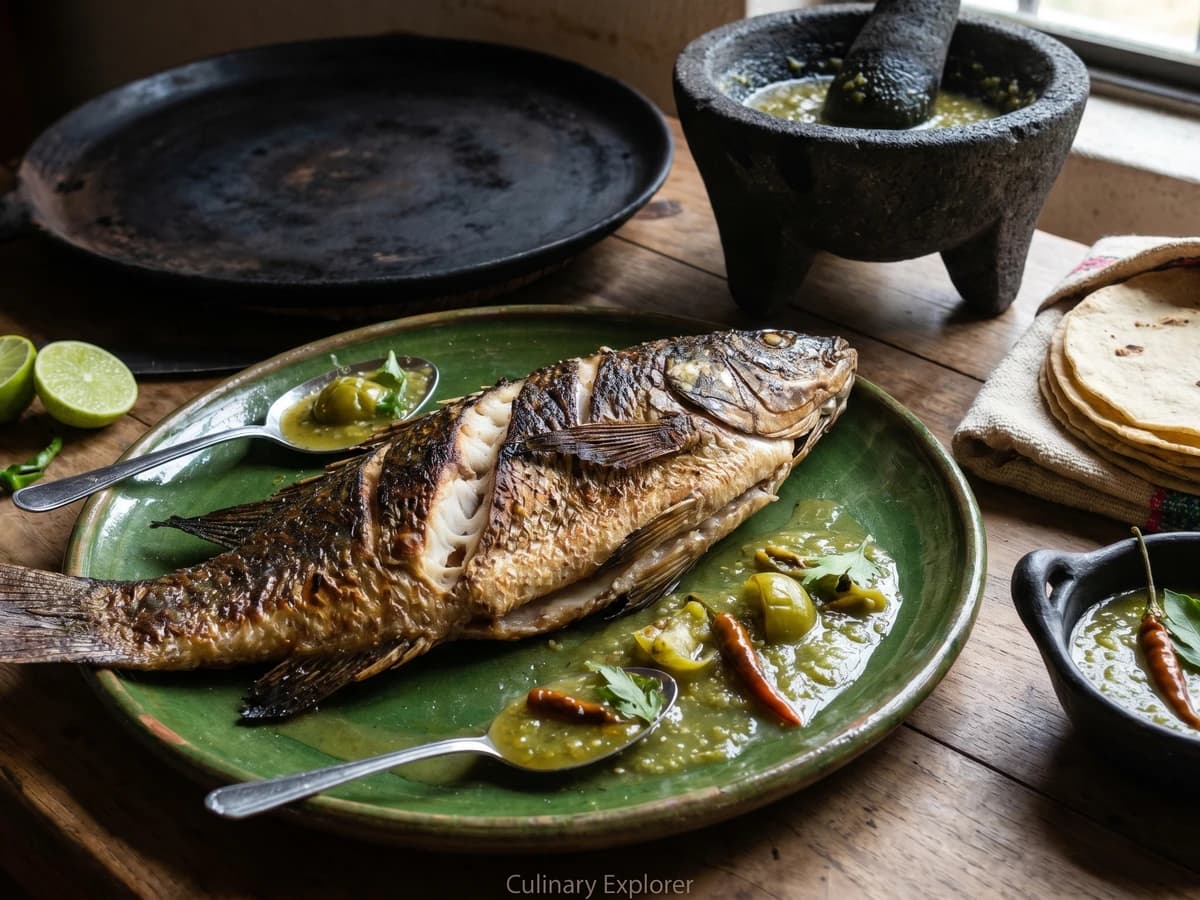
Michoacán's Lake Pátzcuaro acúmara, a whole kurucha from the lago tatemada on a comal de leña and served with chile perón atápakua, corn tortillas, and P'urhépecha discipline.
A cooking platform built around craft, culture, and the stories behind what we eat.

Created by
Sonora's Comca'ac coastal main: fresh snapper poached in a salsa of tomato, garlic, and wild-harvested chiltepin from the brush along the Gulf of California. Indigenous cooking from the edge of the desert.
This is from Sonora. More specifically, it is from the Comca'ac, the Seri people whose territory runs along the Gulf of California coast and across Isla Tiburon, the largest island in Mexico. The Comca'ac have fished these waters for centuries, and their cooking carries the directness of people who live where the desert meets the sea.
The chile is the soul of this dish. Chiltepin is not a chile you grow on a farm. It grows wild in the Sonoran scrubland and the Comca'ac harvest it by hand, climbing through brush in the late summer and early fall. The pea-sized berries pack a heat that is sharp and short-lived, nothing like the slow build of a guajillo or the deep round heat of an ancho. This is a wild heat, a desert heat, and it tastes like the place it comes from. Without chiltepin, this is a different dish. No me vengas con atajos.
The technique is simple, but simple does not mean careless. Toast the chiltepin properly. Cook the tomato until the salsa darkens and the lard separates. Poach the fish gently so the flesh stays whole. The Comca'ac cook with what the sea and the desert give them on the same day, and they do not need a long ingredient list to make food that tastes like home. Cada estado, su propia cocina, and Sonora's coastal kitchen is one of the least understood in Mexico. That is starting to change.
Chiltepin (Capsicum annuum var. glabriusculum) is the only wild chile native to the United States and northern Mexico, and ethnobotanists consider it the ancestor of all domesticated chile varieties in the Americas. The Comca'ac, a coastal indigenous people of approximately 900 to 1,000 individuals living primarily in Punta Chueca and Desemboque on Sonora's mainland coast, have harvested wild chiltepin and fished the waters of the Gulf of California for at least 2,000 years; their language, Cmiique Iitom, is an isolate with no documented relatives. The 20th-century commercial fishing industry on the gulf coast, centered in Bahia de Kino and Guaymas, drew on Comca'ac knowledge of the waters even as it displaced traditional Comca'ac fishing economies, and chiltepin remains a wild-harvested ingredient that has resisted commercial cultivation despite multiple agricultural attempts.
Quantity
2 pounds
cut into 4 pieces, or 4 small whole snappers, cleaned
Quantity
1 1/2 teaspoons, plus more to taste
Quantity
1
halved
Quantity
3 tablespoons
Quantity
1 medium
finely diced
Quantity
5
finely chopped
Quantity
2 pounds
cored and roughly chopped
Quantity
20 to 30
crumbled between your fingers
Quantity
1 teaspoon
oregano sonorense if you can find it
Quantity
1/2 cup
Quantity
2
Quantity
for serving
Quantity
for serving
Quantity
for serving
| Ingredient | Quantity |
|---|---|
| red snapper fillets, skin oncut into 4 pieces, or 4 small whole snappers, cleaned | 2 pounds |
| kosher salt | 1 1/2 teaspoons, plus more to taste |
| limehalved | 1 |
| manteca de cerdo (pork lard) | 3 tablespoons |
| white onionfinely diced | 1 medium |
| garlic clovesfinely chopped | 5 |
| ripe Roma tomatoescored and roughly chopped | 2 pounds |
| dried chiltepin (chile chiltepin del monte)crumbled between your fingers | 20 to 30 |
| dried Mexican oreganooregano sonorense if you can find it | 1 teaspoon |
| fish stock or water | 1/2 cup |
| bay leaves | 2 |
| lime wedges (optional) | for serving |
| hand-pressed corn tortillas or warm flour tortillas sonorenses (optional) | for serving |
| cooked white rice (optional) | for serving |
Pat the snapper dry with paper towels. Salt both sides with one teaspoon of the salt and squeeze half the lime over the fillets. Let them sit on the counter while you build the salsa. Do not skip the salt-and-lime rest. The Comca'ac women on Isla Tiburon will tell you it firms the flesh and makes the fish taste like fish, not like the refrigerator it came out of.
Heat a dry comal or small skillet over medium-low. Crumble the chiltepin between your fingers as they go in. Toast for 30 to 45 seconds, shaking the pan, until they darken a shade and the kitchen catches that sharp, almost smoky aroma. Pull them off immediately. Chiltepin is small but ferocious and it burns to nothing in seconds. The heat is wild and direct, not the round heat of guajillo. That is what makes this dish Sonora.
In a wide cazuela or heavy skillet, melt the lard over medium heat. La manteca es el sabor, even with fish. Add the onion and a pinch of salt. Cook for five minutes until the edges turn translucent. Add the garlic and stir for another minute. Do not let the garlic brown or it will turn the salsa bitter.
Add the chopped tomatoes, the toasted chiltepin, the oregano, the bay leaves, and the remaining half teaspoon of salt. Raise the heat to medium-high. The tomatoes will release their water in the first few minutes. Stir occasionally and let it bubble for ten to twelve minutes, until the tomatoes break down completely and the salsa darkens to a deep red-brick color. The lard will start to separate and pool at the edges. That is the signal.
Pour in the fish stock or water. Stir, scraping up anything stuck to the bottom of the pan. Simmer for three more minutes. Taste the salsa. It should taste of toasted chile, sweet tomato, and clean garlic, with a heat that builds slowly across the tongue. Add more salt if it needs it. Pull out the bay leaves.
Lower the snapper fillets into the salsa, skin side up. Spoon some of the salsa over the top of each piece. Cover the pan and reduce the heat to medium-low. Cook for six to eight minutes, depending on thickness, until the flesh turns opaque and flakes when you press it with a fork. Do not stir or flip. Snapper falls apart fast and you want the fillets whole on the plate.
Bring the whole cazuela to the table. Serve each fillet with a generous ladle of the salsa over white rice, with warm tortillas on the side. Squeeze the remaining lime half across the top at the table. This is how the Comca'ac eat at home, family-style, from the pan it was cooked in. Asi se hace y punto.
1 serving (about 460g)
Culinary guides, cultural storytelling, and the editorial depth that makes cooking meaningful.
Discover Culinary ExplorerChef Lupita
Michoacán's Lake Pátzcuaro acúmara, a whole kurucha from the lago tatemada on a comal de leña and served with chile perón atápakua, corn tortillas, and P'urhépecha discipline.

Chef Lupita
Puebla's weekday adobo of pork shoulder braised in a thick guajillo and ancho sauce sharpened with vinegar, cumin, and clove. The deep red of a market spice stall, the dish a poblana cooks without thinking.

Chef Lupita
Loreto's pit-roasted clams, planted hinge-up in beach sand and tatemadas under a fast fire of dried romerillo brush, the resinous Baja desert shrub that gives this dish its smoke.

Chef Lupita
Oaxaca's eighth mole, the silky, almond-and-cinnamon almendrado, served over poached chicken. Mild, sweet, restrained, and a quiet rebuttal to anyone who thinks Mexican food has to be hot to be Mexican.