Culinary Explorer

A cooking platform built around craft, culture, and the stories behind what we eat.
Discover Culinary Explorer
Peperonata

Peperonata

Created by

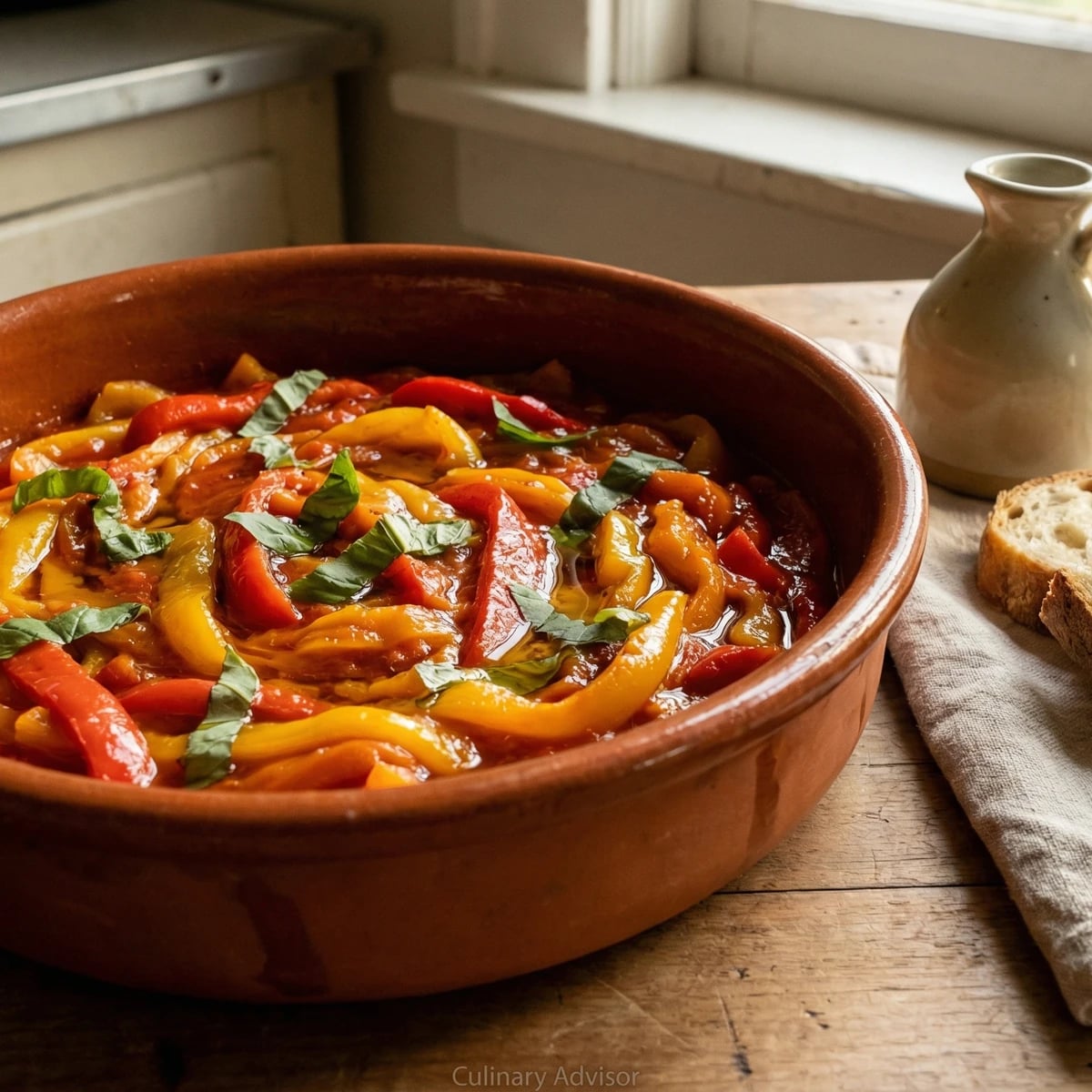
Peppers cooked slowly with onions and tomatoes until their sweetness concentrates and their flesh turns silky. The dish that proves patience is the only technique that truly matters.

Side Dishes
Italian
Make Ahead
Potluck
20 min
Active Time
1 hr cook1 hr 20 min total
Yield6 servings

Peperonata is not a quick vegetable side. It is an exercise in patience, a demonstration that heat applied slowly over time produces results that speed cannot replicate. The peppers must cook until they collapse. The tomatoes must reduce until they cling. There is no shortcut worth taking.

I use no green peppers. Green peppers are simply unripe, and their bitterness has no place here. Red, yellow, and orange peppers bring sweetness that deepens as they cook. The color in the finished dish should be warm and inviting, like sunset over the Amalfi coast.

This is peasant cooking from Campania and Calabria, where women cooked peppers this way because they had time and heat and good vegetables, and because the result was worth the effort. It improves overnight in the refrigerator. Many would say it is better the next day. I would not argue with them.

Peperonata belongs to the cucina povera tradition of southern Italy, where long, slow cooking transformed inexpensive summer vegetables into something far greater than the sum of their parts. The dish spread throughout Italy in the 20th century as peppers became widely available, though southerners maintain that the best peperonata still comes from Campania, where the peppers ripen under the most intense sun.

The technique, the tradition, and the story behind every dish.

Discover Culinary Explorer

Ingredients

mixed bell peppers

Quantity

2 pounds

red, yellow, and orange

extra virgin olive oil

Quantity

1/3 cup

yellow onion

Quantity

1 large

sliced thin

garlic cloves

Quantity

2

lightly crushed and peeled

ripe tomatoes

Quantity

1 pound

peeled, seeded, and chopped

kosher salt

Quantity

to taste

fresh basil leaves

Quantity

8

Equipment Needed

  • Large 12-inch skillet or sauté pan with lid (though you will not use the lid)
  • Wooden spoon

Instructions

  1. 1

    Prepare the peppers

    Wash the peppers and cut them in half lengthwise. Remove the stems, seeds, and white ribs. Cut each half into strips about one inch wide. The strips need not be uniform. They will cook down considerably.

  2. 2

    Cook the onion

    In a large skillet or sauté pan, warm the olive oil over medium heat. Add the sliced onion and the crushed garlic cloves. Cook slowly, stirring occasionally, until the onion is completely soft and pale gold, about 12 minutes. The garlic will perfume the oil. Remove and discard the garlic cloves before proceeding.

    The garlic is there for fragrance, not presence. Two cloves, briefly cooked and then removed, leave behind exactly what is needed and nothing more.
  3. 3

    Add the peppers

    Add all the pepper strips to the pan. They will seem like far too many. This is correct. Stir to coat with the oil and onion. Cook over medium heat, turning occasionally, until the peppers begin to soften and their raw crunch disappears, about 15 minutes.

  4. 4

    Add the tomatoes

    Add the tomatoes and a generous pinch of salt. Stir well. Reduce the heat to medium-low. The mixture should simmer gently, not boil. Cook uncovered, stirring occasionally, until the peppers are completely tender and the tomatoes have reduced to a thick, jammy consistency. This takes 30 to 40 minutes. The peppers should be soft enough to cut with a fork.

    Never cover the pan. The liquid must evaporate slowly. A covered pan creates stewed peppers, not peperonata.
  5. 5

    Finish with basil

    When the peppers are silky and the sauce clings to them rather than pools beneath, tear the basil leaves and scatter them over the top. Stir once gently. Taste for salt. Remove from heat and let rest at least 15 minutes before serving.

  6. 6

    Serve at proper temperature

    Peperonata is best served warm or at room temperature, never hot from the stove. The flavors need time to settle. Serve as a contorno alongside grilled meats or fish, spread on crusty bread, or as part of an antipasto.

Chef Tips

  • Select peppers that are heavy for their size with tight, glossy skin. Wrinkled peppers have begun to dry out and will not produce the silky texture you want.
  • In summer, use fresh, ripe tomatoes. In winter, canned San Marzano tomatoes are preferable to the pale specimens sold out of season. Drain them well before adding.
  • The dish keeps beautifully for five days in the refrigerator. Bring to room temperature before serving. The olive oil will solidify when cold; this is a sign of quality, not a problem.

Advance Preparation

  • Peperonata can be made three to five days ahead and refrigerated. The flavors deepen considerably overnight.
  • Bring to room temperature before serving. Never microwave to reheat; gentle warming in a pan is acceptable if you must serve it warm.
  • The dish freezes adequately for two months, though the texture softens slightly upon thawing.

Frequently Asked Questions

Nutrition Information

1 serving (about 200g)

Calories
180 calories
Total Fat
13 g
Saturated Fat
2 g
Trans Fat
0 g
Unsaturated Fat
11 g
Cholesterol
0 mg
Sodium
385 mg
Total Carbohydrates
14 g
Dietary Fiber
5 g
Sugars
9 g
Protein
3 g

Note: Chef personas and recipes are created with AI assistance. Cook with care: follow safe food-handling practices, check doneness with a thermometer when needed, and adapt for allergies and your kitchen.

Where cooking meets culture.

Culinary guides, cultural storytelling, and the editorial depth that makes cooking meaningful.

Discover Culinary Explorer

More from Chef Graziella's Side Dish Collection

Browse the full collection