
Chef Juliana
Açaí com Camarão do Pará
You think açaí belongs with banana and granola because that's the version that traveled. In Pará, thick unsweetened açaí sits beside shrimp, rice, and farinha. Anota aí: same fruit, different meal.
A cooking platform built around craft, culture, and the stories behind what we eat.
Created by
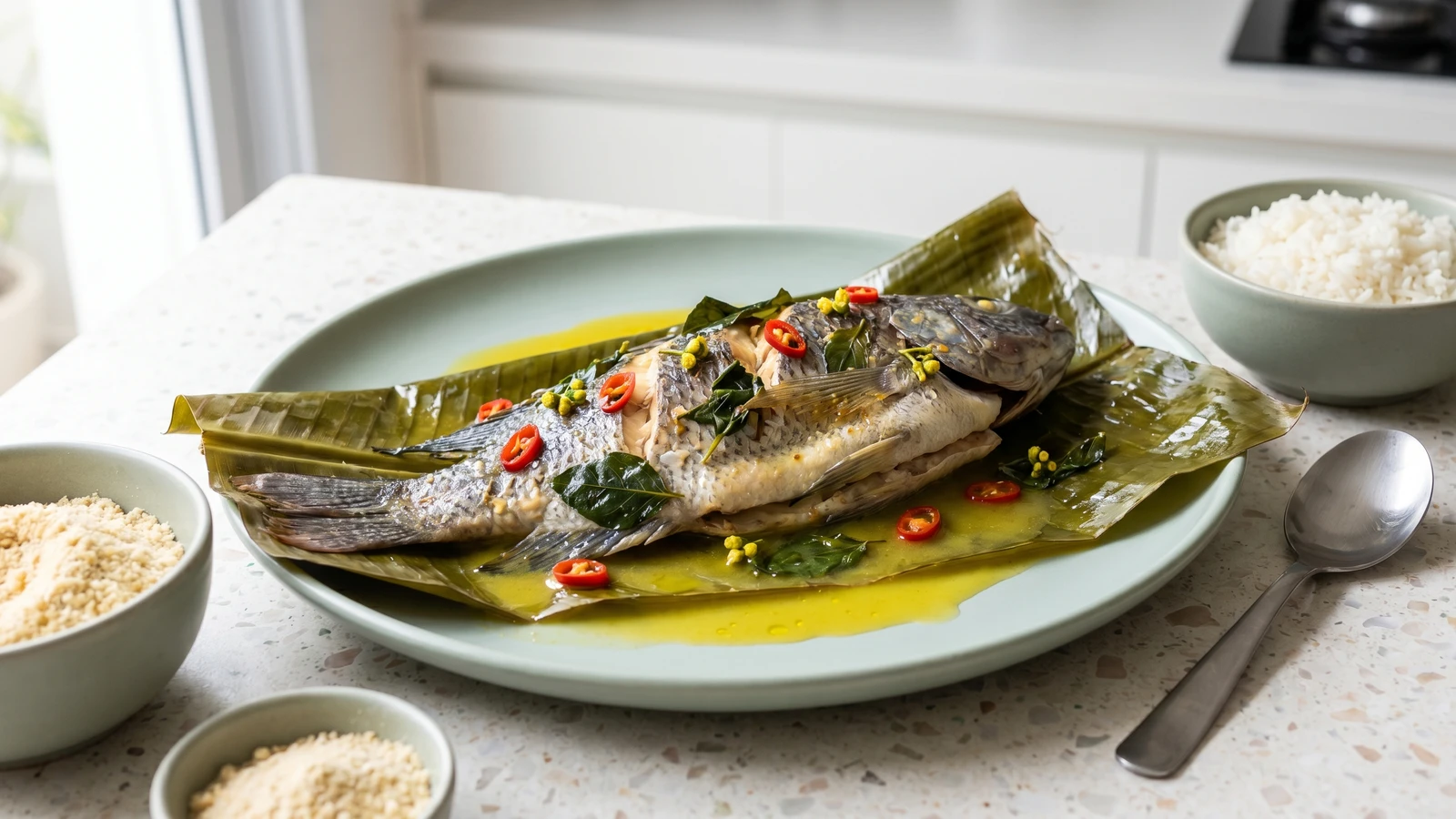
You think wrapping a whole fish in a leaf is advanced. It's not. Season well, build the tucupi base, close the packet, and let heat do quiet, honest work.
You look at a whole fish and a banana leaf and that little voice starts: isso não é pra mim. Anota aí: that voice is mostly fear wearing an apron. A gente isn't doing restaurant theater here. We're seasoning fish, warming a real tucupi base, wrapping it so the flesh cooks gently in its own juice, and putting dinner on the table.
I learned plenty of kitchen things late, badly, and with notes in a cheap caderno, so I don't have patience for mystery. The leaf isn't decoration. It protects the fish from drying out, perfumes it, and turns your oven into a small covered pan. The tucupi brings that sharp, yellow, Amazonian depth, but only if it's real bottled tucupi, already properly boiled by people who know what they're doing. Molho amarelo from the shelf is not tucupi. It's a costume.
I teach this as a home version, with respect. The cooks of Pará and Amazonas carry the canon, not me standing in a São Paulo kitchen with a spoon. What I can do is help you make a receita que funciona: onion, garlic, chicória-do-pará, tucupi cooked long enough to taste rounded, fish seasoned simply, jambu when you can get it. When you can't, don't fake it. Make the fish without jambu and serve something green beside it.
Put it next to arroz soltinho, feijão if that's your table, a spoon of farinha or pirão if the tucupi is calling for it, and you have the pê-efe doing what it always does: rice, beans, fish, green, country on a plate. Cozinha não é dom, é um aprendizado.
Cooking fish in leaves is part of Indigenous food knowledge across Brazil, especially in river regions where banana leaf, fish, mandioca, and herbs meet at the same table. Tucupi comes from mandioca brava, the bitter cassava whose yellow liquid must be boiled for a long time to drive off cyanogenic compounds and become safe to eat. In Pará and Amazonas, tucupi and jambu belong to deep regional traditions, and any home version should name that debt plainly.
Quantity
1 fish, about 1.2 to 1.5 kg
scaled, gutted, rinsed, and patted dry
Quantity
1 large leaf
rinsed and softened over heat
Quantity
2 cups
Quantity
1 cup
washed
Quantity
1/2 cup
finely chopped
Quantity
1 medium
finely chopped
Quantity
3 cloves
minced
Quantity
2 tablespoons
Quantity
2 tablespoons
Quantity
1 1/2 teaspoons, plus more to taste
Quantity
1/2 teaspoon
Quantity
1 small
sliced
Quantity
1/2 cup
only if the tucupi reduces too much
Quantity
as needed
cooked, for serving
Quantity
as needed
for serving
| Ingredient | Quantity |
|---|---|
| whole cleaned fishscaled, gutted, rinsed, and patted dry | 1 fish, about 1.2 to 1.5 kg |
| banana leafrinsed and softened over heat | 1 large leaf |
| real bottled tucupi | 2 cups |
| jambu leaves and tender stems (optional)washed | 1 cup |
| chicória-do-paráfinely chopped | 1/2 cup |
| onionfinely chopped | 1 medium |
| garlicminced | 3 cloves |
| neutral oil or olive oil | 2 tablespoons |
| lime juice | 2 tablespoons |
| salt | 1 1/2 teaspoons, plus more to taste |
| black pepper | 1/2 teaspoon |
| fresh chile (optional)sliced | 1 small |
| water (optional)only if the tucupi reduces too much | 1/2 cup |
| arroz branco soltinhocooked, for serving | as needed |
| farinha d'água or toasted cassava flourfor serving | as needed |
Read the bottle before you start. It must say tucupi, from mandioca, already boiled or ready for culinary use. The long boil is not decoration: mandioca brava carries cyanogenic compounds, and proper boiling is what makes tucupi safe. If what you bought is just molho amarelo, don't use it. Make another fish tonight and save this recipe for the real thing.
Pat the fish dry, then cut 3 shallow slashes on each side so the seasoning reaches the thick flesh. Rub it inside and out with lime juice, salt, and black pepper. Let it sit while you build the base, about 15 minutes. Dry fish takes seasoning better, and the slashes help the heat reach the center before the outside overcooks.
Pass the banana leaf over a gas flame or hot dry pan for a few seconds on each side, just until it turns glossy and bends without cracking. Don't burn it, just wake it up. A stiff leaf tears when you fold it, and then all that good tucupi runs out onto the tray like a small tragedy.
Warm the oil in a small pan over medium heat. Add the onion and cook until soft and see-through, about 5 minutes. Add the garlic and chicória-do-pará and cook for 1 minute, just until the smell opens up. This is the foundation, not a garnish. Rush it and the tucupi tastes thin, like the ingredients never met each other.
Pour the tucupi into the refogado and bring it to a lively simmer. Cook uncovered for 15 minutes, until the sharp edge softens and the liquid smells herbal, sour, and savory instead of raw. Taste carefully and adjust salt. If it reduces below about 1 1/2 cups, add a splash of water. You want a sauce that can bathe the fish, not a salty puddle.
If you have jambu, add the leaves and tender stems to the tucupi for the last 3 minutes, just until they murcham, wilted but still green. That little mouth-tingle is part of the point. If you don't have jambu, say the truth and continue without it. Don't replace it with random greens and pretend nothing changed.
Heat the oven to 200°C, 400°F. Lay the softened banana leaf on a baking tray, shiny side up, and set the fish in the center. Spoon half the tucupi base into the belly and over the top, saving the rest for serving. Add the sliced chile if using. Fold the leaf over the fish like a loose packet and tie it with kitchen string or tuck the ends under. The packet should close well but not squeeze the fish, because the air inside helps it cook gently.
Bake for 30 to 35 minutes, depending on the thickness of the fish. Open the packet carefully and check the thickest part near the backbone: the flesh should flake with a fork and look opaque all the way through. If it still clings glassy and tight to the bone, close the leaf and bake 5 more minutes. Whole fish forgives patience better than guessing.
Lift the fish onto a platter or serve it straight from the opened leaf on the tray. Spoon the reserved tucupi and jambu over the top so the surface looks glossy and yellow around the flakes. Serve with arroz soltinho and farinha d'água, and put beans or a simple green on the table if that's your everyday plate. Dinner is solved, and nobody had to open a packet of powder.
1 serving (about 400g)
Culinary guides, cultural storytelling, and the editorial depth that makes cooking meaningful.
Discover Culinary ExplorerChef Juliana
You think açaí belongs with banana and granola because that's the version that traveled. In Pará, thick unsweetened açaí sits beside shrimp, rice, and farinha. Anota aí: same fruit, different meal.

Chef Juliana
You think savory açaí is not for you. I understand. Then you taste the cold, dark bowl beside hot fried fish, rice, greens, and farinha, and dinner gets very quiet.

Chef Juliana
You think salted beef and rice sound like trouble. Anota aí: soak the charque, brown it properly, build the refogado, and this one pot resolves dinner.

Chef Juliana
You think a Maranhão green rice belongs to somebody else's clever hands. It doesn't. Wilt the vinagreira, build the refogado, fold it through arroz soltinho, and dinner gets bright, coastal, and yours.