
Chef Thomas
A Ploughman's Salad
The old pub ploughman's, shaken loose from its board and laid across butter lettuce with a sharp mustard dressing, for the kind of lunch that feels like you've given yourself the afternoon off.
A cooking platform built around craft, culture, and the stories behind what we eat.
Created by Chef Thomas
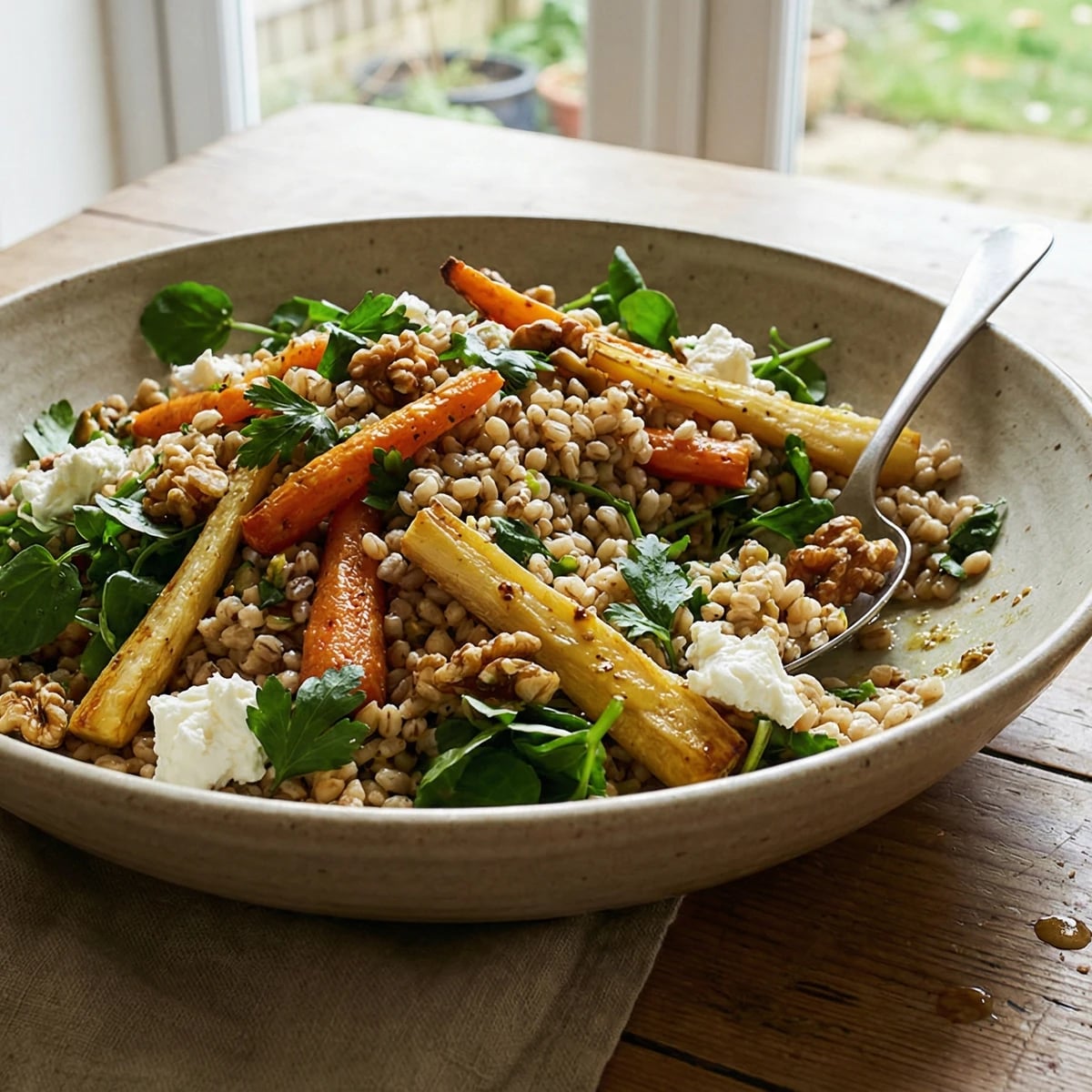
Warm pearl barley tossed with sticky roasted carrots and parsnips, crumbled goat's cheese, and a sharp mustard dressing, the kind of bowl that makes an October evening feel like it's doing exactly what it should.
October. The clocks have gone back and the kitchen window is dark by five. The carrots at the market on Saturday were the size of my thumb, deep orange, the soil still on them. The parsnips were pale and solid, the first good ones of the season. I bought too many of both, which is always the right amount.
Pearl barley doesn't get the attention it deserves. It's a quietly splendid grain, nutty and substantial, with a chew that holds its own against roasted vegetables and sharp cheese. It cooks in the time it takes to roast the roots, and it soaks up a dressing without turning to paste the way couscous does. This is not a delicate salad. It's a bowl of food for a cold evening, the kind you eat with a fork and a glass of something red, leaning against the kitchen counter because the table hasn't been cleared yet.
The goat's cheese does the work you might expect cream to do, softening and melting slightly against the warm barley, catching on the sticky edges of the roasted parsnips. The mustard dressing is sharp enough to keep everything honest. Walnuts for crunch. Watercress for bite. We're only making dinner.
I wrote it down in the notebook last week. Barley, roots, cheese. Tuesday. Dark by five. That was enough to remember it by.
Quantity
200g
Quantity
4 medium
peeled and cut into chunky batons
Quantity
3 medium
peeled and cut into chunky batons
Quantity
3 tablespoons, plus extra for dressing
Quantity
a few sprigs
Quantity
150g
Quantity
generous handful
roughly chopped
Quantity
50g
lightly toasted and roughly broken
Quantity
2 handfuls
Quantity
to taste
Quantity
to taste
Quantity
1 tablespoon
Quantity
1 tablespoon
Quantity
1 teaspoon
Quantity
1 small
juiced
| Ingredient | Quantity |
|---|---|
| pearl barley | 200g |
| carrotspeeled and cut into chunky batons | 4 medium |
| parsnipspeeled and cut into chunky batons | 3 medium |
| good olive oil | 3 tablespoons, plus extra for dressing |
| thyme | a few sprigs |
| soft goat's cheese | 150g |
| flat-leaf parsleyroughly chopped | generous handful |
| walnutslightly toasted and roughly broken | 50g |
| watercress or rocket | 2 handfuls |
| fine sea salt | to taste |
| black pepper | to taste |
| Dijon mustard | 1 tablespoon |
| cider vinegar | 1 tablespoon |
| runny honey | 1 teaspoon |
| lemonjuiced | 1 small |
Rinse the pearl barley under cold water, then tip it into a pan of well-salted water. Bring to a simmer and cook for thirty to thirty-five minutes, until the grains are tender but still have a bit of bite to them. Not mushy. You want each grain distinct, with that pleasant chew that makes barley worth the trouble. Drain well and tip into a wide bowl while it's still warm.
While the barley simmers, set the oven to 200C/180C fan. Scatter the carrots and parsnips across a large roasting tin in a single layer. They need space, so use two tins if you have to. Crowded vegetables steam; spaced-out vegetables caramelize. Pour over the olive oil, strip the thyme leaves from their stalks and scatter them in, then season well with salt and pepper. Toss everything together with your hands. Roast for thirty-five to forty minutes, turning once halfway through, until the edges have gone golden and sticky and the kitchen smells sweet and roasted.
Whisk the mustard, cider vinegar, honey, and lemon juice together in a small bowl or jar. Add a good pour of olive oil, roughly twice the volume of the vinegar, and whisk again until it comes together. Season with salt and pepper. Taste it. It should be sharp enough to cut through the sweetness of the roots and the richness of the cheese. Adjust as you see fit. A recipe is a conversation, not a contract.
While the roots are still warm from the oven, tumble them into the bowl with the barley. Pour over the dressing and toss gently. Add the watercress or rocket and most of the parsley, folding them through so the leaves start to wilt just slightly against the warmth of the grain and the roots. Scatter the broken walnuts over the top. Crumble the goat's cheese in generous pieces, not too small, you want proper mouthfuls of it against the nutty barley. Finish with the last of the parsley. Serve while it's still warm, or let it come to room temperature. It's good either way.
1 serving (about 400g)
Culinary guides, cultural storytelling, and the editorial depth that makes cooking meaningful.
Discover Culinary Explorer
Chef Thomas
The old pub ploughman's, shaken loose from its board and laid across butter lettuce with a sharp mustard dressing, for the kind of lunch that feels like you've given yourself the afternoon off.

Chef Thomas
Double-podded broad beans and sweet peas, dressed simply with torn mint, lemon, and good olive oil. The kind of bowl that tastes the way a June garden smells.

Chef Thomas
Celeriac cut into pale matchsticks and dressed in sharp mustard and crème fraîche, the sort of thing you make on a Sunday and find yourself eating from the bowl with a fork on Tuesday.

Chef Thomas
Bitter chicory leaves carrying sharp apple, crumbled Stilton, and toasted walnuts, dressed with cider vinegar and honey. A winter salad that earns its place at the table when the garden has shut up shop.