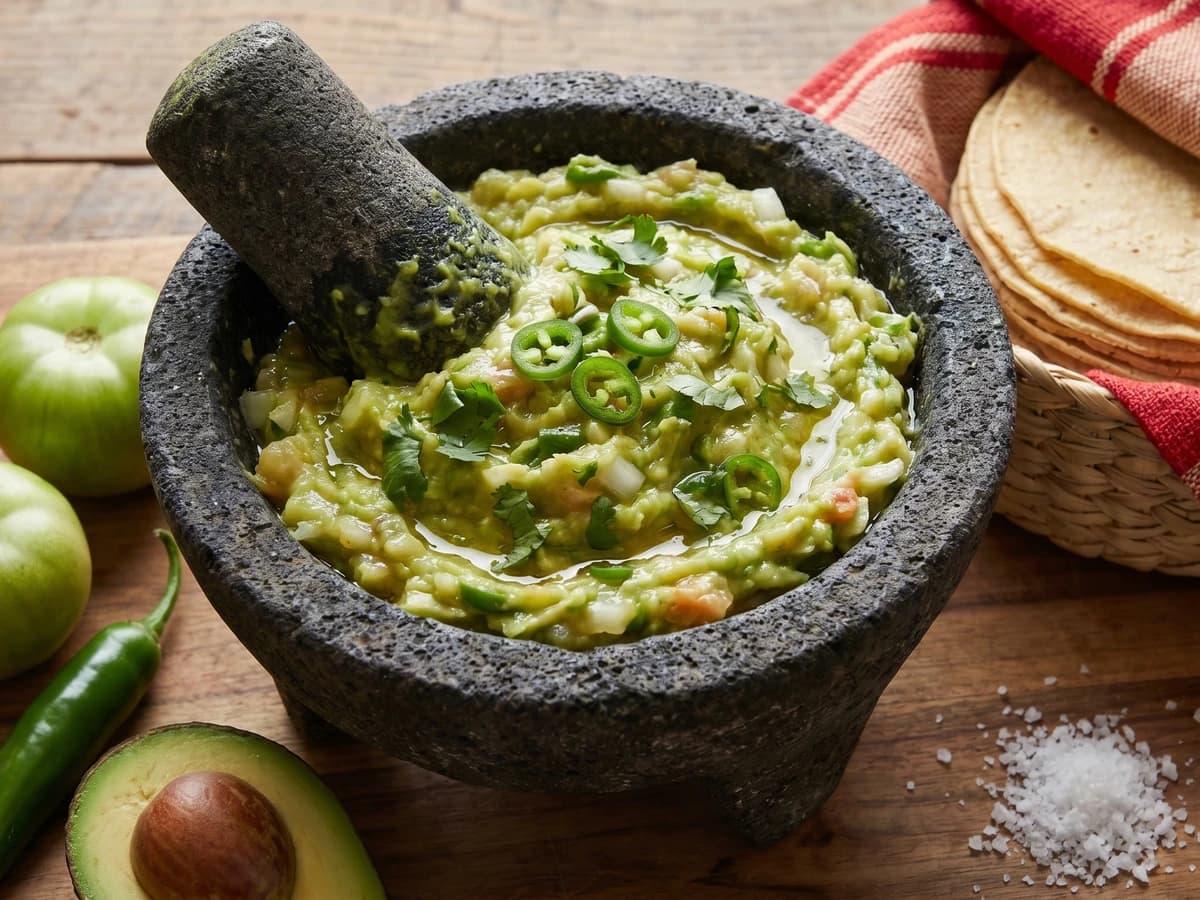
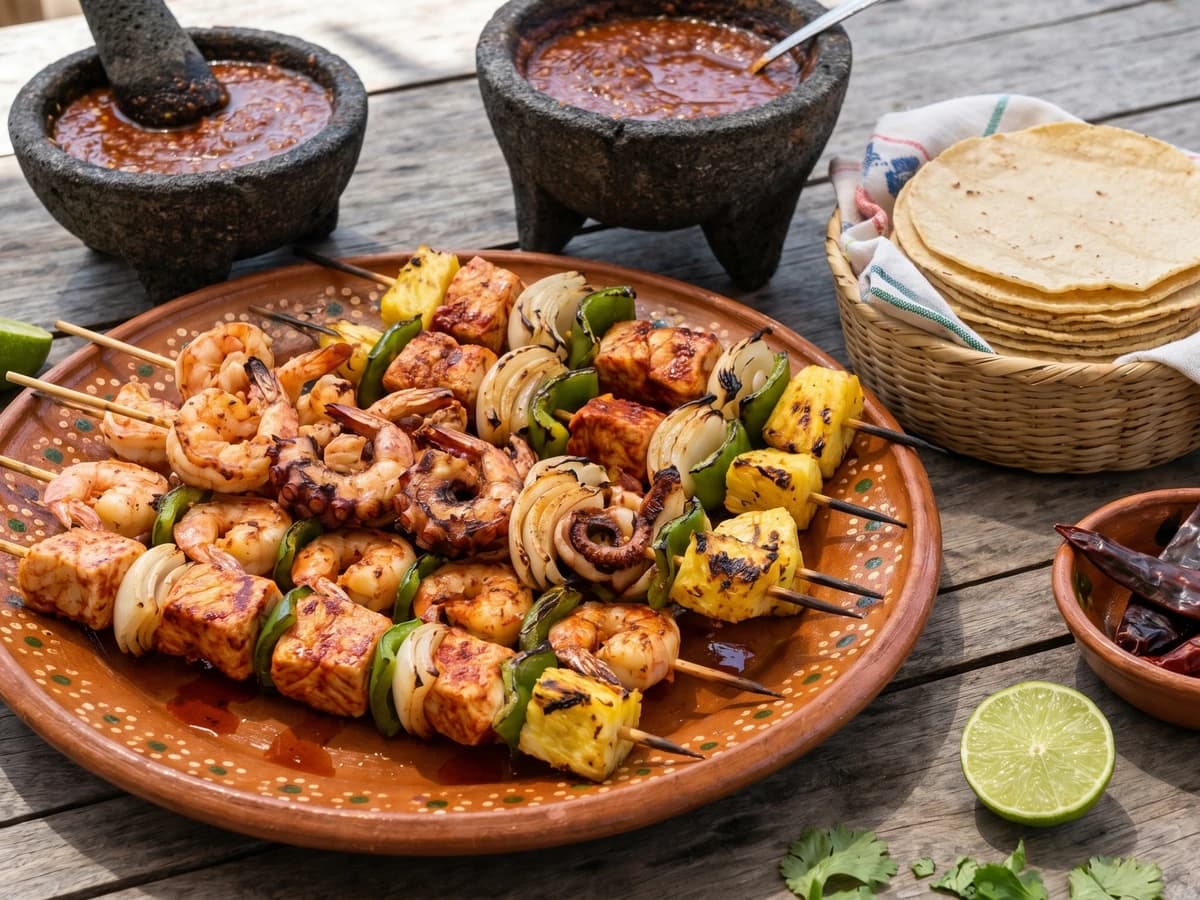
Nayarit's coastal botana of Pacific shrimp folded into cream cheese, chile chipotle en adobo, and Salsa Huichol, chilled until sliceable and eaten with saltines at the cantina table.
Appetizers & Snacks
Mexican
Dinner Party
Potluck
Celebration
25 min
Active Time
15 min cook•4 hr 40 min total
Yield8 to 10 appetizer servings
Nayarit, the Pacific coast between Sinaloa and Jalisco, owns this botana: paté de camarón from the shrimp towns around San Blas and Boca de Camichín, served cold on a cantina table with galletas saladas. Esto no es comida de un solo México. It is Nayarit speaking through Pacific shrimp, chile chipotle en adobo, lime, and the red bottle of Salsa Huichol that comes from Tepic.
I learned a version of this in San Blas from a señora who made it for baptisms, birthdays, and beach-house lunches. She minced the shrimp by hand because the processor turns it to paste if you get careless. The texture should spread, but it should still remind you there is shrimp in it. That is the discipline.
Do not get confused by the cream cheese. This is modern coastal home cooking, not a museum piece, and Mexican kitchens have always used what made sense. The rule is still the same: start with good shrimp, poach it gently, season the fat with chipotle and adobo, bloom the grenetina just enough to hold, and chill it in glazed ceramic until it cuts clean with a cracker. Cada estado, su propia cocina.
San Blas became Spain's Pacific naval base in 1768, giving the Nayarit coast a port culture tied to fishing, salt, and the movement of ingredients along the western shore. The Manila Galleon trade, centered in Acapulco from 1565 to 1815, helped carry coconut, tamarind, and Asian seasonings into western Mexican kitchens; Nayarit's later seafood botanas grew inside that same Pacific-facing pantry. Paté de camarón is a 20th-century refrigerated botana, made from estuary shrimp, packaged cream cheese, chile chipotle en adobo, and Salsa Huichol, first bottled in Tepic in 1949.
The technique, the tradition, and the story behind every dish.
medium shell-on Pacific shrimppeeled and deveined, shells reserved
1 pound
water
3 cups
white onion for broth
1/2 small
garlic clovecrushed
1
bay leaf
1
fine sea saltdivided
1 1/2 teaspoons
unflavored gelatin (grenetina)
1 envelope (2 1/4 teaspoons)
reserved shrimp brothcooled
1/4 cup
cream cheesesoftened
8 ounces
Mexican mayonnaise with lime
3 tablespoons
chile chipotle en adobofinely minced
2
adobo sauce from the can
1 tablespoon
fresh lime juice
1 tablespoon
Salsa Huichol
1 teaspoon, plus more for serving
finely minced white onionrinsed and squeezed dry
2 tablespoons
cilantro leaves and tender stemsfinely chopped
2 tablespoons
neutral oilfor greasing the mold
1 teaspoon
saltine crackers (optional)
for serving
lime wedges (optional)
for serving
Equipment Needed
•Small saucepan for shrimp broth
•Fine-mesh strainer
•Sharp chef's knife or food processor
•Hand mixer or sturdy wooden spoon
•3-cup glazed ceramic mold or shallow clay cazuelita
Instructions
1
Make shrimp broth
Put the reserved shrimp shells in a small saucepan with the water, half onion, garlic, bay leaf, and 1 teaspoon of the salt. Bring to a gentle simmer and cook for 10 minutes. Strain and discard the shells and aromatics. This quick broth gives the paté shrimp flavor all the way through, not just little pieces of shrimp trapped in cheese.
2
Poach the shrimp
Return the strained broth to the saucepan and bring it back to a quiet simmer. Add the peeled shrimp and cook just until pink and barely firm, 90 seconds to 2 minutes. Pull them out with a slotted spoon and spread them on a plate to cool. Reserve 6 shrimp for garnish and save 1/4 cup of the broth for the gelatin. If the shrimp curl into tight little fists, you cooked them too long.
3
Bloom the gelatin
Sprinkle the gelatin over the cooled 1/4 cup shrimp broth and let it sit for 5 minutes, until swollen. Warm it gently until clear and liquid, either over a pan of warm water or in very short bursts in the microwave. Do not let it boil. Grenetina is there to help the paté hold its shape, not to turn it into party rubber.
One envelope is enough for a sliceable, spreadable paté. More gelatin makes it bounce. We are not making a cafeteria mold.
4
Mince the shrimp
Chop the cooled shrimp by hand into very small pieces, about the size of grains of rice. You can pulse them in a food processor, but only 5 or 6 short pulses. Do not puree them. The women in San Blas who make this for parties know the texture: smooth enough to spread, but still clearly shrimp. No me vengas con atajos.
5
Whip the base
Beat the softened cream cheese with the mayonnaise until smooth and light. Mix in the minced chile chipotle en adobo, adobo sauce, lime juice, Salsa Huichol, and the remaining 1/2 teaspoon salt. Stream in the dissolved gelatin while beating. Fold in the minced shrimp, rinsed onion, and cilantro. Taste it on a saltine, not on a spoon. The cracker changes the salt. It should be smoky, rich, and clean at the end from the lime.
6
Mold and chill
Lightly oil a 3-cup glazed ceramic mold or shallow cazuelita. Pack the shrimp mixture in firmly, smooth the top, cover, and refrigerate for at least 4 hours, or overnight. If you plan to serve it from the cazuelita, skip the unmolding and smooth the top neatly. The cold is part of the texture. Let it set properly.
7
Serve cold
Unmold the paté onto a chilled plate, or set the cazuelita directly on the table. Garnish with the reserved shrimp, cilantro, and a thin line of chipotle adobo. Serve with saltine crackers, lime wedges, and more Salsa Huichol. Keep it cold during the party. Shrimp and cream cheese do not sit in the sun waiting for slow guests. Así se hace y punto.
Chef Tips
•The shrimp decides the dish. If you cannot get Nayarit shrimp, use the freshest raw Pacific or Gulf shrimp you can find. Frozen raw shrimp from a serious fishmonger is better than tired fresh shrimp sitting in a supermarket case. A substitution is a compromise, not an upgrade.
•Use chile chipotle en adobo from a can, not chipotle powder. The adobo gives vinegar, garlic, smoke, and body. Powder gives dust. Pregúntale a las señoras del mercado.
•Salsa Huichol belongs here because it is from Tepic and it knows seafood. If you cannot find it, use a clean Mexican bottled table sauce, but understand what you are losing: the Nayarit accent.
•Rinse the minced onion and squeeze it dry. Raw onion that is too sharp will bully the shrimp. The goal is lift, not punishment.
•Serve this with saltines. Not fancy toast. Not crackers with herbs. Saltines. Coastal botanas know exactly what they need.
Advance Preparation
•The paté can be made one day ahead and kept covered in the refrigerator. The flavor settles overnight and the chipotle rounds out.
•The shrimp can be poached up to one day ahead. Keep it refrigerated and mince it just before mixing so it does not dry out.
•Do not freeze this dish. Cream cheese separates after freezing and shrimp turns tough. Some things do not forgive you.
Frequently Asked Questions
Nutrition Information
1 serving (about 85g)
Calories
215 calories
Total Fat
13 g
Saturated Fat
5 g
Trans Fat
0 g
Unsaturated Fat
8 g
Cholesterol
80 mg
Sodium
540 mg
Total Carbohydrates
13 g
Dietary Fiber
1 g
Sugars
1 g
Protein
10 g
Where cooking meets culture.
Culinary guides, cultural storytelling, and the editorial depth that makes cooking meaningful.