
Chef Graziella
Cime di Rapa all'Aglio
The bitter greens of Puglia, blanched and then turned in olive oil with garlic and a whisper of heat. Bitterness here is not a flaw to correct. It is the entire point.
A cooking platform built around craft, culture, and the stories behind what we eat.
Created by
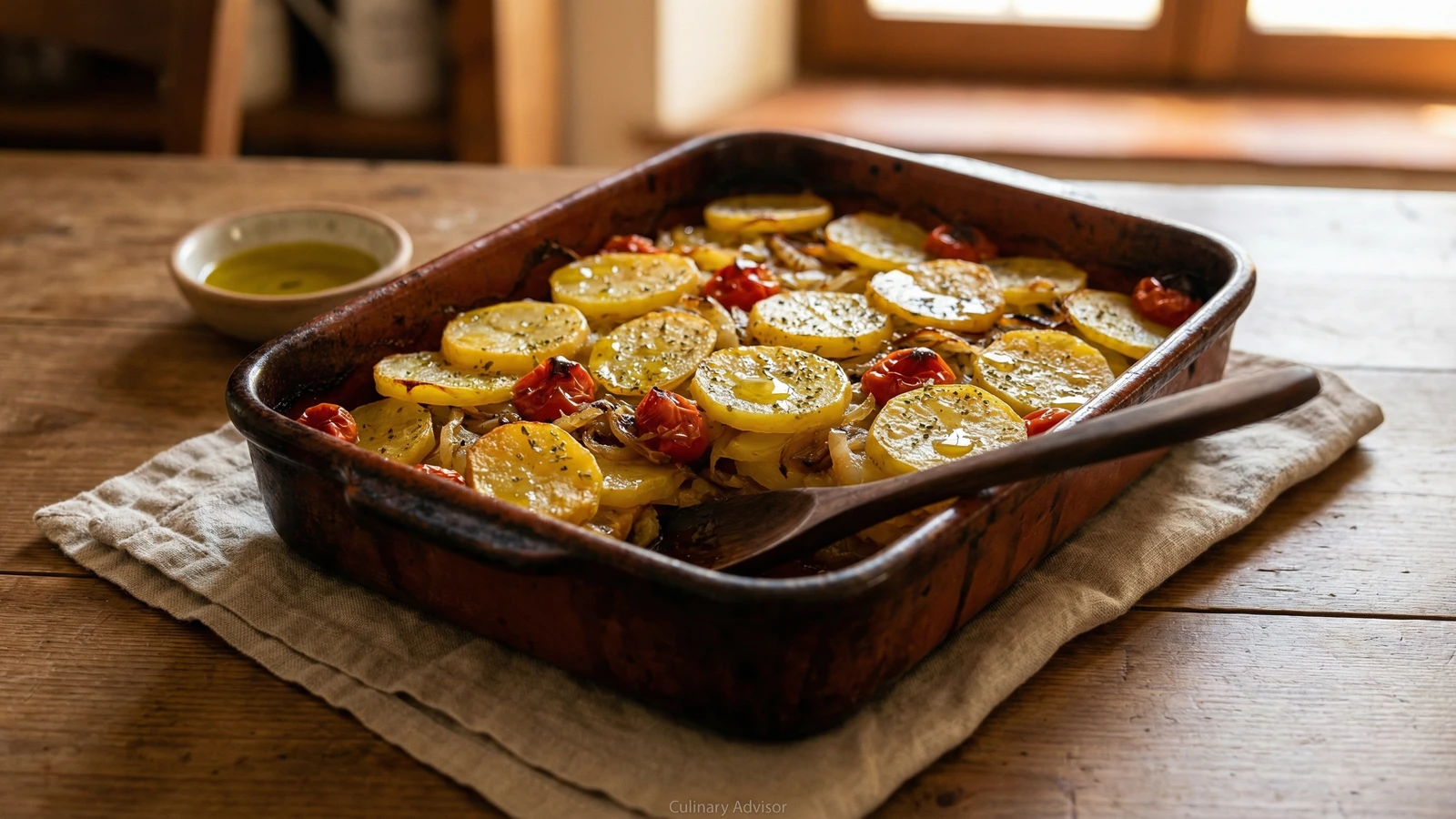
The baked potatoes of Puglia, where sliced potatoes, ripe tomatoes, and sweet onions roast together in a terracotta dish until their edges crisp and their juices mingle into something greater than any ingredient alone.
Arraganato means 'with oregano,' and in Puglia this word describes a way of cooking that requires nothing more than good olive oil, dried oregano, and patience. The potatoes must be sliced thin enough to cook through but thick enough to hold their shape. The tomatoes must be ripe. The onions must be sweet. Everything else is excess.
This is contadino cooking, the food of Pugliese farmers who had olive oil in abundance, oregano growing wild on the hillsides, and whatever vegetables the garden offered. They did not follow recipes. They understood proportions. A layer of potatoes, a scattering of tomatoes and onions, a drizzle of oil, a pinch of oregano. Repeat until the dish is full. Bake until done.
What you keep out matters here. No cheese gratinéed on top, no cream, no butter, no complication. The potatoes absorb the tomato juices and the olive oil. The onions soften and sweeten. The oregano perfumes everything. This is how vegetables are meant to taste when you leave them alone and let heat do its work.
Patate arraganate belongs to the tradition of Pugliese tiella, one-dish baked preparations that date to when every household had a wood-burning oven and no time for fuss. Farmers' wives assembled these dishes in terracotta pans, carried them to the communal oven, and retrieved them hours later. The dish required no attention, no stirring, no watching. It cooked while they worked the fields.
Quantity
2 pounds
peeled and sliced 1/4-inch thick
Quantity
1 pound
cored and sliced 1/4-inch thick
Quantity
1 large
halved and sliced thin
Quantity
1/2 cup, plus more for the dish
Quantity
2 teaspoons
Quantity
3
sliced thin
Quantity
1/2 cup
Quantity
to taste
Quantity
to taste
freshly ground
| Ingredient | Quantity |
|---|---|
| Yukon Gold potatoespeeled and sliced 1/4-inch thick | 2 pounds |
| ripe tomatoescored and sliced 1/4-inch thick | 1 pound |
| yellow onionhalved and sliced thin | 1 large |
| extra virgin olive oil | 1/2 cup, plus more for the dish |
| dried oregano | 2 teaspoons |
| garlic clovessliced thin | 3 |
| water | 1/2 cup |
| kosher salt | to taste |
| black pepperfreshly ground | to taste |
Heat the oven to 400°F. Generously oil a 9x13-inch baking dish or a terracotta casserole with olive oil. The dish should glisten. Do not be timid with the oil.
Arrange half the potato slices in overlapping rows across the bottom of the dish. Season with salt, pepper, and half the oregano. Scatter half the garlic slices over the potatoes. The potatoes should cover the bottom completely with slight overlap.
Distribute all the tomato slices over the potatoes. Scatter all the onion slices over the tomatoes. Season again with salt and pepper. The tomatoes will release their juices as they cook. This is what you want.
Arrange the remaining potato slices over the onions and tomatoes. Season with salt, pepper, and the remaining oregano. Scatter the remaining garlic over the top. Drizzle the half cup of olive oil evenly over everything. Pour the water around the edges of the dish.
Cover the dish tightly with aluminum foil. Bake for 45 minutes. The potatoes will steam and become tender. Do not open the oven to check. Trust the process.
Remove the foil and continue baking until the top is golden and the edges are beginning to crisp, 25 to 30 minutes more. The potatoes should be completely tender when pierced with a knife. If the top browns too quickly, cover loosely with foil for the final minutes.
Let the dish rest for 10 minutes before serving. This allows the juices to settle and makes serving easier. Serve warm, not hot, directly from the baking dish. This is contorno, a side dish meant to accompany grilled fish or roasted meat. It is not a main course.
1 serving (about 230g)
Culinary guides, cultural storytelling, and the editorial depth that makes cooking meaningful.
Discover Culinary ExplorerChef Graziella
The bitter greens of Puglia, blanched and then turned in olive oil with garlic and a whisper of heat. Bitterness here is not a flaw to correct. It is the entire point.

Chef Graziella
The peasant dish of Puglia where creamy dried fava beans meet bitter wild chicory, proving that poverty creates genius when you understand the poetry of contrast.
Chef Juliette
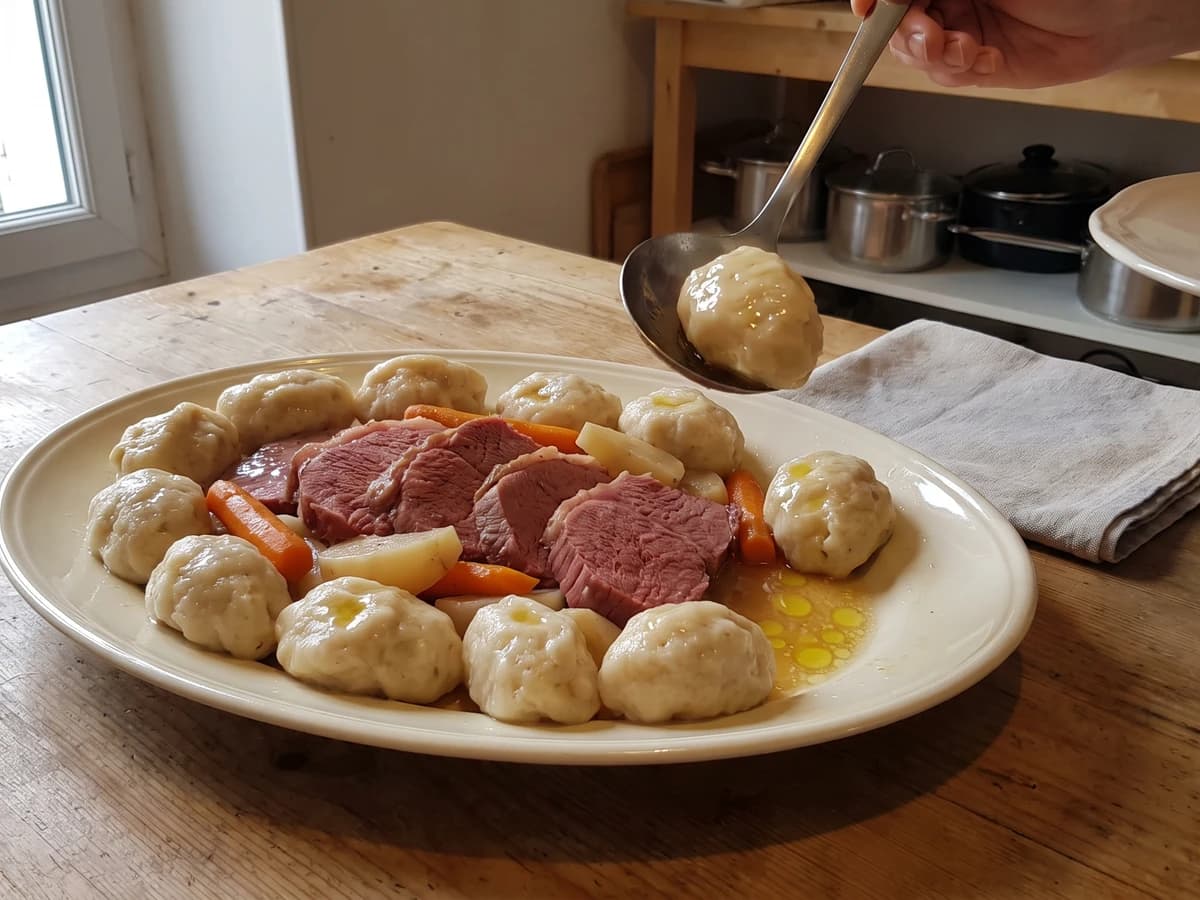
Boulettes au suif, poached beside salt beef, turn equal weights of flour and finely chopped suet into tender, rich dumplings. Keep the beef liquor at a bare tremble and the old garnish works beautifully at home.

Chef Juliette
Bread, flour, frangipane, and rice become four cool, supple panades for binding forcemeats, each changing body and flavor while preserving tenderness. The finest Mousselines need none, and knowing that distinction is the lesson.