Culinary Explorer

A cooking platform built around craft, culture, and the stories behind what we eat.
Discover Culinary Explorer
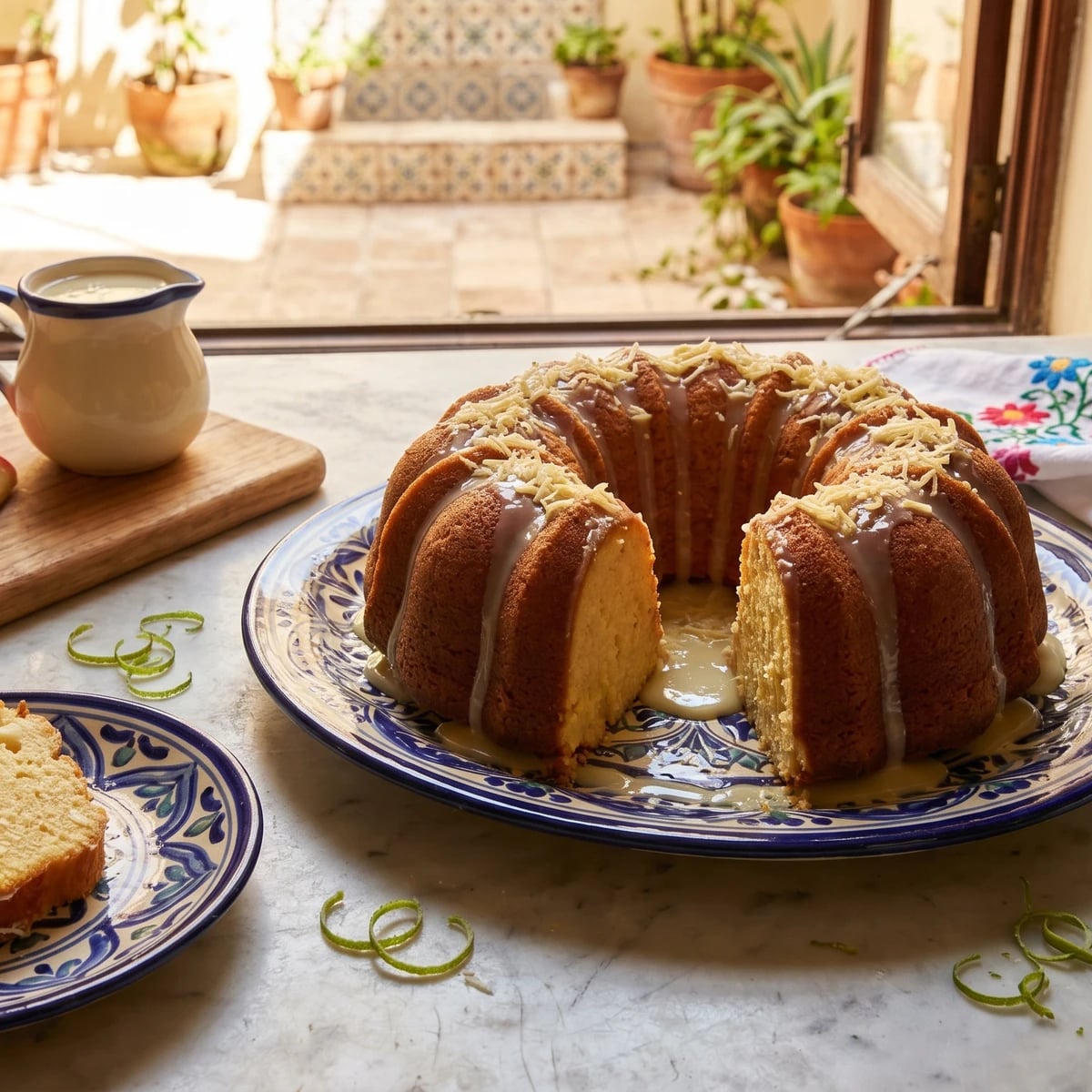
Pastel de Queso de Bola Yucateco

Pastel de Queso de Bola Yucateco

Created by

Yucatan's birthday cake: a buttery crumb built on sharp aged Edam, brightened with Mexican lime and condensed milk. The salty-sweet pastel the senoras of Merida have been making for generations.

Desserts
Mexican
Special Occasion
Birthday
Celebration
30 min
Active Time
55 min cook1 hr 25 min total
Yield10 to 12 servings

This cake is from Yucatan. Not from anywhere else. The peninsula sits apart from the rest of Mexico geographically, linguistically, and gastronomically, and its love of Dutch Edam, which they call queso de bola because of its red wax ball, is one of the clearest markers of that separateness.

The cheese came in on Dutch and English trading ships through the port of Sisal in the 18th and 19th centuries, and the yucatecos kept it because the wax preserved the wheel through the heat of the tropics. They folded it into queso relleno, scattered it over panuchos, and eventually, the abuelas of Merida found their way to this cake. Tere Cazola turned it into a citywide phenomenon out of her pasteleria, but she did not invent it. The home cooks did. They always do.

The principle is salty and sweet at the same time. The aged Edam is sharp and salty enough to cut the sugar and the butter, and the lime zest pulls the cheese forward instead of letting it disappear into a generic pound cake. Use a young, soft Edam and you will get nothing. Use the aged wheel with the deep yellow paste and the crystals of age inside it, and you will understand why this cake belongs to a birthday table in Merida and nowhere else. Cada estado, su propia cocina.

The presence of Edam cheese in Yucatecan cuisine traces directly to the peninsula's 18th and 19th century commercial ties with the Netherlands and the Caribbean, when ships docking at Sisal and Progreso brought wax-sealed wheels that survived the heat and humidity better than any local cheese. By the time the henequen boom transformed Merida into one of the wealthiest cities in the Americas at the turn of the 20th century, queso de bola had become an everyday ingredient in yucateco cooking, appearing in queso relleno, papadzules, and eventually in baked goods. The pasteleria Tere Cazola, founded in Merida in 1988, popularized the modern bundt-style pastel de queso de bola nationally, but the cake itself circulated among home cooks for generations before the bakery codified it for sale.

The technique, the tradition, and the story behind every dish.

Discover Culinary Explorer

Ingredients

aged queso de bola (Edam)

Quantity

8 ounces

rind removed, finely grated

all-purpose flour

Quantity

2 cups

baking powder

Quantity

2 teaspoons

fine sea salt

Quantity

1/2 teaspoon

unsalted butter

Quantity

1 cup (8 ounces)

softened to room temperature

granulated sugar

Quantity

1 1/4 cups

large eggs

Quantity

4

at room temperature

finely grated lime zest

Quantity

1 tablespoon (from 2 Mexican limes)

Mexican vanilla extract

Quantity

1 teaspoon

whole milk

Quantity

3/4 cup

at room temperature

sweetened condensed milk

Quantity

1/3 cup

for brushing

fresh lime juice

Quantity

2 tablespoons

queso de bola for the top

Quantity

1/4 cup

finely grated

unsalted butter for the pan

Quantity

1 tablespoon

softened

all-purpose flour for the pan

Quantity

2 tablespoons

Equipment Needed

  • Stand mixer with paddle attachment
  • Box grater with fine holes
  • 9-inch round cake pan or fluted bundt mold
  • Wire cooling rack
  • Pastry brush for the glaze

Instructions

  1. 1

    Prepare the pan and oven

    Heat the oven to 350F. Butter a 9-inch round cake pan or a fluted bundt mold generously. Dust with flour, tap out the excess. The yucatecas use bundt molds for birthdays because the cake unmolds cleanly and the crumb shows off when you slice it. Set the pan aside on the counter, not on the warm stove.

  2. 2

    Grate the queso de bola

    Peel the red wax rind off the Edam. Grate the cheese on the smallest holes of the box grater. You want a fine, almost powdery grate. Coarse shreds will weigh the batter down and leave pockets of melted cheese rather than infusing the crumb. Set aside a quarter cup for the top. The rest goes into the batter.

    The cheese must be aged and sharp, not the soft young Edam. In Merida, the senoras at the Lucas de Galvez market hand you the wheel and let you smell it. Outside Yucatan, look for Edam labeled 'anejo' or import the Dutch original. No me vengas con queso amarillo. Yellow cheese is not queso de bola.
  3. 3

    Whisk the dry ingredients

    In a medium bowl, whisk the flour, baking powder, and salt together until evenly combined. Add the grated cheese (minus the reserved quarter cup) and toss with your fingers until every shred is coated in flour. This is the trick. Floured cheese disperses through the batter instead of clumping at the bottom of the pan.

  4. 4

    Cream the butter and sugar

    In a stand mixer with the paddle attachment, beat the softened butter and sugar on medium-high for four to five minutes. The mixture should turn pale and almost white, with the volume nearly doubled. Scrape down the bowl twice. This step builds the structure of the crumb. Rush it and the cake comes out dense.

  5. 5

    Add eggs, zest, and vanilla

    With the mixer on medium, add the eggs one at a time, beating for 30 seconds after each. Add the lime zest and the vanilla with the last egg. The batter will look fluffy and slightly glossy. If it looks broken or curdled, your butter or eggs were too cold. Keep going. The flour will pull it back together.

  6. 6

    Alternate flour and milk

    Reduce the mixer to low. Add the floured cheese mixture in three additions, alternating with the milk in two additions, beginning and ending with the flour. Mix only until each addition disappears. Overmixing develops the gluten and toughens the crumb. Finish the last bit by hand with a spatula, scraping the bottom of the bowl to catch any pockets of cheese that settled.

  7. 7

    Bake the cake

    Scrape the batter into the prepared pan and smooth the top with the spatula. The batter is thick, almost paste-like, because of the cheese. Bake on the middle rack for 45 to 55 minutes. The top should be deep gold, the edges pulling away from the pan, and a toothpick inserted in the center should come out with a few moist crumbs. Pure liquid means it needs more time. A black crust means your oven runs hot.

  8. 8

    Cool, glaze, and finish

    Let the cake rest in the pan for 15 minutes. Run a knife around the edge and unmold onto a wire rack. While it is still warm, whisk the condensed milk and lime juice together into a thin glaze. Brush the entire surface with the glaze until it soaks in. Scatter the reserved grated cheese over the top while the glaze is tacky. The cheese melts just enough to catch and creates that salty-sweet finish that defines a pastel de queso de bola yucateco. Asi se hace y punto.

Chef Tips

  • Aged queso de bola is the recipe. Outside Yucatan, look for Dutch Edam labeled 'anejo' or 'aged' at a serious cheese counter, not pre-grated shreds in a bag. The wax should be deep red and the paste should be firm and golden inside. Substituting parmesan or any other hard cheese is a compromise that gives you a different cake entirely.
  • Room temperature ingredients are not optional. Cold butter will not cream. Cold eggs will curdle the batter. Cold milk will harden the butter back up. Pull everything out an hour before you start.
  • This cake is better the second day. The cheese flavor settles, the crumb tightens slightly, and the glaze sinks in. Bake it the day before the birthday and you will be glad you did.

Advance Preparation

  • The cake can be baked one to two days ahead. Wrap it tightly once cool and store at room temperature. Brush with the glaze on the day you serve it so the surface stays fresh.
  • Grated queso de bola can be prepared up to three days ahead and refrigerated in a sealed container. Bring back to room temperature before mixing into the batter.

Frequently Asked Questions

Nutrition Information

1 serving (about 140g)

Calories
485 calories
Total Fat
28 g
Saturated Fat
17 g
Trans Fat
1 g
Unsaturated Fat
10 g
Cholesterol
130 mg
Sodium
470 mg
Total Carbohydrates
48 g
Dietary Fiber
1 g
Sugars
29 g
Protein
12 g

Note: Chef personas and recipes are created with AI assistance. Cook with care: follow safe food-handling practices, check doneness with a thermometer when needed, and adapt for allergies and your kitchen.

Where cooking meets culture.

Culinary guides, cultural storytelling, and the editorial depth that makes cooking meaningful.

Discover Culinary Explorer

More from Yucatecan Desserts

Browse the full collection