
Chef Lupita
Acitrón de Cidra Conventual
Puebla's convent-style acitrón, made from cidra peel instead of endangered biznaga, built through repeated syrup soakings until the cubes turn firm, translucent, and ready for rosca or chiles en nogada.
A cooking platform built around craft, culture, and the stories behind what we eat.
Created by
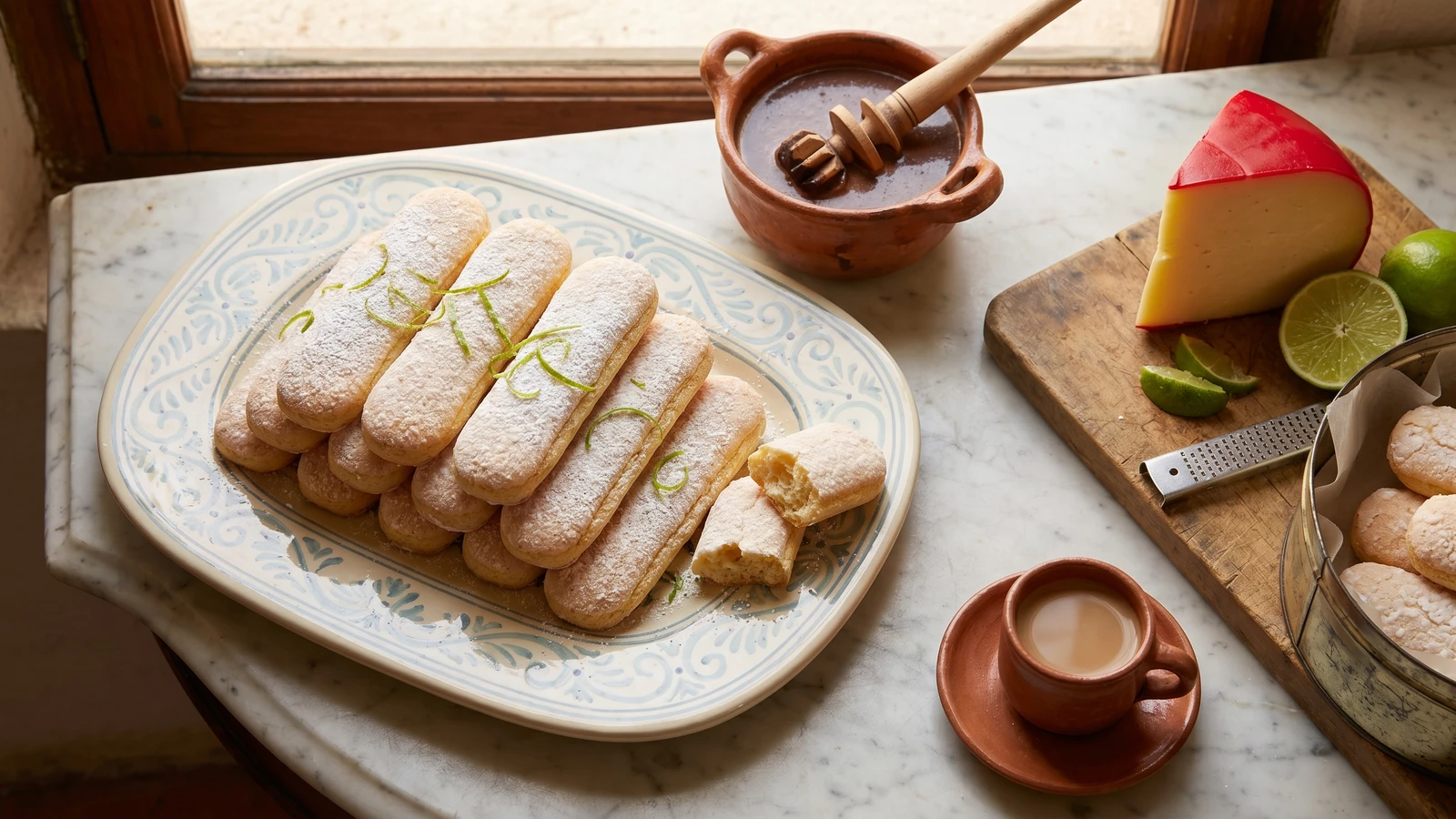
Merida's convent biscuit, beaten by hand for four centuries by the Concepcionistas, baked twice into a crackling sponge made for dipping into cafe con leche or thick Yucatecan chocolate.
This is a Yucatecan dulce. Specifically meridano, from the convent kitchens of the Concepcionistas in the centro historico of Merida, where the order has been baking since 1596. Bizcotelas are not pan dulce. They are not galletas. They are sponge fingers baked twice, once to set and once to dry, until they are light enough to crack between your fingers and dry enough to survive a long dip without collapsing into the cup.
The Yucatan has a sugar tradition unlike anywhere else in Mexico. The peninsula's colonial wealth came from henequen and sugar, and the convents that served the Spanish elite developed a repertoire of cookies, marzipans, and almibares that owes as much to Andalusia as it does to the Maya kitchens around them. Bizcotelas sit at the center of that tradition. Four ingredients, technique that takes patience, and a result that has not needed to change in four hundred years.
I spent a week with a senora in the Lucas de Galvez market in Merida who sells these by the kilo from a tin lined with wax paper. She showed me how she beats the yolks until they ribbon, how she folds the whites in three additions and not one more, how she double-dusts the sugar so the tops pearl in the oven. She told me her recipe came from her tia, who got it from a sister at La Mejorada convent in the 1940s. Cada estado, su propia cocina, and this one belongs to the dulcerias of Merida.
The Convento de la Concepcion was founded in Merida in 1596 as the first nunnery in the Yucatan peninsula, and its kitchens developed a confectionery tradition that married Andalusian convent baking with the sugar and citrus economy of the colonial peninsula. Bizcotelas descend from the Spanish 'bizcocho,' meaning twice-baked, a technique that originated as a method of preserving bread for sea voyages and was refined in Iberian convents into delicate sponge confections sold to support the religious houses. Yucatan's dulces de convento tradition, including yemas, mazapanes de pepita, and bizcotelas, remained largely separate from central Mexican repostería for centuries due to the peninsula's geographic isolation, which is part of why Yucatecan sweets taste and look distinct from the dulces of Puebla or Oaxaca to this day.
Quantity
6
separated, at room temperature
Quantity
1 cup
divided
Quantity
1 teaspoon
or substitute Persian lime
Quantity
1/2 teaspoon
Quantity
1 cup
sifted twice
Quantity
1/4 teaspoon
Quantity
1/4 cup
for dusting
Quantity
2 tablespoons
for dusting
| Ingredient | Quantity |
|---|---|
| large eggsseparated, at room temperature | 6 |
| granulated sugardivided | 1 cup |
| finely grated lime zest from a Yucatecan lima dulceor substitute Persian lime | 1 teaspoon |
| pure vanilla extract | 1/2 teaspoon |
| all-purpose floursifted twice | 1 cup |
| fine sea salt | 1/4 teaspoon |
| superfine sugarfor dusting | 1/4 cup |
| confectioners' sugarfor dusting | 2 tablespoons |
Heat the oven to 325F. Line two heavy sheet pans with parchment paper. Fit a piping bag with a plain round tip about 1/2 inch wide. The bizcotelas need a low, steady oven. A hot oven browns the outside before the inside dries, and what you want is pale gold all the way through. Las concepcionistas baked these in clay ovens that held heat for hours after the wood burned down. A low home oven is the closest we get.
Place the egg yolks in a large bowl with 1/2 cup of the granulated sugar, the lime zest, and the vanilla. Beat with a stand mixer or hand mixer on high speed for 5 to 7 minutes. The yolks should triple in volume and turn pale, almost ivory, and fall from the beater in a thick ribbon that holds its shape for a count of three before sinking back. This is where the sponge gets its body. No me vengas con atajos. Underbeaten yolks make a flat biscuit.
In a separate clean, dry bowl with clean beaters, whip the egg whites with the salt on medium speed until soft peaks form. Slowly stream in the remaining 1/2 cup of granulated sugar with the mixer running. Raise the speed to high and whip until the whites hold stiff, glossy peaks that stand straight when you lift the beater. Any speck of yolk in the whites and they will not climb. The bowl must be spotless.
Add a third of the whipped whites to the yolk mixture and fold gently with a wide rubber spatula to lighten the base. Now sift the flour over the top in three additions, alternating with the remaining whites in two additions, folding from the bottom up after each. Cut down through the middle, sweep across the bottom of the bowl, lift up and over. Twenty folds at most. The batter should look like pale yellow foam holding its shape. Overworked batter deflates and you cannot bring it back. Asi se hace y punto.
Transfer the batter to the prepared piping bag. Pipe finger-length logs about 3 inches long and 1 inch wide onto the lined sheet pans, spacing them an inch apart. They will spread slightly. Work quickly so the batter does not lose air. Dust the tops generously first with the superfine sugar, wait one minute for the sugar to absorb moisture, then dust again with the confectioners' sugar. This double dusting gives the bizcotela its signature pearled crust.
Bake one pan at a time on the middle rack for 18 to 22 minutes. The bizcotelas should be pale gold on top, firm to a light touch, and dry on the bottom. Do not open the oven for the first 15 minutes. The sponge sets on residual lift from the egg whites and a sudden draft will deflate them. When they are done, slide the parchment onto a cooling rack and let them cool completely on the paper.
Once cool, return the bizcotelas to a 200F oven for 30 to 40 minutes, until they are crisp all the way through. This second baking is what makes them bizcotelas and not just sponge cookies. The slow heat draws the remaining moisture out and gives them the dry, crackling texture that holds up to a long dip in cafe con leche without falling apart. Cool completely on the rack before storing.
Layer the cooled bizcotelas between sheets of parchment in an airtight tin and let them sit for at least 8 hours before serving. This rest finishes the drying and lets the sugar crust settle into the sponge. The convent cooks knew this. They baked one day, packed the tins, and served the next. Saber cocinar es saber vivir.
1 serving (about 14g)
Culinary guides, cultural storytelling, and the editorial depth that makes cooking meaningful.
Discover Culinary ExplorerChef Lupita
Puebla's convent-style acitrón, made from cidra peel instead of endangered biznaga, built through repeated syrup soakings until the cubes turn firm, translucent, and ready for rosca or chiles en nogada.

Chef Lupita
Ciudad de México's Tulyehualco alegría is popped huautli folded into piloncillo honey, pressed with peanuts, pepitas, and raisins, then cut into the rectangular bars that built a pueblo's identity.

Chef Lupita
Oaxaca's pre-Columbian amaranth bar, popped on a hot comal and bound with piloncillo, honey, and the sacred Zapotec grain that the Spanish tried, and failed, to outlaw.

Chef Lupita
Querétaro's mercado candy of popped amaranto pressed with dark piloncillo syrup, pepitas, pecans, and cacahuate, a Bajío sweet that respects the seed before it decorates the table.