Chef Thomas
Anchovy Sauce
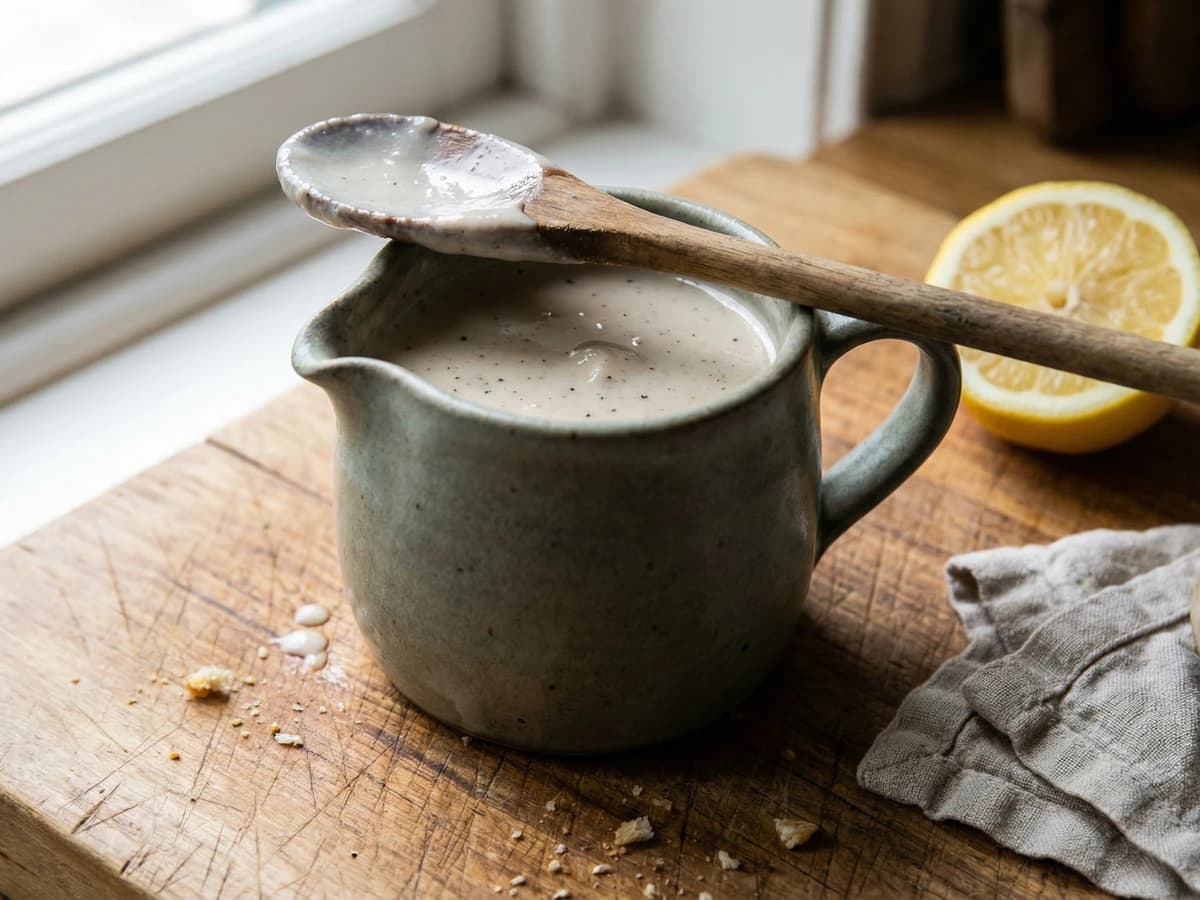
A proper white sauce sharpened with pounded anchovy, the old Georgian trick for waking up a piece of poached fish or a slice of roast lamb on a Sunday in spring.
A cooking platform built around craft, culture, and the stories behind what we eat.
Created by Chef Thomas
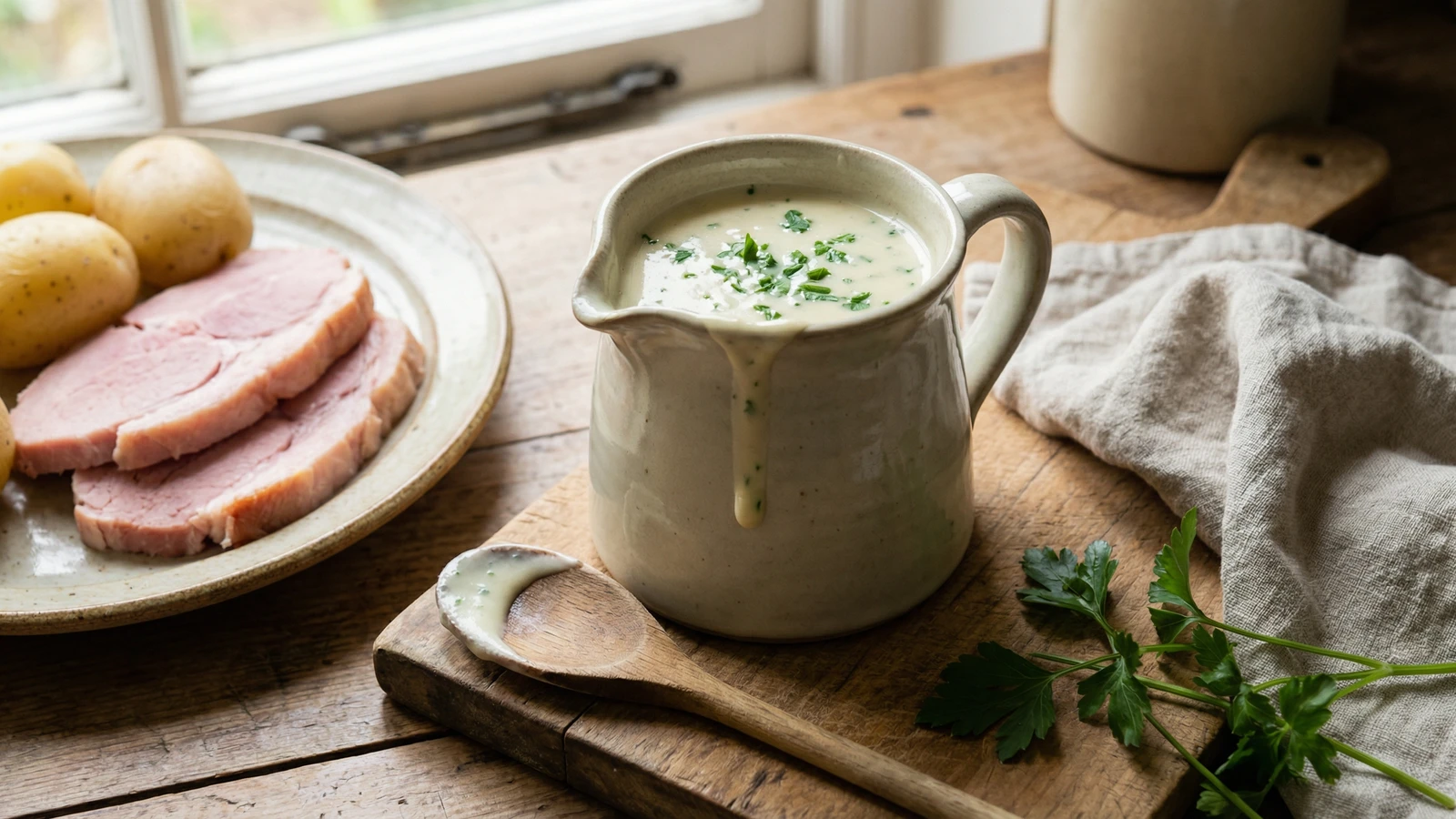
A proper English parsley sauce, thick and speckled green, poured over hot ham or poached fish on the kind of evening when dinner doesn't need to be clever, only warm.
This is a sauce for a grey Tuesday. The sort of evening where the light has gone by five and you want something on the table that feels like it belongs on the table. A piece of boiled ham, some plain potatoes, a plate of cabbage, and this poured over the top in a generous slick. Nothing clever. Nothing to explain. Dinner.
Parsley sauce is one of the oldest sauces in the English kitchen and it has survived because it earns its place. A proper béchamel, made slowly, infused with bay and onion and peppercorns, finished with an almost reckless amount of chopped parsley so the whole thing turns speckled green and smells of a garden in spring. The trick, if there is one, is not being shy with the parsley. A timid parsley sauce is a sad thing. You want the herb to be the point, not a garnish.
Parsley is one of the few green things that keeps going through the cold months, and on a winter evening a handful from a windowsill pot or a bunch from the Saturday market can turn a plain supper into something that feels looked after. A recipe is a conversation, not a contract, and this one has been having the same conversation with English kitchens for three hundred years. I wrote it down in the notebook once, next to a pencil sketch of a ham: parsley, milk, butter, Tuesday. That was enough.
Quantity
400ml
Quantity
1
Quantity
half
peeled, left whole
Quantity
4 whole
Quantity
30g
Quantity
30g
Quantity
a large handful (about 30g)
finely chopped, stalks and all
Quantity
a squeeze
Quantity
to taste
Quantity
to taste
Quantity
a grating
| Ingredient | Quantity |
|---|---|
| whole milk | 400ml |
| bay leaf | 1 |
| small onionpeeled, left whole | half |
| black peppercorns | 4 whole |
| unsalted butter | 30g |
| plain flour | 30g |
| flat-leaf parsleyfinely chopped, stalks and all | a large handful (about 30g) |
| lemon juice | a squeeze |
| fine sea salt | to taste |
| white pepper | to taste |
| nutmeg (optional) | a grating |
Pour the milk into a small saucepan. Add the bay leaf, the half onion, and the peppercorns. Bring it to the edge of a simmer, just until you see the first bubbles rising at the rim, then turn the heat off and leave it alone for ten minutes. The kitchen will start to smell faintly of bay and warm dairy. That's the sauce beginning already.
While the milk sits, chop the parsley. Properly. Don't be precious about separating the leaves from the stalks, the stalks carry most of the flavour and they chop down to nothing if your knife is sharp. You want it fine but not pulverized. A generous mound of bright, damp green on the board.
In a separate small saucepan, melt the butter over a gentle heat. When it's foaming, tip in the flour all at once and stir with a wooden spoon. It will come together into a pale, pasty lump. Keep it moving for a minute or two. You're cooking the raw taste out of the flour, not colouring it. It should smell biscuity and faintly like popcorn. Don't let it go beyond pale sand.
Strain the infused milk through a sieve straight into the pan with the roux, discarding the bay, onion, and peppercorns. Whisk steadily as you pour. It will seize and look lumpy for a worrying moment, then loosen as you keep whisking. Turn the heat to medium-low and stir constantly with the whisk or a wooden spoon until it thickens to the consistency of double cream, about five minutes. It should coat the back of the spoon and hold a clean line when you draw a finger through it.
Take the pan off the heat. Tip in the chopped parsley and stir it through. The sauce will turn from ivory to a proper speckled green, almost emerald in places. Add a squeeze of lemon, a good pinch of salt, a grind of white pepper, and the smallest grating of nutmeg if you fancy it. Taste. Then taste again. It should taste of parsley first, butter second, and milk last. Serve straight away, over hot boiled ham, poached fish, or a plate of floury potatoes.
1 serving (about 100g)
Culinary guides, cultural storytelling, and the editorial depth that makes cooking meaningful.
Discover Culinary ExplorerChef Thomas
A proper white sauce sharpened with pounded anchovy, the old Georgian trick for waking up a piece of poached fish or a slice of roast lamb on a Sunday in spring.

Chef Thomas
A spiced autumn chutney made from a glut of apples and a quiet afternoon, simmered down until the kitchen smells of October and the jars line up on the counter like a small, useful insurance policy.
Chef Thomas
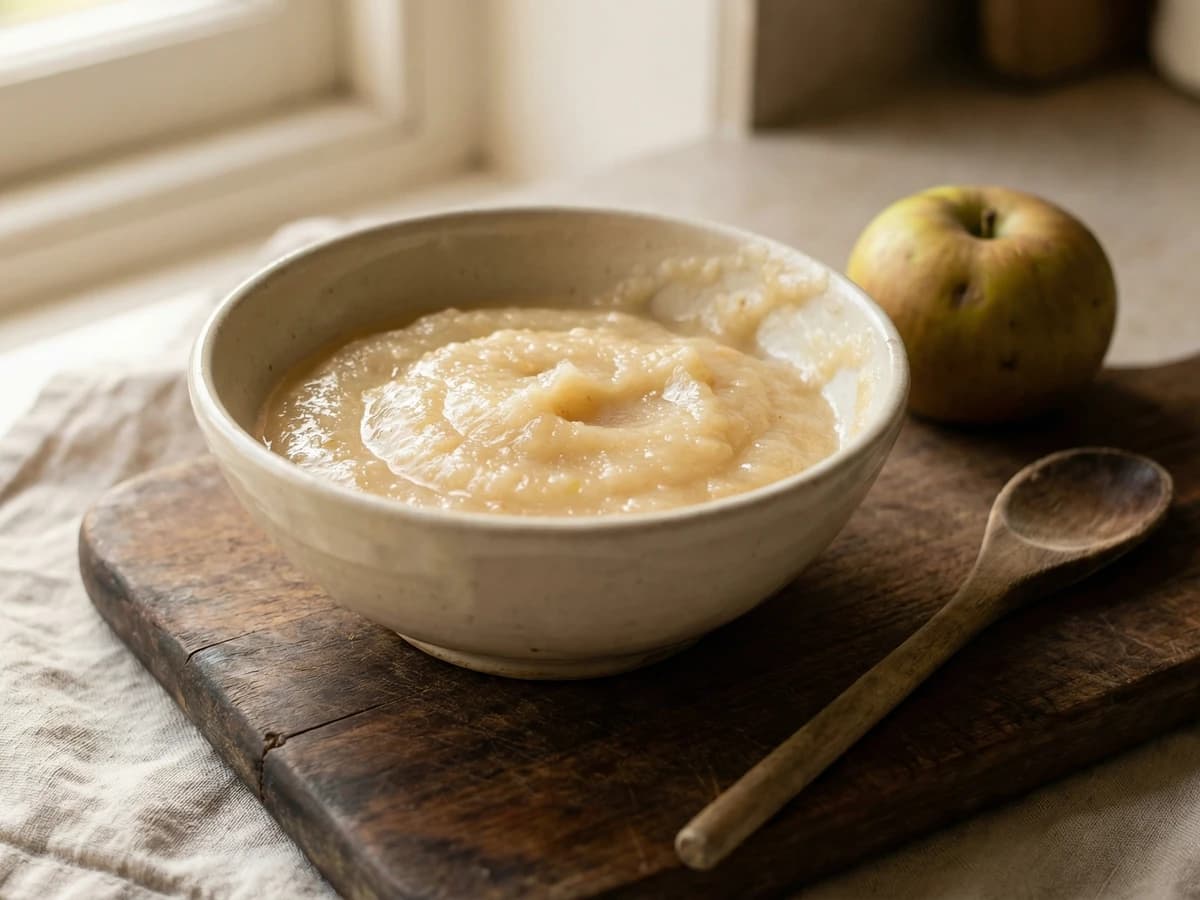
A bowl of sharp, fluffy Bramley apple sauce, made in the time it takes to carve the pork, the kind of small condiment that quietly makes the whole meal make sense.
Chef Thomas
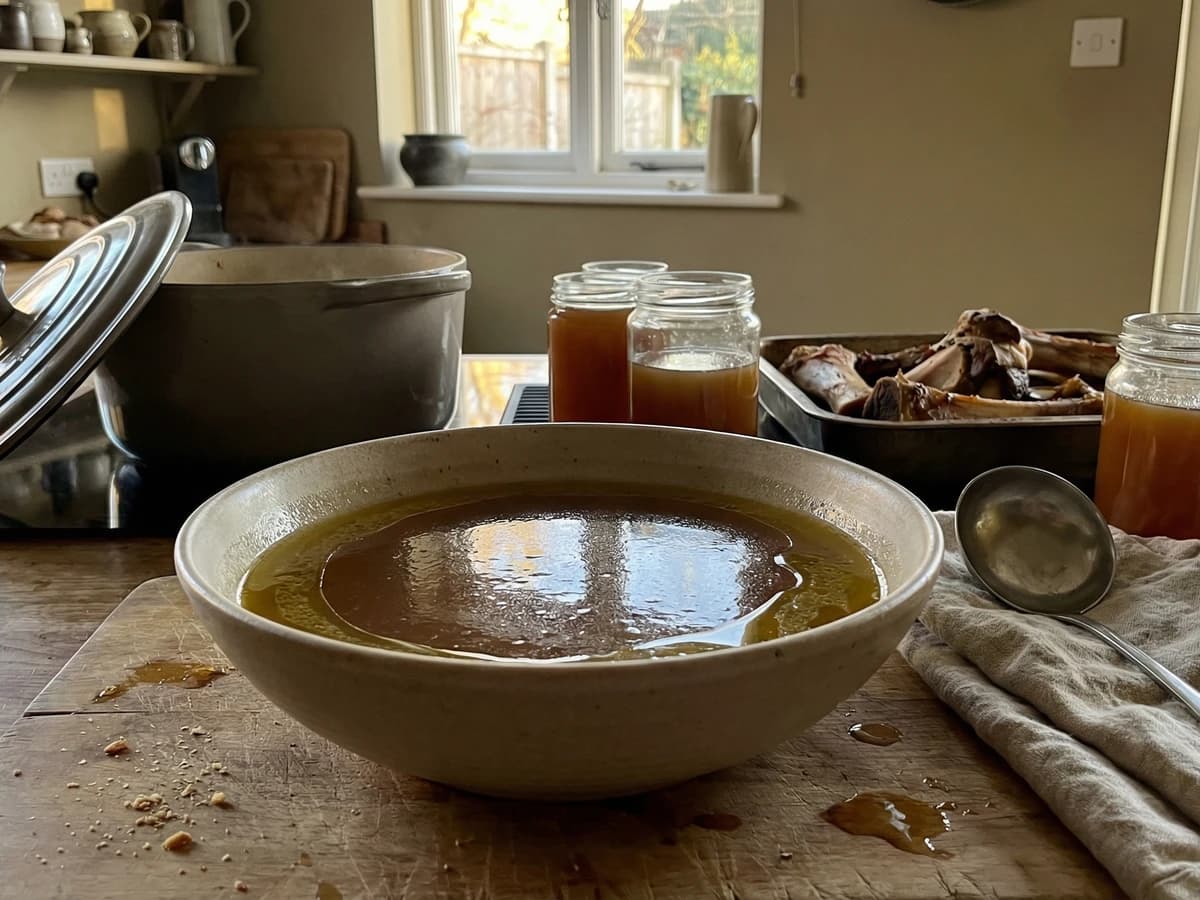
Beef bones roasted until dark, then coaxed for a long afternoon into a deep amber stock, the foundation of every good gravy, every braise, every bowl of winter soup worth the trouble.