
Chef Lupita
Cecina Potosina con Frijoles y Huevo
San Luis Potosí's dry-country breakfast: thin salted beef cured overnight, flashed on the comal, served with frijoles bayos refritos and a lacy-edged huevo estrellado.
A cooking platform built around craft, culture, and the stories behind what we eat.
Created by
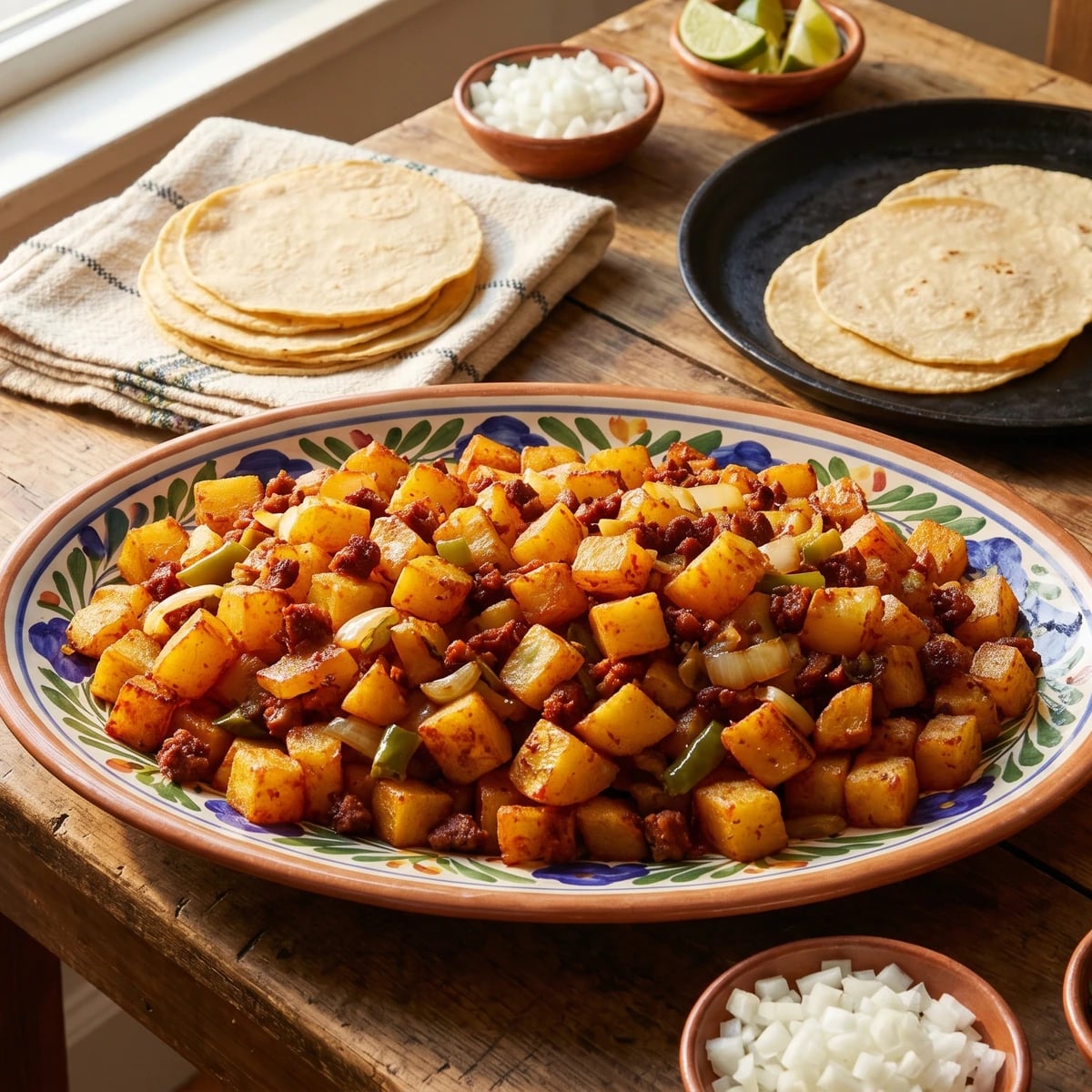
Guanajuato's quick breakfast taco filling: diced potatoes browned in manteca with chorizo de Apaseo, white onion, serrano, and enough chile-stained fat to make every tortilla worth eating.
Guanajuato, the Bajío, is where this plate belongs: Apaseo for the chorizo, Dolores Hidalgo for the painted majolica on the table, and the morning markets of León, Celaya, and Guanajuato capital for the tortillas wrapped in cloth before the day gets loud.
Papas con chorizo is not fancy food. Good. It was never trying to be. It is the taquero's morning fix, diced potato browned in manteca de cerdo with chorizo de Apaseo, cebolla blanca, and chile serrano. The chorizo brings its own work: chile ancho or guajillo, garlic, vinegar, pepper, clove if the butcher knows his trade. You don't need to bury it under cheese. No me vengas con atajos.
I learned this version from a señora near Mercado Hidalgo who cooked it in a blackened skillet while her comal handled the tortillas beside her. She parcooked the potatoes first, then let the chorizo stain them red in the pan. That is the technique. Boil them too soft and they collapse. Fry them raw and the chorizo burns before the centers cook. A home cook in Guanajuato knows the middle path because breakfast has to feed people before work.
Cada estado, su propia cocina. In the north, flour tortillas make sense. Here, in Guanajuato, give me warm corn tortillas, a molcajete salsa of jitomate and serrano, and a clay pot of manteca near the stove. Saber cocinar es saber vivir.
Chorizo in central Mexico took shape after the Spanish introduced pigs and cured sausages in the 16th century, but Mexican cooks rebuilt the seasoning around native chiles, especially ancho and guajillo, with vinegar, garlic, and regional spice blends. Apaseo el Grande and Apaseo el Alto in Guanajuato became known for fresh chorizo sold by butchers and market vendors, a Bajío product meant to be cooked soon rather than dried like Spanish chorizo. Potatoes, originally from the Andes and spread through Spanish colonial trade, became practical market food in central Mexico by the 18th and 19th centuries, especially in fillings for tacos, gorditas, and breakfast guisos.
Quantity
1 1/2 pounds
peeled and cut into 1/2-inch dice
Quantity
1 1/2 teaspoons, divided
Quantity
2 tablespoons
Quantity
12 ounces
casing removed
Quantity
1/2 medium
finely diced
Quantity
1
finely chopped
Quantity
2
minced
Quantity
1/2 teaspoon
crumbled
Quantity
1/4 teaspoon
Quantity
12
warmed
Quantity
for serving
Quantity
for serving
Quantity
for serving
Quantity
for serving
| Ingredient | Quantity |
|---|---|
| waxy potatoespeeled and cut into 1/2-inch dice | 1 1/2 pounds |
| kosher salt | 1 1/2 teaspoons, divided |
| manteca de cerdo | 2 tablespoons |
| chorizo de Apaseocasing removed | 12 ounces |
| white onionfinely diced | 1/2 medium |
| fresh chile serranofinely chopped | 1 |
| garlic clovesminced | 2 |
| dried Mexican oreganocrumbled | 1/2 teaspoon |
| freshly ground black pepper | 1/4 teaspoon |
| corn tortillas (optional)warmed | 12 |
| salsa de molcajete made with jitomate and chile serrano (optional) | for serving |
| diced raw white onion (optional) | for serving |
| chopped cilantro (optional) | for serving |
| lime wedges (optional) | for serving |
Put the diced potatoes in a saucepan and cover with cold water by one inch. Add 1 teaspoon salt. Bring to a simmer and cook 6 to 8 minutes, just until the edges are tender but the centers still hold. Drain well and spread them on a towel for 5 minutes. Wet potatoes do not brown. They steam, and breakfast has no patience for that.
Heat the manteca de cerdo in a wide skillet or clay cazuela over medium heat. Add the chorizo de Apaseo and break it apart with a wooden spoon. Cook 6 to 8 minutes, stirring often, until the sausage darkens, the chile-stained fat separates, and the kitchen smells of garlic, vinegar, chile ancho, and pepper. That fat is where the potatoes are going to learn their manners.
Add the white onion and chile serrano to the chorizo. Cook 3 to 4 minutes, scraping the browned bits from the pan, until the onion softens and turns stained red from the chorizo. Add the garlic, Mexican oregano, black pepper, and remaining 1/2 teaspoon salt. Cook 30 seconds. Garlic burns fast, so don't wander off.
Add the drained potatoes and fold them through the chorizo gently so they stay in pieces. Press them into an even layer and let them cook undisturbed for 3 minutes. Stir, press again, and cook 3 to 5 minutes more, until the edges are crisp, red with chile fat, and a few pieces stick lightly to the pan. That sticking is flavor. Scrape it up.
Taste one potato. It should be salted all the way through, not only on the surface, and the chorizo should cling to it instead of sitting in greasy clumps. If the pan looks dry, add 1 teaspoon manteca and toss once. If it looks oily, cook one more minute over medium-high heat so the potatoes drink in what they need.
Serve hot from the skillet with warm corn tortillas, salsa de molcajete, raw white onion, cilantro, and lime. This is breakfast for workers, students, taqueros, and anyone who knows a potato can carry a whole morning when the cook respects the pan. Así se hace y punto.
1 serving (about 420g)
Culinary guides, cultural storytelling, and the editorial depth that makes cooking meaningful.
Discover Culinary Explorer
Chef Lupita
San Luis Potosí's dry-country breakfast: thin salted beef cured overnight, flashed on the comal, served with frijoles bayos refritos and a lacy-edged huevo estrellado.

Chef Lupita
Guanajuato breakfast chilaquiles built on fried corn totopos, salsa roja of chile ancho and guajillo, and the seasoned pork chorizo that Apaseo el Grande claims as its own.

Chef Lupita
Querétaro's Cadereyta chorizo is pork shoulder and back fat seasoned with chile ancho, vinagre, clavo, ajo, and oregano, rested overnight, then browned for almuerzo beside beans and blue corn totopos.

Chef Lupita
Guanajuato's miner's breakfast, corn tortillas stained red with chile guajillo, folded around shredded chicken, and finished with papas y zanahorias browned in manteca de cerdo.