
Chef Lupita
Aporreadillo Michoacano con Huevo
Michoacán's Tierra Caliente almuerzo, where salted beef is softened, pounded, fried in lard, folded with egg and chile perón salsa, then served beside morisqueta like a proper working table.
A cooking platform built around craft, culture, and the stories behind what we eat.
Created by
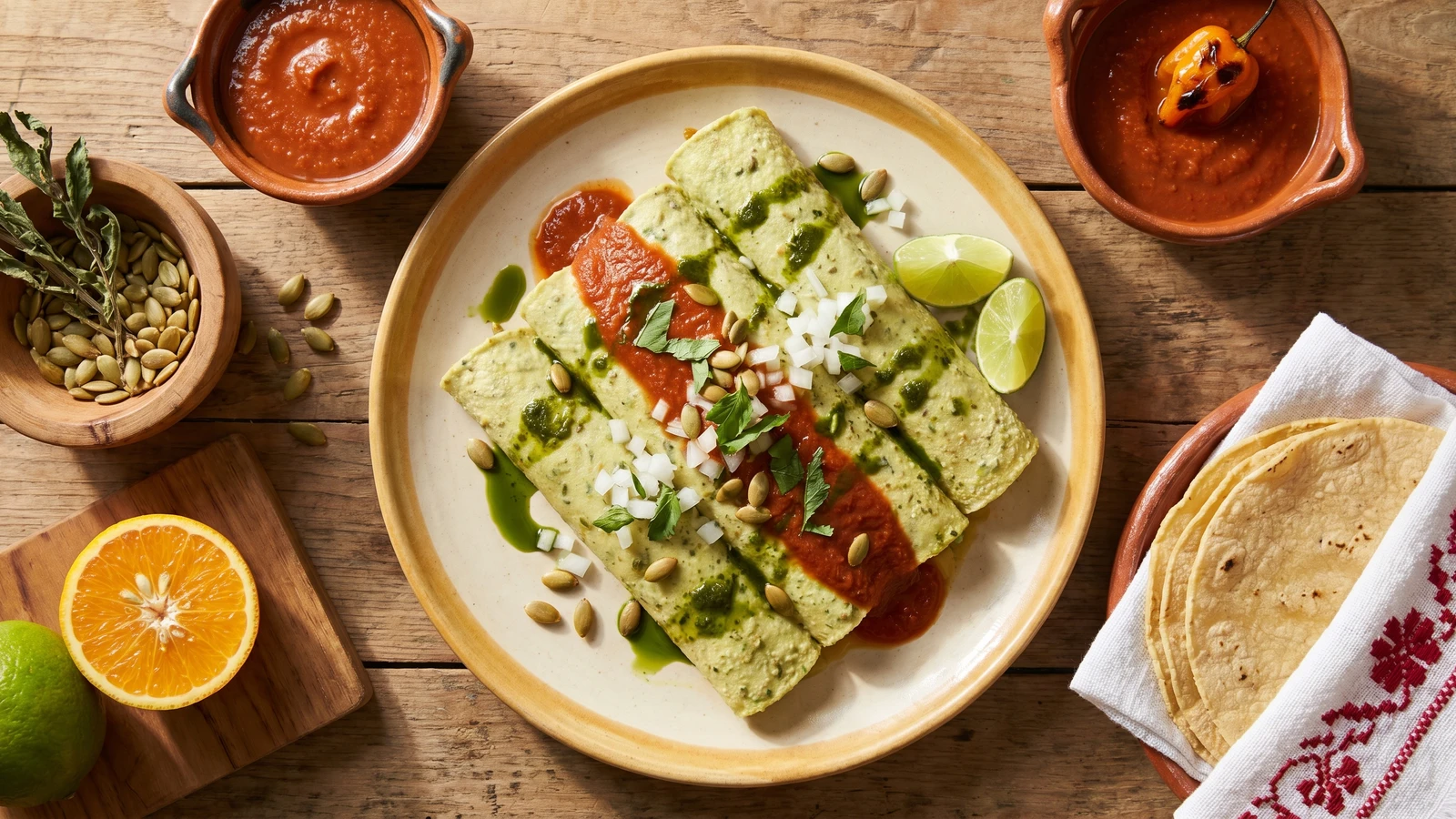
Yucatan's Mayan inheritance: corn tortillas dipped in toasted pepita sauce, rolled around hard-boiled egg, finished with chiltomate and a drizzle of the green oil that rises when the sauce is made right.
Papadzules belong to Yucatan. To be specific, they are Maya. The word itself comes from the Maya: 'papak' to anoint, 'tzul' lord or noble. Food for a nobleman. Long before anyone in Mexico City had heard of enchiladas verdes, the Maya were grinding pumpkin seeds, working hot water through the meal with their hands until the green oil rose to the surface, and dipping tortillas in it. That oil, the blessing of the seed, is the dish.
This is not a green enchilada. The sauce is not blended tomatillo. The filling is not chicken. Papadzules are pepita and egg, with chiltomate, the Yucatecan tomato sauce built around the perfume of a whole charred habanero that you do not break and do not blend into the sauce. If your sauce comes out smooth and green like guacamole, you used a blender to finish it and you broke the emulsion. The pepita sauce wants your hand, hot water, and patience. The hand-kneading is what makes the green oil rise. Without that oil drizzled on top, you have not made papadzules. You have made something else.
I have eaten papadzules in market stalls in Merida and at long family tables in Valladolid. The version in every house is slightly different, but every cook agrees on two things: the pepitas must be toasted just to the point of fragrance, never brown, and the water must be hot but never boiling. Boiling water kills the emulsion. Brown pepitas turn the sauce muddy. Saber cocinar es saber vivir, and in the case of papadzules, knowing means trusting your hand more than your blender. Cada estado, su propia cocina, and this one is Yucatan's gift from the Maya.
Papadzules are among the oldest documented dishes of the Yucatan peninsula, with roots in pre-Columbian Maya cuisine that long predate the Spanish arrival in the 16th century. The name derives from the Yucatec Maya words 'papak' (to anoint or smear) and 'tzul' (lord), and the dish is traditionally understood as a noble or ceremonial preparation, the green pepita oil functioning as a ritual anointment. The use of squash seeds (sikil in Maya) as a base for sauces is part of a regional culinary logic that distinguishes Yucatan from the rest of Mexico, where chile-based moles dominate; the peninsula's Maya cooks built their sauces around seeds, achiote, sour orange, and habanero, producing a cuisine that registers as a separate culinary world even within Mexico itself.
Quantity
2 cups
unsalted
Quantity
1 large bunch (about 20 leaves)
divided
Quantity
2 1/2 cups
hot but not boiling
Quantity
1 teaspoon, plus more to taste
Quantity
8
Quantity
1 1/2 pounds
Quantity
1/2 medium, plus 2 tablespoons finely diced for finishing
Quantity
2
unpeeled
Quantity
1
whole and unpierced
Quantity
2 tablespoons
Quantity
12
hand-pressed if possible
Quantity
for serving
| Ingredient | Quantity |
|---|---|
| raw hulled pepitas (pumpkin seeds)unsalted | 2 cups |
| fresh epazotedivided | 1 large bunch (about 20 leaves) |
| waterhot but not boiling | 2 1/2 cups |
| kosher salt | 1 teaspoon, plus more to taste |
| large eggs | 8 |
| ripe Roma tomatoes | 1 1/2 pounds |
| white onion | 1/2 medium, plus 2 tablespoons finely diced for finishing |
| garlic clovesunpeeled | 2 |
| fresh chile habanerowhole and unpierced | 1 |
| manteca de cerdo (pork lard) | 2 tablespoons |
| fresh corn tortillashand-pressed if possible | 12 |
| lime wedges (optional) | for serving |
Heat a dry comal or heavy skillet over medium-low. Add the pepitas in a single layer. Stir constantly with a wooden spoon for five to seven minutes. They will start to pop, swell, and release a green-grassy aroma. Pull them off the heat the moment they turn from pale to a soft golden green. Do not let them brown. Browned pepitas turn the sauce muddy and bitter, and the whole point of papadzules is that the sauce stays green.
Let the toasted pepitas cool for ten minutes. Reserve two tablespoons for garnish. Transfer the rest to a blender or spice grinder with half a teaspoon of salt. Grind in pulses until you have a fine, slightly oily meal. You should see the natural oil starting to come out at the edges. Do not over-grind into a paste. You want a powder that holds its shape when squeezed.
Place the eggs in a saucepan, cover with cold water by an inch, and bring to a gentle simmer. Cook for ten minutes from the moment the water moves. Drain and shock in cold water. Peel and chop finely. The eggs are the filling and they need to be fully cooked and cool before the tortillas touch the sauce.
Heat the comal over medium-high. Char the whole tomatoes, the half onion, the unpeeled garlic, and the whole habanero directly on the dry surface. Turn them as the skins blacken in patches. The habanero is there for perfume, not heat. Do not pierce it. Do not break the skin. When the tomatoes are blistered all over, about ten minutes, pull everything off. Peel the garlic. Blend the tomatoes, onion, and garlic with a pinch of salt until smooth. Leave the habanero whole, you will use it shortly.
Melt the lard in a small clay cazuela or skillet over medium heat. La manteca es el sabor. Pour in the blended tomato. It will sputter. Drop the whole charred habanero into the sauce. Simmer for ten minutes, stirring occasionally, until the sauce darkens, tightens slightly, and the fat begins to pool at the edges. Taste for salt. Remove the habanero before serving unless your guests know what they are doing.
Place the ground pepitas in a wide bowl. Add about ten epazote leaves, finely chopped. Pour the hot water over them in a slow stream while you work the mixture with your hand or a wooden spoon. Hot water, not boiling. Boiling water breaks the emulsion and the oil separates out before you can use it. Knead and squeeze the paste for three to four minutes. You will feel the texture turn smooth and the green oil start to bead up on the surface. That oil is the soul of the dish. The Maya call it the blessing of the seed.
Tilt the bowl. With a spoon, carefully skim off the green oil that has risen and reserve it in a small dish. You should get two to three tablespoons. This oil goes on top of the finished plate. It is the visual signature of a papadzul made the right way. Without it, you have a green enchilada, not a papadzul. Asi se hace y punto.
Pour the pepita mixture into a wide shallow pan or another cazuela. Adjust the consistency with a little more hot water if needed. It should coat a spoon thickly, like a loose bechamel, not run like soup. Season with salt. Keep the sauce warm over the lowest possible heat. Do not let it boil. High heat will break the emulsion and turn the sauce gritty.
Warm the tortillas one by one on the comal until pliable, about fifteen seconds per side. Working quickly, dip a tortilla into the warm pepita sauce so it is coated on both sides. Lay it on a plate. Spoon a generous tablespoon of chopped egg down the center. Roll it gently into a closed cigar. Place it seam-side down on a warm platter. Repeat with the rest. Three rolled papadzules per person is the Yucatecan portion.
Ladle more of the pepita sauce over the rolled tortillas so they are blanketed. Spoon the chiltomate in a stripe down the center, or in a ring around the plate. Drizzle the reserved green pepita oil over the top in slow circles. Scatter the reserved toasted pepitas, the finely diced raw onion, and a few torn epazote leaves over the plate. Serve immediately with lime wedges. Papadzules sit for no one. The sauce thickens as it cools and the egg loses its warmth.
1 serving (about 500g)
Culinary guides, cultural storytelling, and the editorial depth that makes cooking meaningful.
Discover Culinary ExplorerChef Lupita
Michoacán's Tierra Caliente almuerzo, where salted beef is softened, pounded, fried in lard, folded with egg and chile perón salsa, then served beside morisqueta like a proper working table.

Chef Lupita
Guerrero's Costa Grande aporreado is salted cecina pounded soft, scrambled with egg, and finished in a red guajillo and chile de árbol salsa loud with garlic and cilantro.

Chef Lupita
Los Altos de Chiapas turns two-night fermented white corn into a tart-sweet atole, cooked with canela and piloncillo, then poured hot into jícaras for desayuno.

Chef Lupita
Oaxaca's Mixteca region ferments nixtamalized masa for days until it turns tart and alive, then simmers it with piloncillo and canela into a thick, warm atole served at first light in clay.