
Chef Lupita
Aporreadillo Michoacano con Huevo
Michoacán's Tierra Caliente almuerzo, where salted beef is softened, pounded, fried in lard, folded with egg and chile perón salsa, then served beside morisqueta like a proper working table.
A cooking platform built around craft, culture, and the stories behind what we eat.
Created by
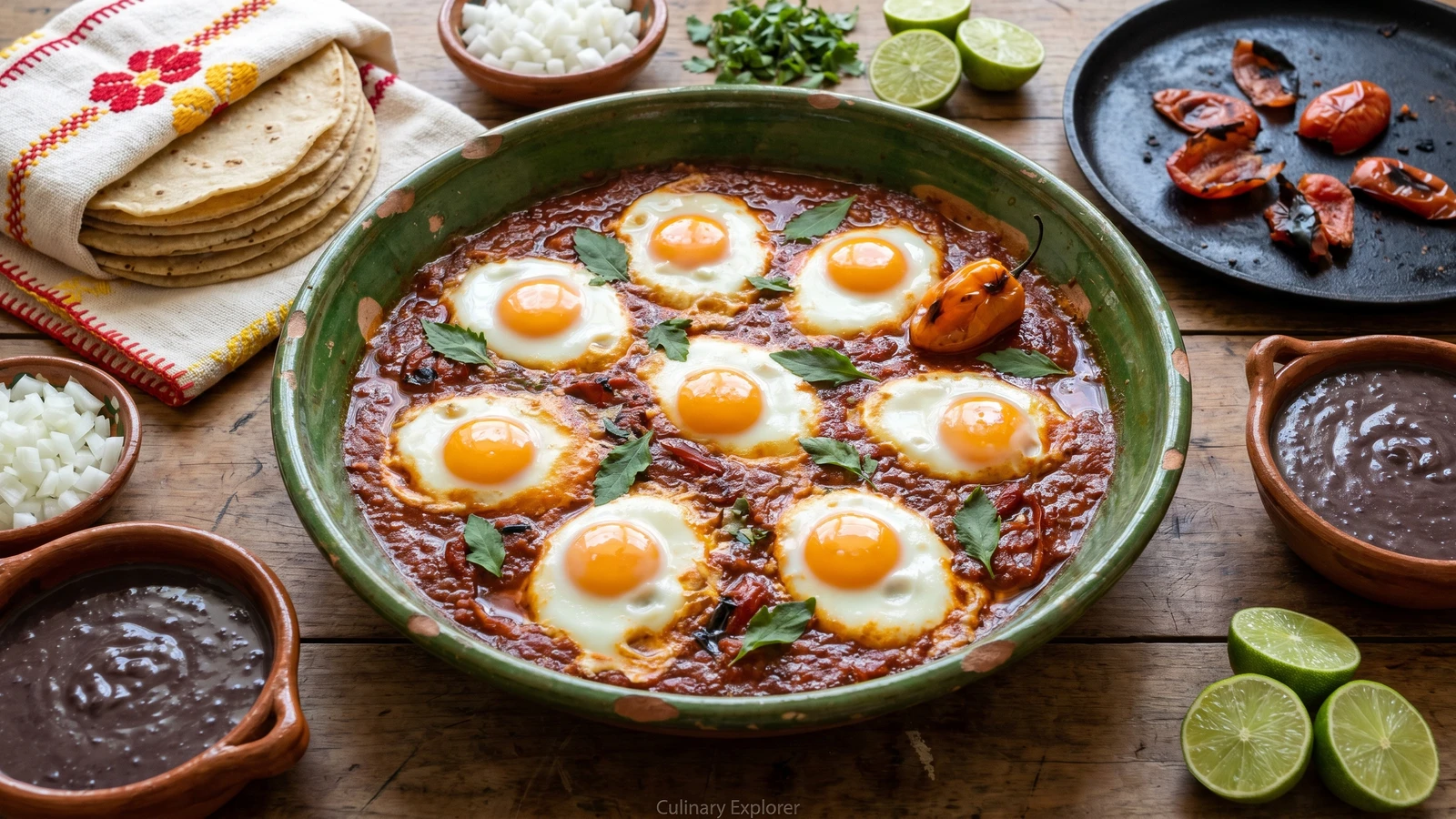
Yucatan's comedor breakfast of eggs poached directly in chiltomate, a charred tomato salsa perfumed with a whole habanero and finished with epazote. Served from the pan with refried black beans and warm corn tortillas in Merida.
This is Yucatecan. Not generic Mexican breakfast. Yucatecan, which means it does not look or taste like anything from central Mexico, and it should not.
Chiltomate is the foundation: charred tomato, white onion, garlic, and a whole habanero, scorched on a comal, blended rough, fried in manteca. The chile goes in whole. You do not chop it. You do not seed it. You drop it into the pot and let it perfume the salsa. In Merida the cooks will press it against the side of the pan with a spoon to release a little more heat if a brave eater asks. Otherwise it stays whole, the way it has always been done. The Yucatan peninsula was cut off from the rest of Mexico for centuries by geography and politics, and that isolation is why their cooks build with habanero, sour orange, achiote, and recado instead of the dried chiles you find in Puebla or Oaxaca. Cada estado, su propia cocina, and the peninsula is its own world.
The eggs are cracked directly into the simmering chiltomate and poached in the salsa itself. The whites set into the tomato. The yolks stay soft. You eat it in a comedor in Merida with a stack of hand-pressed corn tortillas and a mound of frijol colado on the side, the smooth pureed black beans of the region, and you tear the tortillas and scoop. There is no fork on the table unless the cook is being polite to a tourist.
I sat in a comedor on Calle 62 in Merida one morning in August, the kind of place where the doors are open to the street and the heat comes in before the coffee, and the senora who ran the kitchen made me this dish in a battered aluminum pan and set it down with a habanero floating in it. She said: 'No me vengas con atajos.' Do not bring me shortcuts. Char the tomato. Use the lard. Leave the chile whole. The recipe is in the discipline.
Chiltomate is one of the foundational salsas of pre-Hispanic Mayan cooking, predating the Spanish arrival by centuries; the word combines the Mayan and Nahuatl roots for chile and tomato, and the technique of charring vegetables on a comal of stone or clay is documented in archaeological sites across the peninsula. The Yucatan's culinary isolation from central Mexico, reinforced by the Caste War of the 19th century and the peninsula's poor road connections to the rest of the country until well into the 20th, allowed Mayan techniques and ingredients (habanero, achiote, sour orange, recados, epazote) to remain dominant in regional cooking long after central Mexico had absorbed heavier Spanish and French influences. Huevos en chiltomate as a breakfast preparation emerged from Yucatecan home and comedor kitchens as a practical way to stretch the morning's chiltomate, made fresh daily, into a full meal with the eggs from the family yard.
Quantity
6 medium (about 1 1/2 pounds)
Quantity
1/2 medium
Quantity
1/4 medium
finely diced
Quantity
3
unpeeled
Quantity
1 whole
stem on, left whole
Quantity
2 tablespoons
Quantity
1 teaspoon, plus more to taste
Quantity
1/2 teaspoon
Quantity
1 cup
Quantity
8
Quantity
4 to 6
for finishing
Quantity
for serving
warmed on a comal
Quantity
for serving
Quantity
for serving
chopped
Quantity
for serving
| Ingredient | Quantity |
|---|---|
| ripe Roma tomatoes | 6 medium (about 1 1/2 pounds) |
| white onion (for the chiltomate) | 1/2 medium |
| white onion (for serving) (optional)finely diced | 1/4 medium |
| garlic clovesunpeeled | 3 |
| chile habanerostem on, left whole | 1 whole |
| manteca de cerdo (pork lard) | 2 tablespoons |
| kosher salt | 1 teaspoon, plus more to taste |
| dried Mexican oregano, preferably oregano yucateco | 1/2 teaspoon |
| water or light chicken broth | 1 cup |
| large eggs | 8 |
| fresh epazote leaves (optional)for finishing | 4 to 6 |
| hand-pressed corn tortillas (optional)warmed on a comal | for serving |
| refried black beans (optional) | for serving |
| fresh cilantro (optional)chopped | for serving |
| lime wedges (optional) | for serving |
Heat a dry comal or heavy cast iron skillet over medium-high. Place the whole tomatoes, the half onion cut-side down, the unpeeled garlic cloves, and the whole habanero on the hot surface. Turn them as their skins blacken in patches. You are not cooking them through. You are scorching the outside so the smoke gets into the salsa. The tomatoes take about 10 minutes and should be soft and blistered, the garlic 5 to 6 minutes until the skin is dark and the clove is soft inside, the habanero 3 to 4 minutes until it shows black spots. Pull each one off as it is ready.
Peel the garlic. Place the charred tomatoes (skins and all, the burnt patches are the flavor), the charred onion, and the peeled garlic in the blender with the salt and oregano. Do not add the habanero to the blender. Pulse to a coarse, rustic puree. Chiltomate is not a smooth restaurant salsa. It should still show flecks of skin and onion. Asi se hace y punto.
Melt the manteca in a wide 12-inch skillet or a shallow cazuela over medium heat. When it shimmers, pour in the tomato puree all at once. It will sputter. Cook for 8 to 10 minutes, stirring often, until the salsa darkens from bright red to a deeper brick color and the fat begins to pool at the edges. La manteca es el sabor. Skip this step and your chiltomate will taste raw and watery.
Pour in the water or broth and stir. Drop the whole charred habanero into the salsa, stem and all. Let it sit on the surface. Simmer gently for 6 to 8 minutes until the salsa thickens to the consistency of a loose marinara, just thick enough to cradle an egg. Taste for salt. If you want more habanero perfume, press the chile gently against the side of the pan with the back of a spoon. If you want a wall of heat, break the skin. Most Yucatecan cooks leave it whole.
Lower the heat to medium-low. Make eight shallow wells in the salsa with the back of a spoon. Crack each egg into a small bowl first, then slide it carefully into a well. Doing it one at a time gives every egg a clean landing and keeps the yolks intact. The whites should sit in the salsa, not float on top. If a yolk breaks, that is breakfast. Keep going.
Cover the pan and cook for 4 to 6 minutes, until the whites are completely set and the yolks are still soft when you press them gently. The salsa should be barely bubbling around the edges. If you cook longer, you have hard yolks. In Merida the yolks run when you cut them and that is the whole point. Scatter the epazote leaves over the top in the last minute so the heat releases their oil without cooking them gray. Remove the whole habanero before serving. The cook chooses whether to throw it away or save it for the brave.
Carry the pan directly to the table. Two eggs per person, scooped onto the plate with a generous ladle of chiltomate over and around. Serve with a mound of refried black beans on the side, warm corn tortillas in a servilleta, raw white onion, cilantro, and lime. The tortilla is the spoon. Tear, scoop, eat. Saber cocinar es saber vivir.
1 serving (about 370g)
Culinary guides, cultural storytelling, and the editorial depth that makes cooking meaningful.
Discover Culinary ExplorerChef Lupita
Michoacán's Tierra Caliente almuerzo, where salted beef is softened, pounded, fried in lard, folded with egg and chile perón salsa, then served beside morisqueta like a proper working table.

Chef Lupita
Guerrero's Costa Grande aporreado is salted cecina pounded soft, scrambled with egg, and finished in a red guajillo and chile de árbol salsa loud with garlic and cilantro.

Chef Lupita
Los Altos de Chiapas turns two-night fermented white corn into a tart-sweet atole, cooked with canela and piloncillo, then poured hot into jícaras for desayuno.

Chef Lupita
Oaxaca's Mixteca region ferments nixtamalized masa for days until it turns tart and alive, then simmers it with piloncillo and canela into a thick, warm atole served at first light in clay.