
Chef Lupita
Aporreadillo Michoacano con Huevo
Michoacán's Tierra Caliente almuerzo, where salted beef is softened, pounded, fried in lard, folded with egg and chile perón salsa, then served beside morisqueta like a proper working table.
A cooking platform built around craft, culture, and the stories behind what we eat.
Created by
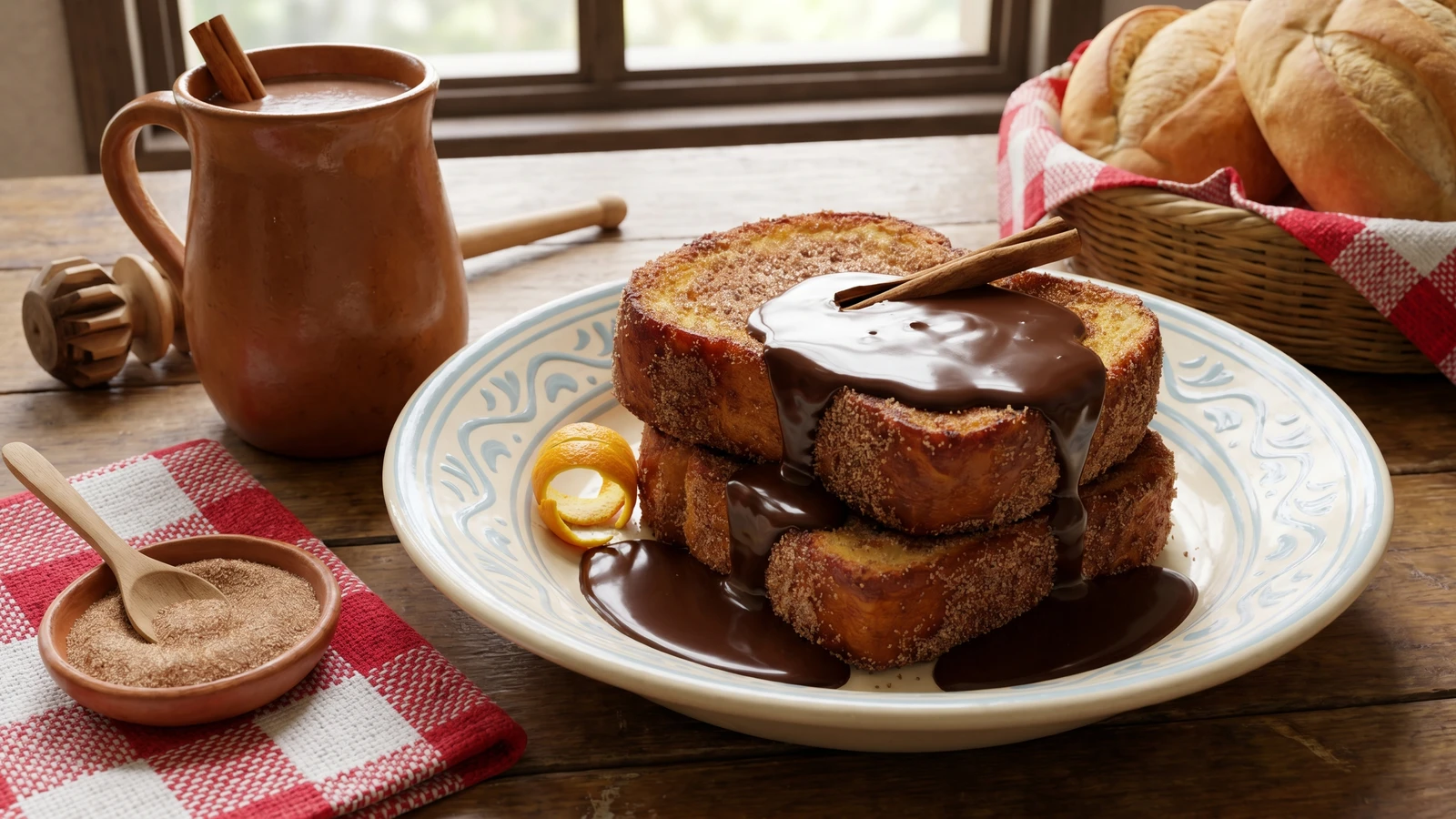
Yucatan's Sunday almuerzo: day-old pan francés soaked in egg and condensed milk, fried golden in butter and lard, rolled in cinnamon sugar, and drowned at the table in a tall jarro of Mexican chocolate.
This is from Yucatan. Not from anywhere else. Pan francés is a specific bread, the small crusty loaves the Yucatecan panaderos bake every morning, the kind you find piled in baskets at the panaderias of Merida and Valladolid before the heat of the day sets in. The bread has nothing to do with France. The name is a regional inheritance, the way half of Yucatan's vocabulary tells you about who passed through this peninsula and what stayed behind.
You make this on Sunday. The comedores in Merida know it, the home kitchens know it, the abuelas in Izamal and Motul know it. Day-old pan francés, sliced on the bias and soaked in a custard of egg, whole milk, condensed milk, vanilla, and a stick of canela de Ceylon. Fried in butter and a little manteca, because butter alone burns and tastes flat. Coated in cinnamon sugar. Then brought to the table with a tall jarro of Mexican chocolate, hot and frothed with a molinillo, and poured over the top until the bread drinks it. You eat it with a spoon. Anything else and the chocolate runs off the plate.
My mother did not make this. She was from Jalisco and Jalisco does its own breakfast. But I learned this version from a senora named Doña Lupe, no relation, who ran a tiny comedor in the Mercado Lucas de Galvez in Merida and served it every Sunday morning to families coming home from mass. She used pan francés from a panaderia three blocks away, butter and manteca from her own pantry, and chocolate de mesa she broke off a tablet with the handle of a wooden spoon. The recipe is in my notebook in her handwriting. She wrote at the bottom: 'el chocolate al final, en la mesa, nunca antes.' The chocolate at the end, at the table, never before. Recetas probadas y garantizadas.
Pan francés in Yucatan is one of the legacies of the 19th-century French intervention and the broader Porfirian-era embrace of European baking traditions, which spread Old World wheat-bread forms across Mexico and grafted them onto regional pantries. The Yucatecan version diverges sharply from its inland cousins: the peninsula's cooks adopted the crusty loaf but built around it a sweet preparation closer in spirit to capirotada and torrejas, the bread-pudding desserts brought from Spain and elaborated during Lent. Chocolate de mesa itself predates all of these influences by millennia, with cacao processed and frothed by Maya cooks throughout the Yucatan Peninsula since pre-Columbian times; the marriage of fried pan francés with hot chocolate is a 20th-century comedor tradition that fused colonial bread, mestizo dairy, and indigenous chocolate into a single Sunday-morning plate.
Quantity
1 loaf
day-old, cut on the bias into 1-inch slices (about 12 slices)
Quantity
4
Quantity
1 cup
Quantity
1/2 cup
Quantity
1 teaspoon
Quantity
1
broken in half
Quantity
1/4 teaspoon
Quantity
from 1 orange
Quantity
4 tablespoons, plus more as needed
Quantity
2 tablespoons
Quantity
1/4 cup
Quantity
1 teaspoon
Quantity
1 tablet (3 ounces)
Quantity
3 cups
Quantity
1
Quantity
1 pinch
| Ingredient | Quantity |
|---|---|
| pan francés (Yucatecan French bread)day-old, cut on the bias into 1-inch slices (about 12 slices) | 1 loaf |
| large eggs | 4 |
| whole milk | 1 cup |
| sweetened condensed milk (lechera) | 1/2 cup |
| Mexican vanilla extract | 1 teaspoon |
| cinnamon stick (canela de Ceylon)broken in half | 1 |
| kosher salt | 1/4 teaspoon |
| orange zest | from 1 orange |
| unsalted butter | 4 tablespoons, plus more as needed |
| manteca de cerdo (pork lard) | 2 tablespoons |
| granulated sugar | 1/4 cup |
| ground Ceylon cinnamon | 1 teaspoon |
| Mexican drinking chocolate (chocolate de mesa, Ibarra or Abuelita) | 1 tablet (3 ounces) |
| whole milk (for the chocolate) | 3 cups |
| cinnamon stick (for the chocolate) | 1 |
| salt (for the chocolate) | 1 pinch |
Use day-old pan francés, the small crusty Yucatecan loaves you find at any panaderia in Merida stacked in baskets near the door. Fresh bread will fall apart in the custard. The crumb needs to be dry enough to drink the egg without surrendering its structure. If your loaf is fresh, slice it on the bias and leave the pieces uncovered on a sheet pan for two hours, or dry them briefly in a 250F oven. Asi se hace y punto.
In a wide shallow bowl, whisk the eggs until the yolks and whites are completely combined. Add the whole milk, the condensed milk, the vanilla, the salt, and the orange zest. Whisk again. Drop in the broken cinnamon stick and let the custard rest for ten minutes. The canela needs time to give its flavor to the milk. Real Ceylon cinnamon is what you want, the soft pale bark that breaks apart in your fingers, not the hard red cassia that most American stores sell as cinnamon. The Yucatecan pantry runs on canela de Ceylon.
While the custard rests, build the chocolate. In a medium saucepan, heat the three cups of whole milk with the cinnamon stick and a pinch of salt over medium-low heat. When the milk is hot but not boiling, drop in the chocolate tablet broken into chunks. Stir slowly with a wooden spoon as it melts. Once the chocolate has dissolved, use a molinillo if you have one, the wooden whisk Mexicans have used for chocolate since before the conquest, and roll it between your palms to froth the surface. No molinillo, no problem. A regular whisk works. The chocolate should be thick enough to coat the spoon but still pourable. Keep it warm but not simmering. Boiling Mexican chocolate breaks the texture.
Heat a large skillet or cast iron comal over medium heat. While it heats, soak the bread slices in the custard. Press each piece gently and let it drink for about 30 seconds per side. You want the slice saturated through the crumb but still holding its shape when you lift it. A bread that falls apart in the bowl was either too fresh or soaked too long.
Add two tablespoons of butter and one tablespoon of manteca de cerdo to the hot skillet. The lard is not optional. Butter alone burns and tastes flat. Lard alone tastes savory in a dish that wants to be sweet. Together they give you the gold color and the round flavor the Yucatecan comedores get. Lay in the soaked slices without crowding, three or four at a time. Fry for two to three minutes per side until each face is deep golden brown and crisp at the edges. The kitchen will smell like warm butter and cinnamon. Wipe the skillet and add fresh butter and lard between batches as needed.
While the slices fry, combine the granulated sugar and ground cinnamon on a wide plate. As each piece comes out of the skillet, press both sides into the cinnamon sugar. The residual butter on the surface will hold the coating. Stack the finished pieces on a serving platter, slightly overlapping, as you go.
Bring the platter of pan francés to the table with the warm chocolate in a tall jarro de barro alongside, the cinnamon stick still floating in it. Each diner gets two or three slices on a deep plate and pours the chocolate over them at the table. The bread drinks the chocolate. Eat with a spoon, not a fork. This is not a delicate dish. This is the Sunday almuerzo at a Merida comedor, generous and unceremonious. Saber cocinar es saber vivir.
1 serving (about 400g)
Culinary guides, cultural storytelling, and the editorial depth that makes cooking meaningful.
Discover Culinary ExplorerChef Lupita
Michoacán's Tierra Caliente almuerzo, where salted beef is softened, pounded, fried in lard, folded with egg and chile perón salsa, then served beside morisqueta like a proper working table.

Chef Lupita
Guerrero's Costa Grande aporreado is salted cecina pounded soft, scrambled with egg, and finished in a red guajillo and chile de árbol salsa loud with garlic and cilantro.

Chef Lupita
Los Altos de Chiapas turns two-night fermented white corn into a tart-sweet atole, cooked with canela and piloncillo, then poured hot into jícaras for desayuno.

Chef Lupita
Oaxaca's Mixteca region ferments nixtamalized masa for days until it turns tart and alive, then simmers it with piloncillo and canela into a thick, warm atole served at first light in clay.