
Chef Joost
Bietensalade (Dutch Beetroot Salad)
Cold beetroot, tart apple, walnuts, and a crumble of salty cheese: the Dutch buffet dish that proves winter storage food can arrive wearing its brightest coat.
A cooking platform built around craft, culture, and the stories behind what we eat.
Created by
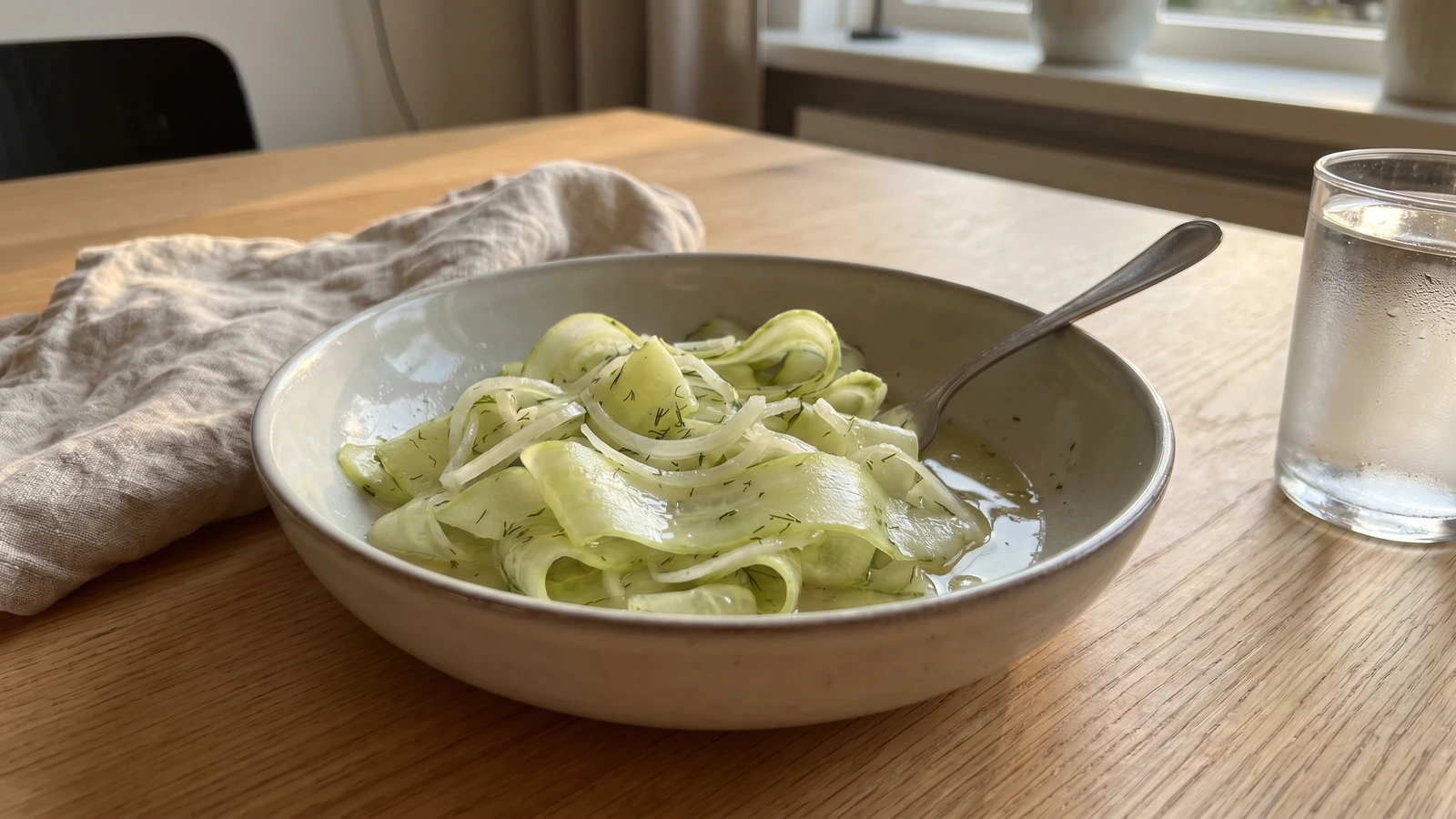
The old Dutch cucumber salad is a lesson in restraint: salt first, press gently, then vinegar and sugar turn one cheap cucumber into the cool, sharp side a heavy plate needs.
In my grandmother's second notebook, komkommersalade appears in the smallest handwriting, which tells you nearly everything. The grand dishes got paragraphs. The salad got a sentence, because every Dutch kitchen knew the rest: slice the cucumber thin, salt it, press out its water, dress it zoetzuur, sweet-sour, and put it beside whatever threatened to be too heavy.
But let me tell you a secret. This is not a decorative salad. It is kitchen engineering in a country that has always understood dampness, weight, and appetite. Boiled potatoes, fried fish, a plate from the barbecue, gehaktballen, meatballs, with gravy: all of them need something cool and sharp at the edge. The cucumber brings water, the salt takes too much of it away, and the vinegar gives the plate a clean little slap. For obvious reasons, the Dutch made this a virtue.
The name already tells you less than one hopes. Komkommer is simply the Dutch descendant of older European cucumber words, tied back through French forms to Latin cucumis. No dramatic cargo manifest here, no exile's pastry name, no bishop hiding in a biscuit mold. The story is quieter and more useful: greenhouse gardens, summer tables, vinegar in the cupboard, and the old habit of making one modest vegetable behave properly.
Hou het altijd simpel, always keep it simple. Use a fresh firm cucumber, salt it long enough to bend but not collapse, then dress it with restraint. The salad should taste fris, fresh and bright, not sugary, not sour enough to punish the tongue. It belongs in a shallow bowl on the table, already weeping a little, because that is what cucumbers do. We forgive them. We are not monsters.
Dutch komkommersalade belongs to the household tradition of zoetzuur, sweet-sour vinegar dressings used for cucumbers, onions, beets, and pickles in nineteenth- and twentieth-century domestic cookbooks. The cucumber became an everyday Dutch ingredient as greenhouse horticulture expanded in the Westland and around Aalsmeer, making a once seasonal summer vegetable available more reliably. Its role at the table is practical: a cool acid side that cuts rich meat, fried fish, potatoes, and barbecue plates without needing costly ingredients.
Quantity
1
very thinly sliced
Quantity
1 small onion or 2 shallots
very thinly sliced
Quantity
1 teaspoon
Quantity
3 tablespoons
Quantity
1 tablespoon
Quantity
2 tablespoons
Quantity
1/4 teaspoon
Quantity
1 tablespoon
finely chopped
| Ingredient | Quantity |
|---|---|
| large cucumbervery thinly sliced | 1 |
| small onion or shallotsvery thinly sliced | 1 small onion or 2 shallots |
| fine sea salt | 1 teaspoon |
| white wine vinegar or mild natural vinegar | 3 tablespoons |
| sugar | 1 tablespoon |
| cold water | 2 tablespoons |
| freshly ground white pepper | 1/4 teaspoon |
| fresh dill or parsley (optional)finely chopped | 1 tablespoon |
Slice the cucumber as thinly as you can manage, ideally with a mandoline or the patient side of a sharp knife. Leave the peel on if it is tender; peel it in stripes if the skin is thick or bitter. Slice the onion just as thin, because a thick onion ring in this salad behaves like a guest who talks over everyone.
Put the cucumber and onion in a colander, sprinkle with the salt, and toss gently with your hands. Let it stand for 25 to 30 minutes over a bowl. The salt draws out excess water, so the dressing clings instead of becoming cucumber soup by accident.
Press the cucumber and onion gently between your hands or in a clean tea towel to remove the water they have given up. Do not wring them like laundry. You want them supple and cool, not bruised into surrender.
In a serving bowl, stir the vinegar, sugar, cold water, and white pepper until the sugar dissolves. Taste it before the cucumber goes in. It should be bright first, sweet second, with enough water to soften the vinegar's bite.
Fold the pressed cucumber and onion through the dressing, add dill or parsley if using, and let the salad chill for at least 15 minutes before serving. The slices should gleam in the bowl and bend easily, with a little sweet-sour dressing pooling at the bottom. Pass it cold, especially beside anything grilled, fried, or rich.
1 serving (about 95g)
Culinary guides, cultural storytelling, and the editorial depth that makes cooking meaningful.
Discover Culinary ExplorerChef Joost
Cold beetroot, tart apple, walnuts, and a crumble of salty cheese: the Dutch buffet dish that proves winter storage food can arrive wearing its brightest coat.

Chef Joost
The name means a jumble, and the plate proves it: green beans, cabbage, egg, potatoes, and tofu gathered under pindasaus, Java carried into the Dutch rijsttafel.

Chef Joost
The harbor herring salad that catches June at its fattest: fresh Hollandse Nieuwe, beetroot, apple, potato, egg, and pickle, laid on lettuce like the North Sea has agreed to come indoors.

Chef Joost
The everyday Dutch potato salad that proves thrift can be generous: waxy potatoes, sharp mustard, pickle, egg, and chives folded cool for the barbecue table.