
Chef Klaus
Apfelschorle
Cloudy apple juice, sharp mineral water, and no sugar bowl: the German Schorle that belongs in school bags, beer gardens, picnic baskets, and the table when supper is quick.
A cooking platform built around craft, culture, and the stories behind what we eat.
Created by
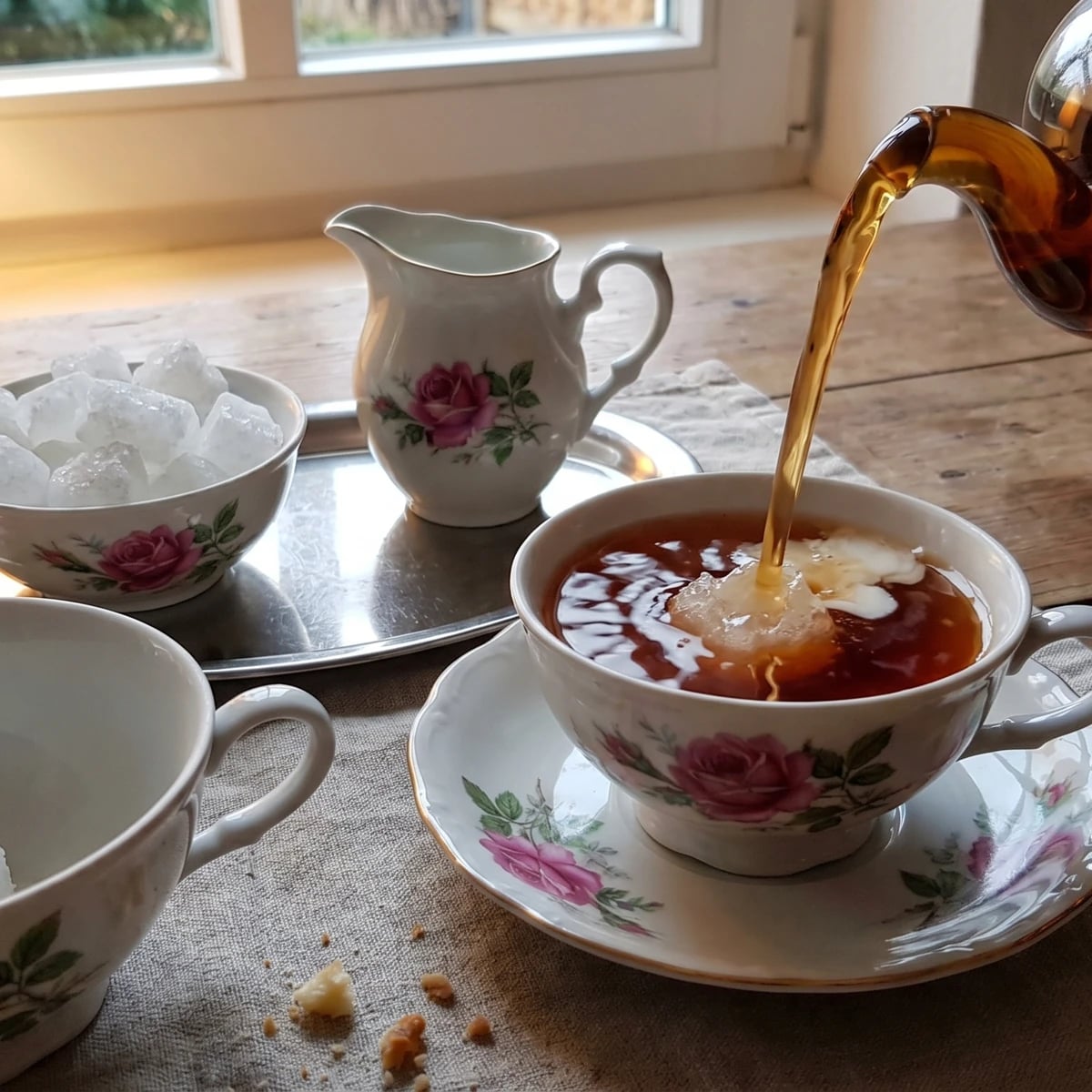
East Frisia's tea table in one cup: strong black tea, a cracking Kluntje of rock sugar, and cream slid in so it blooms instead of disappears.
Ostfriesentee belongs to East Frisia, up on the North Sea, where tea is not a little pause but a proper table habit. Weekday, Sunday, visitor at the door, it all comes to the same tray: strong black tea, Kluntje, the big rock sugar crystal, and cream. Three cups are the minimum. Drei ist Ostfriesenrecht, three is East Frisian law.
Im Norden anders, im Süden anders. The north has its tea table; Nordfriesland hides rum under cream in the Pharisäer, and the south is more likely to argue over coffee, wine, or a summer Bowle, a wine-and-fruit punch. This is not a national German tea. It is East Frisian, and it has rules because the rules make the drink.
The deciding move is the cream. Pour the hot tea over the Kluntje first, so the sugar cracks and starts melting at the bottom. Then slide the cream down the inside of the cup, or over a small spoon, and leave it alone. Stir it and you've made sweet milky tea. Don't stir, and you drink three layers: cool cream first, strong tea in the middle, sweet sugar at the end. Erst verstehen, dann kochen.
Use loose tea, not a bag with dust in it. Nicht aus dem Glas, and not from a packet that smells tired. The blend wants strength, mostly Assam, with enough leaf to stand up to cream. Das braucht seine Zeit, but not much: a warmed pot, boiling water, five minutes, then the tray goes out.
East Frisia became a tea region through Dutch and North Sea trade in the seventeenth century, when tea reached the coastal towns as an imported colonial good and then settled into daily life more deeply than anywhere else in Germany. By the eighteenth and nineteenth centuries, the Ostfriesenmischung, an East Frisian blend built around strong Assam teas, had become the local standard because it held its body against cream and sugar. The ritual of Kluntje, cream cloud, and unstirred drinking is protected as East Frisian tea culture, and the old rule Drei ist Ostfriesenrecht still marks the minimum proper serving.
Quantity
1 liter
preferably low in mineral taste
Quantity
16g
Quantity
12 large pieces
Quantity
120ml
30 to 35 percent fat
| Ingredient | Quantity |
|---|---|
| fresh cold waterpreferably low in mineral taste | 1 liter |
| loose Ostfriesenmischung or strong Assam-based black tea | 16g |
| Kluntje rock sugar crystals | 12 large pieces |
| fresh cream30 to 35 percent fat | 120ml |
Rinse the teapot with hot water and pour it away. A warm pot keeps the brew from dropping in temperature the moment the leaves go in, and black tea needs that first hard heat to pull body from the leaf.
Put the loose tea into the warmed pot and pour over 1 liter of freshly boiled water. Cover and steep for 5 minutes. Shorter and the tea tastes thin under the cream; longer and the tannins grip your mouth before the Kluntje can balance them.
Put one Kluntje in each small tea cup before the tea is poured. The hot tea must hit the sugar directly, because the little crack you hear is the sugar splitting and starting to melt from the outside in.
Strain the tea into the cups over the Kluntje, filling each cup about three-quarters full. Leave space for the cream, and don't chase the sugar with a spoon. The sweetness belongs at the bottom, not dissolved evenly through the cup.
Slide a small spoonful of cream down the inside edge of each cup, or over the back of a teaspoon, so it sinks and opens into pale clouds. Do not stir. Stirring destroys the Wulkje, the little cloud, and turns a layered East Frisian cup into ordinary milk tea.
Serve at once, and pour fresh cups while the pot stays hot on a Stövchen, a small warmer. The first sip is cream-soft, the middle is strong tea, and the last is sweet from the Kluntje. Put the spoon in the cup only when you're finished. Until then, the host keeps pouring.
1 serving (about 290g)
Culinary guides, cultural storytelling, and the editorial depth that makes cooking meaningful.
Discover Culinary Explorer
Chef Klaus
Cloudy apple juice, sharp mineral water, and no sugar bowl: the German Schorle that belongs in school bags, beer gardens, picnic baskets, and the table when supper is quick.

Chef Klaus
Frankfurt's long drink for a warm table: dry Apfelwein, cold mineral water, and the ribbed Geripptes glass that tells you where you are.

Chef Klaus
Berlin's summer glass: sharp, pale Berliner Weisse softened with a red raspberry or green woodruff Schuss, cold enough to bead the glass and never from bottled syrup.

Chef Klaus
The Easter bottle from yolks, sugar, cream, and good spirit, beaten warm just enough to thicken, then cooled into a yellow liqueur for cake, coffee, and small glasses.