
Chef Isabel
Ajo Carretero de Soria
Ajo carretero is Soriano, from the pine country of Soria: lamb cooked in a plain garlicky broth, then served the old way, meat first and bread-soaked soup after.
A cooking platform built around craft, culture, and the stories behind what we eat.
Created by
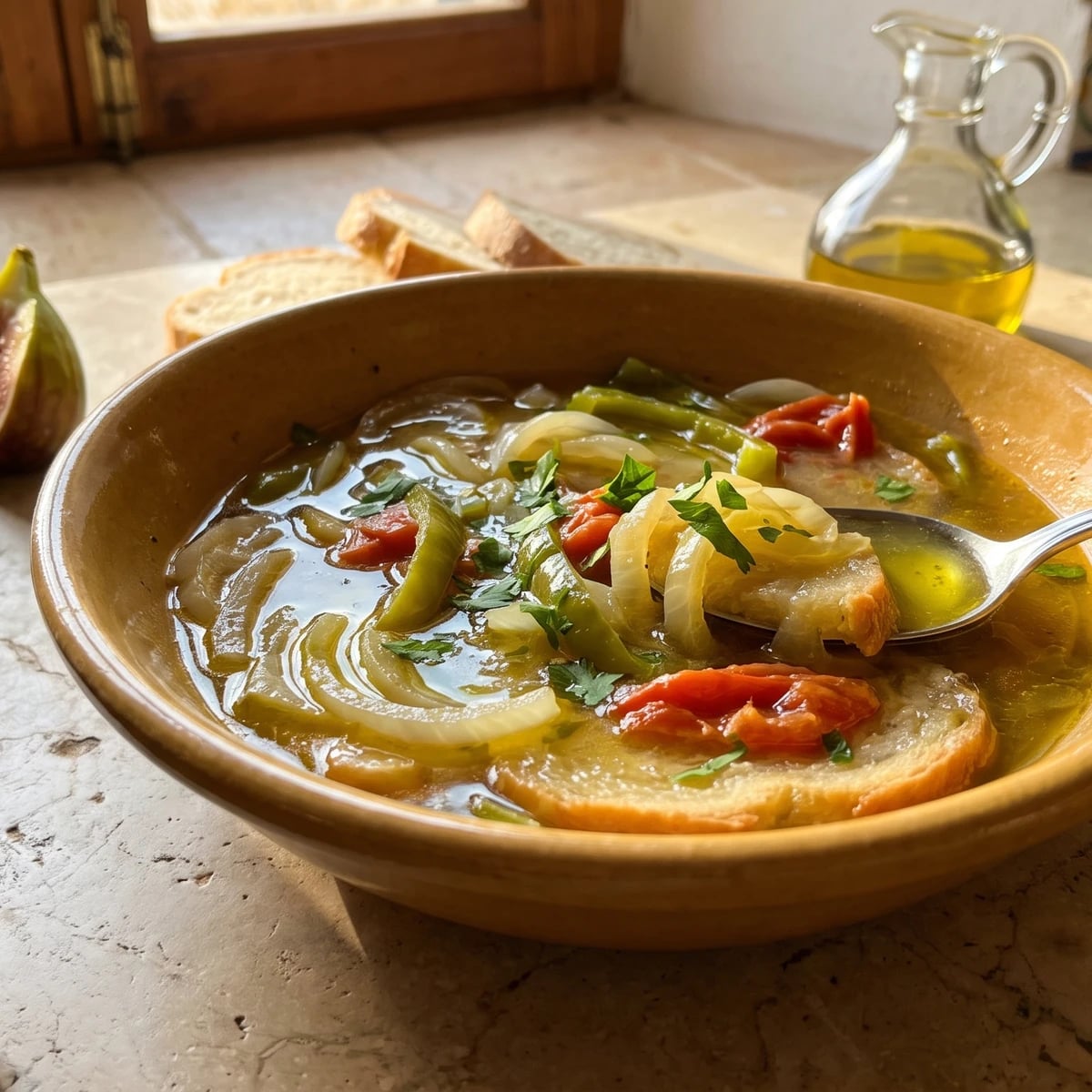
Oliaigua is Menorca's plain spoon food: olive oil, water, summer vegetables, and thin bread. Cook the vegetables slowly, keep the water gentle, and the poor soup turns generous.
Oliaigua is Menorcan, and the name tells the truth: oli i aigua, oil and water. Onion, green pepper, tomato, and garlic are softened in olive oil, then water is added and the whole thing is ladled over thin slices of stale bread. In summer, figs alongside make it a meal. That pairing is Menorca talking, not decoration.
The step that decides it is the slow vegetable base. Cook the onion and pepper until they collapse and turn sweet before the tomato goes in, then let the tomato lose its raw sharpness. Add the water gently and don't thrash it with a hard boil. This soup is light, but it shouldn't taste thin. The oil carries the vegetables into the bread, and the bread gives the bowl its body.
If you're far from Menorca, use a good green Italian frying pepper or a small green bell pepper, ripe tomatoes when they're worth cooking, and sturdy day-old country bread sliced thin. No pan de payes where you are? A dense sourdough is the better substitute, not soft sandwich bread, which goes gluey and sulks in the bowl. Siempre sale, si lo sigues. It turns out if you follow it.
Oliaigua belongs to Menorca, especially to the rural home kitchen, where olive oil, garden vegetables, water, and yesterday's bread made a quick, cheap meal from almost nothing. The summer version, oliaigua amb figues, is served with fresh figs on the side, a Menorcan habit that balances the warm, savory broth with fruit from the same season. Its plainness is the point: it is cucina de cuchara, spoon food, shaped by thrift, heat, and the island's vegetable gardens.
Quantity
80ml
Quantity
350g
thinly sliced
Quantity
250g
seeded and sliced into strips
Quantity
4
thinly sliced
Quantity
600g
peeled and grated or finely chopped
Quantity
1 teaspoon, plus more to taste
Quantity
1.2 litres
Quantity
160g
sliced very thin
Quantity
2 tablespoons
chopped
Quantity
8
to serve
| Ingredient | Quantity |
|---|---|
| extra virgin olive oil | 80ml |
| yellow onionsthinly sliced | 350g |
| green peppersseeded and sliced into strips | 250g |
| garlic clovesthinly sliced | 4 |
| ripe tomatoespeeled and grated or finely chopped | 600g |
| fine sea salt | 1 teaspoon, plus more to taste |
| water | 1.2 litres |
| day-old country breadsliced very thin | 160g |
| flat-leaf parsleychopped | 2 tablespoons |
| fresh figs (optional)to serve | 8 |
Slice the day-old bread as thinly as you can, about 5mm if the loaf allows it, and lay it in four deep bowls. The bread is not a garnish here; it is the floor of the soup. Soft bread turns pasty, so use bread with some backbone.
Warm the olive oil in a wide cazuela or heavy pot over low heat. Add the onions, green peppers, and salt, and cook for 18 to 20 minutes, stirring now and then, until the onion is soft and sweet and the pepper has lost its raw bite. Don't rush this. The sweetness of the whole soup is built here.
Add the sliced garlic and cook for 1 minute, just until it smells good. Stir in the grated tomato and cook for 10 to 12 minutes, until it darkens a little, thickens, and the oil begins to show at the edges. That is the tomato giving up its water and becoming part of the base.
Pour in 1.2 litres water and bring it only to a quiet simmer. Cook for 8 to 10 minutes, then taste for salt. Keep it gentle; a rolling boil makes the oil and water fight each other, and this dish is named for both.
Scatter the parsley into the pot. Ladle the hot soup over the bread in the bowls, making sure each serving gets plenty of vegetables and a good shine of oil. Let it stand 2 minutes so the bread softens but still holds its shape.
Serve at once, with fresh figs alongside if they are in season. Take a spoon of soup, then a bite of fig. It sounds odd until you eat it, and then Menorca has already explained itself.
1 serving (about 700g)
Culinary guides, cultural storytelling, and the editorial depth that makes cooking meaningful.
Discover Culinary Explorer
Chef Isabel
Ajo carretero is Soriano, from the pine country of Soria: lamb cooked in a plain garlicky broth, then served the old way, meat first and bread-soaked soup after.

Chef Isabel
Caldo Gallego is Galicia in a bowl: bitter grelos, creamy white beans, potato, and a small knob of unto giving depth without turning the broth heavy.

Chef Isabel
Escaldón de gofio is Canary Island spoon food: toasted grain flour drinking hot caldo until it turns thick, savory, and steady enough to hold the spoon.

Chef Isabel
Gazpachos Manchegos are La Mancha's hot spoon dish: rabbit, partridge, and torn torta cenceña cooked in a hunter's broth until the bread swells, tender but never mushy.