Culinary Explorer

A cooking platform built around craft, culture, and the stories behind what we eat.
Discover Culinary Explorer
Old-Fashioned Buttermilk Pancakes

Old-Fashioned Buttermilk Pancakes

Created by

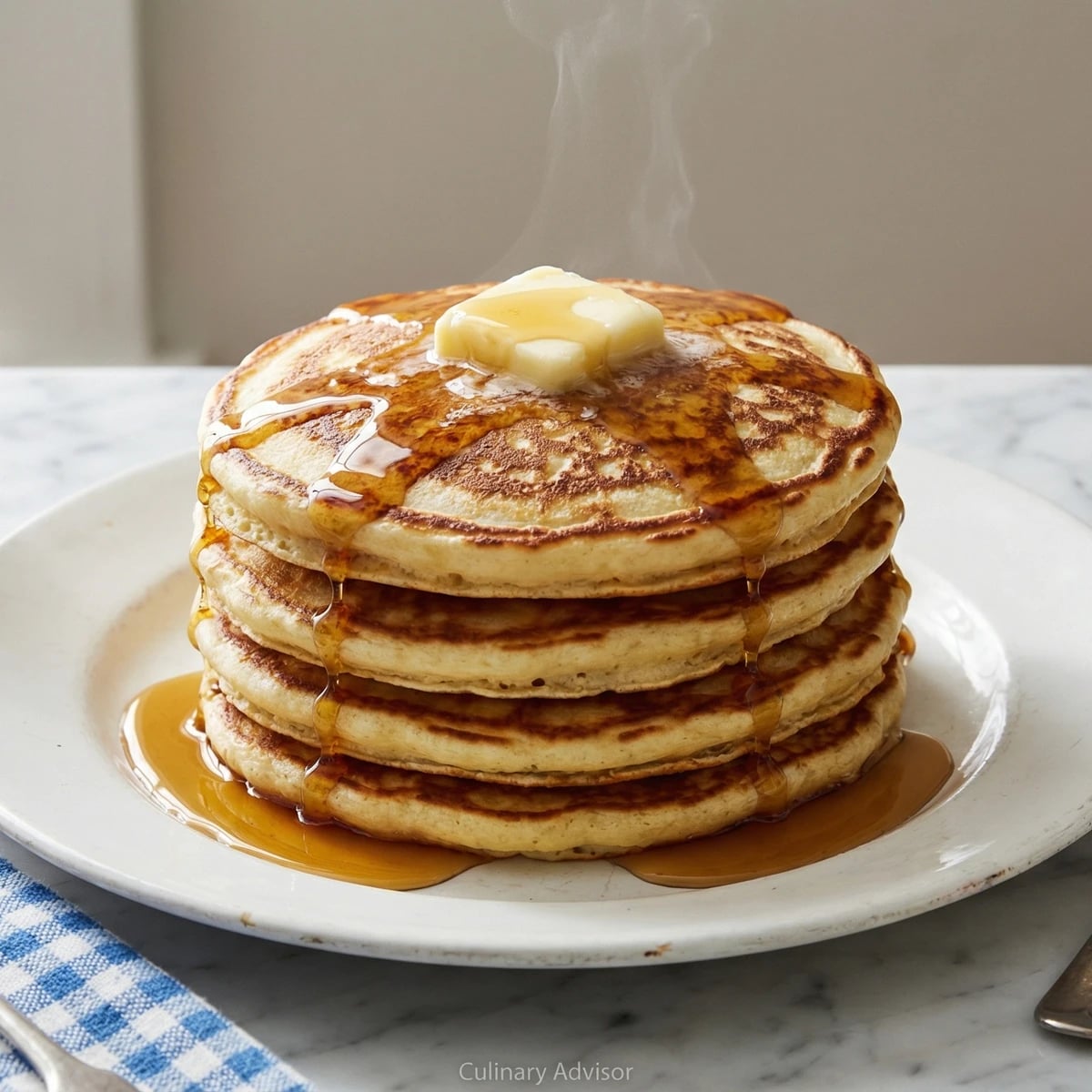
Impossibly fluffy buttermilk pancakes with golden edges and tender centers, made the way your grandmother made them before boxed mixes convinced America that breakfast should come from a cardboard container.

Breakfast & Brunch
American
Weeknight
Comfort Food
10 min
Active Time
20 min cook30 min total
Yield12 pancakes (serves 4)

The buttermilk pancake is American breakfast distilled to its essence. Flour, eggs, buttermilk, a touch of sugar, and the chemical magic of baking soda meeting acid. Our great-grandmothers made these without measuring cups, gauging flour by feel and buttermilk by color. They knew what we've forgotten: a proper pancake requires restraint.

The lumps in your batter are not mistakes. They are insurance against tough, rubbery pancakes. Overmix and the gluten develops, turning what should be tender into something approaching shoe leather. Mix until the flour just disappears into the buttermilk. Those small pockets of dry flour will hydrate on the griddle, creating the irregular texture that makes each bite interesting.

I learned pancakes from a woman who ran a logging camp kitchen in Oregon. She'd make three hundred of these before sunrise, working two griddles with the efficiency of a symphony conductor. Her secret was cold buttermilk, a ripping hot griddle, and the patience to wait for bubbles. When the surface looks like the moon, she'd say, that's when you flip. Not before. Never before.

The technique, the tradition, and the story behind every dish.

Discover Culinary Explorer

Ingredients

all-purpose flour

Quantity

2 cups (240g)

granulated sugar

Quantity

2 tablespoons

baking powder

Quantity

1 teaspoon

baking soda

Quantity

1 teaspoon

fine sea salt

Quantity

3/4 teaspoon

cold buttermilk

Quantity

2 cups (480ml)

large eggs

Quantity

2

at room temperature

unsalted butter

Quantity

4 tablespoons (56g)

melted and slightly cooled

pure vanilla extract

Quantity

1 teaspoon

unsalted butter

Quantity

for the griddle

warm maple syrup

Quantity

for serving

butter (optional)

Quantity

for serving

Equipment Needed

  • 12-inch cast iron skillet or griddle
  • Large mixing bowl
  • Whisk
  • Wooden spoon or spatula
  • Thin metal spatula for flipping
  • 1/4-cup measure or ladle

Instructions

  1. 1

    Whisk dry ingredients

    In a large mixing bowl, whisk together the flour, sugar, baking powder, baking soda, and salt until evenly combined. Create a well in the center. This only takes thirty seconds but distributes the leavening agents throughout, preventing those bitter pockets of baking soda that ruin otherwise good pancakes.

    Measure flour properly by spooning it into your measuring cup and leveling with a knife. Scooping compacts the flour and throws off the ratio.
  2. 2

    Combine wet ingredients

    In a separate bowl or large measuring pitcher, whisk the buttermilk with the eggs until the yolks are fully broken and incorporated. Add the melted butter in a steady stream while whisking. The butter may form small clumps when it hits the cold buttermilk. This is fine. Stir in the vanilla extract.

  3. 3

    Make the batter

    Pour the wet ingredients into the well of dry ingredients. Using a wooden spoon or spatula, stir gently in circular motions, working from the center outward. Stop the moment the flour disappears. The batter will be thick and lumpy, with visible streaks. This is correct. Walk away from the bowl. The urge to smooth those lumps will betray you.

    Count your strokes if you must. Fifteen to twenty is plenty. The batter should look rough and unfinished. Trust the process.
  4. 4

    Rest the batter

    Let the batter rest for five minutes while you heat your griddle. During this time, the flour hydrates, the gluten relaxes, and the baking soda begins its slow reaction with the acidic buttermilk. You'll notice the batter becoming slightly puffy. This rest transforms good pancakes into magnificent ones.

  5. 5

    Heat the griddle

    Set a cast iron skillet or griddle over medium heat. Give it a full five minutes to heat evenly. Test the temperature by flicking a few drops of water onto the surface. They should dance and evaporate within two seconds. Too fast and your pan is screaming hot; too slow and you'll have pale, steamed pancakes.

    An electric griddle set to 375°F removes the guesswork entirely. I keep one just for pancake mornings.
  6. 6

    Butter the cooking surface

    Rub a thin film of butter across the hot griddle using a folded paper towel. You want a whisper of fat, not a pool. Too much butter and your pancakes fry rather than griddle, developing an unpleasant crust. Repeat this light buttering before each batch.

  7. 7

    Pour and cook first side

    Using a quarter-cup measure or ladle, pour batter onto the griddle, leaving three inches between pancakes. The batter should spread into thick rounds about four inches across. Do not press or spread the batter. Watch the edges. Within ninety seconds, small bubbles will form across the surface. When the bubbles near the center begin to pop and hold their shape, leaving small craters, the bottom is set.

  8. 8

    Flip with confidence

    Slide a thin spatula under each pancake in one decisive motion. Flip quickly and cleanly. The second side cooks faster, about sixty to ninety seconds. The pancake is done when it feels springy to gentle pressure and the second side has developed golden-brown spots. Transfer to a warm plate.

    Never press down on a pancake after flipping. You'll crush the air pockets that make it light and force out the moisture that keeps it tender.
  9. 9

    Keep warm and serve

    Hold finished pancakes in a 200°F oven on a wire rack set over a baking sheet while you cook remaining batter. Do not stack them or cover with foil; they'll steam and turn gummy. Serve immediately with a generous pat of butter on each stack and warm maple syrup passed separately. The butter should begin melting the moment it touches the surface.

Chef Tips

  • Real buttermilk, the kind you find in the dairy case, contains live cultures that tenderize gluten and create tang. The powdered substitute is a pale imitation. Seek out the real thing.
  • If you lack buttermilk, place two tablespoons of white vinegar or lemon juice in a measuring cup and add milk to reach two cups. Let it sit five minutes until it curdles. This works in an emergency but lacks the complexity of true buttermilk.
  • The first pancake is always a sacrifice to the griddle gods. It tests your temperature and seasons your surface. Accept this and move on.
  • Leftover pancakes freeze beautifully. Cool completely, separate with parchment, seal in freezer bags. Toast straight from frozen for Tuesday morning redemption.

Advance Preparation

  • Dry ingredients can be whisked together the night before and stored covered at room temperature.
  • Wet ingredients can be combined and refrigerated overnight. Bring to room temperature for twenty minutes before mixing with dry ingredients.
  • Completed batter should be cooked within thirty minutes. The leavening power fades quickly once the acid and base meet.
  • Cooked pancakes freeze for up to two months. Reheat in a toaster or 350°F oven until warmed through, about five minutes.

Frequently Asked Questions

Nutrition Information

1 serving (about 160g)

Calories
440 calories
Total Fat
17 g
Saturated Fat
10 g
Trans Fat
0 g
Unsaturated Fat
6 g
Cholesterol
93 mg
Sodium
808 mg
Total Carbohydrates
54 g
Dietary Fiber
2 g
Sugars
6 g
Protein
9 g

Note: Chef personas and recipes are created with AI assistance. Cook with care: follow safe food-handling practices, check doneness with a thermometer when needed, and adapt for allergies and your kitchen.

Where cooking meets culture.

Culinary guides, cultural storytelling, and the editorial depth that makes cooking meaningful.

Discover Culinary Explorer

More from Breakfast at Grandma's

Browse the full collection