Chef Jeong-sun
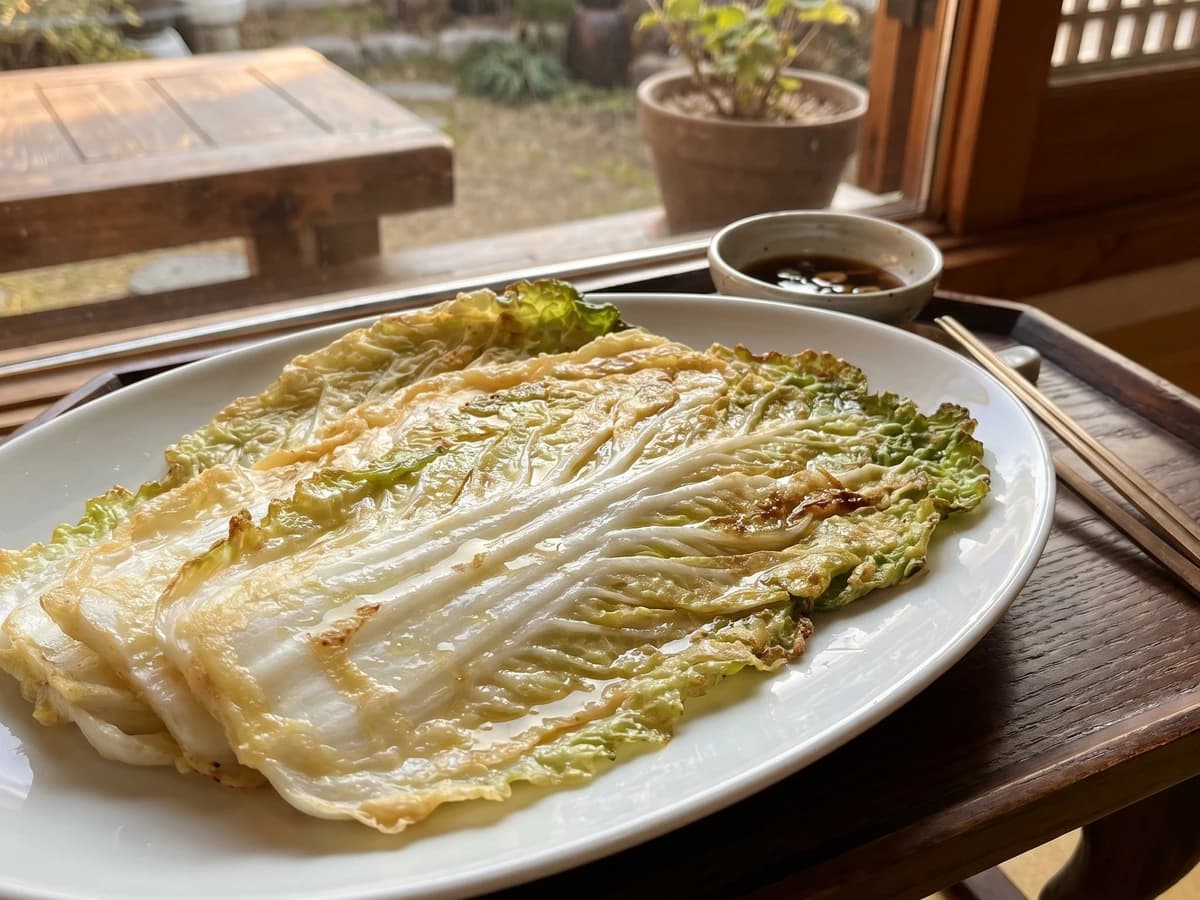
Baechu-jeon (배추전, Napa Cabbage Pancake)
A Gyeongsang home pancake made from one whole napa cabbage leaf at a time, flattened at the rib, brushed in thin salted batter, and fried until sweet, tender, and quietly crisp at the edges.
A cooking platform built around craft, culture, and the stories behind what we eat.

Created by
Tender squid scored to stay flat, dusted lightly, dipped in egg batter, and pan-fried just until the edges crisp before the sea-sweet flesh has time to toughen.
Ojingeo-jeon lives or dies by the knife before it ever reaches the pan. Score the squid shallowly, in a crosshatch, and it lies down obediently. Skip that work and it curls into itself like it has better places to be. My teacher would tap the cutting board once and say, "Again." She was right.
This is weeknight food, market food, drinking-table food, and potluck food, depending on the plate you put under it. Squid is generous that way. The flesh is sweet, the cooking time is short, and the batter should be thin enough to protect it without hiding it. Let it taste like itself. Too much flour gives you bread with a squid accent, and that is not what we came to cook.
Tonight this dish asks for clean cuts, a dry surface, and restraint at the stove. Pull the pieces when they are just firm and lightly golden, not when you feel certain. By the time you feel certain, squid is already chewing back at you. Write down the timing for your pan. Memory is a borrowed bowl.
Jeon, foods coated in flour and egg or a light batter and pan-fried, became fixed in Korean home cooking as both everyday banchan and ceremonial food for holidays, ancestral rites, and shared drinking tables. Ojingeo-jeon reflects Korea's coastal pantry and the twentieth-century spread of inexpensive squid through markets and home freezers, which made it a practical protein for quick pan-fried dishes. Unlike palace-style jeon arranged for formal color balance, this one belongs more to the market stall, the family table, and the plate that disappears first at a gathering.
Quantity
2 medium, about 350g cleaned weight
bodies opened flat, tentacles trimmed
Quantity
1/2 teaspoon, divided
Quantity
1/8 teaspoon
Quantity
1 tablespoon
Quantity
1/2 cup
for dredging
Quantity
2 tablespoons
Quantity
3
Quantity
2 tablespoons
Quantity
1 small
finely sliced
Quantity
1/2 small
cut into very fine matchsticks
Quantity
1
seeded and finely sliced
Quantity
4 to 5 tablespoons
for pan-frying
Quantity
2 tablespoons
for dipping sauce
Quantity
1 tablespoon
for dipping sauce
Quantity
1 teaspoon
for dipping sauce
Quantity
1/2 teaspoon
for dipping sauce
Quantity
a few thin slices
for dipping sauce
| Ingredient | Quantity |
|---|---|
| cleaned squidbodies opened flat, tentacles trimmed | 2 medium, about 350g cleaned weight |
| kosher salt | 1/2 teaspoon, divided |
| ground white pepper or black pepper | 1/8 teaspoon |
| cheongju or mirin (optional) | 1 tablespoon |
| all-purpose flourfor dredging | 1/2 cup |
| potato starch | 2 tablespoons |
| large eggs | 3 |
| cold water | 2 tablespoons |
| scallionfinely sliced | 1 small |
| carrot (optional)cut into very fine matchsticks | 1/2 small |
| green chili (optional)seeded and finely sliced | 1 |
| neutral oilfor pan-frying | 4 to 5 tablespoons |
| soy saucefor dipping sauce | 2 tablespoons |
| rice vinegarfor dipping sauce | 1 tablespoon |
| waterfor dipping sauce | 1 teaspoon |
| toasted sesame seedsfor dipping sauce | 1/2 teaspoon |
| scallion slicesfor dipping sauce | a few thin slices |
Pat the squid very dry with paper towels. Open each body flat, skin side down, and lightly score the inside flesh in a shallow crosshatch, cuts about 5mm apart, taking care not to cut through. Cut the bodies into 5cm pieces and cut the tentacles into bite-size clusters. The scoring is not decoration; it keeps the squid from curling hard in the pan and gives the coating something to hold.
Toss the squid with 1/4 teaspoon salt, the pepper, and the cheongju or mirin if using. Let it stand 10 minutes, then pat it dry again. That short rest seasons the flesh without drawing out so much liquid that the batter slides off.
In a shallow dish, stir the flour with the potato starch and the remaining 1/4 teaspoon salt. In a second dish, beat the eggs with 2 tablespoons cold water until loose, then stir in the scallion, carrot, and green chili if using. The starch gives a cleaner edge, and the water thins the egg so the squid stays squid, not an omelet wearing seafood.
Dust the squid pieces in the flour mixture, then shake off every bit of excess. Dip them into the egg mixture and let the extra drip back into the dish. A thin coating fries tender; a heavy one separates from the squid and turns greasy.
Heat 2 tablespoons oil in a wide nonstick or well-seasoned skillet over medium heat. Lay the squid pieces in a single layer, scored side down first, and press each piece lightly with chopsticks or a spatula for 3 seconds so it sets flat. Cook 1 1/2 to 2 minutes, until the underside is pale golden at the edges.
Turn the squid and cook 1 to 1 1/2 minutes more, just until firm and lightly golden. Move finished pieces to a rack or paper-lined plate and repeat with the remaining squid, adding oil as needed. Do not wait for a dark crust. Squid toughens quickly, and a good ojingeo-jeon should be chewy in the pleasant way, not in the stubborn way.
Stir together the soy sauce, rice vinegar, water, sesame seeds, and scallion slices. Serve the jeon warm or at room temperature, with rice if it is dinner and with makgeolli if the table has turned that direction.
1 serving (about 160g)
Culinary guides, cultural storytelling, and the editorial depth that makes cooking meaningful.
Discover Culinary ExplorerChef Jeong-sun
A Gyeongsang home pancake made from one whole napa cabbage leaf at a time, flattened at the rib, brushed in thin salted batter, and fried until sweet, tender, and quietly crisp at the edges.

Chef Jeong-sun
A holiday jeon of fresh shiitake or oyster mushrooms, salted lightly, dusted thinly, and carried through egg in a quiet pan until the mushroom stays earthy and the coating stays tender.

Chef Jeong-sun
Soaked mung beans ground coarse, folded with pork, bracken, sprouts, and kimchi, then fried thick until the edges crisp and the center stays tender enough for a shared table.

Chef Jeong-sun
A summer garlic chive pancake fried thin, crisp at the edges and chewy in the center, with just enough batter to hold the green pile together and a sharp soy-vinegar dip.