
Chef Takumi
Bamboo Shoot and Wakame Salad (若竹和え, Wakatake-ae)
Two spring things meet here: pale bamboo shoot, green wakame, and a vinegar-miso dressing thin enough to let both speak. The work is sourcing, then restraint.
A cooking platform built around craft, culture, and the stories behind what we eat.
Created by
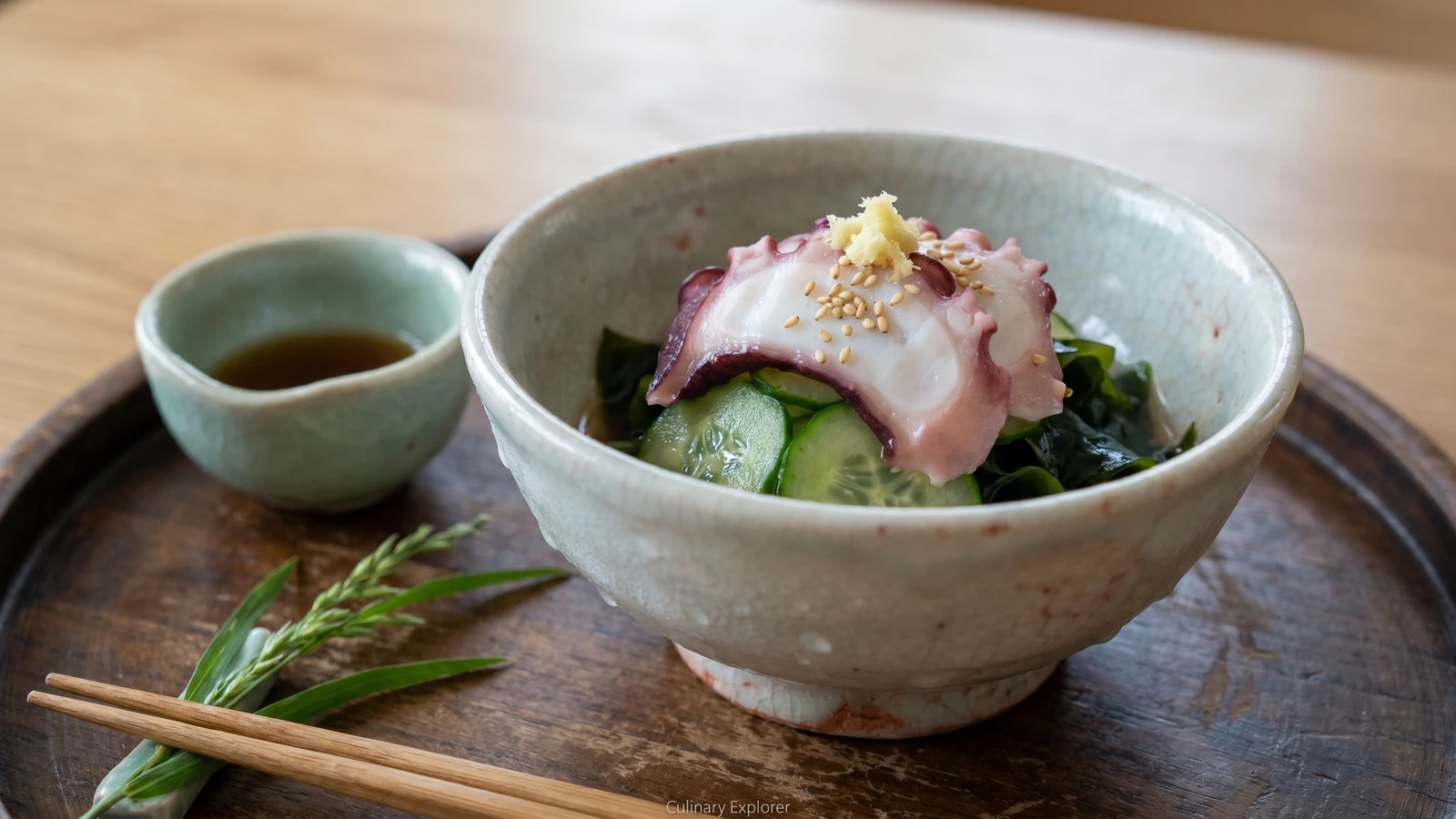
Summer cool, and very little work: tender boiled octopus, crisp cucumber, and wakame dressed with sanbaizu so the vinegar brightens the sea without covering it.
Octopus makes people hesitate. It looks like a creature with opinions, and the cook begins to imagine special knowledge. For this sunomono, the hard part has usually already been done for you: buy good boiled tako, slice it thin, and let the vinegar do its clean work.
The one detail that decides the dish is the cut. Slice the octopus thinly against the grain, on a slight diagonal, so each piece stays tender and the dressing can reach every face. Cut it thick and it fights back a little. Cut it cleanly and it eats cool, springy, and sweet, with nothing hidden under sauce.
Sunomono means vinegared things, and this one belongs especially well to summer, when cucumber is full of water and the table wants something bright beside rice, soup, and a grilled or simmered dish. We salt the cucumber first because salt pulls out excess water and seasons it from inside; skip that, and the bowl turns watery just when it should be sharp and clear.
The dressing is sanbaizu, literally three-cup vinegar, though no sensible person needs three cups of it at dinner. Rice vinegar, soy sauce, and mirin, with a little dashi to soften the edge, give you brightness, salt, sweetness, and depth in one small bowl. This is honmono made reachable: a chilled salad, a sharp knife, and the nerve to leave it room.
Sunomono, vinegared dishes, belongs to the aemono and su-no-mono side of Japanese cooking, small seasoned preparations that often appear as a palate-clearing dish in the meal rather than as a large salad. Sanbaizu, the dressing used here, was recorded in Edo-period cookery as a balanced mixture of vinegar, soy sauce, and sweetness, with regional and household variations using mirin, sugar, or dashi. Boiled octopus has long been common in coastal foodways, and in the Kansai region it is especially familiar through dishes that prize its firm, clean chew.
Quantity
200g
chilled
Quantity
2
thinly sliced
Quantity
1 teaspoon
for drawing out the cucumber
Quantity
5g
rehydrated and trimmed
Quantity
3 tablespoons
Quantity
1 tablespoon
Quantity
1 tablespoon
Quantity
2 tablespoons
Quantity
1 teaspoon
Quantity
1 teaspoon
Quantity
1 small knob
peeled and finely grated
| Ingredient | Quantity |
|---|---|
| boiled octopus tentacle (yude-dako)chilled | 200g |
| Japanese cucumbersthinly sliced | 2 |
| sea saltfor drawing out the cucumber | 1 teaspoon |
| dried wakamerehydrated and trimmed | 5g |
| rice vinegar | 3 tablespoons |
| soy sauce | 1 tablespoon |
| mirin | 1 tablespoon |
| dashi | 2 tablespoons |
| sugar (optional) | 1 teaspoon |
| toasted white sesame seeds | 1 teaspoon |
| gingerpeeled and finely grated | 1 small knob |
Slice the cucumbers as thinly as you can, then toss them with the salt and leave them for 10 minutes. The salt draws out water and seasons the slices all the way through, so the finished salad tastes crisp instead of diluted. Rinse briefly, then squeeze gently in your hands until the cucumber feels supple but not crushed.
Soak the dried wakame in cold water for about 5 minutes, just until it opens and turns glossy green. Drain it well and cut away any tough stems. Cold water keeps the seaweed clean-tasting and firm; hot water makes it slack.
Pat the boiled octopus dry and slice it thinly on a slight diagonal, cutting against the grain of the tentacle. Use one clean pull of the knife if you can. Thin slices stay tender, and the wide cut faces catch the sanbaizu instead of shedding it.
In a small pan, warm the mirin just until its raw alcoholic edge softens, about 30 seconds. Take it off the heat and stir in the rice vinegar, soy sauce, dashi, and sugar if your vinegar is especially sharp. The dressing should taste bright first, then rounded, not sweet like syrup.
Combine the cucumber, wakame, and sliced octopus in a bowl. Spoon over the sanbaizu and toss lightly, then let it stand 5 minutes in the refrigerator. That short rest lets the vinegar settle into the cut faces without stealing the cucumber's crispness.
Lift the salad from the dressing and mound it lightly in small bowls, giving each serving cucumber, wakame, and three or five slices of tako. Spoon a little dressing around the base, not over the top. Finish with grated ginger and sesame seeds, and serve chilled.
1 serving (about 115g)
Culinary guides, cultural storytelling, and the editorial depth that makes cooking meaningful.
Discover Culinary ExplorerChef Takumi
Two spring things meet here: pale bamboo shoot, green wakame, and a vinegar-miso dressing thin enough to let both speak. The work is sourcing, then restraint.

Chef Takumi
Tender spring bamboo meets kinome ground fresh with white miso, vinegar, and dashi. The dressing is green, fragrant, and brief by nature, so make it when the leaves are young.

Chef Takumi
Komatsuna no ohitashi is the home cook's reliable green: a quick blanch, a careful press, and a short rest in dashi until the stems taste clean and seasoned through.

Chef Takumi
Fuki is spring's bitter green stem, softened by salt, boiling water, and a calm soak in dashi. Peel it cleanly, steep it patiently, and the season announces itself without shouting.