Chef Dean
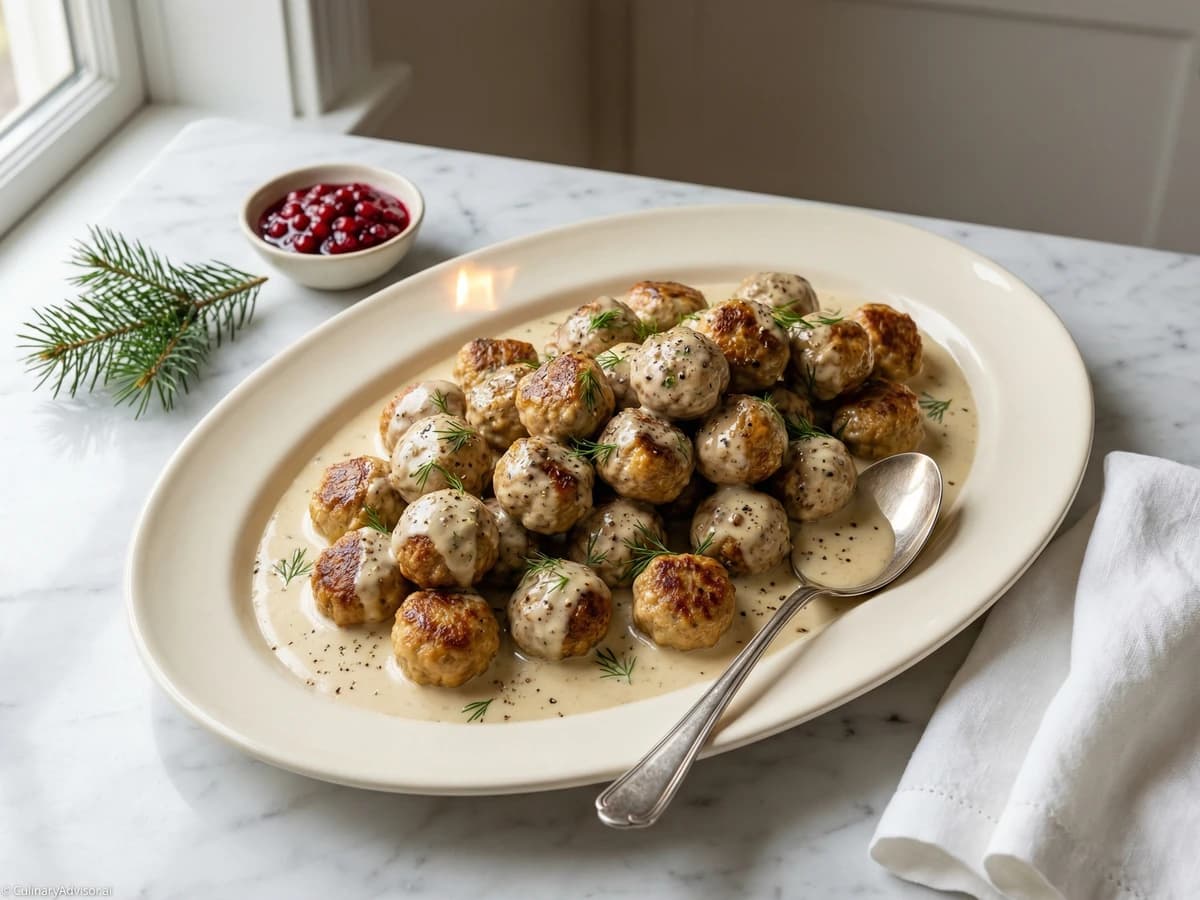
Swedish Meatballs with Cream Sauce
Impossibly tender meatballs kissed with allspice and nutmeg, swimming in a silken cream gravy that begs for crusty bread. This is the dish that turns Christmas Eve into a proper celebration.
A cooking platform built around craft, culture, and the stories behind what we eat.
Created by
Salt-cured lamb ribs steamed to silken tenderness over aromatic birch twigs, a West Norwegian Christmas tradition that transforms humble ingredients into a celebration of pure lamb flavor worthy of your most important gathering.
Pinnekjøtt belongs to that noble family of preserved meats born from necessity and perfected through centuries of tradition. Norwegian farmers along the western fjords developed this technique long before refrigeration, salting and drying their lamb through the harsh autumn to sustain families through winter. The name translates to 'stick meat,' a reference to the birch twigs that form a rack over simmering water, suspending the ribs in fragrant steam until they surrender completely.
This is not fast food. The lamb requires soaking for a full day to draw out excess salt and rehydrate the meat. Then comes the gentle steaming, two to three hours of patient work that rewards you with ribs so tender the meat slides from the bone at the suggestion of a fork. The flavor is extraordinary: intensely lamby, faintly smoky from the birch, with a depth that fresh lamb simply cannot achieve.
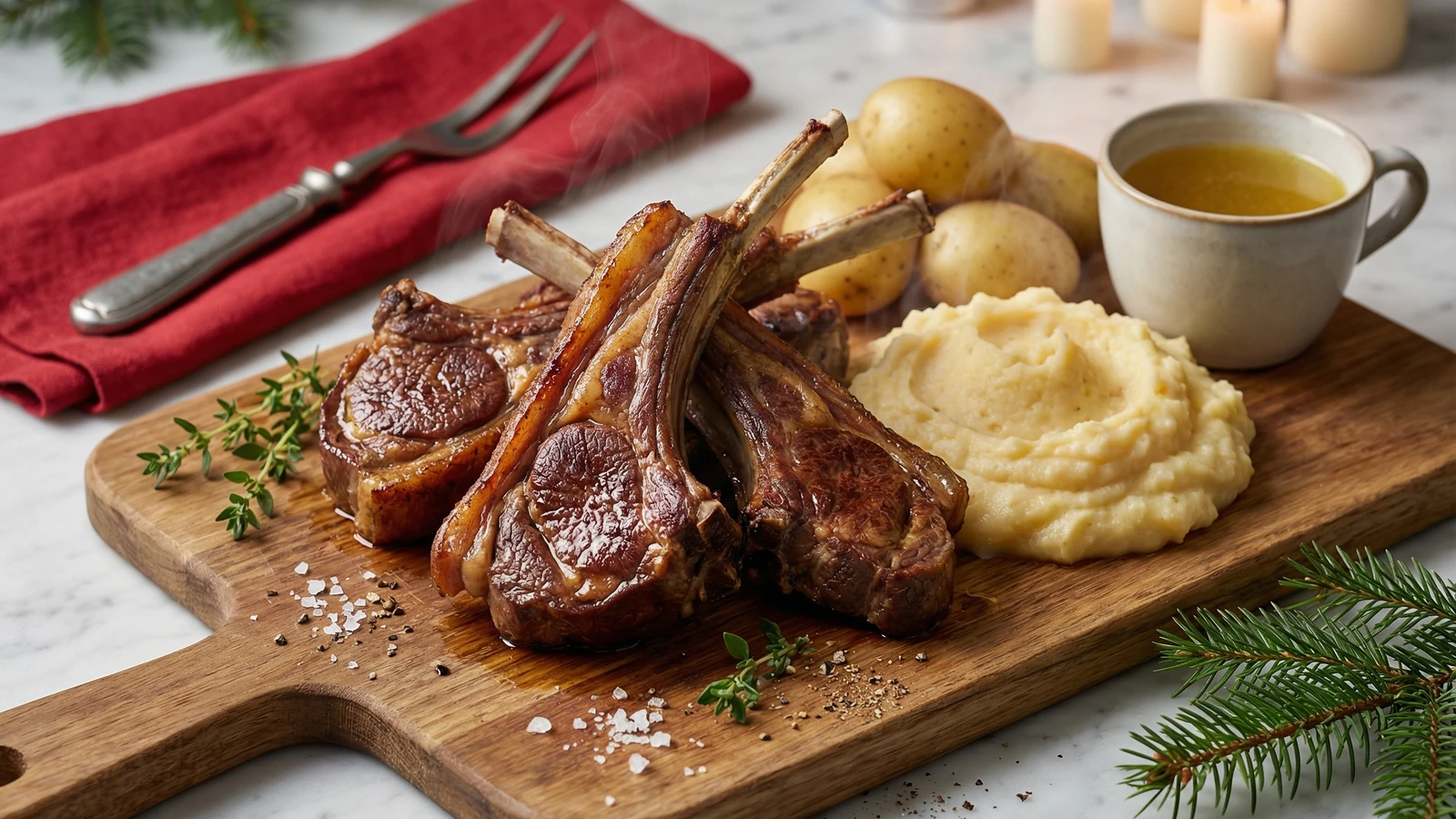
I first encountered pinnekjøtt at a Christmas table in Bergen, served family-style on a wooden platter with mashed rutabaga, boiled potatoes, and cups of the rich cooking broth for sipping. The host explained that in his grandmother's time, the quality of a household was judged by its pinnekjøtt. Some things don't change. This dish still tells your guests exactly how much care you've invested in their celebration.
For American cooks, pinnekjøtt offers a window into a preservation tradition as sophisticated as anything from Italy or Spain. The technique translates beautifully to our kitchens. You'll need to plan ahead, but the active work is minimal. Let time and salt do the heavy lifting while you attend to the rest of your feast.
Quantity
4 pounds
Quantity
1 large bundle (20-30 twigs)
8-10 inches long
Quantity
as needed
for soaking and steaming
Quantity
2
Quantity
6
Quantity
for serving
Quantity
for serving
| Ingredient | Quantity |
|---|---|
| salt-cured dried lamb ribs (pinnekjøtt) | 4 pounds |
| birch twigs8-10 inches long | 1 large bundle (20-30 twigs) |
| waterfor soaking and steaming | as needed |
| bay leaves (optional) | 2 |
| whole black peppercorns (optional) | 6 |
| coarse sea salt | for serving |
| freshly cracked black pepper | for serving |
Examine your pinnekjøtt carefully. The ribs should be firm and dry with a slightly yellowish fat layer and deep burgundy meat. There should be no off odors, just a clean, salty, faintly gamey smell. If the ribs are very stiff and board-like, they'll need the full soaking time. Slightly more pliable ribs may be ready sooner. Cut between the ribs to separate them if they haven't been pre-cut, using a sharp heavy knife to work between the bones.
Place the separated ribs in a large container or clean bucket and cover completely with cold water. The ribs will float initially; weight them down with a plate if needed. Refrigerate and soak for 24 to 30 hours, changing the water three to four times throughout. Each water change draws out more salt and allows the meat to rehydrate. Taste a small piece of the fat after 24 hours. It should be pleasantly salty but not aggressively so. If it still puckers your mouth, continue soaking.
Rinse the birch twigs thoroughly under cold water to remove any dust or debris. Soak them in cold water for at least one hour before cooking. This prevents scorching and releases their subtle aromatic compounds during steaming. The twigs should be sturdy enough to support the weight of the lamb without collapsing. Arrange them in a tight crosshatch pattern at the bottom of your largest pot, creating a platform at least two inches above the bottom.
Add water to the pot until it reaches just below the birch twig rack, roughly one and a half inches deep. The water must never touch the meat directly. Add the bay leaves and peppercorns to the water if using. Bring to a boil over high heat, then reduce to maintain a steady simmer. You should see consistent steam rising but not violent bubbling that would splash water onto the meat.
Drain the soaked lamb ribs and pat them dry. Arrange them on the birch twig rack in a single layer with the meaty side facing up. Pieces can touch but shouldn't overlap significantly or they'll steam unevenly. If you have more ribs than fit in one layer, you'll need to steam in batches or use multiple pots. Cover tightly with a lid. If your lid doesn't seal well, place a clean kitchen towel over the pot before covering to trap steam more effectively.
Steam the ribs for 2 to 3 hours, checking the water level every 30 minutes and adding more boiling water as needed. Never let the pot run dry. The lamb is ready when the meat has pulled back from the bones slightly and yields easily when pierced with a fork. A properly cooked rib will release from the bone with gentle pressure but shouldn't be falling apart. The fat should be translucent and the meat a deep, rich brown throughout.
For a more robust presentation with some caramelization, transfer the steamed ribs to a sheet pan and place under a hot broiler for 3 to 5 minutes until the fat begins to blister and brown in spots. Watch carefully as the rendered fat can flare. This step is not traditional but adds textural contrast that modern diners appreciate. Some Norwegian families consider this heresy; others swear by it.
Strain the steaming liquid through a fine-mesh sieve into a fat separator or measuring cup. The liquid will be deeply flavored with lamb essence and birch. Let it settle for a few minutes, then pour off into a warm serving vessel, leaving the fat behind. This broth is traditionally served alongside in small cups for sipping between bites of meat. It's liquid gold. Don't discard it.
Transfer the ribs to a large warmed platter and bring to the table immediately. Provide coarse salt and pepper for individual seasoning, though most ribs will need nothing more. Serve with mashed rutabaga (kålrabistappe), boiled potatoes, and the cooking broth in small cups or a gravy boat. Each diner should receive several ribs, a generous mound of mash, potatoes for soaking up juices, and broth for sipping. This is fork food. The meat should slide away from bone without knife work.
1 serving (about 226g)
Culinary guides, cultural storytelling, and the editorial depth that makes cooking meaningful.
Discover Culinary ExplorerChef Dean
Impossibly tender meatballs kissed with allspice and nutmeg, swimming in a silken cream gravy that begs for crusty bread. This is the dish that turns Christmas Eve into a proper celebration.

Chef Juliette
John Dory has the delicacy of sole and the firmness of turbot. A light flouring, a quick butter sauté, and nut-brown beurre noisette show exactly why looks never mattered.

Chef Juliette
Fresh haddock proves its delicacy in the meunière pan: a fine flour crust, moist pearly flakes, and beurre noisette sharpened with lemon and parsley, ready from one skillet in half an hour.

Chef Juliette
Éperlans à l’Anglaise turns small fish into a lesson in disciplined coating: boned smelts under a close, crisp crumb, pan-fried in clarified butter and finished with bright, half-melted maître d’hôtel butter.