Chef Thomas
Anchovy Sauce
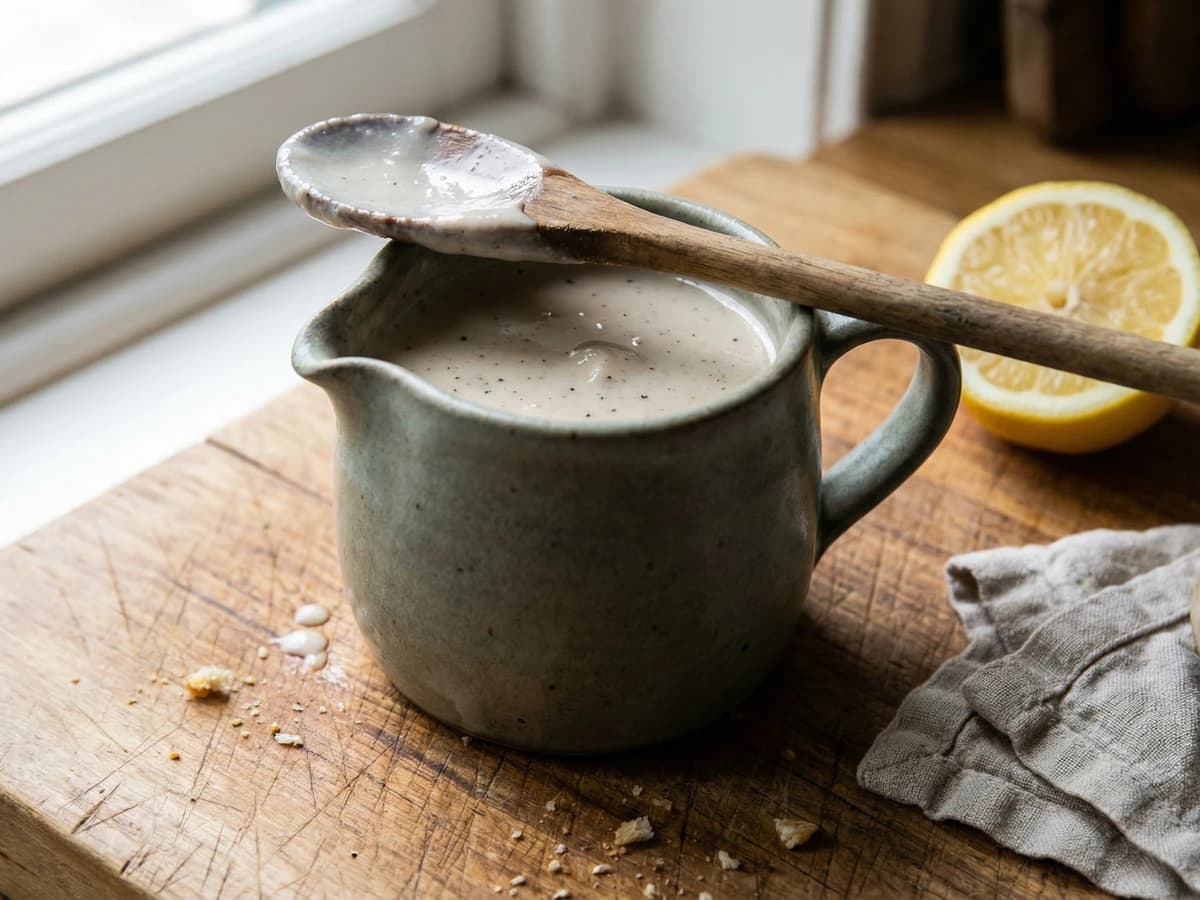
A proper white sauce sharpened with pounded anchovy, the old Georgian trick for waking up a piece of poached fish or a slice of roast lamb on a Sunday in spring.
A cooking platform built around craft, culture, and the stories behind what we eat.

Created by Chef Thomas
A dark, savoury gravy built from mushrooms browned hard in butter, loosened with stock and thyme, and poured over whatever needs the comfort of it on a cold evening.
October arrived in the kitchen this week. The light changed, the window started fogging by five, and the mushroom stall at the market suddenly had things on it that weren't there in August. Chestnut mushrooms in open trays. A few wild ones, foraged, priced accordingly. I brought home more than I needed and made this gravy by the time the kettle had boiled.
Mushroom gravy is one of those quietly useful things. It goes with a nut roast if that's your Sunday. It pools around a pie. It turns a plate of mashed potato into an actual meal. Spooned over toast with a poached egg on top, it's dinner on a Tuesday when you can't be bothered with anything else. I've leaned on it for years and it has never let me down.
The whole thing lives or dies on how hard you brown the mushrooms. This is the part people rush and shouldn't. You want them dark, concentrated, almost too far, with the butter gone nutty around them and the kitchen smelling of woods in autumn. Everything after that is just adding liquid and paying attention. Trust your nose. It knows before you do.
I wrote it down in the notebook once: mushrooms, butter, thyme, Wednesday, rain. That was all the recipe I needed that day. This is the longer version, for anyone who wants one.
Quantity
500g
chestnut, field, and a handful of wild if you can get them, roughly chopped
Quantity
50g
Quantity
1 tablespoon
Quantity
1 medium
finely chopped
Quantity
2 cloves
finely chopped
Quantity
a few sprigs
leaves picked
Quantity
1 tablespoon
Quantity
100ml
Quantity
600ml
Quantity
1 teaspoon
Quantity
to taste
Quantity
to taste
freshly ground
| Ingredient | Quantity |
|---|---|
| mixed mushroomschestnut, field, and a handful of wild if you can get them, roughly chopped | 500g |
| unsalted butter | 50g |
| olive oil | 1 tablespoon |
| onionfinely chopped | 1 medium |
| garlicfinely chopped | 2 cloves |
| fresh thymeleaves picked | a few sprigs |
| plain flour | 1 tablespoon |
| dry white wine or dry sherry | 100ml |
| good beef, chicken, or vegetable stock | 600ml |
| soy sauce or Worcestershire sauce | 1 teaspoon |
| fine sea salt | to taste |
| black pepperfreshly ground | to taste |
Put your widest, heaviest pan over a high heat. Let it get hot before anything goes in. Add half the butter and the olive oil. The butter should foam and begin to smell nutty almost immediately. This is the moment. Cold mushrooms in a warm pan stew. Hot mushrooms in a hot pan caramelize. The difference is everything.
Tip in the mushrooms in a single layer. Don't crowd them. If your pan isn't big enough, do it in two batches. Leave them alone for a minute or two, then stir and leave them alone again. You're waiting for the water to release, hiss away, and the mushrooms to start going properly dark at the edges. They'll shrink to about a third of their original volume. Season with salt once they've started to brown, not before.
Push the mushrooms to one side and drop the rest of the butter into the clear patch. Add the chopped onion and let it soften for five minutes or so, stirring it through the mushrooms once it's translucent. Add the garlic and thyme and give it another minute. The kitchen should smell like somewhere you want to be.
Scatter the flour over everything and stir it in. Cook it for a minute until it disappears into the butter and loses its raw smell. Pour in the wine or sherry and let it bubble fiercely, scraping the bottom of the pan with a wooden spoon to lift the dark sticky bits. That's where the flavour lives. Don't leave any of it behind.
Pour in the stock a little at a time, stirring well between additions so it stays smooth. Bring it to a gentle simmer and let it bubble away for ten or fifteen minutes, until it's reduced to something that coats the back of a spoon. Add the soy or Worcestershire sauce. Taste it. More salt, probably. A good grind of pepper. Taste again. If it needs more time, give it more time. Gravy rewards patience.
Check the texture. If you want it smoother, give it a quick blitz with a stick blender, though I usually leave it chunky because I like the bits. If it's too thick, loosen with a splash more stock. If it's too thin, let it bubble a few minutes longer. Pour into a warm jug and take it straight to the table.
1 serving (about 350g)
Culinary guides, cultural storytelling, and the editorial depth that makes cooking meaningful.
Discover Culinary ExplorerChef Thomas
A proper white sauce sharpened with pounded anchovy, the old Georgian trick for waking up a piece of poached fish or a slice of roast lamb on a Sunday in spring.

Chef Thomas
A spiced autumn chutney made from a glut of apples and a quiet afternoon, simmered down until the kitchen smells of October and the jars line up on the counter like a small, useful insurance policy.
Chef Thomas
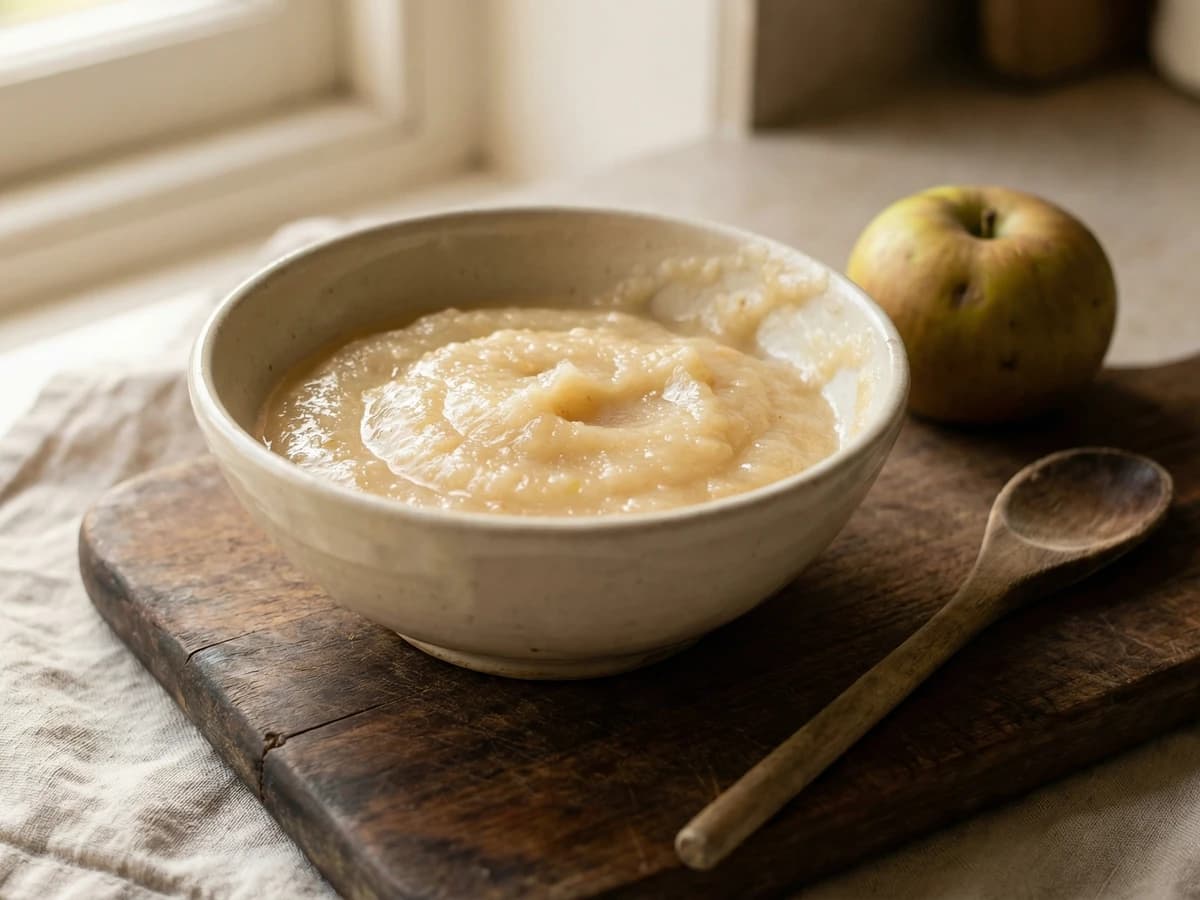
A bowl of sharp, fluffy Bramley apple sauce, made in the time it takes to carve the pork, the kind of small condiment that quietly makes the whole meal make sense.
Chef Thomas
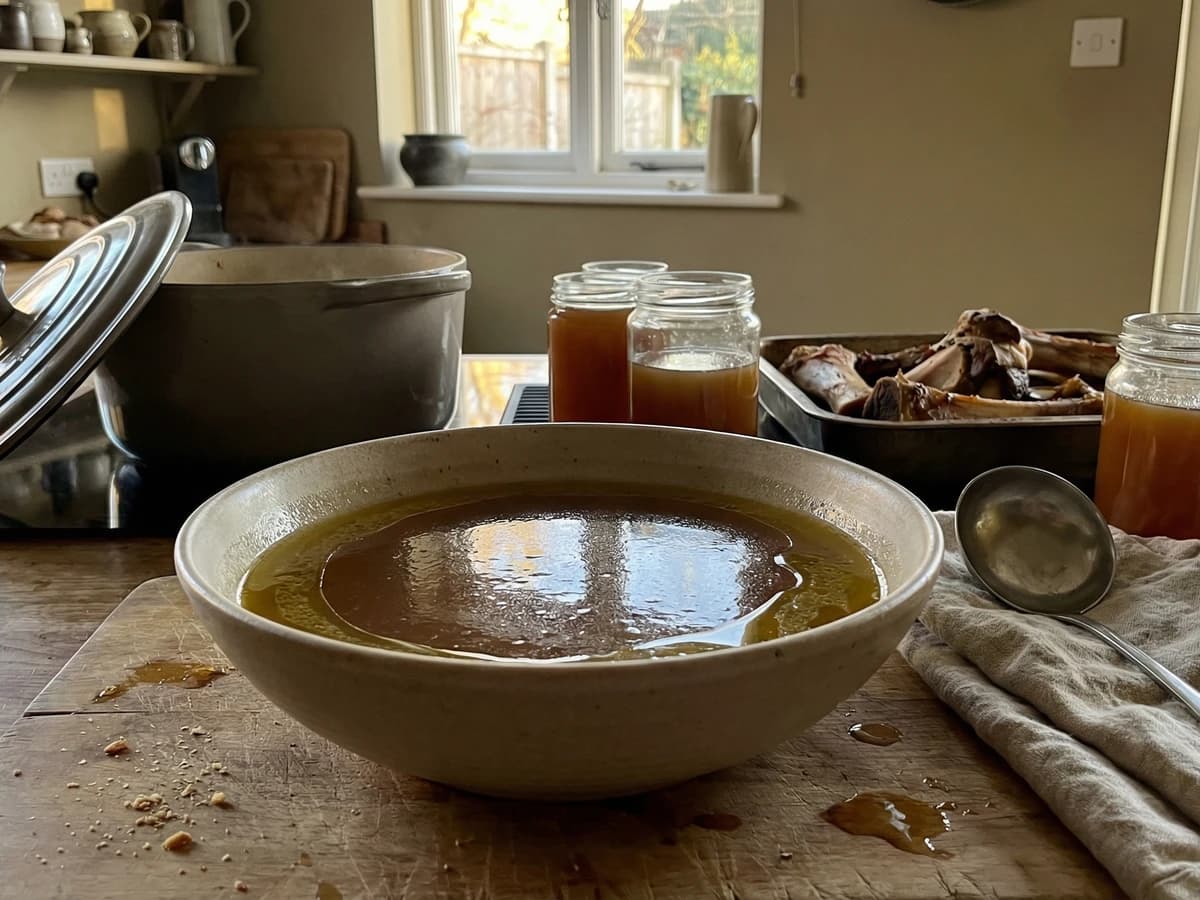
Beef bones roasted until dark, then coaxed for a long afternoon into a deep amber stock, the foundation of every good gravy, every braise, every bowl of winter soup worth the trouble.