
Chef Juliana
Arroz Paraense
You don't need to be from Belém to learn the method. Real tucupi, a good refogado, and quiet hands give you yellow, loose rice that tastes like comida de verdade.
A cooking platform built around craft, culture, and the stories behind what we eat.
Created by
You think tucupi and fish flakes mean this is not for you. Wrong. Buy real tucupi, build a refogado, thicken with farinha, and dinner knows exactly where it is from.
You look at the bottle of tucupi and the bunch of jambu and think, quietly, isso não é pra mim. I know. A gente was trained to believe regional food is either restaurant magic or grandmother-only knowledge. Nonsense. Cooking isn't a gift, it's something you learn, one pot, one smell, one correct texture at a time.
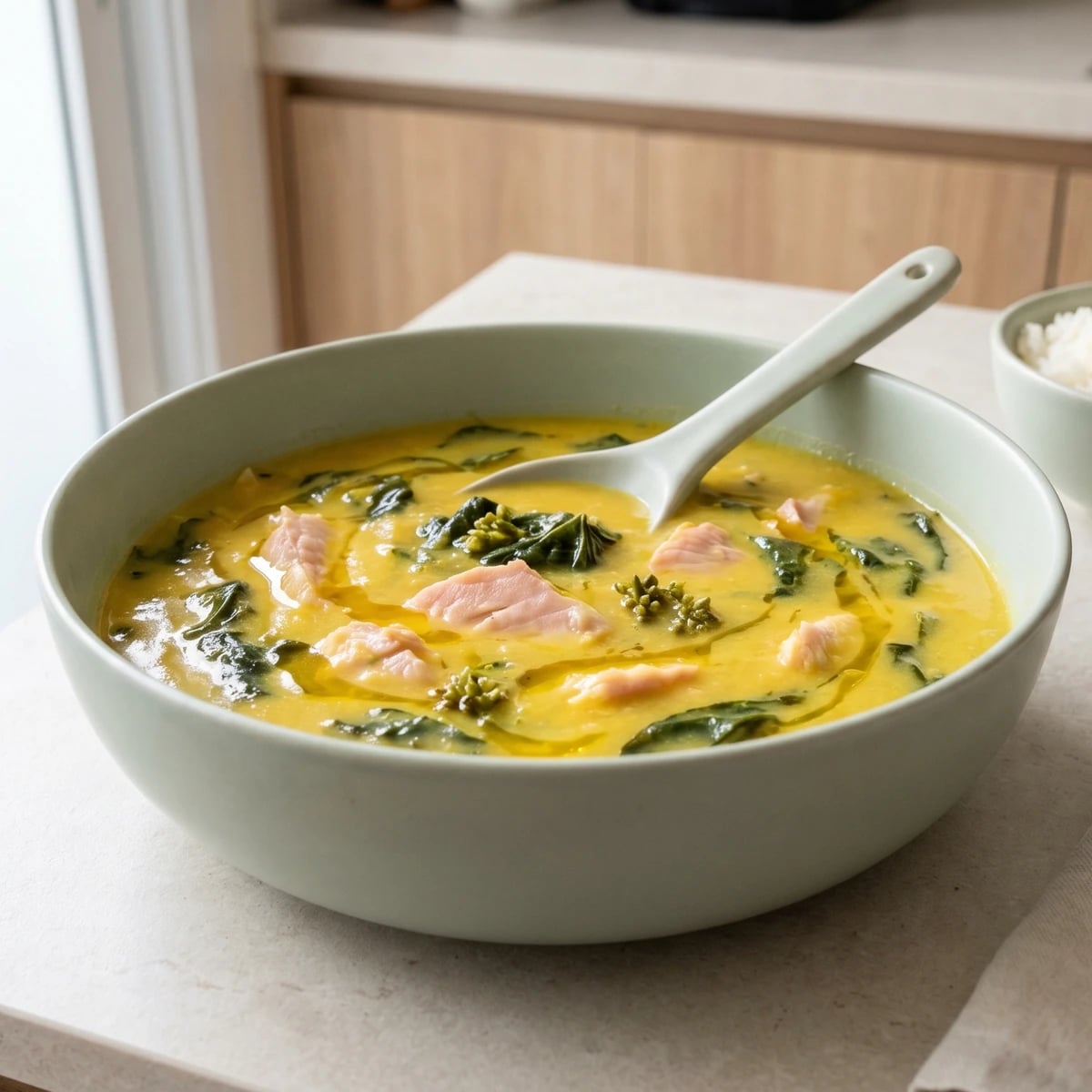
This is comida de verdade for the day after the fish. You take Sunday's roasted fish, desfiar it with your hands, build a refogado with onion, garlic, and chicoria-do-para, then give it the yellow strength of real tucupi. The farinha doesn't get dumped in like cement. It rains in slowly, while you stir, until the broth pulls together into a soft, spoonable stew. That's the point: body, not paste.
Anota ai: real bottled tucupi is non-negotiable. Tucupi comes from mandioca brava, and the long boil is what drives off the cyanogenic compounds and makes it safe. Buy tucupi from a serious producer that has already boiled it properly, then boil it again at home because care is not drama. That supermarket molho amarelo pretending to be tucupi can stay exactly where it is.
Jambu is the second non-negotiable when you can get it, because its green, electric little numbness belongs here. If you can't get it, say the truth and cook without it. Don't throw in random greens and pretend. Pará and Amazonas cooks carry this tradition; I teach a home version with respect, not ownership. Serve it with arroz soltinho, beans if you have them, and something green on the side, because even when the fish is river fish and the starch is mandioca, the pê-efe is still there holding the country together.
Mujica, also written mojica in parts of Brazil, names a family of fish stews thickened with cassava, either in pieces or as farinha, with strong regional versions from the Pantanal to the Amazon. In Pará and Amazonas home cooking, leftover roasted river fish, tucupi, chicoria-do-para, jambu, and farinha d'agua turn the pot into practical food, especially after a big fish meal. The tucupi is the serious part: it comes from wild bitter cassava and is only safe after proper processing and a long boil, which is why real prepared tucupi matters.
Quantity
4 cups
from a trusted producer, not molho amarelo
Quantity
2 cups
flaked and checked for bones, preferably tambaqui, pirarucu, dourada, or another firm Brazilian fish
Quantity
1 bunch
tough stems removed, leaves and tender tips washed
Quantity
3 tablespoons
Quantity
1 medium
finely chopped
Quantity
4 cloves
minced
Quantity
1/2 cup
chopped, also called coentro-do-para
Quantity
1 small
chopped
Quantity
1 small
minced
Quantity
2 cups, plus more as needed
Quantity
1/3 cup, plus more only if needed
Quantity
1 teaspoon, plus more to taste
Quantity
2 tablespoons
chopped, for finishing
Quantity
as needed
for serving
| Ingredient | Quantity |
|---|---|
| real bottled tucupifrom a trusted producer, not molho amarelo | 4 cups |
| cooked roasted fishflaked and checked for bones, preferably tambaqui, pirarucu, dourada, or another firm Brazilian fish | 2 cups |
| jambutough stems removed, leaves and tender tips washed | 1 bunch |
| neutral oil or mild olive oil | 3 tablespoons |
| onionfinely chopped | 1 medium |
| garlicminced | 4 cloves |
| chicoria-do-parachopped, also called coentro-do-para | 1/2 cup |
| tomato (optional)chopped | 1 small |
| fresh chile (optional)minced | 1 small |
| water | 2 cups, plus more as needed |
| farinha d'agua or coarse cassava flour | 1/3 cup, plus more only if needed |
| salt | 1 teaspoon, plus more to taste |
| cilantro or more chicoria-do-parachopped, for finishing | 2 tablespoons |
| cooked white ricefor serving | as needed |
Pour the tucupi into a heavy pot and bring it to a steady boil. Let it boil for 15 minutes, uncovered, until it smells sharp, sour, and clean, not raw. Real bottled tucupi should already be safely processed, but this second boil is part of cooking with respect for mandioca brava. The long boil is what makes tucupi safe; molho amarelo from the shelf is not tucupi and won't give you this dish.
Flake the roasted fish with your fingers into bite-size pieces and check every piece for bones. Keep some flakes large enough to look like fish, because if you shred it into dust the stew loses its body. Leftover roasted fish is the honest Tuesday shortcut here. Raw fish can cook in the pot, yes, but it won't give the same roasted depth.
Bring a small pot of water to a boil, add the jambu, and cook for 2 to 3 minutes, just until the leaves murchar and the stems turn tender. Drain, chop roughly, and set aside. This keeps the jambu green and pleasant instead of tough. If you don't have jambu, cook the dish without it and say so plainly. Don't replace it with a random green and call it the same.
Warm the oil in a heavy 4-liter pot over medium heat. Add the onion and cook, stirring now and then, until it goes soft and see-through, about 5 minutes. Add the garlic and chicoria-do-para and cook for 1 minute, just until the smell rises from the pot. This is the foundation, not decoration. Burn the garlic and bitterness walks into dinner with muddy shoes.
Add the tomato and chile, if using, and cook until the tomato slumps and leaves a little red-orange oil around the edges, about 4 minutes. This cooks off the raw taste and gives the stew a rounder base. Skip the tomato if yours is pale and sad. A bad tomato doesn't become good because a recipe bullied you.
Pour in the boiled tucupi and 2 cups water, scraping the bottom of the pot with a wooden spoon. Bring it to a lively simmer and let it cook for 10 minutes, until the color is bright yellow and the refogado has stopped floating around like separate little bits. This short simmer lets the base become one thing before the fish goes in.
Stir in the flaked fish gently and simmer for 5 to 8 minutes, just until the fish is hot and the broth tastes like it has met the fish properly. Don't boil it hard. Hard boiling breaks the flakes into strings, and then you have fish soup with regrets instead of mujica.
Lower the heat. Sprinkle in the farinha d'agua slowly with one hand while stirring with the other, like rain, not like a landslide. Stop at 1/3 cup and simmer for 3 minutes. The mujica should be spoonable, glossy, and softly thick, with the broth coating the spoon but still moving. If you dump the farinha all at once, it clumps. If you add too much, you make paste. A gente wants comfort, not construction material.
Stir in the cooked jambu and taste for salt. Let the pot rest off the heat for 5 minutes, because farinha keeps drinking liquid after the flame is off. If it tightens too much, loosen it with a splash of hot water or tucupi. Finish with chopped cilantro or chicoria-do-para and serve with arroz branco soltinho.
1 serving (about 435g)
Culinary guides, cultural storytelling, and the editorial depth that makes cooking meaningful.
Discover Culinary Explorer
Chef Juliana
You don't need to be from Belém to learn the method. Real tucupi, a good refogado, and quiet hands give you yellow, loose rice that tastes like comida de verdade.

Chef Juliana
You don't need river wisdom in your bones to cook tambaqui well. You need real tucupi, a calm simmer, and the sense to let the fish stay whole until it gives.

Chef Juliana
If fish on the grill makes you whisper isso não é pra mim, anota aí: salt, garlic, chicória, hot coals, and attention. Cooking isn't a gift, it's something you learn.

Chef Juliana
You think tucupi is too regional, too special, too much for your stove. Wrong. Buy the real bottle, sear the fish, and let a careful refogado solve dinner.