Chef Juliana
Chimia de Fruta
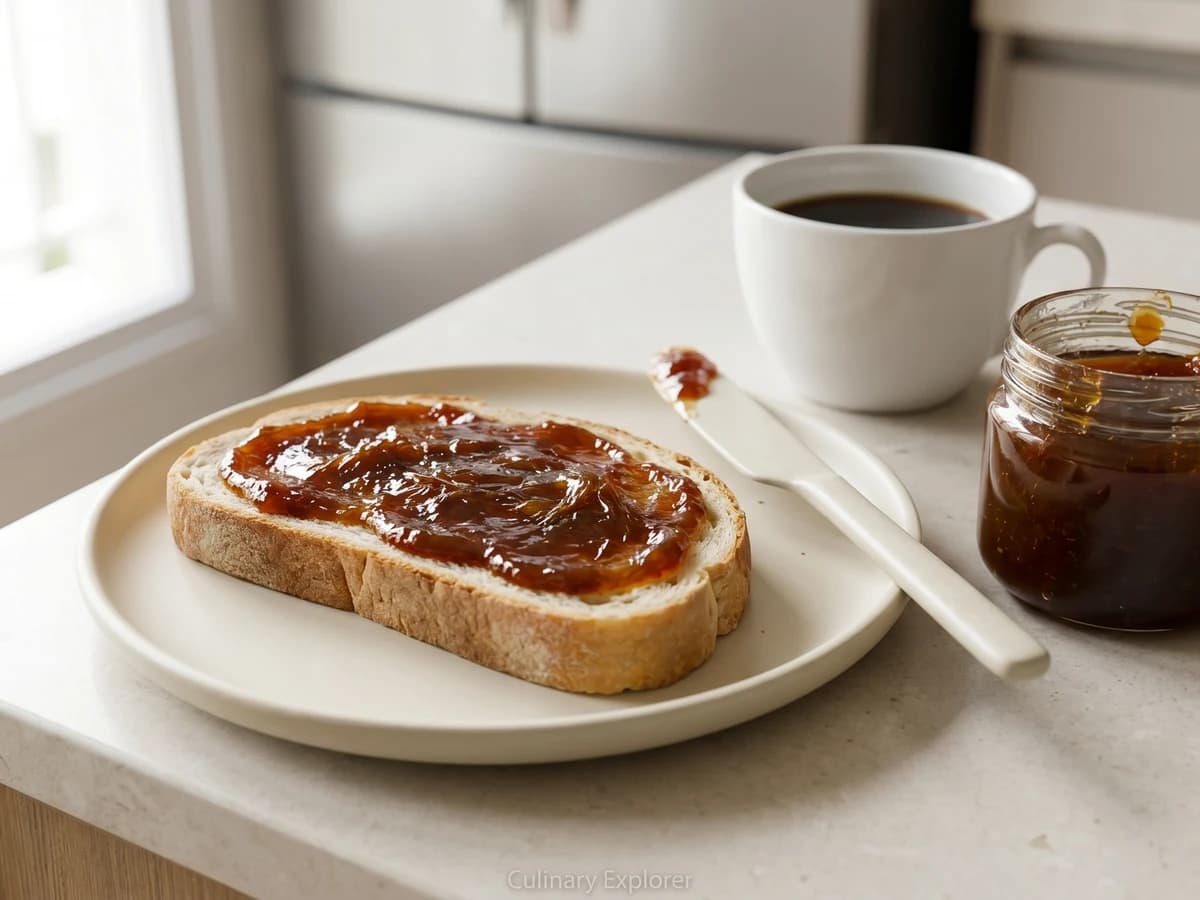
You don't need a factory jar to put something good on bread. Fruit, sugar, lemon, and patience turn into chimia, the kind of comida de verdade that makes breakfast behave.
A cooking platform built around craft, culture, and the stories behind what we eat.

Created by
You don't need a bottled sauce to make churrasco taste alive. Cook tomato, onion, pepper and chili until they soften, blend them hot, and you get a sharp, honest spoonful for the whole pê-efe.
You hear molho, hear gaúcho, hear pimenta, and that little voice says, "isso não é pra mim." Good. Bring the little voice here. A gente is going to put tomato, onion, bell pepper and pimenta in a pan, let them murchar until they stop tasting raw, and blend the whole thing into a sauce that behaves.
I learned too late that sauces are where people hide nonsense. Powder, bottle, "barbecue flavor" written by someone who never stood over a grill. No. Comida de verdade can be faster than the fake thing if the method is plain: cook the vegetables in oil so their water leaves and their sweetness shows up, add vinegar so the sauce cuts the fat, then blend while hot so it turns smooth and spoonable instead of thin and watery.
This belongs next to churrasco, yes, but don't trap it there. On a pê-efe, rice, beans, meat or egg, and something green, one spoon of this wakes up leftovers, makes a simple plate feel cared for, and keeps dinner from becoming a dry little lecture. Not luxury. Arithmetic.
Use good ripe tomatoes when they're cheap, local, and didn't travel a week to reach you. If tomatoes are pale and sulking, canned whole tomatoes are the Tuesday shortcut; they work, but you lose that fresh campo sweetness. You can still resolver o jantar. Cozinhar não é dom, é um aprendizado, and this sauce is a very forgiving teacher.
Molho campeiro is tied to the churrasco culture of Rio Grande do Sul, where grilled meat is often served with sharp sauces that cut fat instead of covering the meat. Campeiro comes from campo, the rural cattle country of the southern plains, but the sauce is not one protected formula; families and barbecue cooks vary the tomato, vinegar, herbs and pimenta. Cooked, blended versions sit apart from raw vinagrete, with the vegetables softened first so the sauce lands round, sharp and spicy instead of raw and crunchy.
Quantity
4 medium, about 3 cups
chopped
Quantity
1 medium, about 1 cup
chopped
Quantity
1/2 pepper, about 1/2 cup
chopped
Quantity
2 dedo-de-moça or 1 malagueta
stems removed, seeded for less heat
Quantity
3 cloves
chopped
Quantity
2 tablespoons
Quantity
1 teaspoon, plus more to taste
Quantity
1/4 teaspoon
Quantity
2 tablespoons
Quantity
1/4 cup
only if needed for blending
Quantity
2 tablespoons
chopped
Quantity
1/2 teaspoon
only if the tomatoes taste very sharp
| Ingredient | Quantity |
|---|---|
| ripe tomatoeschopped | 4 medium, about 3 cups |
| onionchopped | 1 medium, about 1 cup |
| green bell pepperchopped | 1/2 pepper, about 1/2 cup |
| dedo-de-moça chiles or malagueta chilestems removed, seeded for less heat | 2 dedo-de-moça or 1 malagueta |
| garlicchopped | 3 cloves |
| neutral oil or olive oil | 2 tablespoons |
| salt | 1 teaspoon, plus more to taste |
| freshly ground black pepper | 1/4 teaspoon |
| apple cider vinegar or red wine vinegar | 2 tablespoons |
| water (optional)only if needed for blending | 1/4 cup |
| parsley or green onionchopped | 2 tablespoons |
| sugar (optional)only if the tomatoes taste very sharp | 1/2 teaspoon |
Chop the tomatoes, onion and bell pepper into small, even pieces. Cut the pimenta in half and remove the seeds if you want the sauce lively instead of furious. Even pieces cook at the same pace; big chunks stay raw while tiny bits scorch, and then you'll blame the sauce when the knife was the problem.
Warm the oil in a heavy 2-liter saucepan over medium heat. Add the onion, bell pepper and a pinch of the salt, then cook, stirring now and then, until the onion goes soft and see-through and the pepper loses its raw smell, about 5 to 7 minutes. This is the refogado doing its work: the vegetables murchar, their water cooks off, and the sauce begins tasting like food instead of chopped salad.
Add the garlic and pimenta and stir for 1 minute, just until the garlic smells sweet and sharp. Don't wander off. Burnt garlic is bitter and bossy, and in a blended sauce it spreads everywhere like bad news.
Add the chopped tomatoes, the rest of the salt and the black pepper. Cook at a steady bubble, stirring often, until the tomatoes collapse, the sauce looks glossy at the edges, and a spoon leaves a brief trail across the bottom of the pan, about 12 to 15 minutes. You are cooking out excess water here; skip this and the blender gives you a thin red drink, not molho.
Stir in the vinegar and cook for 2 minutes. Taste a little on a spoon. It should be sharp enough to wake up grilled meat and rich beans, but not so sour that your face folds in half. If the tomatoes are very acidic, add the optional sugar and stir until it disappears. Sugar is not the point; balance is.
Take the pan off the heat. Blend with an immersion blender right in the pan, or transfer the sauce to a blender only half full, remove the small center cap, cover the opening with a folded towel, and pulse until smooth. Hot sauce trapped in a closed blender builds pressure, and a ceiling painted with pimenta teaches nothing useful. Add water 1 tablespoon at a time only if the blades refuse to move. The finished sauce should coat a spoon and pour in a slow ribbon.
Stir in the chopped parsley or green onion. Taste again for salt, vinegar and pimenta, then let the sauce rest for 10 minutes before serving. Resting lets the sharp edges settle, so the tomato, pepper and vinegar taste like one sauce instead of three people arguing in the same room.
1 serving (about 60g)
Culinary guides, cultural storytelling, and the editorial depth that makes cooking meaningful.
Discover Culinary ExplorerChef Juliana
You don't need a factory jar to put something good on bread. Fruit, sugar, lemon, and patience turn into chimia, the kind of comida de verdade that makes breakfast behave.

Chef Juliana
You think preserves belong to grandmothers and copper pots. Wrong. A heavy pot, ripe pumpkin, sugar, coconut, and attention to the ponto get you there.

Chef Juliana
You don't need a copper pan or a grandmother watching your elbow. Green figs, sugar, cloves, and patience make a glossy preserve that waits in the fridge for the next pê-efe.

Chef Juliana
You don't need a copper pot or a grandmother watching over your shoulder. You need ripe jabuticabas, a heavy pan, and the patience to learn the ponto.