
Chef Ally
Dashi with Silken Tofu and Seasonal Greens
A bowl of honest, crystal-clear Japanese broth that lets perfect ingredients speak for themselves: trembling silken tofu, bright market greens, and a dashi made with your own hands.
A cooking platform built around craft, culture, and the stories behind what we eat.

Created by
A bowl of warming broth that changes with the seasons, built on whatever looks most alive at the market. Simple enough for a Tuesday, nourishing enough for a lifetime.
This soup begins at the market. Not with a list, but with your eyes. What greens are the farmers proud of today? Which mushrooms smell of the earth? The vegetables you choose become the soup, so choose well.
Miso soup is not a fixed recipe. It is a way of eating. In Japan, it appears at nearly every meal, different each time because the season is different, the market is different, the cook is different. A bowl in spring might hold tender pea shoots and the first asparagus. Winter calls for sturdy roots and dark leafy greens. The miso and the dashi stay constant; everything else responds to the moment.
The technique here is almost nothing. You warm vegetables in good broth, then stir in miso at the end. That is all. But the nothing is important. You do not boil the miso, because boiling destroys the living cultures that make it so nourishing. You do not overcook the vegetables, because their aliveness is the whole point. When you get out of the way, the ingredients speak for themselves.
Quantity
4 cups
Quantity
1 piece (about 4 inches)
Quantity
1/2 cup loosely packed
Quantity
3 tablespoons
Quantity
4 ounces
cut into 1/2-inch cubes
Quantity
1 cup
Quantity
4 ounces
sliced
Quantity
1 medium
sliced thin on the diagonal
Quantity
2
sliced thin
Quantity
1 teaspoon
| Ingredient | Quantity |
|---|---|
| dashi or vegetable stock | 4 cups |
| kombu (optional) | 1 piece (about 4 inches) |
| bonito flakes (optional) | 1/2 cup loosely packed |
| miso paste | 3 tablespoons |
| firm tofucut into 1/2-inch cubes | 4 ounces |
| seasonal greens | 1 cup |
| mushroomssliced | 4 ounces |
| carrotsliced thin on the diagonal | 1 medium |
| scallionssliced thin | 2 |
| toasted sesame oil (optional) | 1 teaspoon |
If you are making your own dashi, place the kombu in a pot with four cups of cold water. Let it sit for fifteen minutes while you prepare your vegetables. Then bring the water slowly to just below a simmer over medium heat. You will see small bubbles forming on the kombu. Remove the kombu before the water boils, or the broth turns bitter. Add the bonito flakes, let them steep for five minutes without stirring, then strain through a fine mesh strainer. This is your foundation.
Slice your mushrooms and carrots. Wash and roughly chop your greens, removing any tough stems from chard or kale. Cut the tofu into small cubes. Slice the scallions, keeping the white and green parts separate. The whites go into the pot; the greens are for finishing.
Bring the dashi to a gentle simmer. Add the carrots first because they need the most time. After three minutes, add the mushrooms and the white parts of the scallions. Simmer another three minutes until the carrots yield to a fork but still have some life in them.
Slide in the tofu cubes and let them warm through for two minutes. Add your greens in the final minute. Spinach wilts almost instantly; heartier greens like kale need a bit longer. You want them just surrendered, still bright, not army green.
Remove the pot from the heat. This is essential. Place your miso in a small bowl or ladle. Add a few spoonfuls of the hot broth and whisk until smooth. Pour this slurry back into the pot and stir gently. Miso is alive with beneficial cultures; boiling kills them and turns the flavor harsh.
Ladle the soup into warmed bowls. Scatter the green parts of the scallions over each serving. A few drops of toasted sesame oil, if you like. Miso soup waits for no one. The vegetables are at their brightest now, the broth at its most fragrant. Bring it to the table while it still has that aliveness.
1 serving (about 330g)
Culinary guides, cultural storytelling, and the editorial depth that makes cooking meaningful.
Discover Culinary ExplorerChef Ally
A bowl of honest, crystal-clear Japanese broth that lets perfect ingredients speak for themselves: trembling silken tofu, bright market greens, and a dashi made with your own hands.
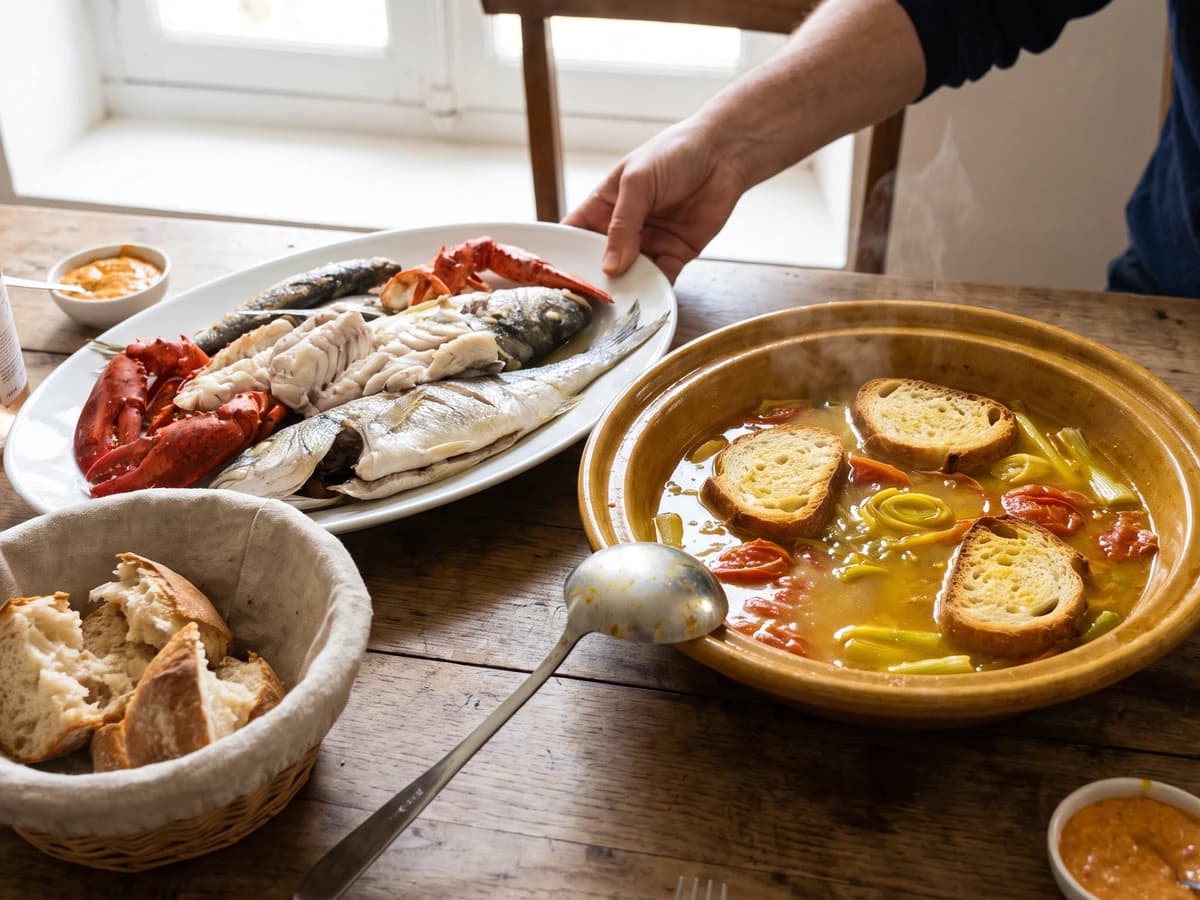
Chef Juliette
Marseille's great fish stew, saffron-gold and garlic-scented, proves that a hard boil can be the careful choice: it binds olive oil into broth before the whole pot meets bread.
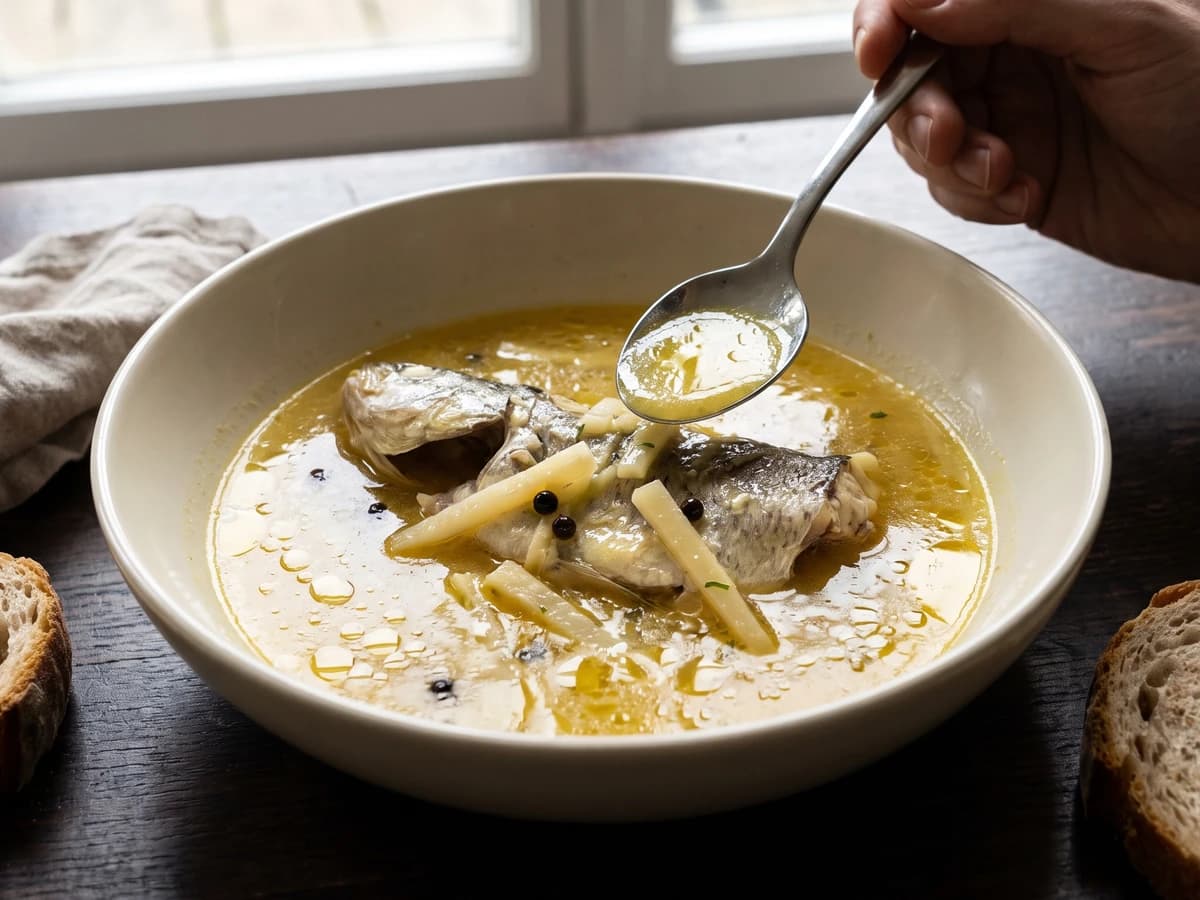
Chef Juliette
Waterzoi asks fresh, bone-in river fish to thicken its own buttery broth, with parsley root and pepper for company. No flour, no stockpot, just a brisk simmer watched closely.
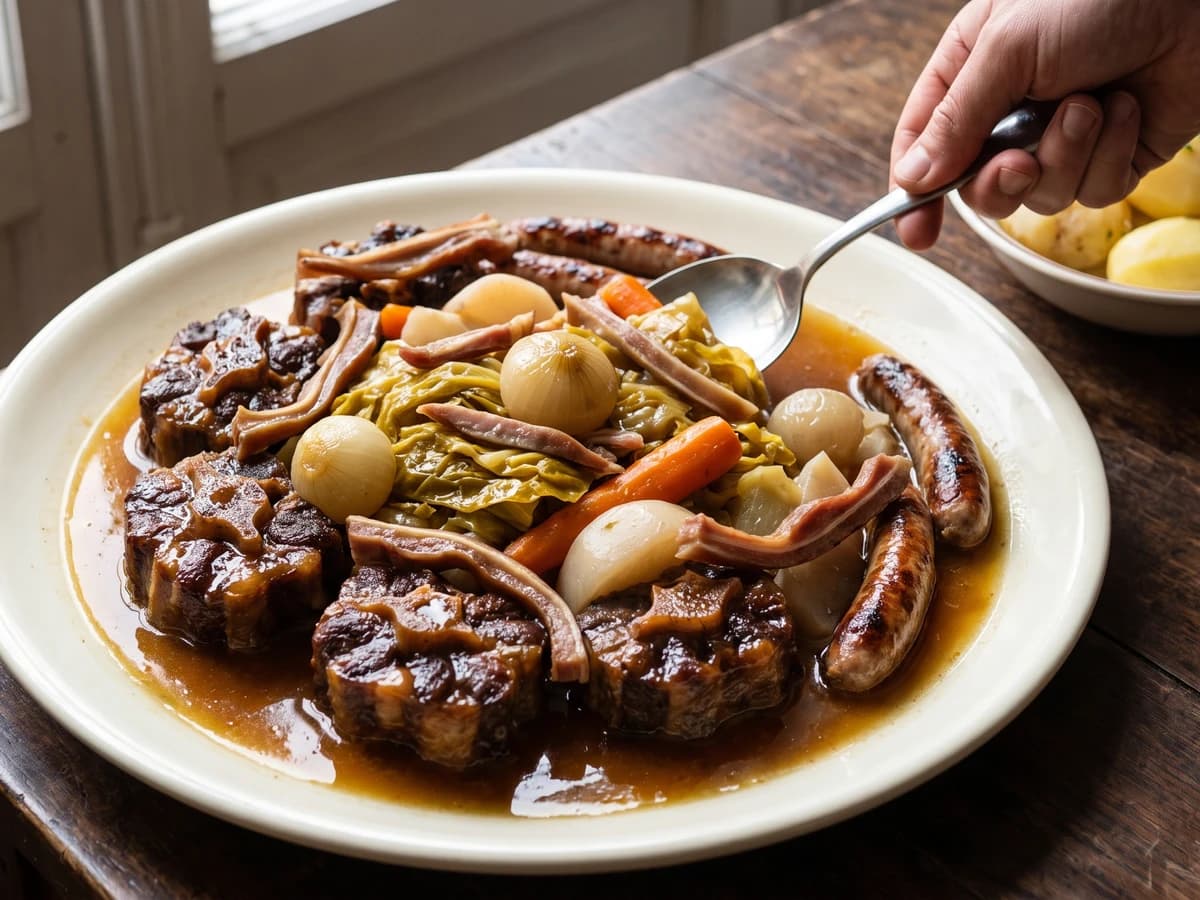
Chef Juliette
Queue de Bœuf en Hochepot gathers oxtail, pig's trotter and ear, cabbage, roots, and grilled chipolatas around a clear, gelatin-rich broth whose quiet simmer keeps every piece tender and distinct.