Chef Fai
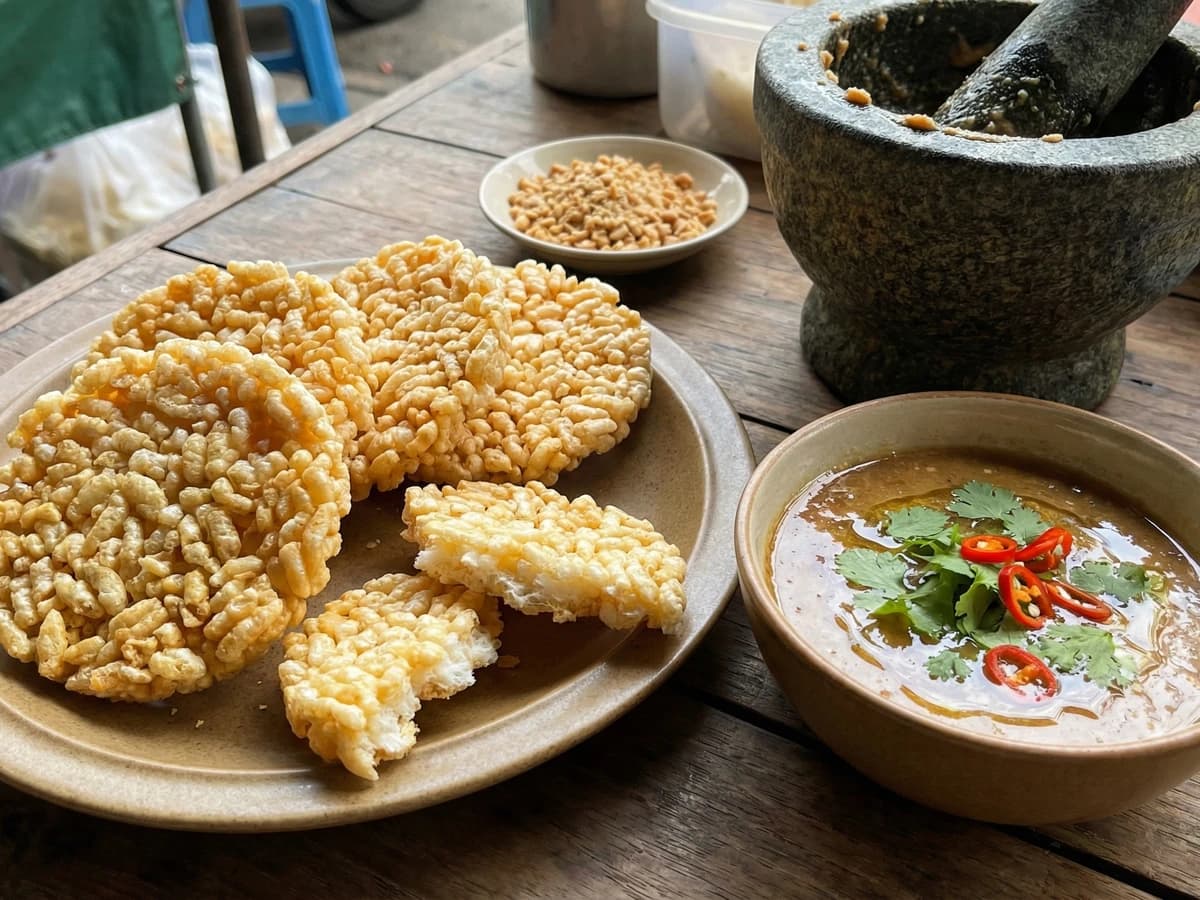
Crispy Rice with Coconut Dip (Khao Tang Na Tang)
The kreung tam doesn't rest, not even for a snack. Pounded paste cracked into coconut cream, spooned over golden rice that shatters on contact. Four pillars in every bite.
A cooking platform built around craft, culture, and the stories behind what we eat.
Created by
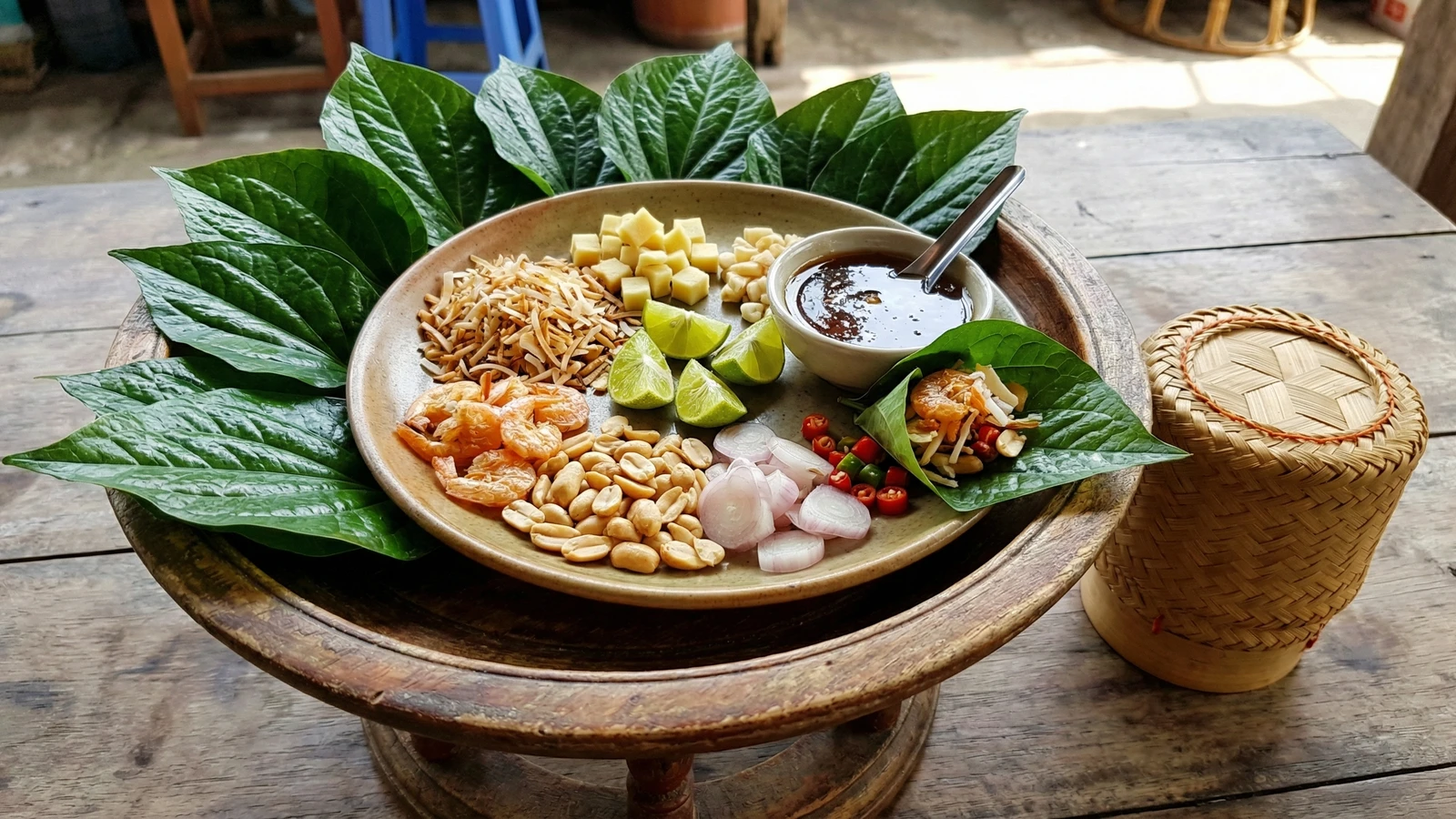
One leaf, one bite, all four pillars firing at the same time. Miang kham is the Thai flavor system deconstructed into a handful. The sauce is the kreung tam. Everything else is the lesson.
Miang kham is the dish I use to open every Fai Thai workshop. Not because it's easy, though it is. Because it's the clearest proof that Thai food is a system.
One betel leaf. A pinch of toasted coconut, a sliver of ginger, a cube of lime, a few roasted peanuts, a couple of dried shrimp, a slice of shallot, a tiny chili. Then the sauce: palm sugar cooked down with fish sauce, kapi (shrimp paste), shallots, and galangal until it's thick and dark and concentrated. You fold the leaf into a pouch. You eat it in one bite. And every single pillar hits at once. Salty from the nam pla and kapi. Sweet from the nam tan pip. Sour from the lime. Heat from the prik. All four. In one mouthful. That's not a snack. That's a thesis statement.
Ajarn always said: "If you understand the why, the how takes care of itself." Miang kham is the why made physical. Each little bowl on the platter represents a principle. The toasted coconut is fat and sweetness. The ginger is heat and aromatics. The lime is acid. The dried shrimp is umami. The peanut is crunch and richness. The shallot is sharpness. The chili is fire. And the sauce ties them all together, because the sauce is where the kreung tam lives. You pound the shallots, galangal, and kapi in the krok, then cook them down with palm sugar until the whole thing goes dark and syrupy. That sauce is the foundation. Without it, you have a plate of ingredients. With it, you have miang kham.
In the North, in Lanna, miang kham shows up at temple fairs, night markets, dinner parties. It's the dish that says: sit down, eat with your hands, talk to the person next to you. Every guest assembles their own bite. That's the design. The cook provides the system. The eater creates the balance. Ajarn would love that. Principles, not recipes.
Miang kham (เมี่ยงคำ, literally "one-bite wrap") has deep roots in Northern Thailand and Lanna court traditions, where betel chewing culture shaped the practice of wrapping small bites in leaves. The "betel leaf" used is actually bai cha plu (ใบชะพลู, Piper sarmentosum), wild pepper leaf, not true betel (Piper betle). The dish spread from Lanna to Central Thai entertaining culture in the mid-20th century, where it became a popular party appetizer, but its origins remain firmly Northern, tied to the same leaf-wrapping, hand-eating traditions that define Lanna table culture.
Quantity
20-24
stems trimmed, washed, patted dry
Quantity
100g
cut into small dice, dry-toasted until golden
Quantity
50g
peeled and cut into small dice
Quantity
2
cut into small dice including peel
Quantity
50g
Quantity
50g
Quantity
4
thinly sliced
Quantity
5-8
sliced into thin rounds
Quantity
150g
Quantity
2 tablespoons
Quantity
1 tablespoon
Quantity
3
roughly chopped
Quantity
3 slices
roughly chopped
Quantity
50g
finely chopped
Quantity
3 tablespoons
| Ingredient | Quantity |
|---|---|
| fresh betel leaves (bai cha plu)stems trimmed, washed, patted dry | 20-24 |
| fresh coconut fleshcut into small dice, dry-toasted until golden | 100g |
| ginger (khing)peeled and cut into small dice | 50g |
| limescut into small dice including peel | 2 |
| dried shrimp (goong haeng) | 50g |
| roasted unsalted peanuts | 50g |
| shallots (hom daeng) for fillingthinly sliced | 4 |
| bird's eye chilies (prik khi nu)sliced into thin rounds | 5-8 |
| palm sugar (nam tan pip) for sauce | 150g |
| fish sauce (nam pla) for sauce | 2 tablespoons |
| shrimp paste (kapi) for sauce | 1 tablespoon |
| shallots (hom daeng) for sauceroughly chopped | 3 |
| galangal (kha) for sauceroughly chopped | 3 slices |
| toasted coconut flesh for saucefinely chopped | 50g |
| water for sauce | 3 tablespoons |
This is where the kreung tam lives. In your granite mortar (krok hin), pound the shallots and galangal to a rough paste. Add the kapi (shrimp paste) and pound again until everything is combined. The smell should be sharp, pungent, a little funky from the kapi. That's good. That's fermentation doing its work. Add the finely chopped toasted coconut and pound a few more times to integrate. You're not making a smooth paste. You want texture. The coconut fibers hold onto the sauce later.
Transfer the pounded paste to a small saucepan. Add the palm sugar, fish sauce, and water. Set it over medium-low heat. Stir constantly. The palm sugar will melt and the mixture will start to bubble gently. Keep stirring. You're cooking this down for 12 to 15 minutes until it's thick, dark, and syrupy. It should coat the back of a spoon and fall off in slow, heavy drops. If it's still watery, keep going. The color should be deep brown, almost like dark caramel. The sweetness of the palm sugar, the salt of the nam pla, the funk of the kapi: they concentrate as the water evaporates. That's the sauce. Taste it. It should hit you with sweet first, then salt, then that deep fermented undertone from the shrimp paste.
In a dry wok or skillet over medium heat, toast the diced fresh coconut flesh. Keep it moving. Coconut goes from golden to burnt in about ten seconds, so don't walk away. You want it evenly golden brown with a nutty, toasty fragrance. The moment it smells like a Lanna temple fair, pull it off the heat and onto a plate to stop the cooking. If you're also toasting the coconut for the sauce, do that batch first, chop it finely, then toast the filling batch to a slightly larger dice.
Cut the ginger into small, uniform dice, about the size of a pea. Cut the limes the same way, skin and all. The peel is the point. It carries the essential oils, the bitterness, the intensity that juice alone can't provide. Slice the shallots thin. Slice the chilies into tiny rounds. Arrange everything in separate small bowls or mounds on a large platter. Each component gets its own space. This isn't a mixed salad. Each ingredient is distinct. The eater chooses the balance.
Lay the betel leaves (bai cha plu) around the edge of a large round platter or a traditional khan tok tray. Place the small bowls or mounds of each filling in the center: toasted coconut, ginger, lime, dried shrimp, peanuts, shallots, chilies. Put the sauce in a small bowl with a spoon in the middle. This presentation is the dish. It's a system laid bare. Every component visible, every principle represented. The guests do the rest.
Take one betel leaf, glossy side down, cupped in your palm. Place a small pinch of each filling in the center: a few pieces of toasted coconut, a cube or two of ginger, a couple of lime dice, two or three dried shrimp, a few peanuts, a slice of shallot, a round of chili. Spoon a generous drizzle of sauce over the top. Fold the leaf into a little pouch by bringing the sides up and pinching. Put the whole thing in your mouth at once. One bite. Everything hits at the same time. Sweet, salty, sour, spicy, crunchy, chewy, aromatic, bitter. That's miang kham. That's the system.
1 serving (about 160g)
Culinary guides, cultural storytelling, and the editorial depth that makes cooking meaningful.
Discover Culinary ExplorerChef Fai
The kreung tam doesn't rest, not even for a snack. Pounded paste cracked into coconut cream, spooned over golden rice that shatters on contact. Four pillars in every bite.
Chef Fai
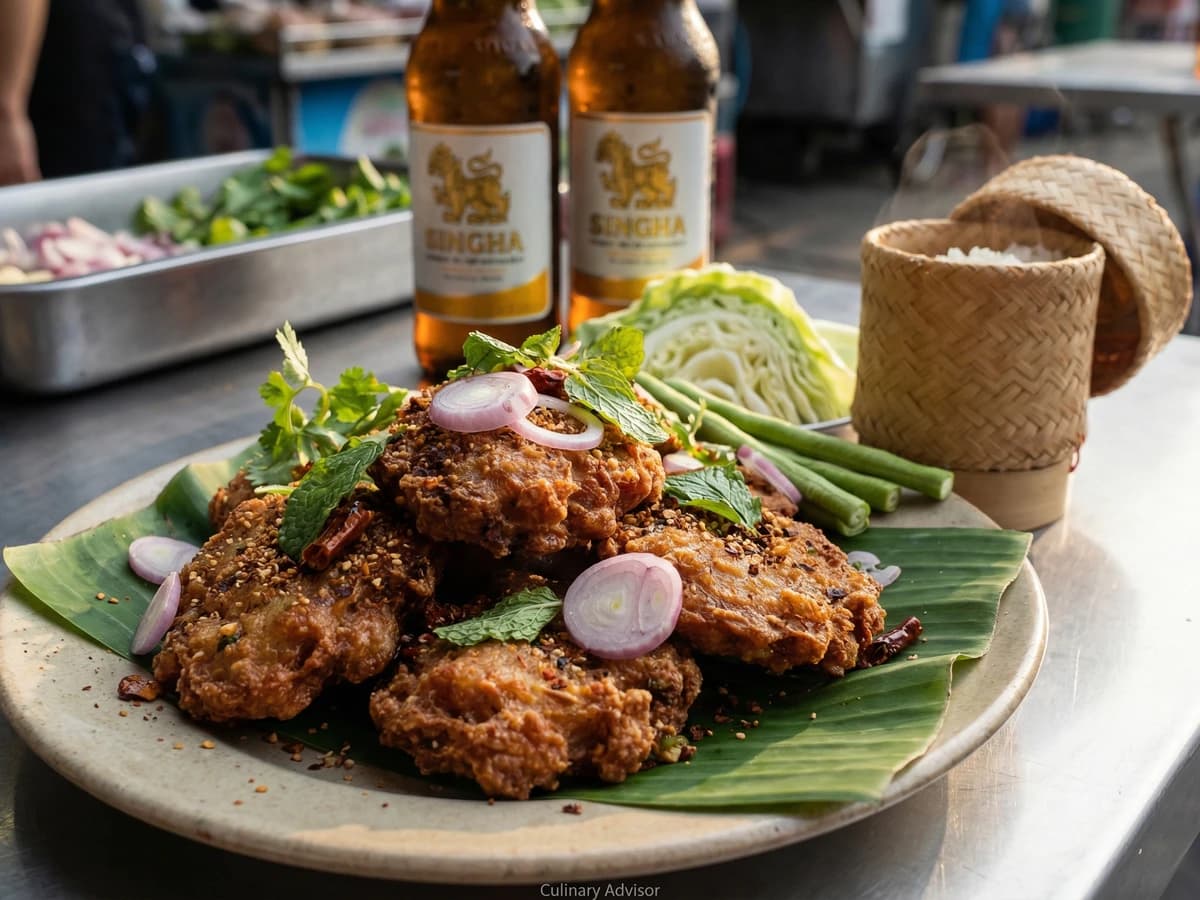
Isan's larb principles pressed into patties and fried golden: fish sauce for salt, lime for sour, khao khua for structure and crunch, prik pon for heat. No sugar. That's the rule that separates Isan from everything else.
Chef Fai
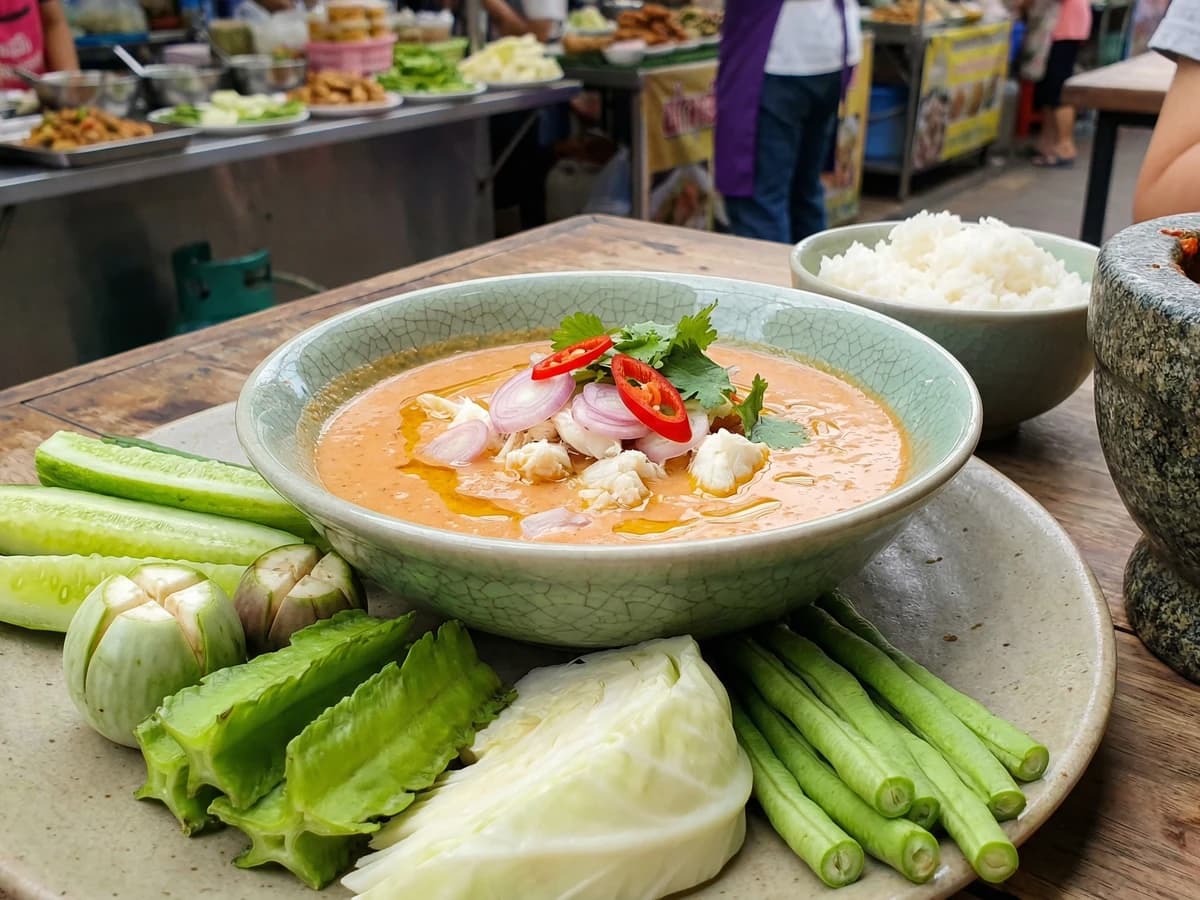
A kreung tam pounded in the krok, dissolved into cracked coconut cream, sweet crab folded through at the end. All four pillars balanced in a dip so silky you'll forget it started in a granite mortar. Central Thai home cooking at its most principled.

Chef Fai
Twenty-four meatballs, eight bamboo skewers, a charcoal grill the size of a shoebox, and one pot of nam jim built on the four pillars. The simplest vendor setup in Thailand proves the system works everywhere.