Chef Juliette
Bouillabaisse à la Marseillaise
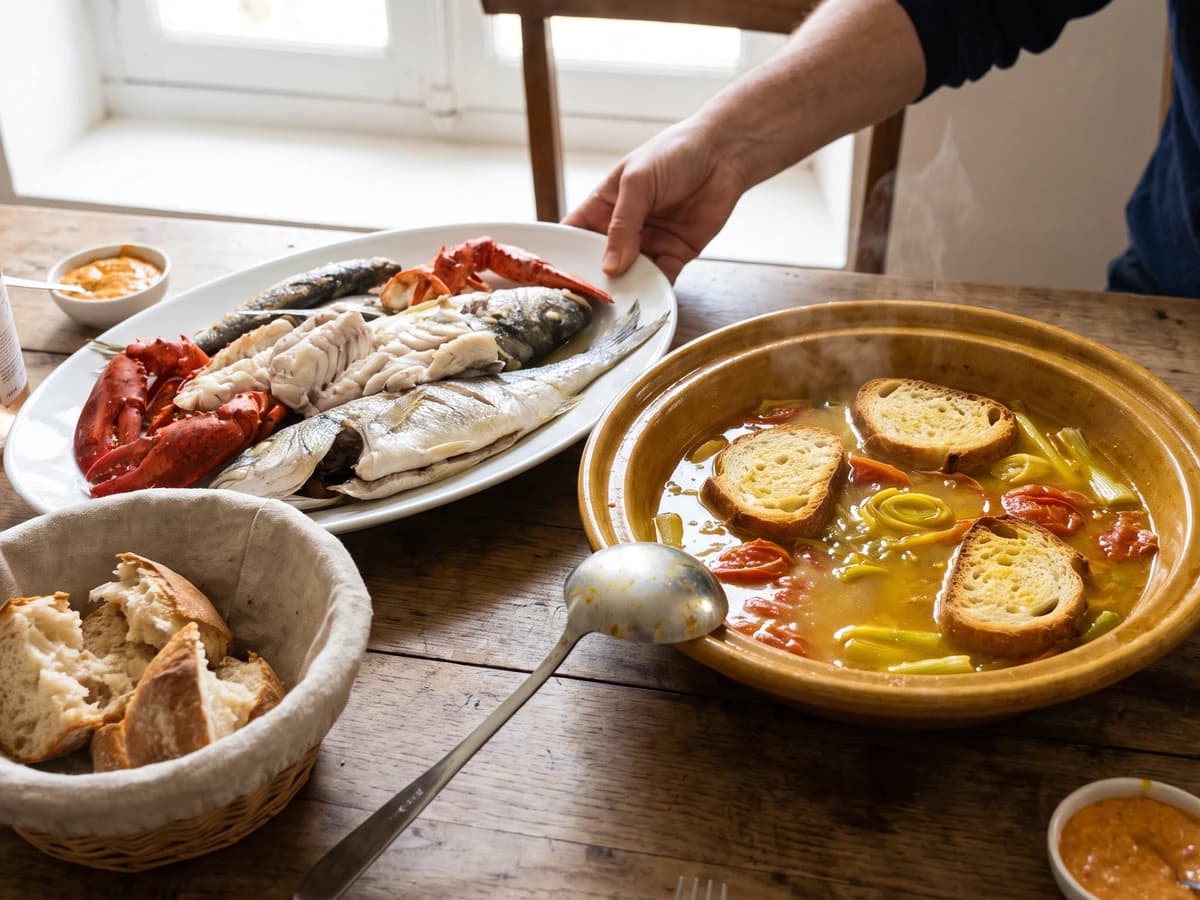
Marseille's great fish stew, saffron-gold and garlic-scented, proves that a hard boil can be the careful choice: it binds olive oil into broth before the whole pot meets bread.
A cooking platform built around craft, culture, and the stories behind what we eat.
Created by
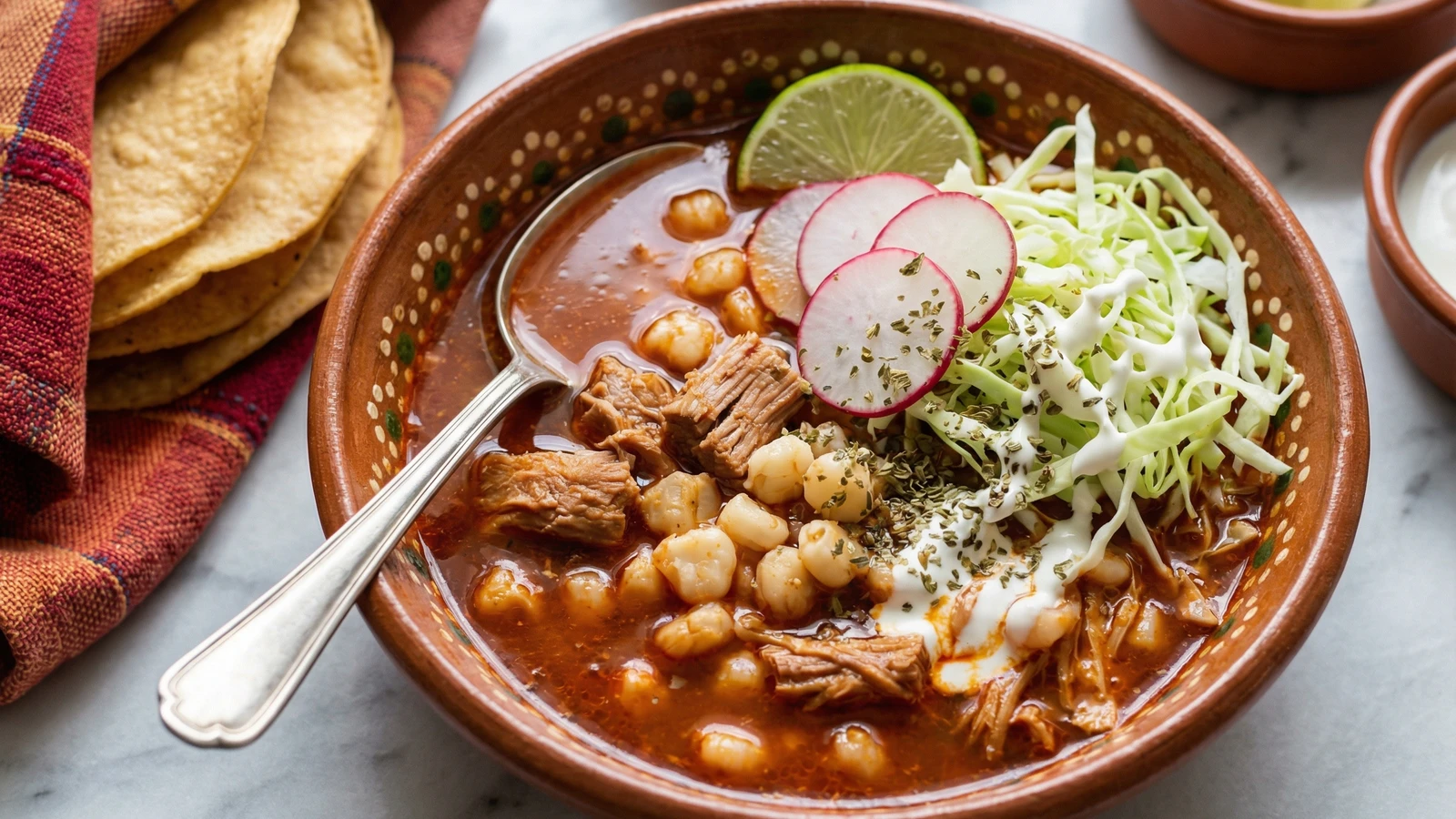
A magnificent red chile and pork stew crowned with crisp garnishes, this is the centerpiece of Mexican Christmas Eve tables, made for feeding a crowd and made even better when prepared the day before.
Pozole is older than Mexico itself. The Aztecs served a version of this stew at religious ceremonies, though the protein has mercifully changed over the centuries. When Spanish missionaries arrived, pork replaced the original ingredient, and what emerged became one of the most important dishes in Mexican cuisine. Every family guards their recipe. Every region claims superiority. I won't wade into that argument. What I will tell you is that this version works.
The dish exists in three colors: green (verde), white (blanco), and the version we're making today, red (rojo). The color comes entirely from dried chiles, specifically the guajillo and ancho that form the backbone of Mexican cooking. These aren't hot chiles. They're fruity, earthy, and complex, with a warmth that builds slowly rather than attacking. The hominy, those fat kernels of nixtamalized corn, provides the stew's substance and its distinctive chew.
What makes pozole perfect for entertaining is its structure. The broth can simmer unattended for hours. The garnishes can be prepped days ahead. And the whole pot improves with time, making it ideal for Christmas Eve when you'd rather be with your guests than chained to the stove. In Mexican tradition, pozole is served late on Nochebuena, after midnight mass, when families gather around the table to celebrate together. The garnish platter passes from hand to hand. Everyone builds their own bowl. It's communal eating at its finest.
This recipe feeds a proper crowd. For smaller gatherings, halve everything and use a smaller pot. But I'd encourage you to make the full batch regardless. Pozole freezes beautifully, and you'll thank yourself in February when you pull a container from the freezer and remember Christmas.
Quantity
4 pounds
cut into 2-inch chunks
Quantity
1 pound
Quantity
1
quartered
Quantity
1 cup
diced, for garnish
Quantity
1
halved crosswise
Quantity
6
minced
Quantity
2
Quantity
1 tablespoon
Quantity
2 tablespoons, plus more to taste
Quantity
6
stemmed and seeded
Quantity
4
stemmed and seeded
Quantity
2
stemmed
Quantity
1 tablespoon, plus more for garnish
Quantity
1 teaspoon
Quantity
3 cans (29 oz each)
drained and rinsed
Quantity
2 cups
shredded, for garnish
Quantity
12
thinly sliced, for garnish
Quantity
4
cut into wedges, for garnish
Quantity
1 cup
Quantity
for serving
Quantity
for garnish
| Ingredient | Quantity |
|---|---|
| bone-in pork shouldercut into 2-inch chunks | 4 pounds |
| country-style pork ribs | 1 pound |
| large white onionquartered | 1 |
| white oniondiced, for garnish | 1 cup |
| head of garlichalved crosswise | 1 |
| garlic clovesminced | 6 |
| bay leaves | 2 |
| whole black peppercorns | 1 tablespoon |
| kosher salt | 2 tablespoons, plus more to taste |
| dried guajillo chilesstemmed and seeded | 6 |
| dried ancho chilesstemmed and seeded | 4 |
| dried chiles de árbol (optional)stemmed | 2 |
| dried Mexican oregano | 1 tablespoon, plus more for garnish |
| ground cumin | 1 teaspoon |
| hominydrained and rinsed | 3 cans (29 oz each) |
| green cabbageshredded, for garnish | 2 cups |
| radishesthinly sliced, for garnish | 12 |
| limescut into wedges, for garnish | 4 |
| Mexican crema or sour cream (optional) | 1 cup |
| tostadas or tortilla chips | for serving |
| dried chile flakes (optional) | for garnish |
Place the pork shoulder and ribs in your largest stockpot or Dutch oven. Add the quartered onion, halved garlic head, bay leaves, peppercorns, and salt. Pour in enough cold water to cover the meat by two inches, roughly 4 to 5 quarts. Bring to a boil over high heat. The surface will foam with grayish-brown scum as the proteins release. Skim this diligently with a large spoon for the first fifteen minutes. This step determines the clarity of your broth. Don't skip it.
Once the foam subsides, reduce heat to maintain a gentle simmer. The surface should barely tremble, with only occasional bubbles breaking through. Cover partially and let the pork cook for 2 to 2½ hours, until it shreds easily when prodded with a fork. The aroma will shift from raw pork to something deeply savory, almost like roasted meat. That's your signal the collagen is breaking down.
While the pork simmers, heat a dry cast iron skillet or comal over medium heat. Working in batches, press each chile flat against the hot surface with a spatula for 10 to 15 seconds per side. They'll blister slightly, become pliable, and release a smoky, earthy fragrance that fills the kitchen. Transfer immediately to a heatproof bowl. Cover with 3 cups of boiling water and let them steep for 30 minutes until completely softened. Do not discard the soaking liquid.
Transfer the softened chiles to a blender along with 2 cups of their soaking liquid, the minced garlic, oregano, and cumin. Blend on high for 2 to 3 minutes until completely smooth. The texture should be satiny, with no visible flecks of chile skin. Pass through a fine-mesh strainer into a bowl, pressing firmly with a spatula to extract every drop of that brick-red liquid. What you're left with is the soul of your pozole.
Use tongs to transfer the cooked pork to a large cutting board. Let it cool for 10 minutes until you can handle it. Remove and discard any bones, cartilage, and large pieces of fat. Shred the meat into generous bite-sized pieces using two forks or your fingers. The texture should be rustic, with some larger chunks alongside the shreds. Set aside. Strain the cooking broth through a fine-mesh sieve and discard the spent aromatics. You should have roughly 3 quarts of rich, golden pork broth.
Return the strained broth to the pot over medium heat. Whisk in the chile sauce until fully incorporated. The broth will transform from pale gold to deep terracotta red. Add the drained hominy and bring to a simmer. Let the hominy absorb the flavors for 20 minutes, stirring occasionally. The kernels should be tender but still have a slight resistance when bitten, like properly cooked pasta.
Add the shredded pork back to the pot. Simmer together for another 15 minutes to marry the flavors. Taste the broth carefully. It should be rich, slightly spicy, and deeply savory. Adjust salt as needed, often another teaspoon or two. The pozole is ready when the broth coats a spoon lightly and the pork has absorbed some of the red color.
Arrange the shredded cabbage, sliced radishes, diced onion, lime wedges, dried oregano, and crema in separate piles on a large platter or in individual small bowls. The garnishes are not optional. They're essential to the pozole experience, adding crunch, brightness, and freshness that balances the rich broth. Each guest customizes their bowl according to preference.
Ladle generous portions of pozole into deep, warmed bowls, ensuring each serving gets plenty of pork and hominy. Serve immediately with the garnish platter alongside and a basket of tostadas. Instruct guests to pile their bowls high with cabbage, squeeze lime juice liberally, and crumble oregano between their palms before scattering it over the surface. The first bite should bring heat, acid, crunch, and richness in quick succession.
1 serving (about 380g)
Culinary guides, cultural storytelling, and the editorial depth that makes cooking meaningful.
Discover Culinary ExplorerChef Juliette
Marseille's great fish stew, saffron-gold and garlic-scented, proves that a hard boil can be the careful choice: it binds olive oil into broth before the whole pot meets bread.
Chef Juliette
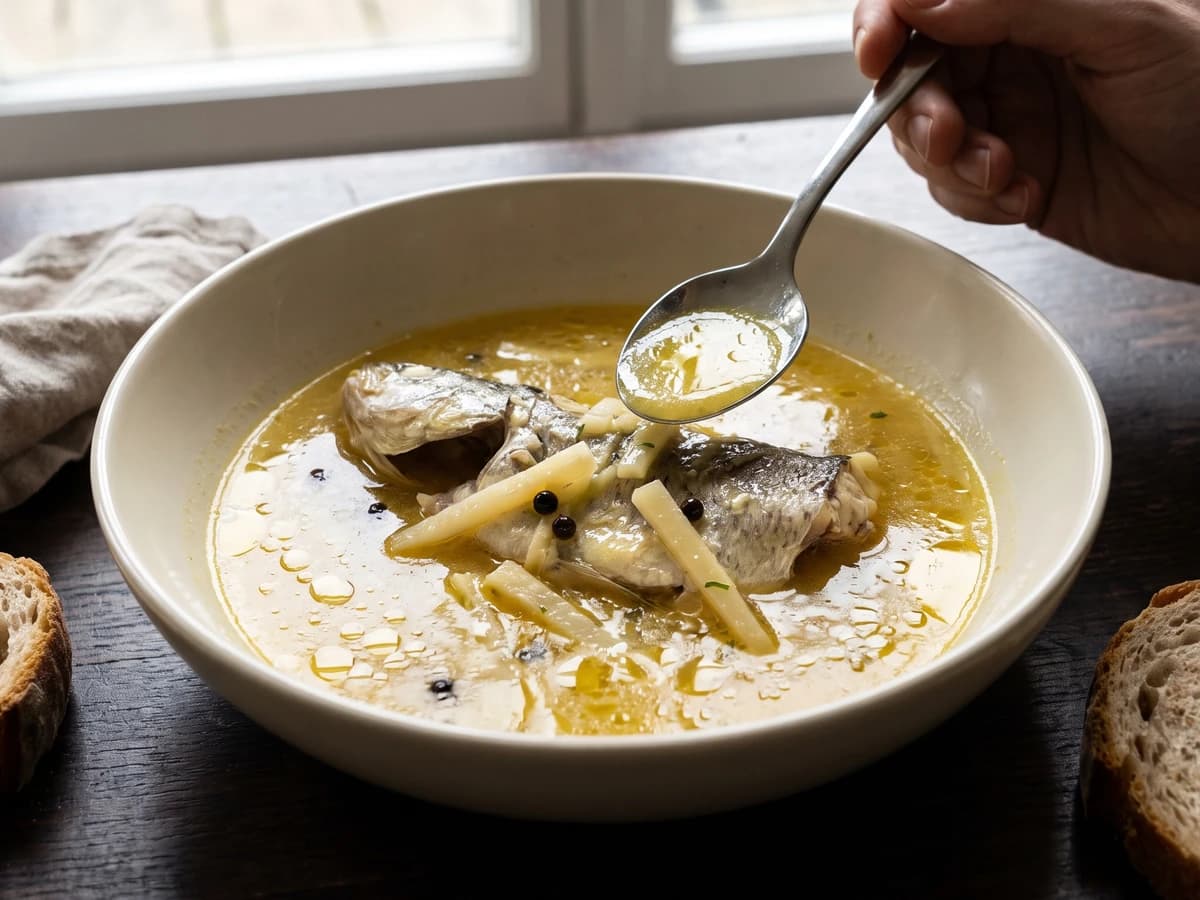
Waterzoi asks fresh, bone-in river fish to thicken its own buttery broth, with parsley root and pepper for company. No flour, no stockpot, just a brisk simmer watched closely.
Chef Juliette
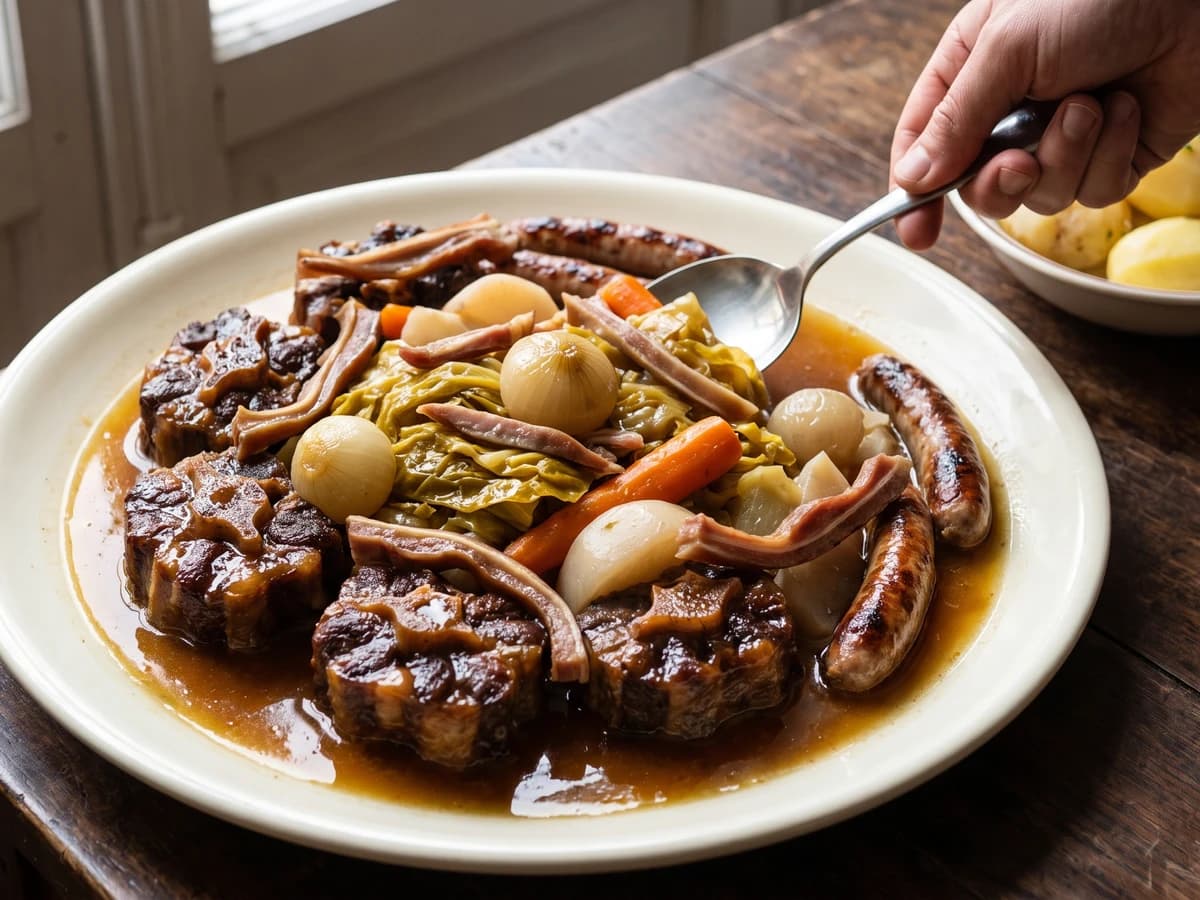
Queue de Bœuf en Hochepot gathers oxtail, pig's trotter and ear, cabbage, roots, and grilled chipolatas around a clear, gelatin-rich broth whose quiet simmer keeps every piece tender and distinct.
Chef Juliette
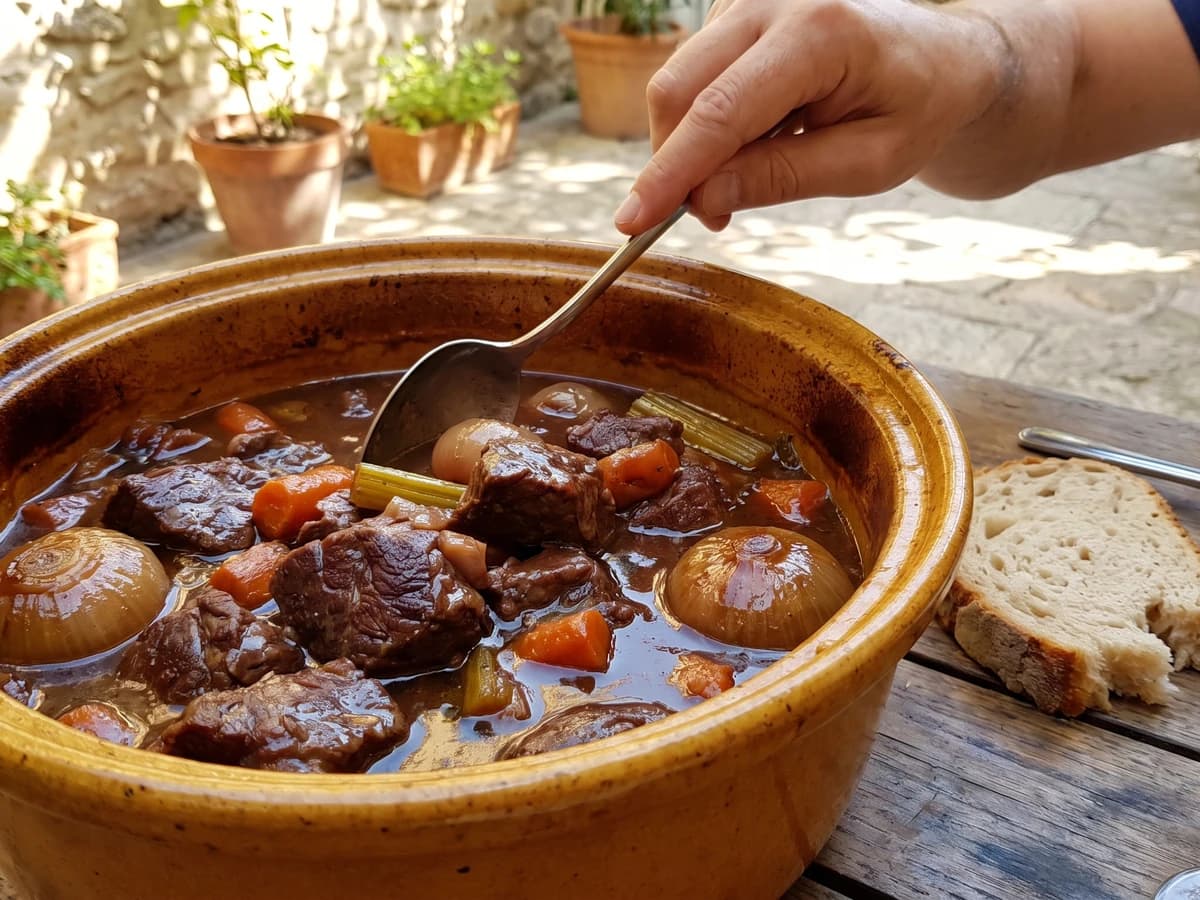
Beef shoulder larded with bacon, sharpened by red wine and vinegar, then sealed with garlic, vegetables, and dry lemon peel until the low oven turns it yielding and the gravy darkly glossy.