
Chef Lupita
Enchiladas de Valladolid
Valladolid's enchiladas, corn tortillas bathed in a chile ancho and Mexican chocolate sauce, stuffed with smoked longaniza, crowned with a fried egg and a tangle of habanero-pickled red onion.
A cooking platform built around craft, culture, and the stories behind what we eat.
Created by
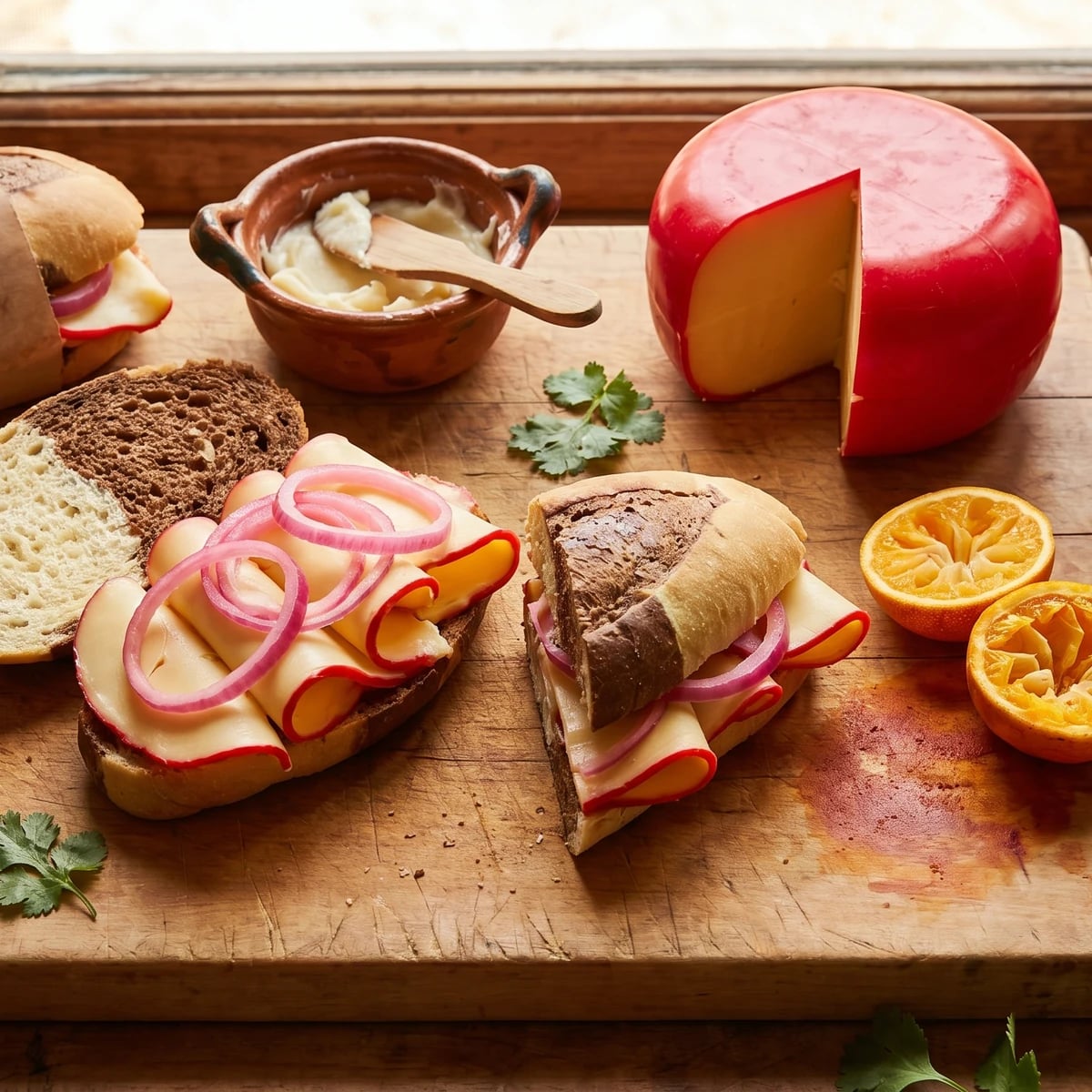
Campeche's bicolor mestiza bread, half refined wheat and half bran, split open and stuffed with shaved queso de bola Edam. The handheld market snack of the Peninsula, eaten warm with pickled red onion and a habanero on the side.
This is from Campeche. Not Yucatan, not Quintana Roo. Campeche. The Peninsula shares a grammar of sour orange, achiote, banana leaf, and habanero, but each state inside it has its own dishes and the mestiza belongs to the campechano panaderias. You will find it at the Mercado Pedro Sainz de Baranda, wrapped in brown paper, sold by the half dozen, eaten on the seawall in the late afternoon.
The bread is the dish. A mestiza is bicolor by design: one half made from refined wheat flour, the other half from whole bran. The two doughs are pressed together before baking, and when the bread comes out of the oven it carries both worlds in one crumb. Mestiza, mixed, two-blooded. The campechanos named it for the same reason the country was named what it was named. It is sweet on one side and savory on the other, and the only filling that makes sense in it is queso de bola.
Queso de bola is Dutch Edam, the red-wax wheel, and it arrived in Campeche through the trade routes that ran between the Peninsula and the Caribbean in the 17th and 18th centuries. The campechanos took the foreign cheese and made it their own. They pair it with the mestiza, they shave it into relleno negro at Christmas, they stuff it whole and call it queso relleno. In this sandwich the cheese does not melt. It yields. It softens against the warm bread, against the thin layer of lard the cocinera spreads on the cut side, and that is the whole dish.
My mother did not make mestizas. She was from Jalisco and the Peninsula was a foreign country to her kitchen. I learned this sandwich the first time I went to Campeche, sitting on a stool at a panaderia near the old city wall, watching a senora wrap them in paper for the schoolchildren who came in at noon. She told me: la mestiza takes lard, not butter, and the queso de bola takes a sharp knife, not a grater. I wrote it down. Saber cocinar es saber vivir.
Queso de bola arrived in the Yucatan Peninsula through 17th and 18th century maritime trade between the port of Campeche and the Dutch Caribbean colonies, particularly Curacao, where Edam was a staple of provisioning ships. The Peninsula adopted the cheese so thoroughly that by the 19th century it had become the defining ingredient of several signature dishes, including queso relleno and the relleno negro filling, despite being entirely European in origin. The mestiza bread itself reflects the Peninsula's colonial-era panaderia tradition, in which Spanish wheat baking was adapted with local Mayan attention to bicolor presentation, and the word mestiza carries the same racial and cultural meaning in this context that it carries in Mexican national identity broadly: a deliberate, named mixing of two inheritances.
Quantity
4
half refined wheat and half bran, fresh from the panaderia
Quantity
8 ounces
at cool room temperature
Quantity
2 tablespoons
softened
Quantity
1
sliced into paper-thin half-moons
Quantity
1/2 cup
or 1/4 cup fresh orange juice mixed with 1/4 cup white vinegar
Quantity
1 teaspoon
Quantity
1/2 teaspoon
crumbled
Quantity
1
stemmed and sliced into thin rings (for the table)
Quantity
for serving
| Ingredient | Quantity |
|---|---|
| mestizas (Campeche's bicolor sweet-salty bread)half refined wheat and half bran, fresh from the panaderia | 4 |
| queso de bola (Dutch Edam, aged red-wax wheel)at cool room temperature | 8 ounces |
| manteca de cerdo (pork lard)softened | 2 tablespoons |
| small red onionsliced into paper-thin half-moons | 1 |
| naranja agria juice (Seville sour orange)or 1/4 cup fresh orange juice mixed with 1/4 cup white vinegar | 1/2 cup |
| kosher salt | 1 teaspoon |
| dried Mexican oreganocrumbled | 1/2 teaspoon |
| fresh chile habanero (optional)stemmed and sliced into thin rings (for the table) | 1 |
| lime wedges (optional) | for serving |
Place the sliced red onion in a small glass bowl. Pour the naranja agria juice over the top. Add the salt and oregano. Press the onion down so the juice covers it. Let it sit for at least 20 minutes while you do everything else. The onion will turn from purple to bright pink. That color is the signal that the acid has done its work. The Peninsula has its own grammar and this pickle is part of it.
Cut the wax off the Edam if it is still on. Using a sharp knife or a vegetable peeler, shave the cheese into thin curls. Not grated. Not cubed. Shaved into ribbons the way the cheese vendors do it at the Mercado Pedro Sainz de Baranda. The thin shavings let the cheese yield to the bite of the bread without overwhelming it. Set the shaved cheese aside at cool room temperature so it is not stiff when it goes into the sandwich.
Heat a dry comal or cast iron skillet over medium. Split each mestiza horizontally with a serrated knife, leaving a hinge if you can. Place the breads cut-side down on the hot comal for about 30 seconds. You want them warm and lightly toasted on the inside, not crisp. The mestiza is meant to stay soft. The dark bran half and the pale wheat half should both warm through. That bicolor crumb is the signature of the bread and the reason these sandwiches are called mestizas, mixed, two-blooded.
While the bread is still warm, spread a thin layer of softened lard on the cut side of each half. Not butter. Not mayonnaise. Manteca de cerdo. La manteca es el sabor. The lard sinks into the warm crumb and carries the flavor of the cheese into the bread itself. This is how the cocineras at the panaderias in Campeche do it. Asi se hace y punto.
Pile a generous handful of shaved queso de bola onto the bottom half of each mestiza. Be generous. The cheese is the filling and the only filling. Lift a few rings of the pickled onion out of the juice, let them drain for a second, and lay them across the cheese. Close the sandwich and press gently with the heel of your hand so the cheese settles into the lard-warmed crumb.
Cut each mestiza in half on the diagonal or leave whole, however your hand prefers. Set the habanero rings and lime wedges on the side for the person eating to add at their own risk. The sandwich is meant to be eaten immediately, while the bread is still warm and the cheese is still soft against it. This is market food, picnic food, lunch-from-a-paper-bag food. Recetas probadas y garantizadas.
1 serving (about 155g)
Culinary guides, cultural storytelling, and the editorial depth that makes cooking meaningful.
Discover Culinary Explorer
Chef Lupita
Valladolid's enchiladas, corn tortillas bathed in a chile ancho and Mexican chocolate sauce, stuffed with smoked longaniza, crowned with a fried egg and a tangle of habanero-pickled red onion.

Chef Lupita
Yucatán's pambazo, a pan de huevo split, toasted on the comal with lard, and packed with cochinita pibil and a tangle of habanero-pickled red onions. Not the Mexico City pambazo. This one is never dipped in chile.

Chef Lupita
Pomuch's wood-fired handheld from northern Campeche: pan francés baked in stone ovens, split and stuffed with ham, queso Daysi, and pickled jalapeño, then fired again until the crust crackles and the cheese binds the layers.

Chef Lupita
Yucatán's classic antojito: a puffed corn tortilla split open and packed with refried black beans, fried in lard, then crowned with achiote-stained cochinita pibil, magenta pickled onions, and a habanero salsa that does not negotiate.