Chef Jeong-sun
Baechu-jeon (배추전, Napa Cabbage Pancake)
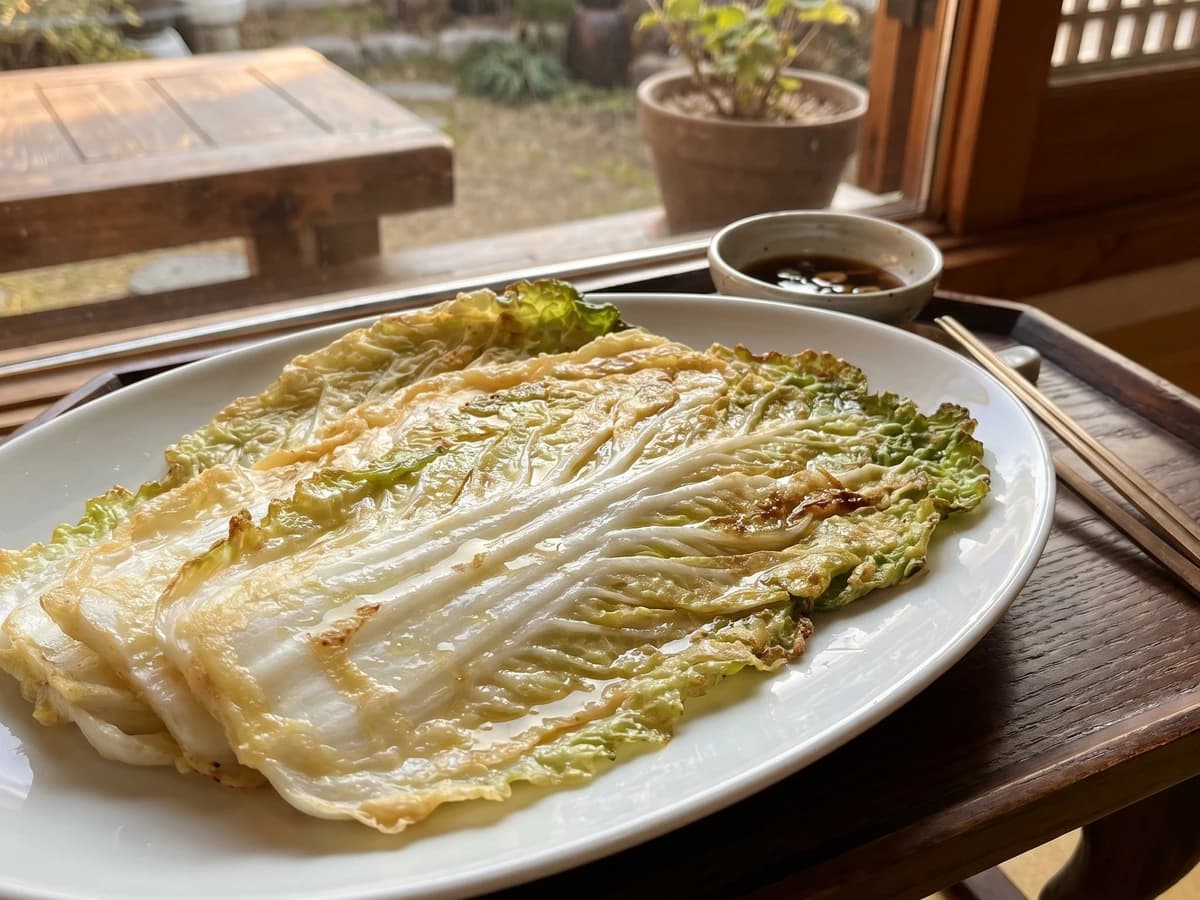
A Gyeongsang home pancake made from one whole napa cabbage leaf at a time, flattened at the rib, brushed in thin salted batter, and fried until sweet, tender, and quietly crisp at the edges.
A cooking platform built around craft, culture, and the stories behind what we eat.
Created by
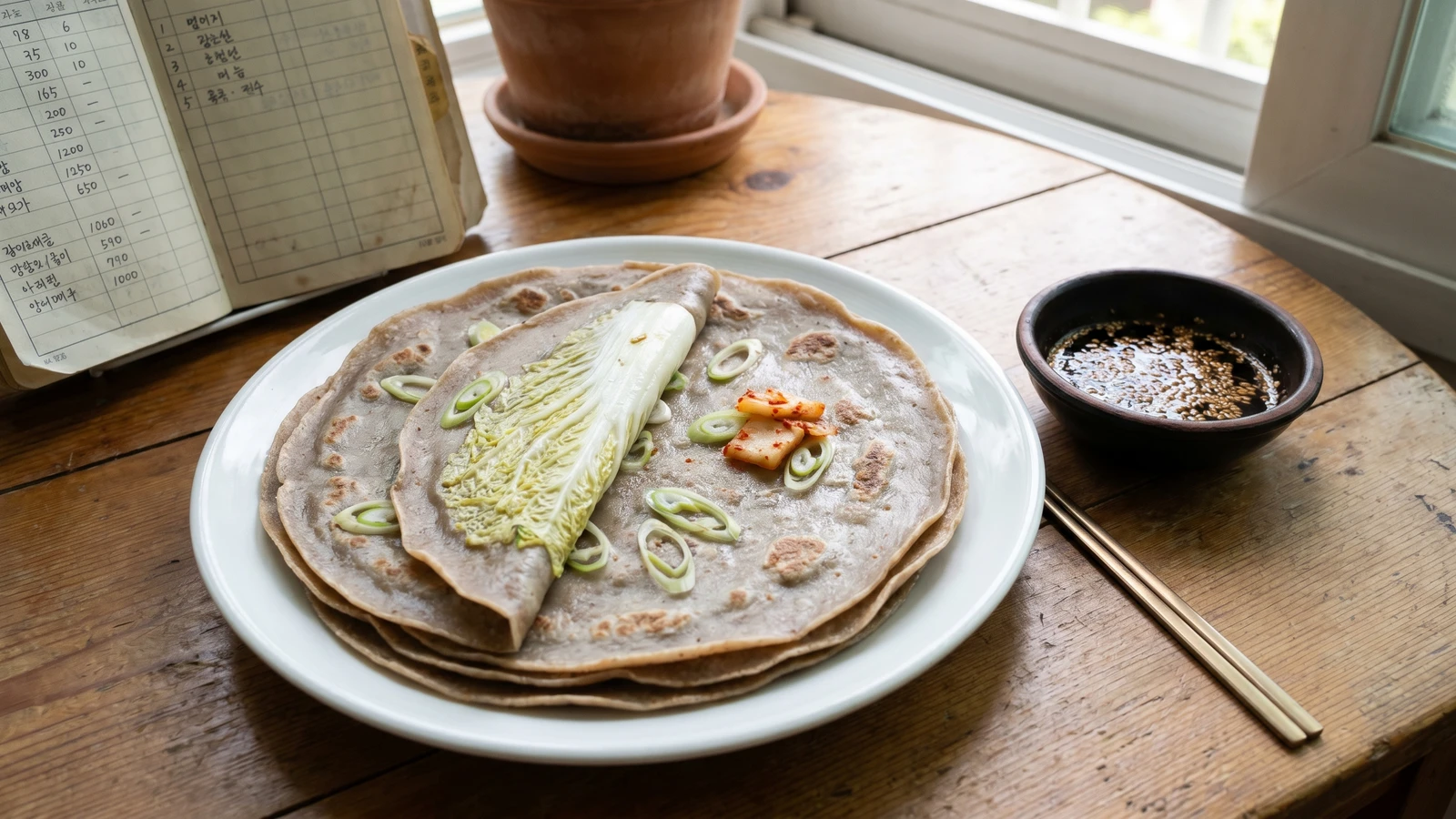
A thin Gangwon buckwheat pancake, cooked with a light hand and almost no sweetness, topped with cabbage or kimchi so the grain stays plain, nutty, and honest.
Buckwheat belongs to the mountain market. In Gangwon, where cold fields and poor soil made rice less obedient, memil (buckwheat) fed people without making a speech about it. This pancake is that kind of food: thin batter, light oil, a cabbage leaf or a little kimchi, and no decoration that gets in the way.
The mistake is cooking it like pajeon. Memil-jeon is flatter, softer, and more restrained. You don't want a thick batter or a loud pile of seafood and chili. The batter should pour thin enough to run when you tilt the pan, because buckwheat has little gluten and turns heavy if you force it. Let it taste like itself.
Notebook 38 says 120 grams buckwheat flour to 300 milliliters water, with 2 tablespoons starch when the flour is freshly milled and fragile. 손맛 is real; I measure it anyway. Tonight this dish asks for a quiet hand: stir before every pour, oil lightly, turn carefully, and stop before the pancake becomes something richer but less true.
Memil-jeon is closely tied to Gangwon-do, especially mountain towns such as Pyeongchang, Jeongseon, and Bongpyeong, where buckwheat grew reliably in cool fields that were not kind to rice. Buckwheat appears throughout Korean regional cooking as noodles, muk (starch jelly), crepes, and market pancakes, and Gangwon's versions stayed plain because the grain itself was the point. The related memil-jeonbyeong, a buckwheat crepe rolled around kimchi or radish filling, is better known at some markets, but the flat memil-jeon remains the simpler home and market form.
Quantity
1 cup (120g)
Quantity
2 tablespoons
Quantity
1/2 teaspoon
Quantity
1 1/4 cups, plus 2 tablespoons if needed
Quantity
2 teaspoons
Quantity
6 small leaves, about 150g total
thick ribs lightly crushed
Quantity
1 cup
squeezed and chopped
Quantity
2
thinly sliced on the diagonal
Quantity
3 to 4 tablespoons
for pan-frying
Quantity
1 tablespoon
for dipping sauce
Quantity
1 tablespoon
for dipping sauce
Quantity
1 teaspoon
for dipping sauce
Quantity
1/2 teaspoon
for dipping sauce
Quantity
a few drops
for dipping sauce
| Ingredient | Quantity |
|---|---|
| buckwheat flour | 1 cup (120g) |
| all-purpose flour or potato starch | 2 tablespoons |
| fine sea salt | 1/2 teaspoon |
| cold water | 1 1/4 cups, plus 2 tablespoons if needed |
| soup soy sauce (guk-ganjang) (optional) | 2 teaspoons |
| napa cabbage leavesthick ribs lightly crushed | 6 small leaves, about 150g total |
| well-fermented napa kimchi (optional)squeezed and chopped | 1 cup |
| scallionsthinly sliced on the diagonal | 2 |
| neutral oilfor pan-frying | 3 to 4 tablespoons |
| soy saucefor dipping sauce | 1 tablespoon |
| waterfor dipping sauce | 1 tablespoon |
| rice vinegarfor dipping sauce | 1 teaspoon |
| toasted sesame seedsfor dipping sauce | 1/2 teaspoon |
| toasted sesame oilfor dipping sauce | a few drops |
Whisk the buckwheat flour, all-purpose flour or potato starch, salt, cold water, and soup soy sauce if using. The batter should pour like thin cream, not sit like pajeon batter. Buckwheat has very little gluten, so it will not stretch and forgive you; the thinness is what lets it cook flat and tender.
Let the batter rest 10 minutes while you prepare the topping. Crush the thick ribs of the cabbage leaves once with the side of a knife so they lie flat in the pan. If using kimchi, squeeze it firmly and chop it small; wet kimchi tears the pancake and makes the surface soggy.
Set a 10-inch nonstick or well-seasoned skillet over medium heat and wipe in 1 teaspoon oil. Memil-jeon is not a heavy fried pancake. The pan should be lightly glossed, because too much oil hides the buckwheat's clean, faintly bitter taste.
Stir the batter again, because buckwheat settles fast. Pour in about 1/3 cup batter and tilt the pan until it spreads into a thin round, 7 to 8 inches wide. Lay 1 cabbage leaf across the top, or scatter 2 tablespoons squeezed kimchi and a pinch of scallion. Press the topping gently so it meets the batter.
Cook 2 to 3 minutes, until the edges look dry and the underside has pale brown freckles. Slide a thin spatula under the pancake and turn it carefully. Cook the second side 1 to 2 minutes more. Do not chase deep crispness here; this pancake should be tender, flexible, and lightly browned.
Wipe in another teaspoon of oil for each pancake, stir the batter before every pour, and continue until you have 6 pancakes. Mix the soy sauce, water, vinegar, sesame seeds, and sesame oil for dipping. Serve the pancakes warm or at room temperature, folded once if you like, with rice and one sharp banchan beside them.
1 serving (about 100g)
Culinary guides, cultural storytelling, and the editorial depth that makes cooking meaningful.
Discover Culinary ExplorerChef Jeong-sun
A Gyeongsang home pancake made from one whole napa cabbage leaf at a time, flattened at the rib, brushed in thin salted batter, and fried until sweet, tender, and quietly crisp at the edges.

Chef Jeong-sun
A holiday jeon of fresh shiitake or oyster mushrooms, salted lightly, dusted thinly, and carried through egg in a quiet pan until the mushroom stays earthy and the coating stays tender.

Chef Jeong-sun
Soaked mung beans ground coarse, folded with pork, bracken, sprouts, and kimchi, then fried thick until the edges crisp and the center stays tender enough for a shared table.

Chef Jeong-sun
A summer garlic chive pancake fried thin, crisp at the edges and chewy in the center, with just enough batter to hold the green pile together and a sharp soy-vinegar dip.