
Chef Dean
Kourabiedes
Impossibly tender Greek butter cookies wrapped in clouds of powdered sugar, their almond-studded interiors scented with brandy and orange blossom. One bite transports you to an Athenian grandmother's kitchen at Christmas.
A cooking platform built around craft, culture, and the stories behind what we eat.

Created by
Aromatic Greek Christmas cookies, fragrant with orange and warm spices, bathed in honey syrup until they glisten like amber jewels. These improve with each passing day, making them the ideal make-ahead holiday treat.
Every Greek grandmother knows the secret to Christmas lives in these cookies. Melomakarona have graced holiday tables for centuries, their name derived from 'meli' (honey) and 'makarona' (blessed). This is food with sacred roots, descended from ancient offerings to the gods, now democratized into something every home cook can master.
The beauty of melomakarona lies in their construction. Olive oil replaces butter entirely, yielding a tender crumb and a conscience-free treat for those avoiding dairy. Orange juice brightens the dough while brandy adds depth that whispers of celebration. The spices, cinnamon and clove, fill your kitchen with the unmistakable scent of Greek Christmas.
But the true magic happens after baking. Warm cookies plunge into warm syrup, drinking it in greedily for exactly thirty seconds. Not twenty. Not forty. Thirty. This timing produces cookies that are saturated but not soggy, sweet but not cloying. Crown them with crushed walnuts while still sticky, and you have achieved something worthy of the name 'blessed.'
These cookies reward patience. Made three days before serving, they reach their peak as the syrup penetrates fully and the flavors meld into something greater than their parts. Your future self will thank you for the foresight.
Quantity
1 cup (240ml)
Quantity
1/2 cup (120ml)
Quantity
1/2 cup (100g)
Quantity
3/4 cup (180ml)
from about 2 large oranges
Quantity
2
zested
Quantity
3 tablespoons
Quantity
1 teaspoon
Quantity
1/2 teaspoon
Quantity
1 1/2 teaspoons
Quantity
1/2 teaspoon
Quantity
1/4 teaspoon
freshly grated
Quantity
4 1/2 cups (560g)
plus more as needed
Quantity
1/2 cup (80g)
Quantity
1 cup (340g)
Quantity
1 cup (200g)
Quantity
1 cup (240ml)
Quantity
1
Quantity
4
Quantity
1 strip (2 inches)
Quantity
1 tablespoon
Quantity
1 1/2 cups (180g)
finely chopped
| Ingredient | Quantity |
|---|---|
| extra-virgin olive oil | 1 cup (240ml) |
| vegetable oil | 1/2 cup (120ml) |
| granulated sugar | 1/2 cup (100g) |
| fresh orange juicefrom about 2 large oranges | 3/4 cup (180ml) |
| orangeszested | 2 |
| brandy or cognac | 3 tablespoons |
| baking powder | 1 teaspoon |
| baking soda | 1/2 teaspoon |
| ground cinnamon | 1 1/2 teaspoons |
| ground cloves | 1/2 teaspoon |
| nutmegfreshly grated | 1/4 teaspoon |
| all-purpose flourplus more as needed | 4 1/2 cups (560g) |
| fine semolina | 1/2 cup (80g) |
| honey | 1 cup (340g) |
| granulated sugar for syrup | 1 cup (200g) |
| water | 1 cup (240ml) |
| cinnamon stick | 1 |
| whole cloves | 4 |
| orange peel | 1 strip (2 inches) |
| fresh lemon juice | 1 tablespoon |
| walnutsfinely chopped | 1 1/2 cups (180g) |
In a large bowl, whisk together the olive oil, vegetable oil, and sugar until well combined. The mixture won't emulsify like butter and sugar would. That's correct. Add the orange juice, orange zest, and brandy. Whisk until everything comes together into a fragrant, golden liquid that smells like a Mediterranean orchard.
In a separate bowl, whisk together the flour, semolina, baking powder, baking soda, cinnamon, cloves, and nutmeg. The semolina is essential. It gives these cookies their characteristic slightly sandy texture that holds the syrup beautifully without becoming mushy.
Add the dry ingredients to the wet in three additions, stirring with a wooden spoon after each. The dough should come together into a soft, pliable mass that's slightly oily to the touch but not sticky. If it clings to your hands, add flour one tablespoon at a time. If it cracks when you shape it, you've added too much. The dough should feel like modeling clay, smooth and cooperative.
Preheat your oven to 350°F (175°C). Line two baking sheets with parchment paper. Pinch off pieces of dough about the size of a walnut and roll them into ovals roughly 2 inches long. The traditional shape resembles a small torpedo or an elongated egg. Place them on the baking sheets, leaving an inch between each. Using the tines of a fork, gently press a crosshatch pattern into the top of each cookie. This isn't decoration. These grooves become channels for the syrup to penetrate.
Bake for 22 to 25 minutes, rotating the pans halfway through. The cookies are done when they're golden brown on the bottom and just barely golden on top. They'll feel slightly soft when warm but firm up as they cool. Don't overbake. Pale cookies absorb syrup better than dark ones. Transfer to a wire rack and let cool completely, at least 30 minutes. They must be cool before meeting the warm syrup.
While the cookies cool, make the syrup. Combine the honey, sugar, water, cinnamon stick, whole cloves, and orange peel in a medium saucepan. Bring to a boil over medium heat, stirring until the sugar dissolves. Reduce heat and simmer for 10 minutes. The syrup should be fragrant and slightly thickened but still pourable. Remove from heat and stir in the lemon juice. Fish out the cinnamon stick, cloves, and orange peel.
Working in batches of six or eight, submerge the cooled cookies in the warm syrup. Let them soak for exactly 30 seconds, turning once at the halfway point. Use a slotted spoon to transfer them to a wire rack set over a baking sheet. The timing matters. Less time yields dry cookies. More time yields soggy ones. Thirty seconds. Count it out.
While the cookies are still glistening and sticky, sprinkle generously with the chopped walnuts, pressing gently so they adhere. Work quickly before the syrup sets. Let the cookies rest on the rack for at least an hour before transferring to an airtight container. They'll be good immediately but transcendent in three days.
1 cookie (about 37g)
Culinary guides, cultural storytelling, and the editorial depth that makes cooking meaningful.
Discover Culinary ExplorerChef Dean
Impossibly tender Greek butter cookies wrapped in clouds of powdered sugar, their almond-studded interiors scented with brandy and orange blossom. One bite transports you to an Athenian grandmother's kitchen at Christmas.

Chef Juliette
A pale short-paste shell holds silken, lightly sweet carrot purée beneath neat glazed half-discs, their butter syrup catching the light: a classical tart poised between vegetable course and sweet.
Chef Juliette
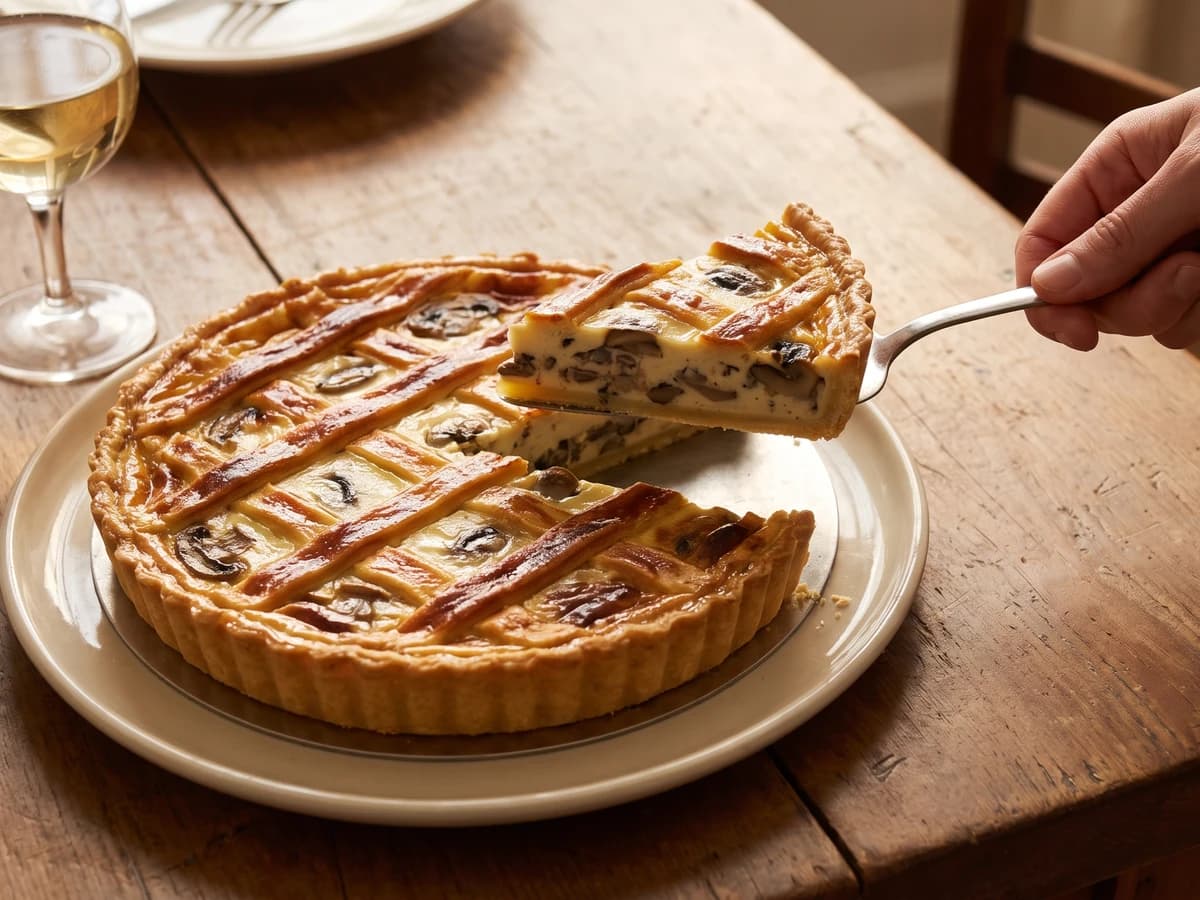
A hot mushroom flan under a butter-gold lattice, with cream reduced close around barely opened caps and a crisp short-paste base protected by one discipline: cool the filling completely.

Chef Juliette
Four little mushroom flans, latticed and gilded, baked hard and fast until butter-gold: a classical garnish scaled to the meat it accompanies and served before its crispness has time to fade.