
Chef Ally
Amaretti with Fresh Almonds
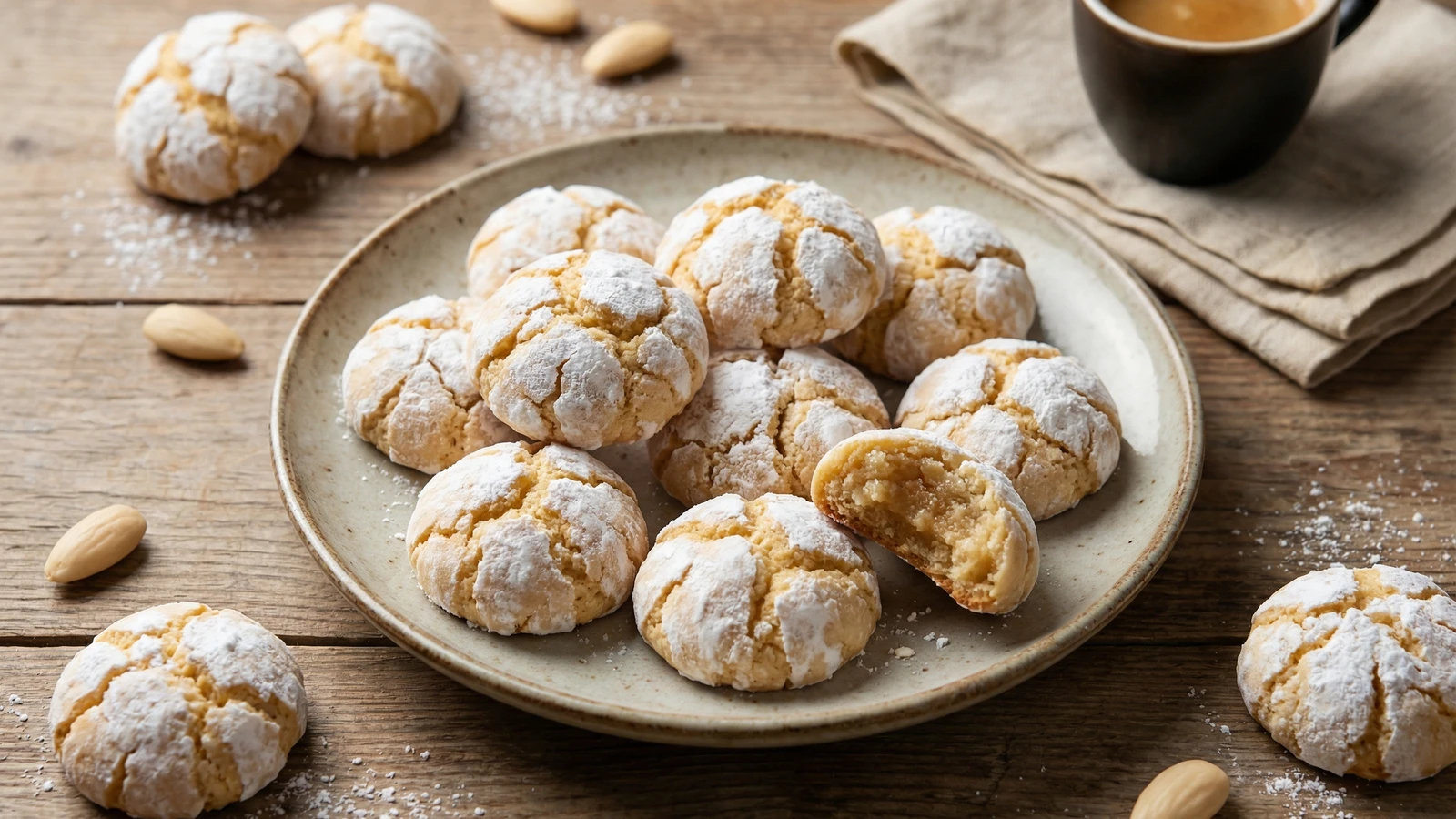
Three ingredients, centuries of tradition. Chewy Italian almond cookies with crackled tops and soft, marzipan centers that taste purely of the nut itself.
A cooking platform built around craft, culture, and the stories behind what we eat.
Created by
Pillowy Italian almond cookies with crackled sugar surfaces and tender, chewy centers that taste like marzipan learned to dance. Three ingredients do the heavy lifting in these naturally gluten-free gems that have graced Italian holiday tables for centuries.
These cookies arrived in Italy centuries before anyone thought to call something "gluten-free." They simply were what they were: ground almonds, sugar, and egg whites transformed into something transcendent through technique and patience. The soft amaretti of Sardinia and Sicily differ from their crunchy cousins found in paper-wrapped pairs across northern Italy. These yield to the tooth, collapsing into a chewy, almost candy-like center that tastes of pure almond essence.
The secret to proper amaretti morbidi lies in understanding what you're actually making: a meringue-bound almond paste that sets just enough to hold its shape while remaining soft inside. Overbake them and you've lost the magic. Pull them from the oven when they still look slightly underdone, trust the cooling process, and you'll be rewarded with cookies that improve over several days as the moisture redistributes.
I learned to make these from a Sicilian grandmother who measured nothing and apologized for nothing. She'd been making them since before the war, she told me, the same way her mother made them. The proportions lived in her hands. I've translated her intuition into measurements here, but once you've made these three or four times, you'll understand why she never bothered writing anything down. The dough tells you what it needs.
Traditionally, these appear on Italian Christmas tables alongside panettone and torrone, but they belong wherever good coffee is served and conversation runs long. They ship beautifully, improve with age, and disappear faster than you'd expect from something so humble in appearance.
Quantity
200g (2 cups)
Quantity
200g (1 cup)
Quantity
1/4 teaspoon
Quantity
1/2 teaspoon
Quantity
1/4 teaspoon
Quantity
1 tablespoon
Quantity
2 (about 70g)
Quantity
100g (3/4 cup plus 2 tablespoons)
for coating
| Ingredient | Quantity |
|---|---|
| superfine almond flour | 200g (2 cups) |
| granulated sugar | 200g (1 cup) |
| fine sea salt | 1/4 teaspoon |
| almond extract | 1/2 teaspoon |
| bitter almond extract (optional) | 1/4 teaspoon |
| amaretto liqueur (optional) | 1 tablespoon |
| large egg whites, at room temperature | 2 (about 70g) |
| powdered sugarfor coating | 100g (3/4 cup plus 2 tablespoons) |
Whisk together the almond flour, granulated sugar, and salt in a large bowl. Break up any lumps in the almond flour with your fingers. The mixture should feel uniformly sandy, with no clumps larger than a grain of rice. If your almond flour is coarse, pulse it briefly in a food processor until fine, then measure.
In a small bowl, whisk the egg whites with the almond extract and bitter almond extract (or amaretto) until just combined and slightly frothy. You're not building a meringue here, just breaking up the whites so they incorporate evenly. About thirty seconds of whisking does the job.
Pour the egg white mixture into the dry ingredients. Stir with a wooden spoon or stiff spatula until a sticky, cohesive dough forms. This takes some muscle. The dough will look shaggy at first, then suddenly come together into something resembling wet marzipan. It should be sticky enough to cling to your fingers but firm enough to shape. If the dough seems dry and crumbly, add egg white one teaspoon at a time until it holds together when squeezed.
Cover the bowl with plastic wrap and refrigerate for at least 30 minutes or up to 24 hours. This rest accomplishes two things: the dough firms up for easier shaping, and the almond flour hydrates fully, producing a more tender cookie. Cold dough also spreads less in the oven, giving you taller, more domed cookies.
Line two baking sheets with parchment paper. Place the powdered sugar in a shallow bowl. Position the oven rack in the center and preheat to 325°F (165°C). The moderate temperature allows the cookies to set slowly, preventing the tops from cracking too much before the interior cooks through.
Scoop level tablespoons of dough (about 15g each) and roll between your palms into smooth balls. The dough is sticky, so work quickly. If it clings to your hands unbearably, dampen your palms with water. Each ball should be roughly the size of a cherry tomato. Don't worry about perfection. Slight irregularity is authentic.
Drop each ball into the powdered sugar and roll to coat completely. The coating should be generous, almost excessive. This thick layer of sugar creates the signature crackled top as the cookie expands in the oven. Place the coated balls on prepared baking sheets, spacing them 2 inches apart. They spread slightly but not dramatically.
Bake one sheet at a time for 12 to 14 minutes. The cookies are done when the tops show distinct cracks through the powdered sugar coating and the edges feel barely set when touched. The centers will still look soft and slightly underdone. This is correct. Resist the urge to bake longer. The cookies continue cooking on the hot pan for several minutes after leaving the oven.
Let the cookies cool on the baking sheet for 10 minutes. They'll firm up significantly during this time but remain fragile. Transfer carefully to a wire rack to cool completely, at least 30 minutes more. The texture you want, that chewy, almost fudgy center with a delicate sugar shell, only develops fully once the cookies reach room temperature.
Layer cookies between sheets of parchment paper in an airtight container. At room temperature, they keep beautifully for up to two weeks, actually improving after the first day or two as the moisture redistributes and the almond flavor deepens. In hot weather, refrigerate and bring to room temperature before serving.
1 cookie (about 20g)
Culinary guides, cultural storytelling, and the editorial depth that makes cooking meaningful.
Discover Culinary ExplorerChef Ally
Three ingredients, centuries of tradition. Chewy Italian almond cookies with crackled tops and soft, marzipan centers that taste purely of the nut itself.

Chef Ally
Pillowy Italian doughnuts, golden from the oil and rolled in sugar while still warm, hiding a heart of vanilla pastry cream that spills out with the first bite.

Chef Dean
Three delicate almond sponge layers in the colors of the Italian flag, sandwiched with fruity jam and dressed in bittersweet chocolate. These labor-of-love cookies honor generations of Italian-American bakers.

Chef Dean
Chewy almond paste cookies rolled in pine nuts, crackled and golden from the oven. These Italian-American bakery classics deliver intense marzipan flavor with a satisfying chew that improves over two days.