
Chef Graziella
Cannellini con Salvia
Tuscan white beans warmed gently with fried sage leaves and a whisper of garlic. This is the contorno that proves restraint is a virtue, not a limitation.
A cooking platform built around craft, culture, and the stories behind what we eat.
Created by
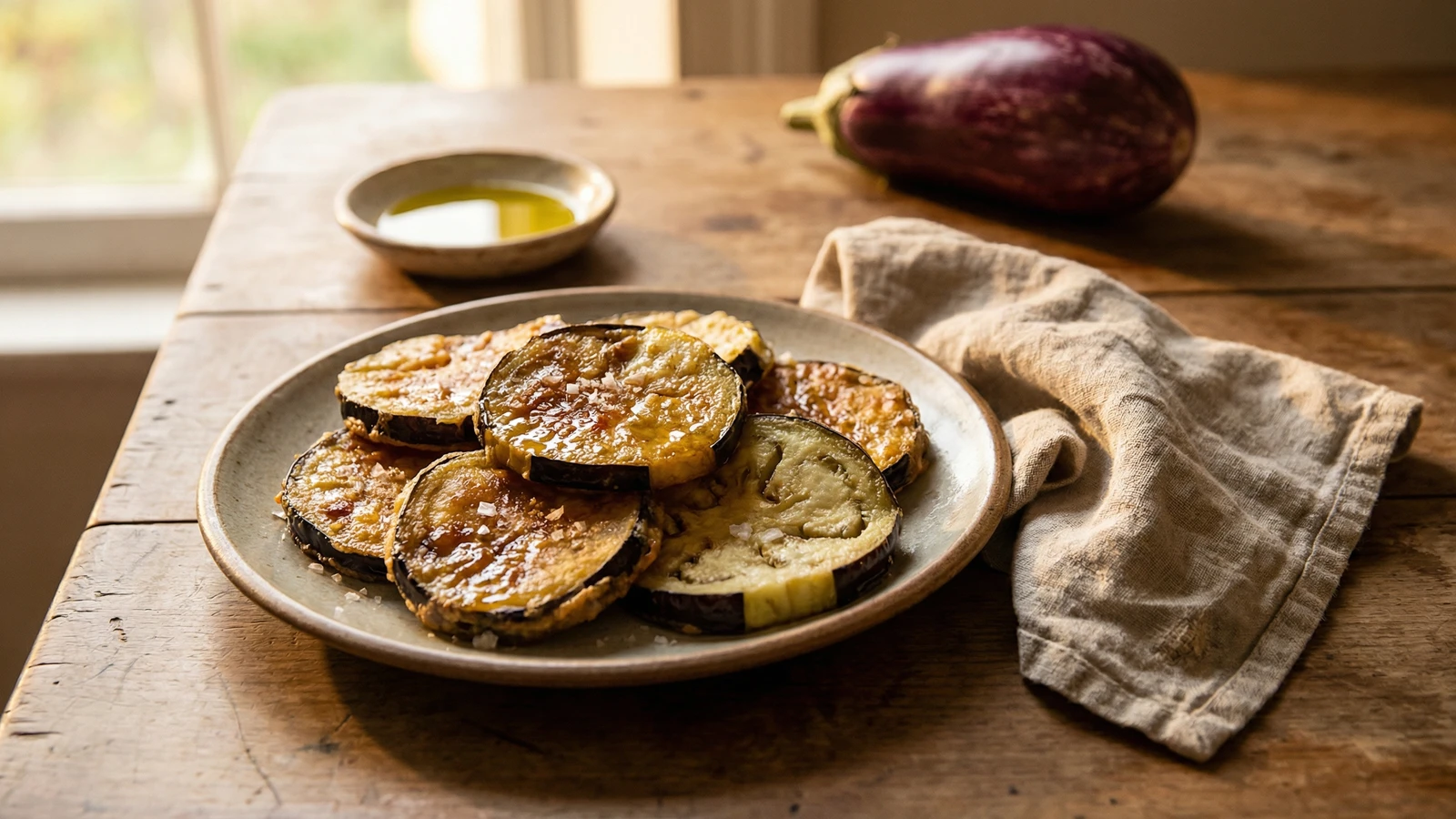
Eggplant sliced, salted until it weeps, then fried in olive oil until the flesh surrenders completely. This is the building block of parmigiana and the test of your patience.
Frying eggplant properly requires discipline. The salting cannot be rushed. One hour is the minimum. Two is better. You will watch brown liquid pool beneath the slices and wonder if the eggplant will have any flavor left. It will have more flavor, not less. The salt draws out bitterness and excess moisture. What remains is the eggplant's true character, concentrated and ready to fry.
Americans skip the salting. They are in a hurry. Then they wonder why their eggplant is bitter and sodden with oil. The unsalted eggplant acts like a sponge, drinking oil until it becomes greasy and heavy. The salted eggplant, its cellular structure collapsed, absorbs less oil and fries to a proper golden exterior with a creamy interior.
This is contorno cooking at its simplest. No batter, no breadcrumbs, no complications. Just eggplant, salt, olive oil, and the understanding that what you leave out matters as much as what you put in.
Fried eggplant has been prepared throughout Southern Italy since the Arabs introduced the vegetable to Sicily in the 9th century. Italian cooks initially viewed the eggplant with suspicion, believing it caused madness, which is why they named it melanzana, from the Latin mala insana, meaning 'mad apple.' Centuries of frying proved the suspicion unfounded.
Quantity
2 medium (about 2 pounds total)
Quantity
for salting
Quantity
about 2 cups
for frying
Quantity
for finishing
| Ingredient | Quantity |
|---|---|
| globe eggplants | 2 medium (about 2 pounds total) |
| kosher salt | for salting |
| extra virgin olive oilfor frying | about 2 cups |
| flaky sea salt | for finishing |
Trim the stem and bottom from each eggplant. Slice crosswise into rounds approximately one-third inch thick. Uniformity matters here. Thin slices will burn before the interior softens. Thick slices will absorb too much oil. One-third inch is correct.
Arrange the eggplant slices in a single layer on a large rimmed baking sheet or in a colander set over the sink. Sprinkle both sides generously with kosher salt. You need more salt than you think. The eggplant will weep brown liquid as the salt draws out moisture and bitterness. Let stand for at least one hour. Two hours is better.
Rinse each slice briefly under cold water to remove excess salt. This step is not optional. Pat completely dry with clean kitchen towels or paper towels, pressing firmly to extract as much moisture as possible. The slices must be dry. Wet eggplant in hot oil creates spattering and prevents proper browning.
Pour olive oil into a large heavy skillet to a depth of about one-quarter inch. Heat over medium-high until the oil shimmers and a small piece of eggplant dropped in sizzles immediately. The temperature should be around 350 degrees if you use a thermometer. I never have.
Add eggplant slices in a single layer without crowding. Crowding lowers the oil temperature and creates steaming instead of frying. Fry until the underside turns deep golden brown, about 3 minutes. Flip and fry the second side until equally golden, another 2 to 3 minutes. The eggplant should feel soft when pressed with tongs, the interior transformed from spongy to creamy.
Transfer fried slices to a wire rack set over a baking sheet or to a plate lined with paper towels. The wire rack keeps them crispest. Sprinkle with flaky sea salt while still warm. Repeat with remaining slices, adjusting heat as needed to maintain proper frying temperature.
Melanzane fritte are best eaten within minutes of frying, while still warm and the exterior remains crisp. They will soften as they sit. If you must hold them, keep them in a low oven on a wire rack, uncovered. Never cover fried eggplant. Steam is the enemy of crispness.
1 serving (about 200g)
Culinary guides, cultural storytelling, and the editorial depth that makes cooking meaningful.
Discover Culinary ExplorerChef Graziella
Tuscan white beans warmed gently with fried sage leaves and a whisper of garlic. This is the contorno that proves restraint is a virtue, not a limitation.

Chef Graziella
Chickpeas cooked with restraint: garlic infused and removed, rosemary perfuming the oil, nothing more. A contorno that proves legumes need only respect, not complication.

Chef Graziella
The vegetable stew of Southern Italy, where summer's abundance cooks slowly until eggplant, peppers, zucchini, and tomatoes become one soft, melded thing. This is the honest food of Campania and Calabria.

Chef Graziella
Green beans cooked the Italian way, tender and flavorful, with garlic that whispers and tomato that barely speaks. A contorno that proves the side dish can be the quiet star of the meal.