Culinary Explorer

A cooking platform built around craft, culture, and the stories behind what we eat.
Discover Culinary Explorer
Marmite and Cheddar Palmiers

Marmite and Cheddar Palmiers

Created by Chef Thomas

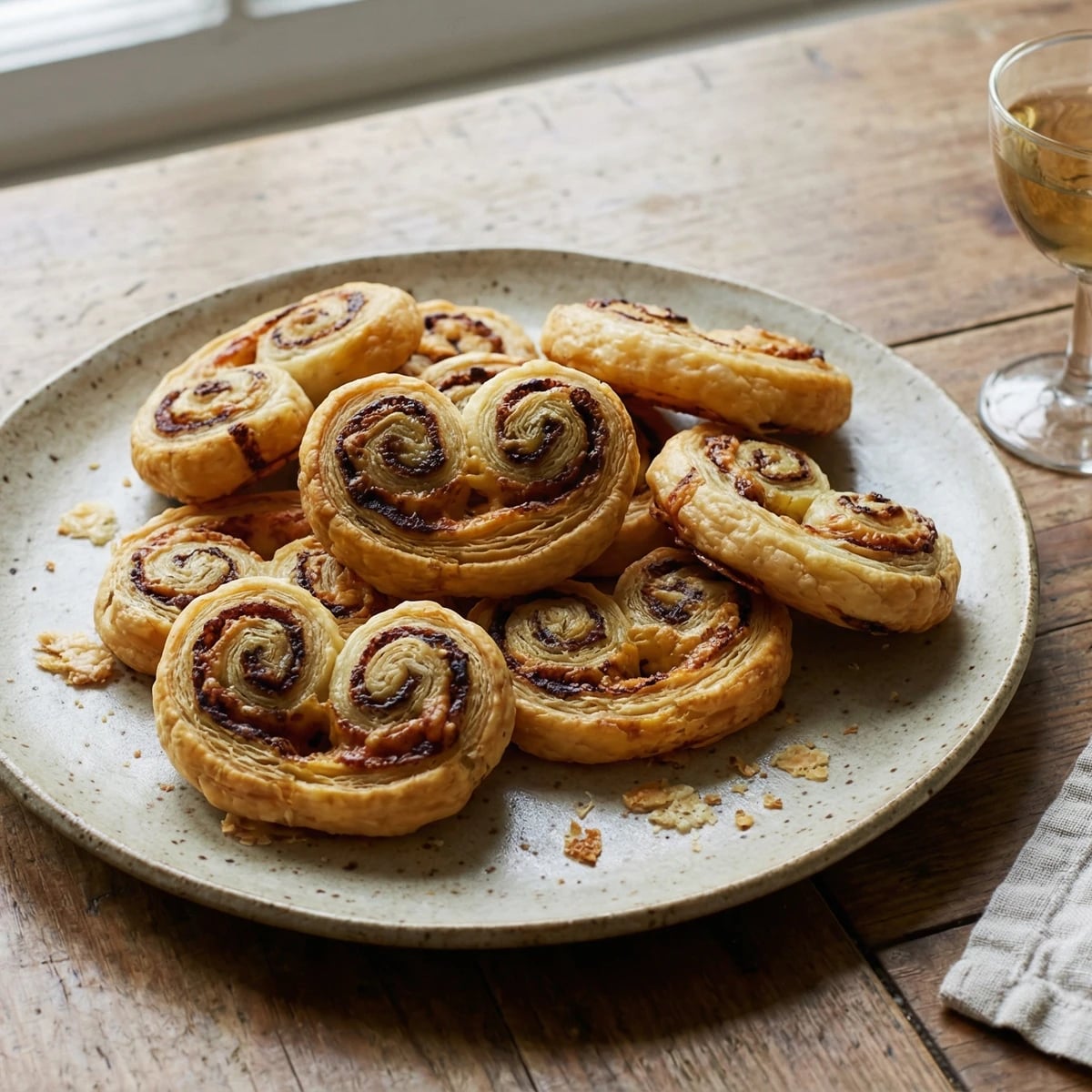
Crisp puff pastry spirals spread with Marmite and scattered with sharp cheddar, the kind of thing you put out when people arrive and watch disappear before anyone sits down.

Appetizers & Snacks
British
Dinner Party
Potluck
15 min
Active Time
15 min cookPT30M plus 20 minutes chilling total
YieldAbout 20 palmiers

The smell hits the hallway before anyone reaches the kitchen. Warm butter, toasted cheese, that particular savoury depth that only Marmite brings. It's the smell of a Friday evening when someone is coming for dinner and you need something ready the moment they walk through the door.

These are not complicated. A sheet of puff pastry, a thin spread of Marmite, a scattering of good cheddar, rolled inward from both sides and sliced into spirals. Twenty minutes in a hot oven and you've got a plate of golden, flaky, salty, cheesy things that people will eat standing up in the kitchen before you've taken their coats. That's the whole idea. Something warm on a plate, offered without fuss, while the real cooking is still happening behind you on the hob.

I make these more often than I should probably admit. They're in the notebook several times, always with the same note: "gone in ten minutes." A recipe is a conversation, not a contract, and this one barely qualifies as a recipe at all. Four ingredients. One good tray. The trick, if there is one, is good pastry made with real butter and a cheddar with enough character to hold its own against the Marmite. Everything else takes care of itself.

You either love Marmite or you are wrong. I've never found a middle ground worth occupying.

The technique, the tradition, and the story behind every dish.

Discover Culinary Explorer

Ingredients

all-butter puff pastry

Quantity

1 sheet (about 320g)

ready-rolled

Marmite

Quantity

1-2 tablespoons

mature cheddar

Quantity

100g

finely grated

plain flour

Quantity

a little

for dusting

flaky sea salt (optional)

Quantity

a pinch

Equipment Needed

  • Baking tray lined with parchment
  • Palette knife or butter knife for spreading
  • Sharp knife for slicing

Instructions

  1. 1

    Spread the Marmite

    Unroll the pastry on a lightly floured surface. Spoon the Marmite onto the pastry and spread it thinly with the back of the spoon or a palette knife. You want a thin, even layer that covers the whole sheet. It will resist you. It's Marmite. Be firm with it. If it tears the pastry, warm the jar in a bowl of hot water for a minute so it loosens up. A thin smear isbetter than a thick one. You can always add more next time, but too much and the salt overwhelms everything.

    If your pastry came from the freezer, let it thaw fully in the fridge before you start. Cold pastry cracks. You want it cool and pliable, not stiff.
  2. 2

    Add the cheese

    Scatter the grated cheddar evenly over the Marmite. Press it down gently with your palm so it sticks. The cheese needs to be finely grated here, not coarsely. Fine gratings melt into the pastry as it bakes and become part of the spiral. Coarse cheese falls out and burns on the tray. Use the good cheddar. Something mature with a proper bite.

  3. 3

    Roll inward from both sides

    Starting from one long edge, roll the pastry tightly toward the centre. Stop when you reach the middle. Now roll the opposite long edge inward to meet it. You should have two tight scrolls sitting side by side, touching in the middle. Press them together gently. The shape will look like a scroll or a heart when you slice it, which is the whole point of a palmier.

    Keep your rolls tight. Loose rolling means the spirals unravel in the oven and you lose the shape. Tuck the pastry under itself as you go.
  4. 4

    Chill and slice

    Wrap the rolled log in cling film and put it in the fridge for at least twenty minutes. This firms the butter in the pastry and makes slicing clean rather than a squashed mess. When it's firm, unwrap and slice into rounds about 1cm thick. A sharp knife in one confident motion. Don't saw. Lay them flat on a lined baking tray with space between them, because they spread as they puff.

  5. 5

    Bake until golden and crisp

    Set the oven to 200C/180C fan. Bake for twelve to fifteen minutes, until the pastry has puffed and gone deep gold and the cheese has melted into something lacey and crisp at the edges. The kitchen will smell of warm butter and Marmite, which is one of those smells that sorts people into two camps rather quickly. Flip them halfway through if you remember. It helps them crisp evenly on both sides. Let them cool on the tray for a few minutes. They firm as they cool. A pinch of flaky salt on top while they're still warm, if you like.

    Watch them carefully after ten minutes. The line between golden and burnt is thin when cheese and Marmite are involved. Your nose will tell you before the timer does.

Chef Tips

  • Use all-butter puff pastry. The supermarket kind made with vegetable oil puffs well enough but tastes of nothing. Butter pastry shatters and flakes and tastes like pastry should. It costs a little more and it is worth every penny.
  • The Marmite goes on thin. This is not toast. A thick layer will make the palmiers unbearably salty and overpower the cheese. Think of it as a wash, not a spread. You're painting the pastry, not plastering a wall.
  • These are best eaten warm, within half an hour of coming out of the oven, when the pastry is still crisp and the cheese is still a bit molten. They're acceptable at room temperature. They are not worth reheating. Make them fresh.
  • A glass of cold white wine or a dry sherry alongside these is not a bad way to start an evening. The salt and the savour want something clean and sharp to cut through them.

Advance Preparation

  • The rolled, unsliced log can be wrapped tightly in cling film and refrigerated for up to twenty-four hours before slicing and baking. This actually improves the shape, as the butter firms thoroughly.
  • The log freezes well for up to a month. Slice from frozen, adding two or three minutes to the baking time. Worth keeping one in the freezer for the evening someone turns up unannounced.
  • Baked palmiers do not store well. The pastry softens. Make them, eat them, make more another day.

Frequently Asked Questions

Nutrition Information

1 serving (about 20g)

Calories
90 calories
Total Fat
6 g
Saturated Fat
4 g
Trans Fat
0 g
Unsaturated Fat
2 g
Cholesterol
11 mg
Sodium
140 mg
Total Carbohydrates
6 g
Dietary Fiber
0 g
Sugars
0 g
Protein
3 g

Note: Chef personas and recipes are created with AI assistance. Cook with care: follow safe food-handling practices, check doneness with a thermometer when needed, and adapt for allergies and your kitchen.

Where cooking meets culture.

Culinary guides, cultural storytelling, and the editorial depth that makes cooking meaningful.

Discover Culinary Explorer

More from British Snacks & Small Things

Browse the full collection