
Chef Graziella
Besciamella all'Italiana
The mother sauce of Italian baked pastas, transformed from simple butter, flour, and milk into silk through patient whisking and the essential warmth of nutmeg.
A cooking platform built around craft, culture, and the stories behind what we eat.

Created by
The wine marinade of Northern Italy, where a few honest ingredients transform a good roast into something memorable. This is not disguise. This is enhancement.
Italian cooks do not marinate meat to hide its quality. They marinate to draw out what is already there, to create harmony between the roast and the sauce that will accompany it. The wine, the herbs, the aromatics: all of these will reappear later, strained and reduced into the braising liquid or the pan juices. The marinade is the first chapter of a longer story.
This is the marinata I learned in Emilia-Romagna, though every region has its own variation. The Piedmontese might add Barolo and more garlic. The Tuscans prefer their own Chianti and perhaps some sage. What remains constant is the principle: good wine, restrained aromatics, and patience.
The juniper berries are traditional for game and robust cuts of beef. They bring a resinous, almost piney fragrance that marries beautifully with venison, wild boar, or a well-aged piece of beef. Omit them for pork or lamb if you prefer, though I find they do no harm.
Wine-based marinades for meat trace back to ancient Rome, where cooks used wine, vinegar, and herbs to preserve and flavor game. The practice survived through the Middle Ages in noble kitchens, where elaborate marinades disguised meat of uncertain freshness. By the Renaissance, Italian cooks had refined the technique into something more subtle: enhancing rather than masking, creating flavor harmony between the marinade and the final sauce.
Quantity
2 cups
Quantity
1/4 cup
Quantity
4
lightly crushed
Quantity
3 sprigs
Quantity
4
preferably fresh
Quantity
1 small
sliced thin
Quantity
1
sliced
Quantity
1 small
sliced
Quantity
10
lightly crushed
Quantity
6
lightly crushed
Quantity
1 teaspoon
| Ingredient | Quantity |
|---|---|
| dry red wine | 2 cups |
| extra virgin olive oil | 1/4 cup |
| garlic cloveslightly crushed | 4 |
| fresh rosemary | 3 sprigs |
| bay leavespreferably fresh | 4 |
| yellow onionsliced thin | 1 small |
| celery stalksliced | 1 |
| carrotsliced | 1 small |
| black peppercornslightly crushed | 10 |
| juniper berrieslightly crushed | 6 |
| kosher salt | 1 teaspoon |
Place the garlic cloves on your cutting board and press firmly with the flat of your knife until each clove cracks open. Do the same with the peppercorns and juniper berries. You want to release their oils, not pulverize them. Whole aromatics infuse slowly and can be removed cleanly. Crushed garlic in a marinade perfumes the meat. Minced garlic would penetrate too aggressively and turn bitter over time.
In a bowl large enough to hold your meat, combine the wine and olive oil. Add the crushed garlic, rosemary sprigs, bay leaves, sliced onion, celery, carrot, crushed peppercorns, juniper berries, and salt. Stir once to distribute everything. The vegetables provide sweetness and depth. The herbs provide fragrance. The wine provides acid that will gently tenderize the meat's surface.
Place your roast in the marinade and turn it to coat all surfaces. The meat should be at least half submerged. If it floats, weight it with a plate. Transfer to the refrigerator.
For beef or lamb, marinate 12 to 24 hours, turning occasionally. For pork, 8 to 12 hours is sufficient. For game, which benefits most from this treatment, marinate up to 48 hours. The longer marinating times suit tougher cuts that will be braised. Tender roasting cuts need less time. Remove the meat from refrigeration one hour before cooking to bring it to room temperature.
Remove the meat and pat it thoroughly dry before browning. Wet meat steams rather than sears. Strain the marinade and reserve the liquid. After browning your roast, deglaze the pan with the strained marinade. It becomes the foundation of your braising liquid or pan sauce. Nothing is wasted. The aromatics have given what they had to give and may be discarded.
1 serving (about 190g)
Culinary guides, cultural storytelling, and the editorial depth that makes cooking meaningful.
Discover Culinary ExplorerChef Graziella
The mother sauce of Italian baked pastas, transformed from simple butter, flour, and milk into silk through patient whisking and the essential warmth of nutmeg.

Chef Graziella
The foundation of Italian cooking, made as it has been made for generations: a whole chicken, honest vegetables, cold water, and three hours of patient simmering. This is where flavor begins.

Chef Graziella
Three ingredients. No garlic. No dried oregano. No sugar. This is what Italians actually put on their salads, and it requires nothing more than quality and balance.
Chef Graziella
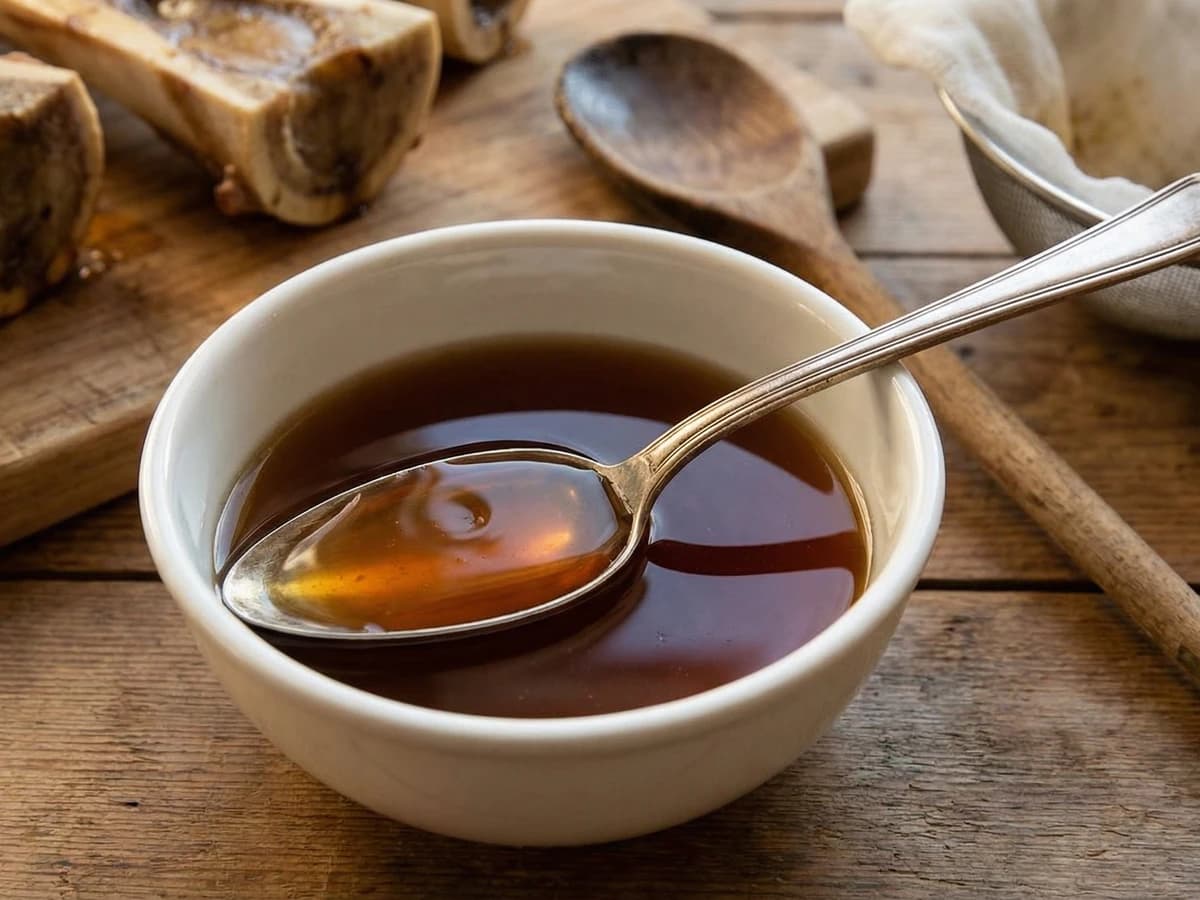
The brown stock that forms the backbone of Italian meat cookery. Hours of roasting and simmering extract every trace of flavor from bone and sinew, creating liquid gold that transforms ordinary sauces into extraordinary ones.