Culinary Explorer

A cooking platform built around craft, culture, and the stories behind what we eat.
Discover Culinary Explorer
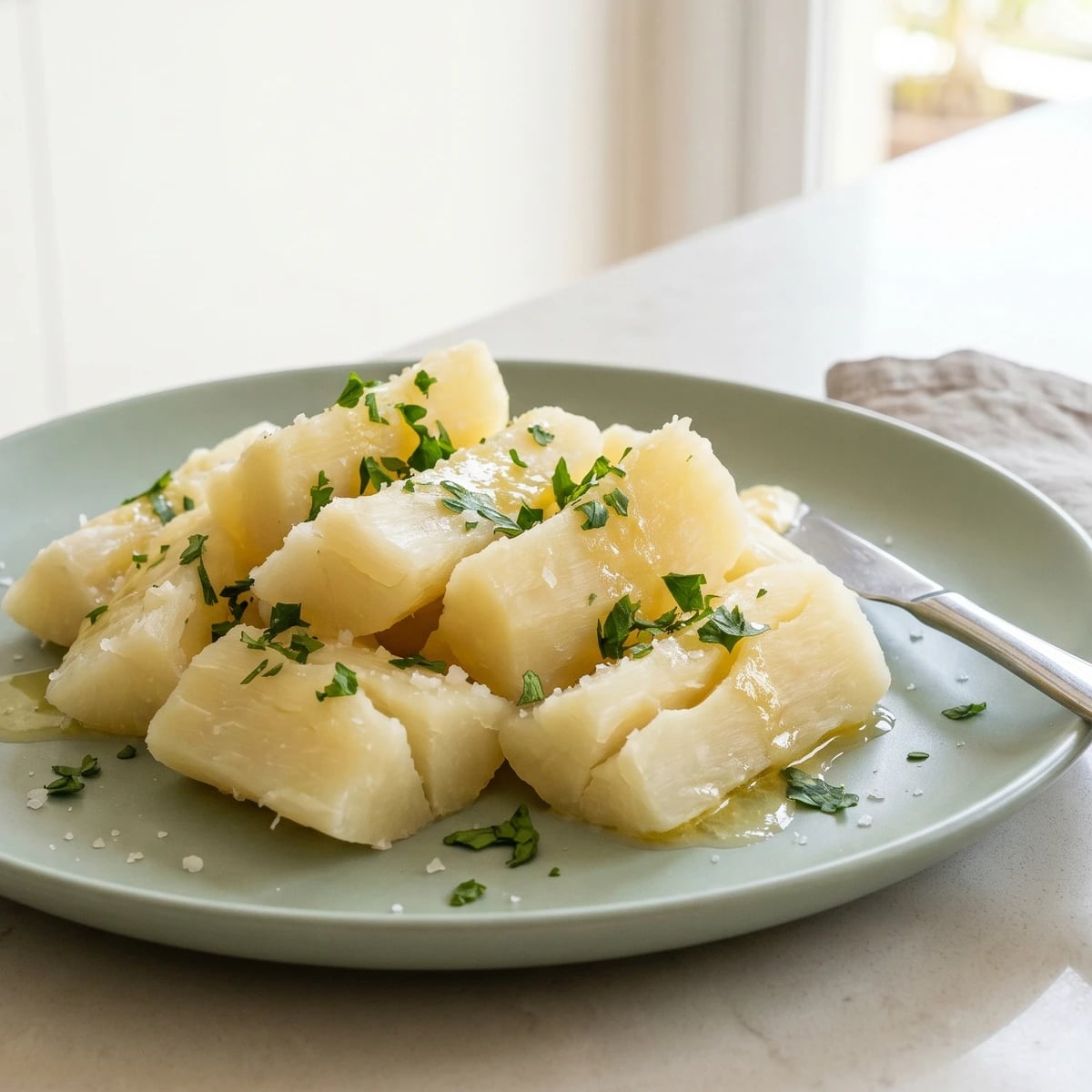
Mandioca Cozida com Manteiga

Mandioca Cozida com Manteiga

Created by

You don't need talent to cook mandioca. You need salted water, patience, and the sense to stop when the fork slides in cleanly.

Side Dishes
Brazilian
BBQ
Outdoor Dining
Comfort Food
15 min
Active Time
35 min cook50 min total
Yield4 servings

You look at that thick brown root in the market and hear the little voice: isso não é pra mim. Good. Now we can answer it. Mandioca is not a test of character. It's a root, a pot of water, salt, and the patience to let it cook until it gives up the fight.

I learned plenty of things late, including the obvious ones. The first time I wrote mandioca in my caderno, the note was basically: don't rush it or you'll eat wood. That's still the lesson. Cut the pieces evenly so they cook together, salt the water so the flavor goes in, and keep simmering until a fork slides through the center without you forcing it. Not mush, not stone. Tender.

On the Brazilian table, mandioca can walk into a churrasco, sit beside rice and beans, or turn a pê-efe into something with more body and comfort. It belongs to comida de verdade because it asks almost nothing from a factory. No packet, no powdered seasoning pretending to help. Butter, heat, salt, and the root itself do the work.

When it's done, fold the hot pieces through butter so the edges gloss over and the salt wakes everything up. That's it. Cozinhar não é dom, é um aprendizado. Anota aí.

Cassava was domesticated by Indigenous peoples in South America long before Portuguese colonization, and it became one of Brazil's central staple foods through forms like farinha, beiju, tapioca, pirão, and boiled roots. Across the country it changes names, mandioca in much of Brazil, aipim in Rio and parts of the Southeast, macaxeira in the Northeast, which is how you know a food is not a trend but a daily habit. The sweet varieties are boiled and eaten like this; bitter cassava belongs to specific traditional processing methods and should not be treated as the same ingredient at home.

The technique, the tradition, and the story behind every dish.

Discover Culinary Explorer

Ingredients

fresh cassava (mandioca, aipim, or macaxeira)

Quantity

2 pounds

peeled and cut into 3-inch pieces

water

Quantity

8 cups, or enough to cover by 1 inch

salt for cooking water

Quantity

1 tablespoon

unsalted butter

Quantity

3 tablespoons

salt

Quantity

1/2 teaspoon, plus more to taste

parsley (optional)

Quantity

2 tablespoons

chopped

Equipment Needed

  • Heavy 4-liter pot
  • Sharp small knife
  • Colander
  • Wooden spoon or silicone spatula

Instructions

  1. 1

    Choose the cassava

    Buy sweet cassava sold for cooking, with firm white flesh and no gray, black, or sour-smelling spots. If the root looks tired, cook something else. A bad mandioca stays fibrous no matter how much hope you put in the pot, and I refuse to let you blame yourself for a sad ingredient.

    Frozen peeled cassava is the honest Tuesday shortcut. It saves peeling and is usually reliable, but the pieces may cook unevenly, so test each one with a fork before draining.
  2. 2

    Peel and cut

    Trim the ends, cut the cassava crosswise into 3-inch pieces, then slice away the thick brown skin and the thin pink layer under it. Cut any very fat pieces in half lengthwise. Even pieces cook at the same pace; uneven ones give you one piece collapsing while another still eats like a chair leg.

  3. 3

    Start in salted water

    Put the cassava in a heavy pot, cover with water by about 1 inch, and add 1 tablespoon salt. Bring to a boil, then lower to a steady simmer. Salt in the water matters because mandioca is dense; seasoning only at the end leaves the middle bland, and bland mandioca is just starch behaving badly.

  4. 4

    Cook until tender

    Simmer until the pieces look slightly opened at the edges and a fork slides into the thickest part without force, about 25 to 40 minutes depending on the root. Check more than one piece. Mandioca doesn't care about your timer; it cares about tenderness. Stop too soon and it's woody. Go too far and it drinks water until it turns heavy and dull.

  5. 5

    Drain and clean

    Drain the cassava well while it's hot. Pull out the tough stringy core from any piece where it shows, using a small knife or your fingers once it's cool enough to handle. That center fiber never becomes pleasant, so remove it now instead of pretending dinner is a dental exercise.

  6. 6

    Fold with butter

    Return the hot cassava to the empty pot, add the butter and 1/2 teaspoon salt, and fold gently until the butter melts and coats the edges with a glossy sheen. Don't stir like you're angry. The pieces should stay chunky, tender, and buttery, not become a paste. Taste and adjust the salt.

  7. 7

    Finish and serve

    Scatter parsley over the top if you want it, then serve right away beside grilled meat, beans, rice, or something green. The plate should feel full and honest, the kind of pê-efe that resolves dinner without a packet having to whisper lies from the pantry.

Chef Tips

  • Never eat cassava raw. Buy sweet cassava meant for boiling, peel it well, cook it fully, and discard the cooking water. Bitter cassava needs traditional processing, not home improvisation.
  • If the cassava is fresh and good, it will usually split a little at the edges as it cooks. That's a friendly sign. The fork test still decides.
  • For churrasco, cook the mandioca ahead until tender, drain it, and rewarm gently with butter before serving. It should be soft and glossy, not fried dry into toughness.
  • Skip bouillon powder and seasoning packets. They mostly bring salt and a factory taste. Butter and properly salted cooking water are cleaner, cheaper, and better.

Advance Preparation

  • Fresh cassava can be peeled, cut, covered with water, and refrigerated for up to 24 hours before cooking. Drain and use fresh water to boil.
  • Cooked cassava keeps 3 days in the fridge. Rewarm in a covered pan with a spoonful of water, then fold in fresh butter.
  • For freezing, boil until just tender, drain well, cool completely, and freeze in portions for up to 2 months. Reheat from frozen in simmering salted water or a covered pan.

Frequently Asked Questions

Nutrition Information

1 serving (about 290g)

Calories
425 calories
Total Fat
9 g
Saturated Fat
6 g
Trans Fat
0 g
Unsaturated Fat
3 g
Cholesterol
23 mg
Sodium
670 mg
Total Carbohydrates
82 g
Dietary Fiber
4 g
Sugars
3 g
Protein
3 g

Note: Chef personas and recipes are created with AI assistance. Cook with care: follow safe food-handling practices, check doneness with a thermometer when needed, and adapt for allergies and your kitchen.

Where cooking meets culture.

Culinary guides, cultural storytelling, and the editorial depth that makes cooking meaningful.

Discover Culinary Explorer

More from Churrasco & the Gaúcho Fire

Browse the full collection