
Chef Juliana
Laranja em Gomos para Feijoada
You think cutting orange this way is fussy. It isn't. It's one knife, one bowl, and the reason feijoada tastes like home instead of just heavy.
A cooking platform built around craft, culture, and the stories behind what we eat.

Created by
You don't need a family secret. You need potatoes cooked until tender, onion softened by vinegar, and a homemade mayo that holds the salad together without turning it into paste.
You hear "isso não é pra mim" and think a bowl for churrasco has to come from somebody's aunt, the one who never measures and somehow gets it right. I like that aunt. I just don't accept the myth. Cozinhar não é dom, é um aprendizado, and potato salad is one of the best places to prove it.
The whole trick is control. Cut the vegetables evenly so they cook evenly. Start them in cold salted water so the centers and edges arrive together. Drain them well, because watery potatoes make watery salad, and then everyone blames the mayonnaise. No. A gente is not doing that today.
For a potluck, I use maionese de leite, a real homemade milk mayo, thickened in the blender with oil, lime, mustard, and salt. It gives you the creamy fold without gambling on raw egg under the sun. No packet, no powder pretending to be flavor. The flavor is salted potato, softened onion, fresh cheiro-verde, and a mayo you made with your own two hands.
Put this beside rice, beans, grilled meat or fish, and something green, and there it is: the pê-efe stretching itself into a Sunday lunch, a churrasco, a plastic-table birthday. Comida de verdade doesn't need drama. It needs a method.
Brazilian maionese de batata belongs to the wider family of mayonnaise-based potato salads that spread through urban home cooking and community cookbooks in the twentieth century. In Brazil it settled firmly into churrasco, Sunday lunch, festas, and potlucks, especially with carrot, peas, olives, cheiro-verde, and endless family arguments about what does or doesn't belong. There is no single national version; the variation is part of the dish.
Quantity
2 pounds (900 g)
peeled and cut into 3/4-inch cubes
Quantity
2 medium
peeled and cut into 1/2-inch cubes
Quantity
1 tablespoon, plus more to taste
for the cooking water
Quantity
1/2 cup
thawed
Quantity
1/3 cup
finely chopped
Quantity
2 tablespoons
for softening the onion
Quantity
1/2 cup
chopped
Quantity
1/4 cup
chopped
Quantity
1/2 cup
Quantity
1 teaspoon
Quantity
2 tablespoons
for the mayo
Quantity
1/2 teaspoon
for the mayo
Quantity
1 to 1 1/4 cups
Quantity
to taste
| Ingredient | Quantity |
|---|---|
| yellow or all-purpose potatoespeeled and cut into 3/4-inch cubes | 2 pounds (900 g) |
| carrotspeeled and cut into 1/2-inch cubes | 2 medium |
| saltfor the cooking water | 1 tablespoon, plus more to taste |
| frozen peasthawed | 1/2 cup |
| yellow onionfinely chopped | 1/3 cup |
| white vinegar or lime juicefor softening the onion | 2 tablespoons |
| cheiro-verde, parsley and scallionschopped | 1/2 cup |
| green olives (optional)chopped | 1/4 cup |
| cold whole milk | 1/2 cup |
| mustard | 1 teaspoon |
| lime juice or white vinegarfor the mayo | 2 tablespoons |
| saltfor the mayo | 1/2 teaspoon |
| neutral oil | 1 to 1 1/4 cups |
| freshly ground black pepper (optional) | to taste |
Peel the potatoes and carrots. Cut the potatoes into 3/4-inch cubes and the carrots into 1/2-inch cubes. Keep the carrot pieces smaller because carrots take longer to soften. Even pieces cook together, which means you don't end up with hard centers and mashed corners in the same bowl.
Put the potatoes and carrots in a heavy pot, cover with cold water by 1 inch, and add the tablespoon of salt. Bring to a boil, then lower to a steady simmer, not a violent boil. Cook until a knife slides into a potato cube and the cube slips off with a little resistance, about 8 to 12 minutes. Starting cold lets the vegetables heat evenly; boiling hard knocks the corners off and turns your salad cloudy before it even reaches the bowl.
Add the thawed peas to the pot for the last 30 seconds, just enough to brighten them and take off the chill. Drain everything well in a colander, then spread the vegetables on a tray for 10 minutes. They should look matte at the edges, not wet. Dry vegetables hold mayo; wet vegetables slide around in a sad white puddle.
While the vegetables cool, put the chopped onion in the serving bowl with 2 tablespoons vinegar or lime juice and a pinch of salt. Stir and let it sit for 10 minutes, until the onion looks glossy and smells less sharp. The acid murcha the onion a little, taking down the raw bite so it seasons the salad instead of shouting over it.
In a tall jar, combine the cold milk, mustard, lime juice or vinegar, and 1/2 teaspoon salt. Add 1 cup of oil. Set an immersion blender flat on the bottom and blend without lifting for 10 to 15 seconds, until thick white mayo forms under the blade. Then lift slowly while blending. If it's still loose, add more oil 1 tablespoon at a time until it gets thick and spoonable. Lift too soon and the milk and oil don't bind. I've made that soup. Anota aí: patience for ten seconds.
Add the warm, dry potatoes, carrots, and peas to the onion bowl. Fold gently so the vegetables touch the acid and onion, then let them sit for 5 minutes. Warm potatoes drink seasoning better than cold ones. Hot potatoes break; cold potatoes shrug. Warm is the little window where the salad learns flavor.
Add 3/4 cup of the homemade mayo, the cheiro-verde, olives if using, and a little black pepper. Fold from the bottom with a big spoon until every cube is coated but still visible. Add more mayo only if the salad looks dry. You want creamy potato salad, not mashed potatoes wearing a white coat.
Taste and adjust salt or lime. Cover and chill for at least 1 hour before serving. The cold firms the mayo and gives the onion time to behave. For churrasco or outdoor dining, keep the bowl cold and bring it out close to eating time. Sun on mayo salad is not confidence, it's trouble.
1 serving (about 210g)
Culinary guides, cultural storytelling, and the editorial depth that makes cooking meaningful.
Discover Culinary ExplorerChef Juliana
You think cutting orange this way is fussy. It isn't. It's one knife, one bowl, and the reason feijoada tastes like home instead of just heavy.
Chef Juliana
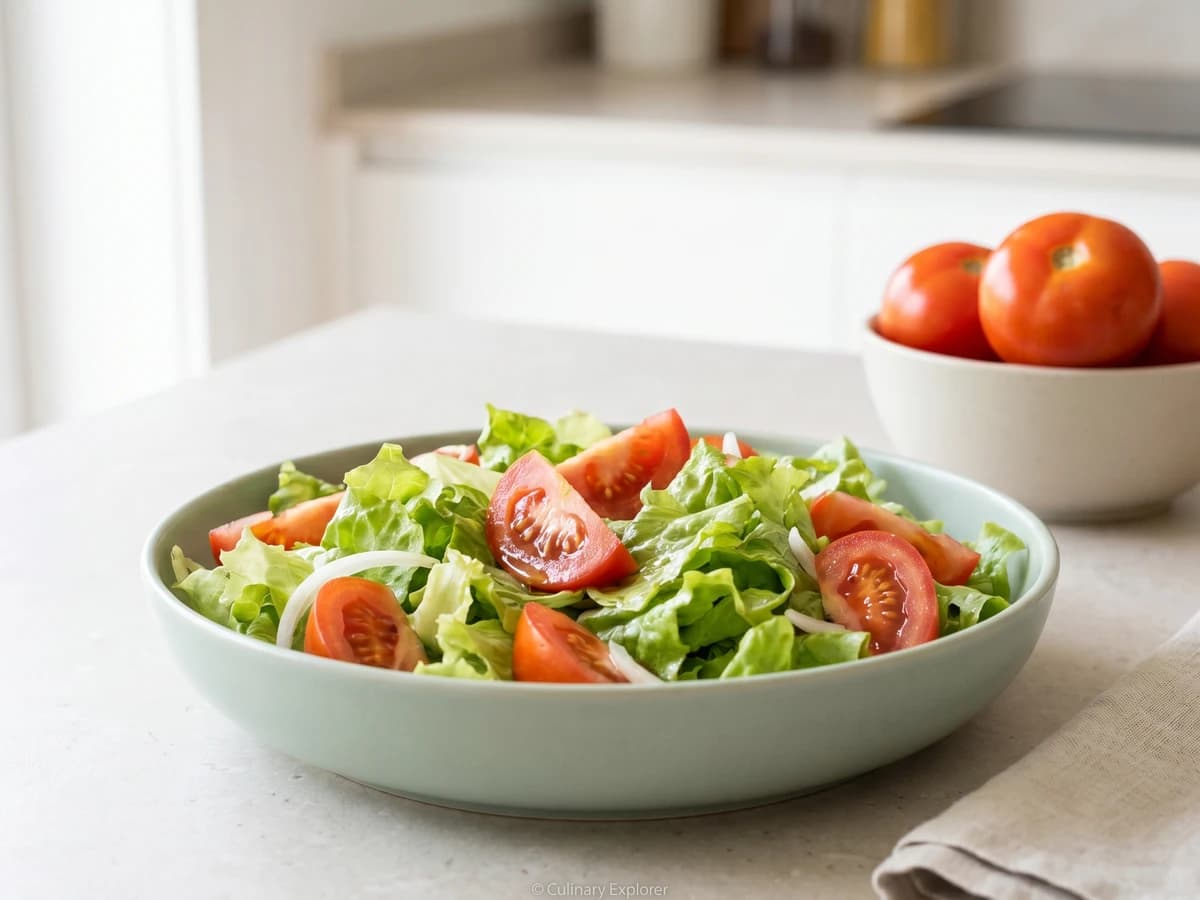
You don't need courage for salad, you need order: dry the leaves, salt the tomatoes, dress at the last minute. That's how the fresh corner of the pê-efe stays crisp.
Chef Juliana
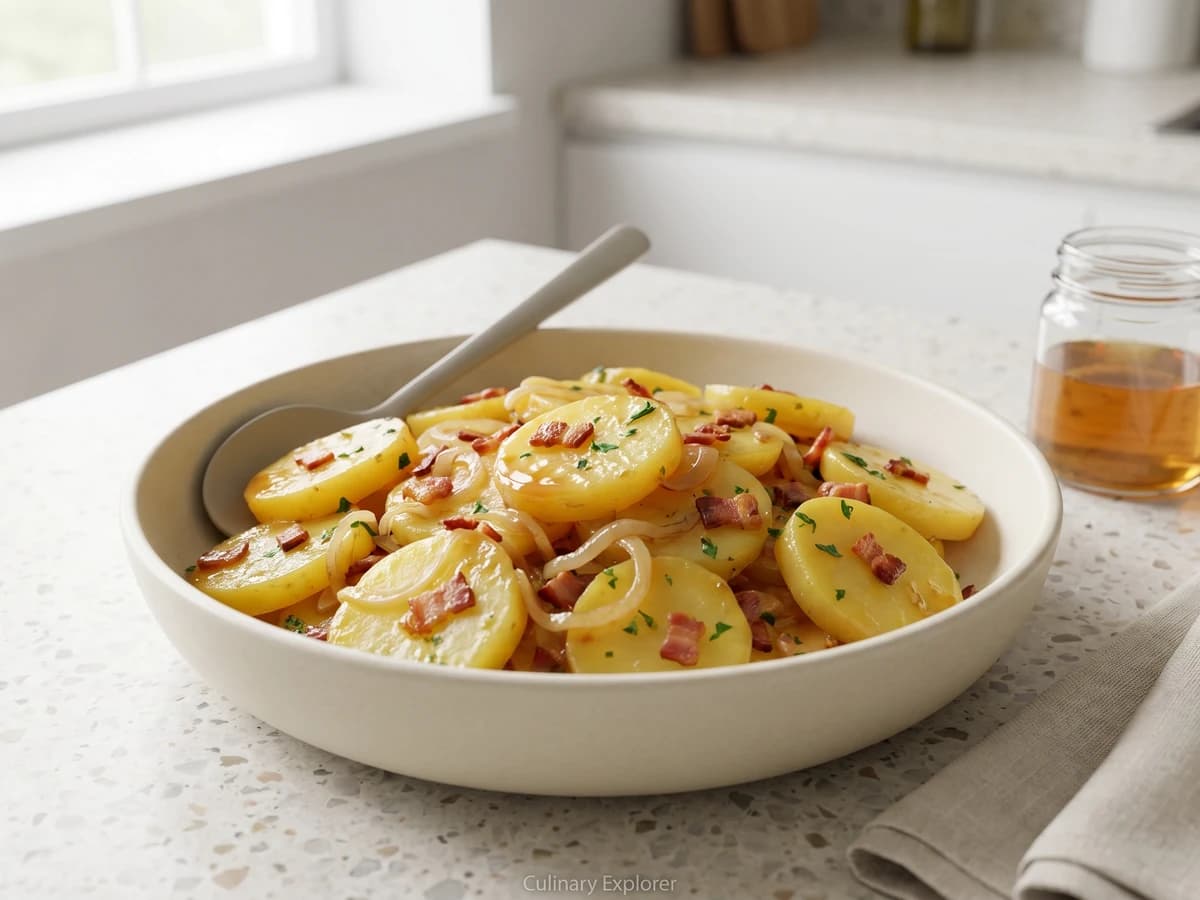
You don't need mayo to make potatoes behave. Dress them warm with vinegar, onion, and bacon fat, and every slice turns sharp, glossy, and ready for the pê-efe.

Chef Juliana
You don't need a secret hand for Christmas maionese. You need potatoes cut evenly, cooked just tender, cooled properly, and folded gently so the salad stays creamy, not smashed.