Chef Jeong-sun
Baechu-jeon (배추전, Napa Cabbage Pancake)
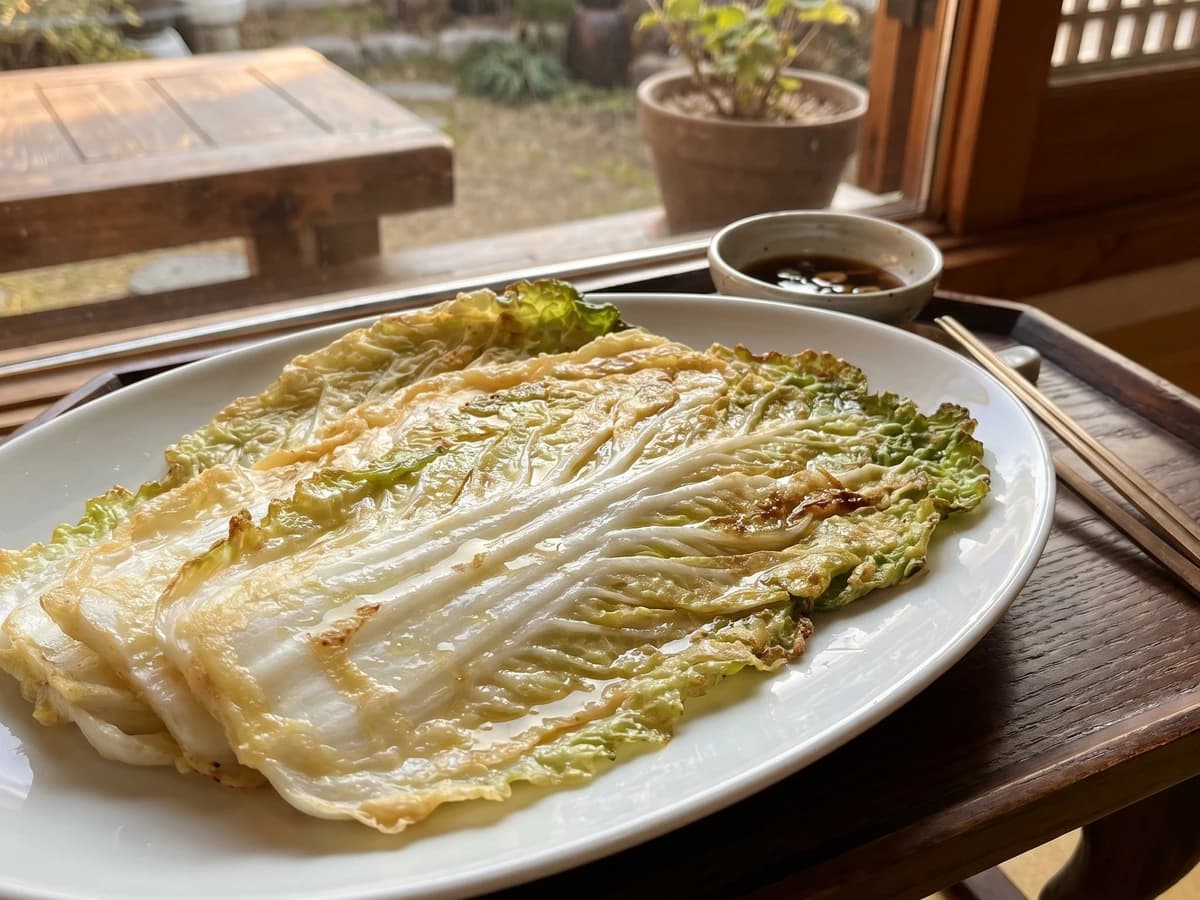
A Gyeongsang home pancake made from one whole napa cabbage leaf at a time, flattened at the rib, brushed in thin salted batter, and fried until sweet, tender, and quietly crisp at the edges.
A cooking platform built around craft, culture, and the stories behind what we eat.

Created by
Fine winter maesaengi and plump oysters bound with just enough batter, pan-fried into small green jeon that taste of the cold sea and hold together because the cook did not rush.
Maesaengi arrives in the cold months, fine as thread and dark green enough to stain the rinse water. Cook the month you're standing in. This is winter food, the kind a coastal market gives you when the air is sharp and oysters are sweet from cold water.
The mistake is treating maesaengi like sturdy seaweed. It isn't. It tangles, hides sand, and carries water into the pan if you don't drain it properly. Rinse it gently in a bowl, lift it out instead of pouring the grit back over it, then squeeze it only enough to stop dripping. The batter should bind, not bury. Too much flour makes a green pancake with oysters trapped inside it, and that is not what we came for.
Fry these small. My teacher would tap the edge of the pan with her chopsticks when a student made jeon too large, no scolding needed. Small jeon set quickly, turn cleanly, and keep the oyster tender. Write the batter amount down after the first proper batch. Memory is a borrowed bowl, and maesaengi is too seasonal to relearn every winter.
Maesaengi, a fine green seaweed harvested in winter, is closely tied to Korea's southern and western coastal waters, especially Jeollanam-do areas such as Jangheung, Gangjin, and Wando, where cold clean tides made it a seasonal byeolmi (special delicacy). Oysters have long belonged to coastal Korean winter cooking, and pairing them with maesaengi in soups or jeon reflects the practical home table: two ingredients at their best in the same month. Jeju and southern coastal households both claim versions of this cold-season pan-fried dish, not as palace food, but as seaside food made when the market is right.
Quantity
150g
rinsed gently and well drained
Quantity
180g
rinsed gently and drained
Quantity
1/2 teaspoon
for rinsing oysters
Quantity
1/2 cup
Quantity
2 tablespoons
Quantity
1
Quantity
1/2 cup
Quantity
1/2 teaspoon
Quantity
1/4 teaspoon
Quantity
1 small
finely sliced
Quantity
1 small
thinly sliced
Quantity
4 to 5 tablespoons
for pan-frying
Quantity
2 tablespoons
for dipping sauce
Quantity
1 tablespoon
for dipping sauce
Quantity
1 teaspoon
for dipping sauce
Quantity
1/2 teaspoon
for dipping sauce
Quantity
a few thin slices
for dipping sauce
| Ingredient | Quantity |
|---|---|
| fresh maesaengi (fine green seaweed)rinsed gently and well drained | 150g |
| fresh shucked oystersrinsed gently and drained | 180g |
| coarse saltfor rinsing oysters | 1/2 teaspoon |
| all-purpose flour | 1/2 cup |
| potato starch or cornstarch | 2 tablespoons |
| large egg | 1 |
| cold water | 1/2 cup |
| soup soy sauce (guk-ganjang) or fish sauce | 1/2 teaspoon |
| fine sea salt | 1/4 teaspoon |
| scallionfinely sliced | 1 small |
| fresh red chili (optional)thinly sliced | 1 small |
| neutral oilfor pan-frying | 4 to 5 tablespoons |
| soy saucefor dipping sauce | 2 tablespoons |
| rice vinegarfor dipping sauce | 1 tablespoon |
| waterfor dipping sauce | 1 teaspoon |
| toasted sesame seedsfor dipping sauce | 1/2 teaspoon |
| scallion ringsfor dipping sauce | a few thin slices |
Put the maesaengi in a large bowl of cold water and loosen it with your fingers. Let any grit fall, then lift the seaweed out into a sieve instead of pouring the dirty water over it. Repeat once more if the bowl shows sand. Drain 10 minutes, then press gently with your hand until it is damp but no longer dripping. This is the step that keeps the batter from turning loose in the pan.
Swish the oysters in a bowl with 2 cups cold water and 1/2 teaspoon coarse salt, then lift them out and drain on paper towels or a clean cloth. Do not rub them hard. You want grit gone, not the oysters bruised. If they are very large, cut each one in half so the jeon cooks before the batter darkens.
Whisk the flour, potato starch, egg, cold water, soup soy sauce, and fine sea salt until just smooth. The starch gives the edge a light crispness, and the cold water slows gluten so the jeon stays tender. The batter should be thinner than American pancake batter, thick enough to coat a spoon but loose enough to fall off it.
Add the drained maesaengi, oysters, sliced scallion, and red chili if using. Fold gently with chopsticks or a spoon until the seaweed is evenly loosened through the batter. Do not beat it. Maesaengi clumps if you bully it, and then one pancake gets all the seaweed while the next gets only flour.
Set a wide nonstick or well-seasoned skillet over medium heat and add 1 tablespoon oil. Wait until the oil thins and moves easily across the pan. Jeon needs steady heat, not violence. Too hot, and the outside browns before the oyster cooks; too cool, and the batter drinks oil.
Spoon 2 tablespoons batter per jeon into the pan, keeping each one about 7cm wide with 1 oyster in each if you can manage it. Press stray seaweed back into the edge. Fry 2 to 3 minutes, until the underside is set and lightly browned at the rim, then turn once and fry 2 minutes more. Work in batches, adding a little oil each time.
Move the finished jeon to a rack or paper towel for 1 minute, then serve while the edges are still crisp. Stir together the soy sauce, vinegar, water, sesame seeds, and scallion rings for dipping. Taste one plain first. It should be green, briny, and tender, with the oyster still tasting like oyster.
1 serving (about 160g)
Culinary guides, cultural storytelling, and the editorial depth that makes cooking meaningful.
Discover Culinary ExplorerChef Jeong-sun
A Gyeongsang home pancake made from one whole napa cabbage leaf at a time, flattened at the rib, brushed in thin salted batter, and fried until sweet, tender, and quietly crisp at the edges.

Chef Jeong-sun
A holiday jeon of fresh shiitake or oyster mushrooms, salted lightly, dusted thinly, and carried through egg in a quiet pan until the mushroom stays earthy and the coating stays tender.

Chef Jeong-sun
Soaked mung beans ground coarse, folded with pork, bracken, sprouts, and kimchi, then fried thick until the edges crisp and the center stays tender enough for a shared table.

Chef Jeong-sun
A summer garlic chive pancake fried thin, crisp at the edges and chewy in the center, with just enough batter to hold the green pile together and a sharp soy-vinegar dip.