
Chef Lupita
Aporreadillo Michoacano con Huevo
Michoacán's Tierra Caliente almuerzo, where salted beef is softened, pounded, fried in lard, folded with egg and chile perón salsa, then served beside morisqueta like a proper working table.
A cooking platform built around craft, culture, and the stories behind what we eat.
Created by
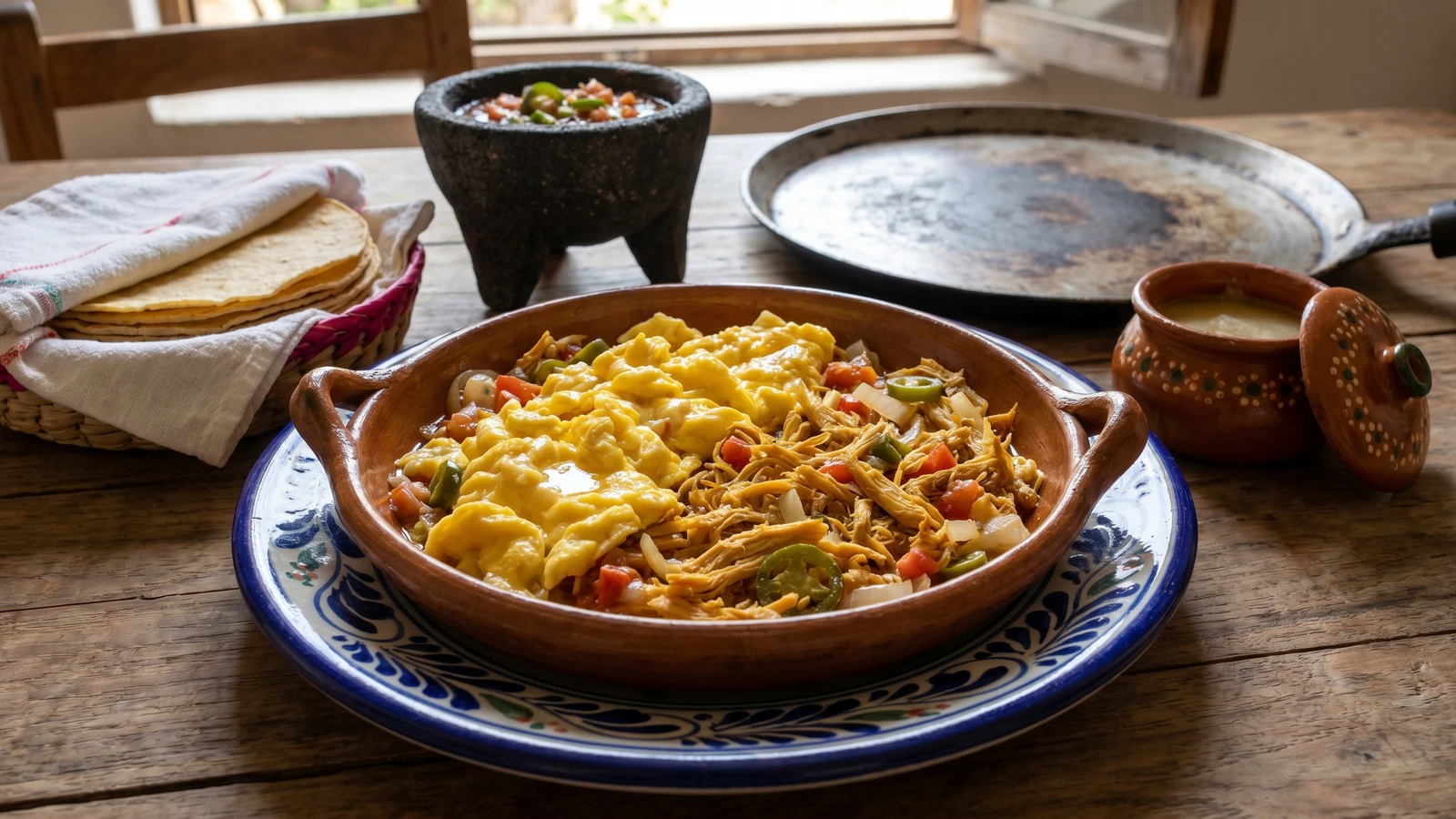
Aguascalientes' dry-ranch breakfast of salted shredded chicken, revived in lard with tomato, white onion, chile jalapeño, and eggs, then scooped into hot corn tortillas before the day starts.
Aguascalientes, on the dry northern edge of the Bajío between Zacatecas and Jalisco, is where this chicken machaca makes sense. The state is small, but do not confuse small with minor. In the ranch kitchens outside Calvillo, Jesús María, and Rincón de Romos, a cooked chicken was not finished after the first meal. It was shredded, salted, dried, and brought back to the pan with egg before the day started.
The defining ingredient is the dried chicken first, then the chile. Fresh chile jalapeño gives a clean green bite without turning breakfast into a dare. Jitomate guaje, white onion, and manteca de cerdo do the rest. The tomato cooks down until it stains the lard orange, then the chicken goes in and drinks that fat. La manteca es el sabor.
I learned this style from a señora near the Mercado Terán in the capital, and she was clear about the mistake: leaving the chicken soft. Soft shredded chicken with eggs is comida corrida, fine for lunch, but not machaca. Machaca needs to chew back under the huevo. No me vengas con atajos. This is a 32-state cuisine, and Aguascalientes knows exactly what its dry breakfast should feel like.
Machaca belongs to the preservation logic of Mexico's arid north: meat cut thin, salted, dried, then pounded or shredded so it could travel and cook quickly. Aguascalientes, a small dry state on the Bajío's northern edge, absorbed that ranch technique through trade and family movement with Zacatecas and Jalisco, then applied it to chicken in home kitchens where a whole bird had to feed more than one meal. When the Ferrocarril Central Mexicano made Aguascalientes an important rail junction in the late 19th century, portable dried meats and quick egg dishes became practical food for workers, markets, and ranch households.
Quantity
3 cups
preferably a mix of breast and thigh, pulled into very fine threads
Quantity
1 teaspoon
divided
Quantity
3 tablespoons
Quantity
1/2 medium
finely chopped
Quantity
1
stemmed and finely chopped
Quantity
2 medium
cored and finely chopped
Quantity
6
Quantity
2 tablespoons
Quantity
1/4 teaspoon
Quantity
for serving
Quantity
for serving
Quantity
for serving
| Ingredient | Quantity |
|---|---|
| cooked shredded chickenpreferably a mix of breast and thigh, pulled into very fine threads | 3 cups |
| fine sea saltdivided | 1 teaspoon |
| manteca de cerdo (pork lard) | 3 tablespoons |
| white onionfinely chopped | 1/2 medium |
| fresh chile jalapeñostemmed and finely chopped | 1 |
| jitomates guaje (Roma tomatoes)cored and finely chopped | 2 medium |
| large eggs | 6 |
| water | 2 tablespoons |
| freshly ground black pepper | 1/4 teaspoon |
| warm corn tortillas (optional) | for serving |
| salsa de molcajete with roasted jitomate and chile jalapeño (optional) | for serving |
| bolillos from the panadería (optional) | for serving |
Pull the cooked chicken into thin threads with your fingers. Not chunks. Threads. Sprinkle with 3/4 teaspoon of the salt and toss well. The finer the shred, the better it dries and the better it catches the egg later.
Heat the oven to 275F. Spread the salted chicken in a thin layer on a rimmed sheet pan. Bake for 30 to 35 minutes, stirring once, until the edges look leathery, the color deepens, and the chicken has lost its wet softness. This home method makes machaca for this dish, not meat for the cupboard. Refrigerate it if you are not cooking it right away.
Crack the eggs into a bowl. Add the water, black pepper, and the remaining 1/4 teaspoon salt. Beat with a fork until the whites and yolks are fully combined. The water keeps the curds tender without making them taste like milk.
Melt the manteca in a wide skillet or clay cazuela over medium heat. Add the white onion and cook until it turns translucent at the edges, about 3 minutes. Add the chile jalapeño and cook for 1 minute more. Add the chopped jitomate and cook until it collapses and stains the lard orange-red, 5 to 6 minutes. La manteca es el sabor.
Add the dried chicken to the skillet and stir it through the tomato, onion, chile, and lard. Cook for 3 to 4 minutes, pressing and turning, until the strands darken slightly and some ends crisp against the pan. Soft shredded chicken with eggs is not machaca. You need a little chew.
Lower the heat to medium-low. Pour in the beaten eggs and let them sit for 20 seconds before stirring. Fold slowly with a wooden spoon, pulling the cooked edges toward the center. Stop when the eggs are just set and still glossy in small curds. The chicken will keep cooking them after the pan leaves the fire.
Spoon the machaca con huevo into a warm shallow cazuela or onto a Dolores Hidalgo majolica plate. Set hot corn tortillas, salsa de molcajete, and bolillos on the table. Eat it while the chicken still has crisp edges. Recetas probadas y garantizadas.
1 serving (about 275g)
Culinary guides, cultural storytelling, and the editorial depth that makes cooking meaningful.
Discover Culinary ExplorerChef Lupita
Michoacán's Tierra Caliente almuerzo, where salted beef is softened, pounded, fried in lard, folded with egg and chile perón salsa, then served beside morisqueta like a proper working table.

Chef Lupita
Guerrero's Costa Grande aporreado is salted cecina pounded soft, scrambled with egg, and finished in a red guajillo and chile de árbol salsa loud with garlic and cilantro.

Chef Lupita
Los Altos de Chiapas turns two-night fermented white corn into a tart-sweet atole, cooked with canela and piloncillo, then poured hot into jícaras for desayuno.

Chef Lupita
Oaxaca's Mixteca region ferments nixtamalized masa for days until it turns tart and alive, then simmers it with piloncillo and canela into a thick, warm atole served at first light in clay.