Chef Lupita
Acúmara Tatemada al Comal
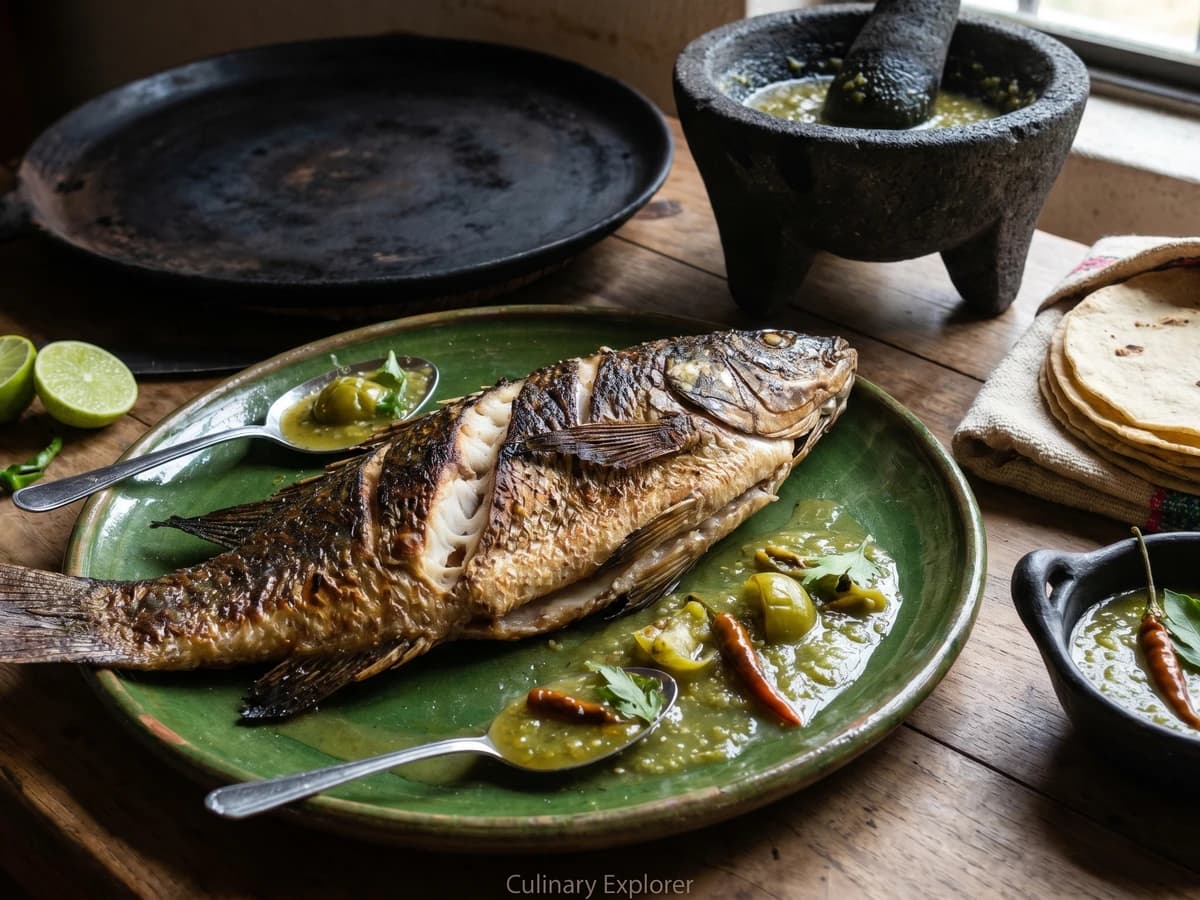
Michoacán's Lake Pátzcuaro acúmara, a whole kurucha from the lago tatemada on a comal de leña and served with chile perón atápakua, corn tortillas, and P'urhépecha discipline.
A cooking platform built around craft, culture, and the stories behind what we eat.

Created by
Baja California Sur's salt-dried stingray, soaked back to life and guisada with tomato, onion, chile serrano, and rajas of poblano. The peninsular main, distinct from the breakfast version of La Paz.
This is a Sudcaliforniano dish. From La Paz, from Loreto, from the small fishing communities along the Sea of Cortez where the boats come in with mantarraya in the morning and the women on the playa salt and dry the meat in the sun the same afternoon. The peninsula has its own kitchen, separate from Sinaloa across the gulf, separate from Sonora to the north. Cada estado, su propia cocina, and Baja California Sur is one of the states the rest of Mexico forgets when it talks about regional cooking.
Mantarraya seca is the ingredient that defines this dish. Stingray, salt-cured and sun-dried on wooden frames along the coast, the way the peninsula has preserved fish since long before refrigeration arrived. The drying concentrates the flavor and gives the meat its fibrous, shredded texture. That is why the cooks here call it machaca, even though northerners hear the word and think only of dried beef. The peninsula borrowed the name and gave it to their fish. Both are correct.
The guisada version is the comida, the midday main, eaten in a cazuela with frijoles peruanos and flour tortillas sobaqueras. It is not the breakfast plate of scrambled eggs and shredded fish that you will find in cafes around La Paz. That is machaca con huevo, a different dish entirely. Asking for machaca de mantarraya in Sudcalifornia and getting eggs is the kind of mistake a tourist makes once.
My mother never cooked this. She was from Jalisco and the peninsula was as far from her kitchen as Spain. I learned this dish from a senora named Dona Rufina in a small marisqueria in El Sargento, north of La Paz, who showed me her drying frames out behind the kitchen and told me the salt has to be coarse and the sun has to be honest. She wrote two lines in my notebook: 'soak twice, taste before salt.' Saber cocinar es saber vivir.
Stingray drying as a preservation method on the Baja California peninsula predates European contact, practiced by the Pericu and Guaycura peoples who inhabited the southern peninsula and depended on the Sea of Cortez for protein in a region where freshwater and arable land were both scarce. The Jesuit and later Franciscan missions established between 1697 and the late 18th century maintained the practice and added Mediterranean elements, olive oil, garlic, oregano, that fused with the indigenous drying tradition to produce the guisado form recognizable today. Baja California Sur was administered as a federal territory until 1974, when it became Mexico's 31st state, and its cuisine remained largely insulated from the rest of the country until commercial flights and the Transpeninsular Highway, completed in 1973, finally connected the peninsula to the mainland.
Quantity
8 ounces
shredded into thin strands
Quantity
4 cups
for soaking
Quantity
3 tablespoons
olive oil works only if your fish renders very oily on its own
Quantity
1 large
finely chopped
Quantity
4
finely chopped
Quantity
3 to 4
finely chopped, chile verde del rancho if you can find it
Quantity
1
fire-roasted, peeled, seeded, and cut into thin strips
Quantity
4 medium
finely chopped
Quantity
1 teaspoon
oregano de monte from the sierra if available
Quantity
1/2 teaspoon
Quantity
2
Quantity
1/4 cup
chopped
Quantity
1, juiced, plus more halves for serving
Quantity
to taste, only after tasting the fish
Quantity
for serving
Quantity
for serving
Quantity
for serving
| Ingredient | Quantity |
|---|---|
| dried, salted stingray (mantarraya seca)shredded into thin strands | 8 ounces |
| warm waterfor soaking | 4 cups |
| manteca de cerdo (pork lard)olive oil works only if your fish renders very oily on its own | 3 tablespoons |
| white onionfinely chopped | 1 large |
| garlic clovesfinely chopped | 4 |
| fresh chile serranofinely chopped, chile verde del rancho if you can find it | 3 to 4 |
| fresh chile poblanofire-roasted, peeled, seeded, and cut into thin strips | 1 |
| ripe Roma tomatoesfinely chopped | 4 medium |
| dried Mexican oreganooregano de monte from the sierra if available | 1 teaspoon |
| ground black pepper | 1/2 teaspoon |
| bay leaves | 2 |
| fresh cilantrochopped | 1/4 cup |
| lime | 1, juiced, plus more halves for serving |
| sea salt | to taste, only after tasting the fish |
| flour tortillas, sobaqueras or hand-pressed (optional) | for serving |
| frijoles peruanos refritos (optional) | for serving |
| salsa de chiltepin (optional) | for serving |
Place the shredded mantarraya seca in a wide bowl and cover with the warm water. Let it soak for 20 to 30 minutes, changing the water once halfway through. The fish was salt-dried on the coast for preservation, and it carries a serious load of salt and sea. You are pulling that back to a level where the dish can breathe. Taste a strand after 20 minutes. If it still tastes like the ocean swallowed it whole, soak longer. If it tastes like clean fish with a memory of salt, you are there.
Drain the fish in a fine-mesh strainer. Press it firmly with your hands or the back of a wooden spoon to push out the soaking water. Pull the strands apart with your fingers, looking for any tough cartilage or skin pieces and discarding them. The mantarraya should look like soft, pale, fibrous threads. This shredded texture is why La Paz cooks call it machaca. The name does not belong only to the dried beef of the north.
Set the chile poblano directly over an open gas flame, or under the broiler, turning until the skin is blistered and blackened on all sides. Place it in a bowl and cover for 10 minutes. The trapped heat lifts the skin. Peel under running water, remove the seeds and stem, and cut into thin strips. This is rajas. The poblano is not native to Sudcalifornia but it has lived in these kitchens for generations and the senoras of La Paz will tell you the guisado is wrong without it.
In a heavy skillet or clay cazuela, melt the manteca over medium heat. Add the onion and a small pinch of salt. Cook for five to seven minutes, stirring, until soft and translucent with a touch of color at the edges. Add the garlic and chile serrano. Cook one minute more, until you smell the garlic clearly without it taking color. La manteca es el sabor. Olive oil is acceptable here only because the peninsula sits at the western edge of the Mediterranean trade and the missions brought olive culture south, but the lard tastes more like home.
Add the chopped tomato, oregano, black pepper, and bay leaves. Cook over medium heat for eight to ten minutes, stirring often, until the tomato breaks down and the liquid pulls in. The mixture should look thick and saucy, not watery. If you see standing water, keep cooking. The fish has nothing to give the pot in the way of moisture. The sauce has to carry the dish.
Stir in the drained, shredded mantarraya and the rajas of poblano. Lower the heat and cook for ten to twelve minutes, stirring occasionally so the fish absorbs the sofrito and the sauce coats every strand. The fish was cooked when it was dried in the sun. You are not cooking it now. You are guisando it, marrying it to the sauce. Taste the dish before you reach for the salt. The mantarraya may have salt left to give. Adjust with sea salt only if the dish is flat.
Remove the bay leaves. Stir in the chopped cilantro and the juice of one lime off the heat. Pull the cazuela to the table. Serve with warm flour tortillas, frijoles peruanos refritos on the side, and a small molcajete of salsa de chiltepin for whoever wants to push the heat. This is a peninsular main. Not breakfast. Not a taco filling tucked into a flour tortilla on the way to the truck, although you can eat it that way too. Asi se hace y punto.
1 serving (about 200g)
Culinary guides, cultural storytelling, and the editorial depth that makes cooking meaningful.
Discover Culinary ExplorerChef Lupita
Michoacán's Lake Pátzcuaro acúmara, a whole kurucha from the lago tatemada on a comal de leña and served with chile perón atápakua, corn tortillas, and P'urhépecha discipline.

Chef Lupita
Puebla's weekday adobo of pork shoulder braised in a thick guajillo and ancho sauce sharpened with vinegar, cumin, and clove. The deep red of a market spice stall, the dish a poblana cooks without thinking.

Chef Lupita
Loreto's pit-roasted clams, planted hinge-up in beach sand and tatemadas under a fast fire of dried romerillo brush, the resinous Baja desert shrub that gives this dish its smoke.

Chef Lupita
Oaxaca's eighth mole, the silky, almond-and-cinnamon almendrado, served over poached chicken. Mild, sweet, restrained, and a quiet rebuttal to anyone who thinks Mexican food has to be hot to be Mexican.