
Chef Dimitra
Anginares a la Polita, Constantinople Artichokes (Αγκινάρες αλά Πολίτα)
Constantinople's spring artichokes, pale and lemony, braised with potato, carrot, peas, dill, and enough olive oil to make the sauce shine.
A cooking platform built around craft, culture, and the stories behind what we eat.
Created by
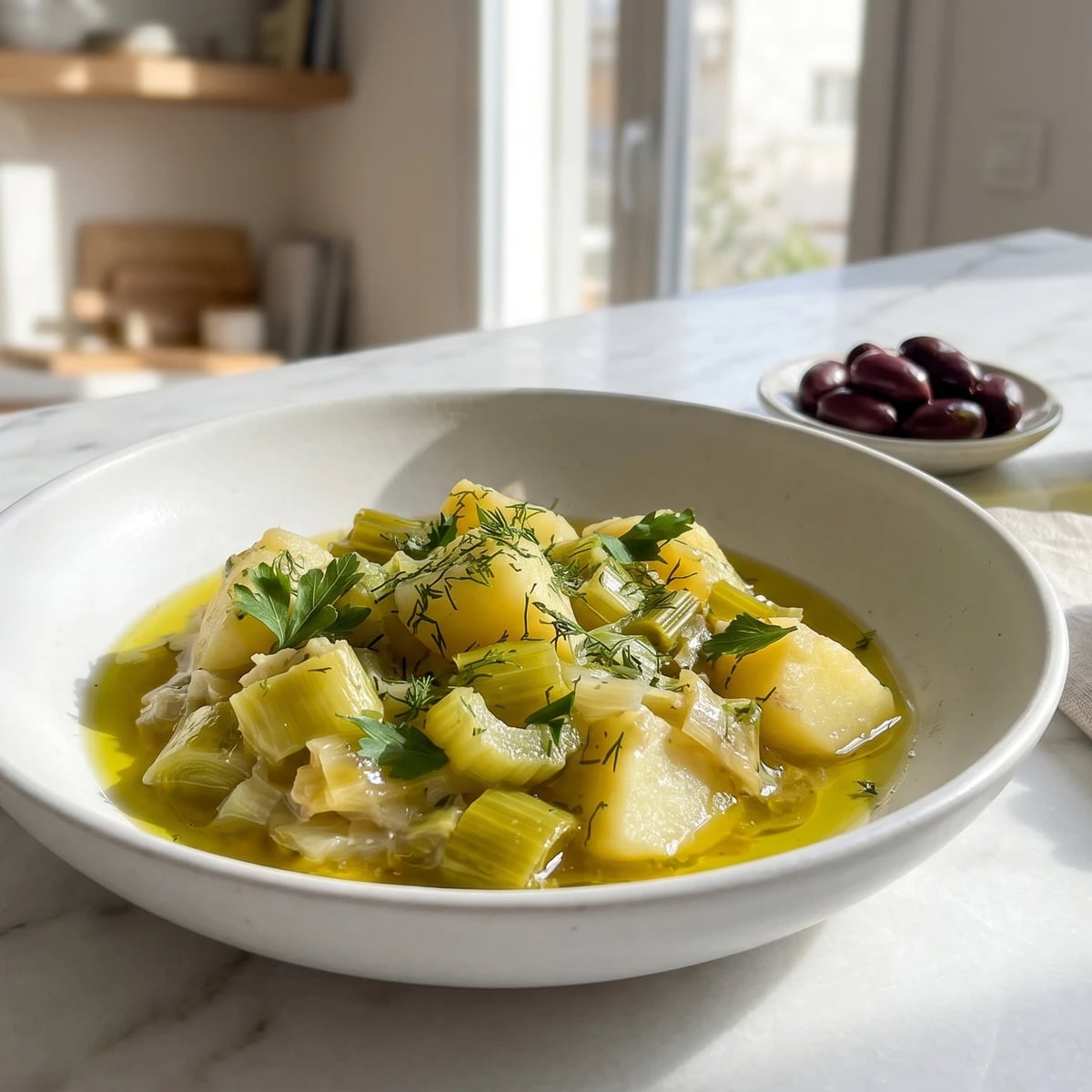
Macedonian prasoselino is leeks and celery cooked low in olive oil until sweet, soft, and lemon-bright, a winter fasting dish that needs patience more than expense.
Prasoselino belongs to Macedonia's winter table: leeks, celery, olive oil, and lemon, cooked down into a soft green-gold stew. It is nistisimo, suitable for fasting days, but it doesn't eat like a compromise. The leeks turn sweet, the celery keeps its clean bitterness, and the potato gives the pot a little body without making it heavy.
The one rule is simple. Sweat the leeks gently and don't let them brown. Browning pulls them toward sweetness in the wrong direction, deeper and heavier, while this dish wants the pale sweetness of winter vegetables softened in oil. Good olive oil, and patience.
I finish it with lemon off the heat, so the flavor stays clear. Some northern kitchens make the richer pork-and-avgolemono cousin for feast days, but this is the plain fasting pot, the one that proves how much Greek cooking can do with a few good things.
Prasoselino is part of the northern Greek winter family of leek and celery dishes, especially in Macedonia and Thrace, where leeks are treated as a main vegetable rather than an aromatic. The same pairing also appears with pork and egg-lemon sauce for cold-weather feast meals, while the olive-oil-and-lemon version belongs to the nistisima repertoire of Orthodox fasting days.
Quantity
1kg
trimmed, washed well, cut into 4cm pieces
Quantity
350g
cut into 4cm pieces
Quantity
350g
peeled and cut into large chunks
Quantity
1 medium
thinly sliced
Quantity
90ml
Quantity
240ml
Quantity
1 teaspoon
plus more to taste
Quantity
1/2 teaspoon
Quantity
1 small
Quantity
45ml
Quantity
1 tablespoon
chopped
Quantity
1 tablespoon
chopped
| Ingredient | Quantity |
|---|---|
| leeks (prasa)trimmed, washed well, cut into 4cm pieces | 1kg |
| celery stalks with leaves (selino)cut into 4cm pieces | 350g |
| waxy potatoespeeled and cut into large chunks | 350g |
| yellow onionthinly sliced | 1 medium |
| extra virgin Koroneiki olive oil | 90ml |
| hot water or light vegetable stock | 240ml |
| fine sea saltplus more to taste | 1 teaspoon |
| freshly ground black pepper | 1/2 teaspoon |
| bay leaf | 1 small |
| fresh lemon juice | 45ml |
| dillchopped | 1 tablespoon |
| flat-leaf parsleychopped | 1 tablespoon |
Split the leeks lengthwise where grit hides, rinse under cold running water, then cut them into 4cm pieces. Keep the pale green parts if they're tender. The dark tough tops go to stock, not into this pot.
Warm the olive oil in a wide heavy pot over medium-low heat. Add the onion, leeks, celery, salt, pepper, and bay leaf, then turn everything through the oil. Cook for 15 minutes, stirring often, until the vegetables relax and shine but take no color.
Tuck the potatoes among the leeks and celery. Pour in the hot water or stock, just enough to come partway up the vegetables. Cover the pot and bring it to a quiet simmer.
Cook covered over low heat for 30 to 35 minutes, shaking the pot now and then instead of stirring hard. The leeks should be silky, the celery tender, and the potatoes soft enough to take the edge of a spoon.
Uncover and simmer for 5 minutes if the liquid is thin. Remove the bay leaf, pull the pot off the heat, and stir in the lemon juice, dill, and parsley. Taste for salt. Let the prasoselino stand 10 minutes before serving, so the oil and lemon settle into the vegetables.
1 serving (about 465g)
Culinary guides, cultural storytelling, and the editorial depth that makes cooking meaningful.
Discover Culinary Explorer
Chef Dimitra
Constantinople's spring artichokes, pale and lemony, braised with potato, carrot, peas, dill, and enough olive oil to make the sauce shine.

Chef Dimitra
Attica gemista orfana are the summer tray of tomatoes and green peppers, rice loose with mint, dill, and parsley, baked with potatoes until the vegetables slump and sweeten.

Chef Dimitra
Peloponnesian bamies laderes are high-summer okra in tomato and olive oil, a nistisimo pot that depends on one small mercy: vinegar before the braise.

Chef Dimitra
Cycladic briam is the summer tray of zucchini, potato, eggplant, tomato, and good olive oil, sliced thin and baked until the vegetables surrender into one sweet, red-gold pan.