
Chef Remy
Gateau Sirop (Cajun Cane Syrup Cake)
A sticky, warmly spiced cake drenched in pure Louisiana cane syrup, the kind of honest dessert that sustained sugarcane farmers through long harvest days and now graces holiday tables across Acadiana.
A cooking platform built around craft, culture, and the stories behind what we eat.
Created by Chef Remy
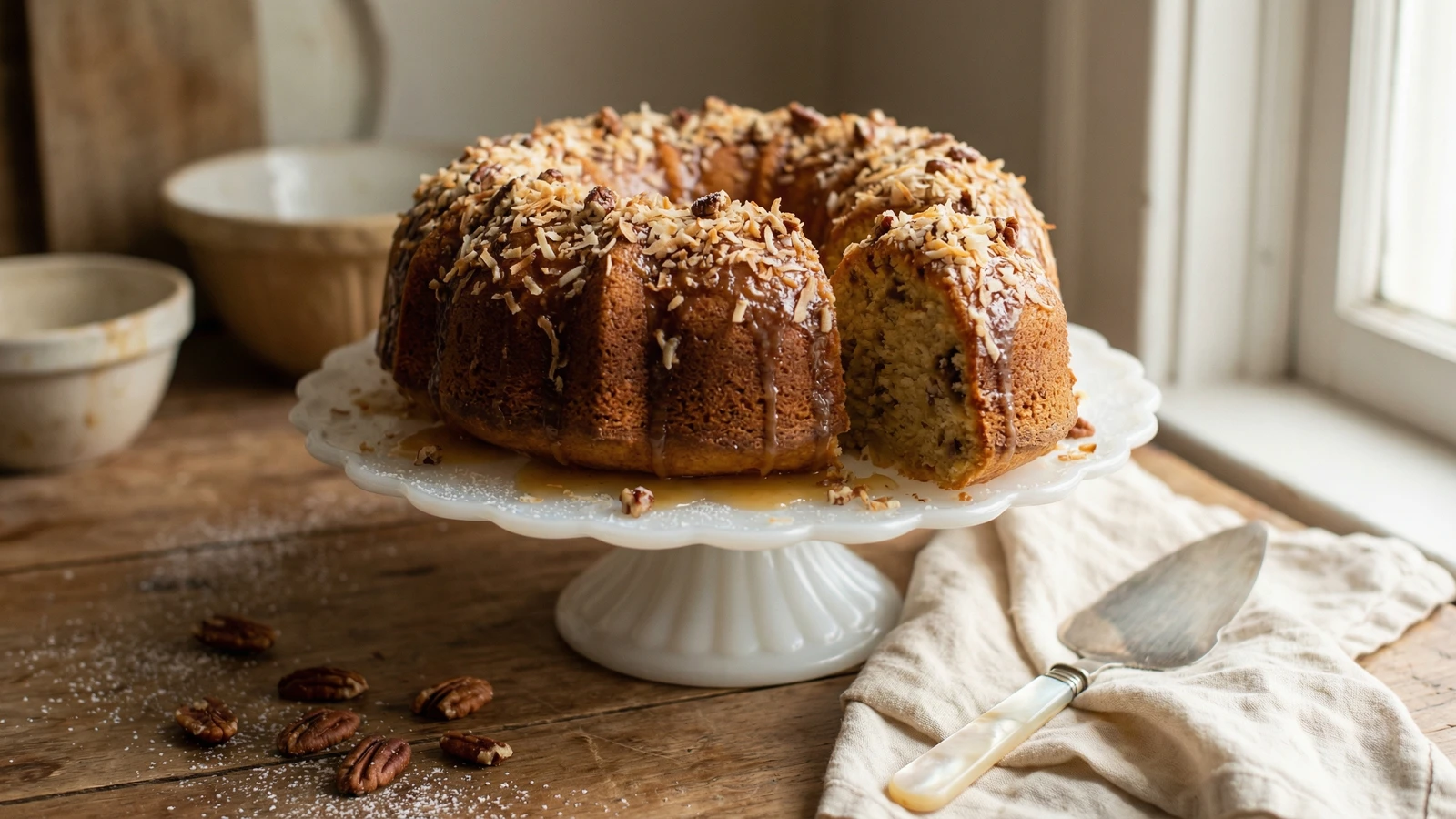
A golden, dense pound cake soaked in warm cane syrup glaze, then buried under a blanket of toasted coconut and buttery Louisiana pecans, the kind of dessert that makes folks ask for the recipe before they've finished their first slice.
Good butter is not negotiable. That's where this cake lives or dies. My grandmother Evangeline made a version of this every Christmas, and she would have boxed my ears if I'd tried to use margarine in her kitchen. Real butter, room temperature, creamed until it's pale and fluffy. That's the foundation of everything that follows.
The crunch cake tradition runs deep in Louisiana. You'll find versions at church suppers, family reunions, and holiday tables from Lafayette to Lake Charles. Every family has their own recipe, passed down through generations, scribbled on index cards stained with vanilla and butter. At Lagniappe, we serve this on Sundays, and I've watched grown men fight over the last slice.
What makes this cake special is the layers of texture and sweetness. You start with a dense, buttery pound cake that can stand up to the glaze. Then you pour warm cane syrup over it while the cake is still hot, letting it soak into every crevice. The toasted coconut and pecans go on while the glaze is still tacky, creating that signature crunch that gives the cake its name. When the last bite is as good as the first, you've done it right.
Quantity
1 cup (2 sticks/226g)
softened
Quantity
1/2 cup
Quantity
3 cups (600g)
Quantity
5
at room temperature
Quantity
3 cups (375g)
Quantity
1/2 teaspoon
Quantity
1/4 teaspoon
Quantity
1 cup
at room temperature
Quantity
1 teaspoon
Quantity
1 teaspoon
Quantity
1 cup (2 sticks/226g)
Quantity
1 cup (200g)
Quantity
1/2 cup
Quantity
1/2 cup
Quantity
1 teaspoon
Quantity
1/2 teaspoon
Quantity
2 cups
toasted
Quantity
1 1/2 cups
toasted and roughly chopped
| Ingredient | Quantity |
|---|---|
| unsalted butter (for cake)softened | 1 cup (2 sticks/226g) |
| vegetable shortening | 1/2 cup |
| granulated sugar (for cake) | 3 cups (600g) |
| large eggsat room temperature | 5 |
| all-purpose flour | 3 cups (375g) |
| baking powder | 1/2 teaspoon |
| fine sea salt | 1/4 teaspoon |
| whole milkat room temperature | 1 cup |
| pure vanilla extract (for cake) | 1 teaspoon |
| coconut extract (for cake) | 1 teaspoon |
| unsalted butter (for glaze) | 1 cup (2 sticks/226g) |
| granulated sugar (for glaze) | 1 cup (200g) |
| water | 1/2 cup |
| Steen's cane syrup or dark corn syrup | 1/2 cup |
| pure vanilla extract (for glaze) | 1 teaspoon |
| coconut extract (for glaze) | 1/2 teaspoon |
| sweetened flaked coconuttoasted | 2 cups |
| Louisiana pecan halvestoasted and roughly chopped | 1 1/2 cups |
Position a rack in the lower third of your oven and preheat to 325°F. Generously grease and flour a 10-inch tube pan or Bundt pan, getting into every crevice. This cake is dense and rich, and it will stick if you cut corners here. I've seen beautiful cakes ruined by lazy pan prep.
Spread coconut on one baking sheet and pecans on another. Toast in the preheating oven, stirring every few minutes, until golden and fragrant. The coconut takes 8 to 10 minutes and turns quickly, so watch it like a hawk. The pecans need 10 to 12 minutes. Let both cool completely. This step builds flavor you cannot get from raw nuts and coconut.
In a large bowl using a stand mixer fitted with the paddle attachment, beat the softened butter and shortening on medium speed until completely smooth and combined, about 2 minutes. The shortening gives this cake its tender crumb and helps it stay moist for days. Gradually add the sugar, beating on medium-high for 5 full minutes until the mixture is pale, fluffy, and nearly doubled in volume. Scrape down the sides twice during this process. This is where your cake's texture is built, so don't rush it.
Add the eggs one at a time, beating well after each addition until fully incorporated before adding the next. The batter should look smooth and glossy after each egg. If it starts to look curdled, that means your eggs were too cold or you added them too fast. It will come back together, but work slower with the remaining eggs.
In a separate bowl, whisk together the flour, baking powder, and salt until evenly distributed. This ensures every bite has the right balance of lift and structure. In a measuring cup, stir together the milk, vanilla extract, and coconut extract.
With the mixer on low speed, add the flour mixture in three additions, alternating with the milk mixture in two additions, beginning and ending with flour. Mix just until each addition disappears before adding the next. Overmixing develops gluten and makes pound cake tough instead of tender. The batter should be thick, smooth, and fall in heavy ribbons from the paddle.
Pour the batter into your prepared pan and smooth the top with a spatula. Tap the pan firmly on the counter three times to release air bubbles. Bake for 1 hour and 10 to 15 minutes, until the top is deeply golden and a wooden skewer inserted in the center comes out clean. The cake will pull away slightly from the sides of the pan, and a gentle press on the top will spring back. Do not open the oven door for the first hour.
About 15 minutes before the cake is done, start your glaze. In a heavy saucepan over medium heat, melt the butter completely. Add the sugar, water, and cane syrup. Stir constantly until the sugar dissolves and the mixture comes to a rolling boil. Let it boil for 2 minutes without stirring, then remove from heat and carefully stir in the vanilla and coconut extracts. The glaze will bubble up when you add the extracts, so stand back.
When the cake tests done, remove from oven and let cool in the pan for 10 minutes only. The cake must still be warm for the glaze to soak in properly. Using a wooden skewer, poke holes all over the top of the cake, going about two-thirds of the way down. Slowly spoon about one-third of the warm glaze over the cake, letting it soak in before adding more. Give it 5 minutes between each addition. The cake will absorb an astonishing amount of glaze.
After the cake has absorbed the first round of glaze, place a serving plate over the pan and carefully invert. The cake should release cleanly. If it hesitates, tap the bottom of the pan firmly. Poke more holes in this side and spoon the remaining glaze over the top and sides, using a pastry brush to spread it evenly into every ridge and crevice.
While the glaze is still tacky, press the toasted coconut and pecans all over the top and sides of the cake. Use handfuls and press gently to help them stick. Some will fall off, that's fine. Catch them on the plate and press them back on. Work quickly before the glaze sets. The finished cake should be generously coated, showing more coconut and pecans than bare cake.
Let the cake cool completely at room temperature, at least 2 hours. This allows the glaze to set and the flavors to meld. The cake actually improves overnight as the moisture distributes evenly throughout. Slice with a serrated knife using a gentle sawing motion to preserve the crunchy coating.
1 serving (about 200g)
Culinary guides, cultural storytelling, and the editorial depth that makes cooking meaningful.
Discover Culinary ExplorerChef Remy
A sticky, warmly spiced cake drenched in pure Louisiana cane syrup, the kind of honest dessert that sustained sugarcane farmers through long harvest days and now graces holiday tables across Acadiana.

Chef Remy
A velvety spoonful of Louisiana heritage: rich egg custard perfumed with real vanilla, the kind of simple dessert that closes a meal the way your grandmother intended.
Chef Remy
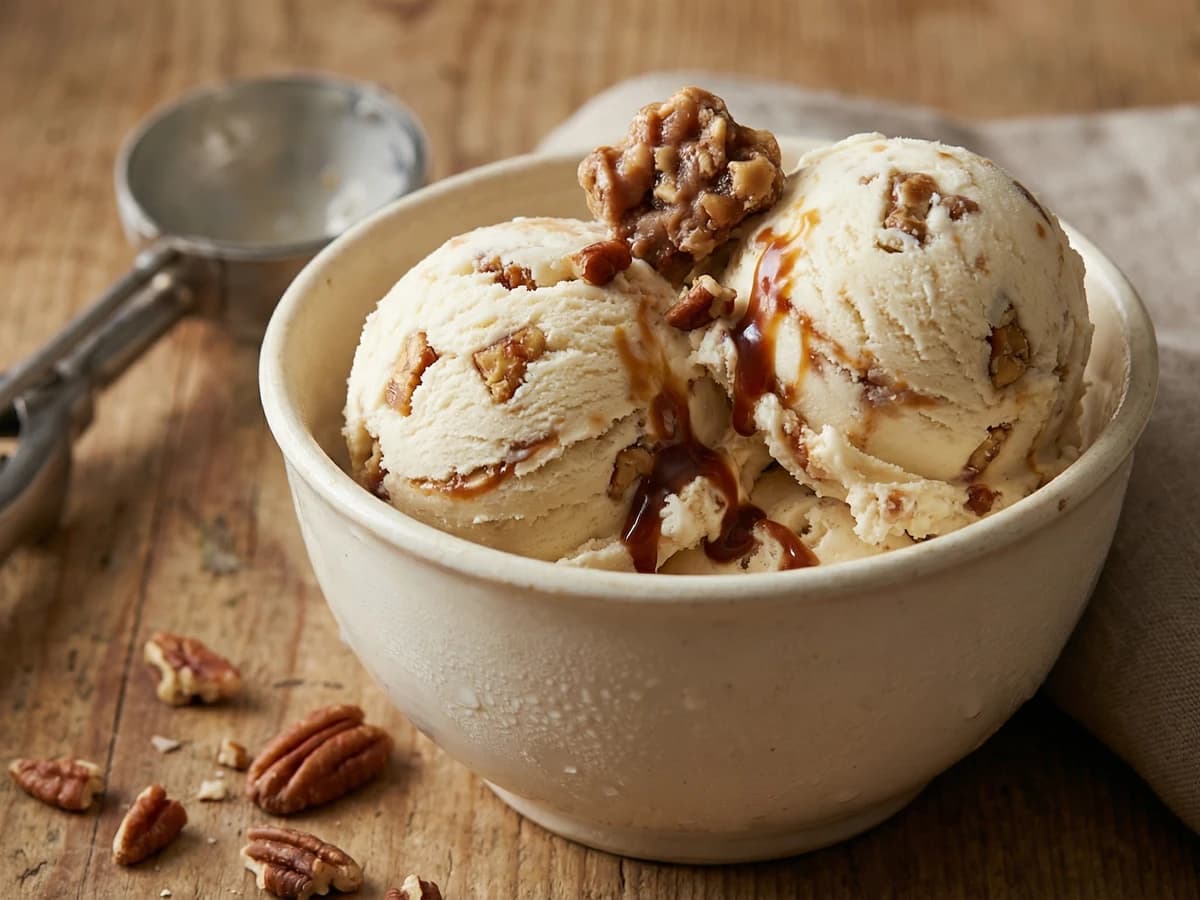
Rich vanilla bean custard studded with chunks of buttery Louisiana pralines and swirled with dark caramel ribbons, the kind of frozen dessert that makes you close your eyes and think of New Orleans in summertime.

Chef Juliette
Five almond preparations, one discipline: remove the skins cleanly, dry every kernel through, then cut, toast, or cloak it in pale caramel without letting its fragrant oils escape.