Chef Dean
Buddha's Delight (Jai)
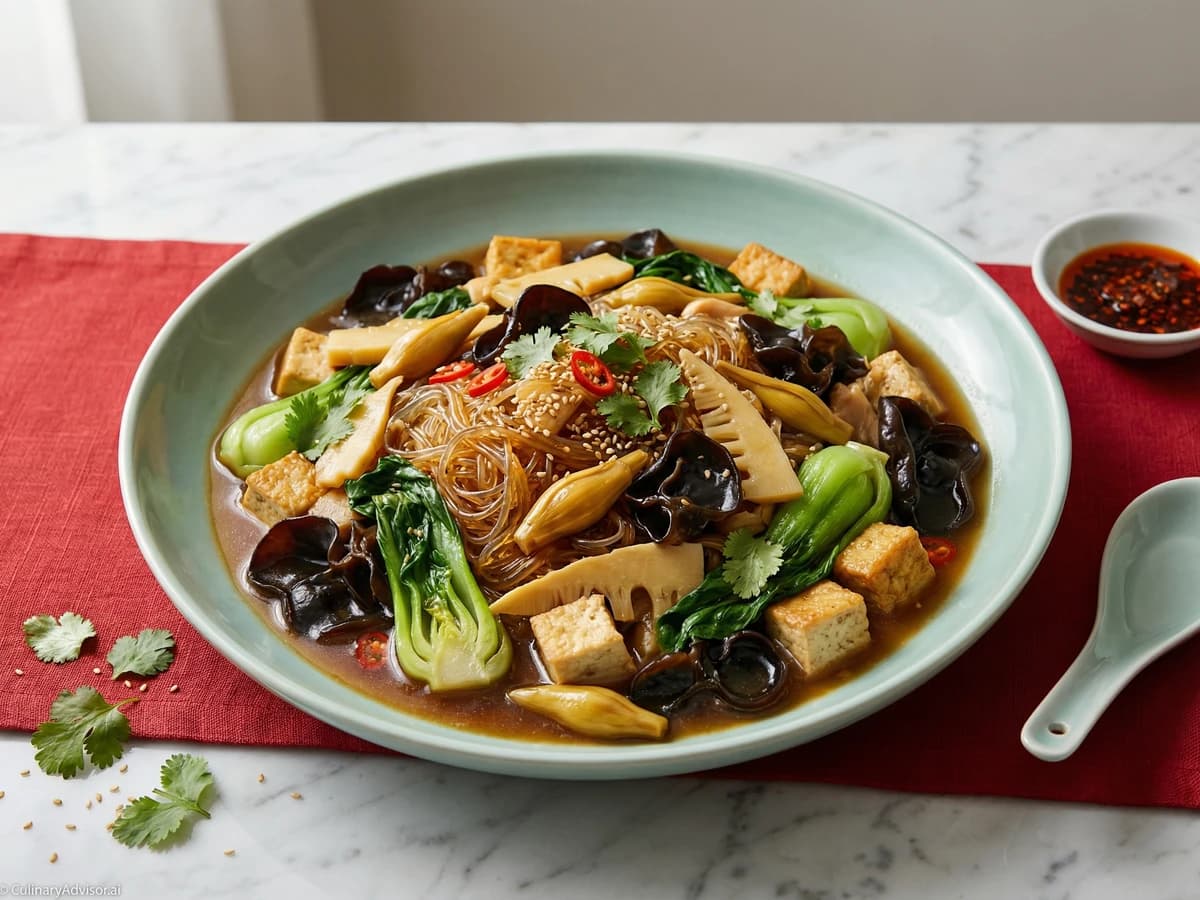
A celebration of textures and traditions: silky tofu, tender mushrooms, and crisp vegetables braised in a glossy sauce that honors the Buddhist vegetarian tradition and welcomes prosperity with every bite.
A cooking platform built around craft, culture, and the stories behind what we eat.
Created by
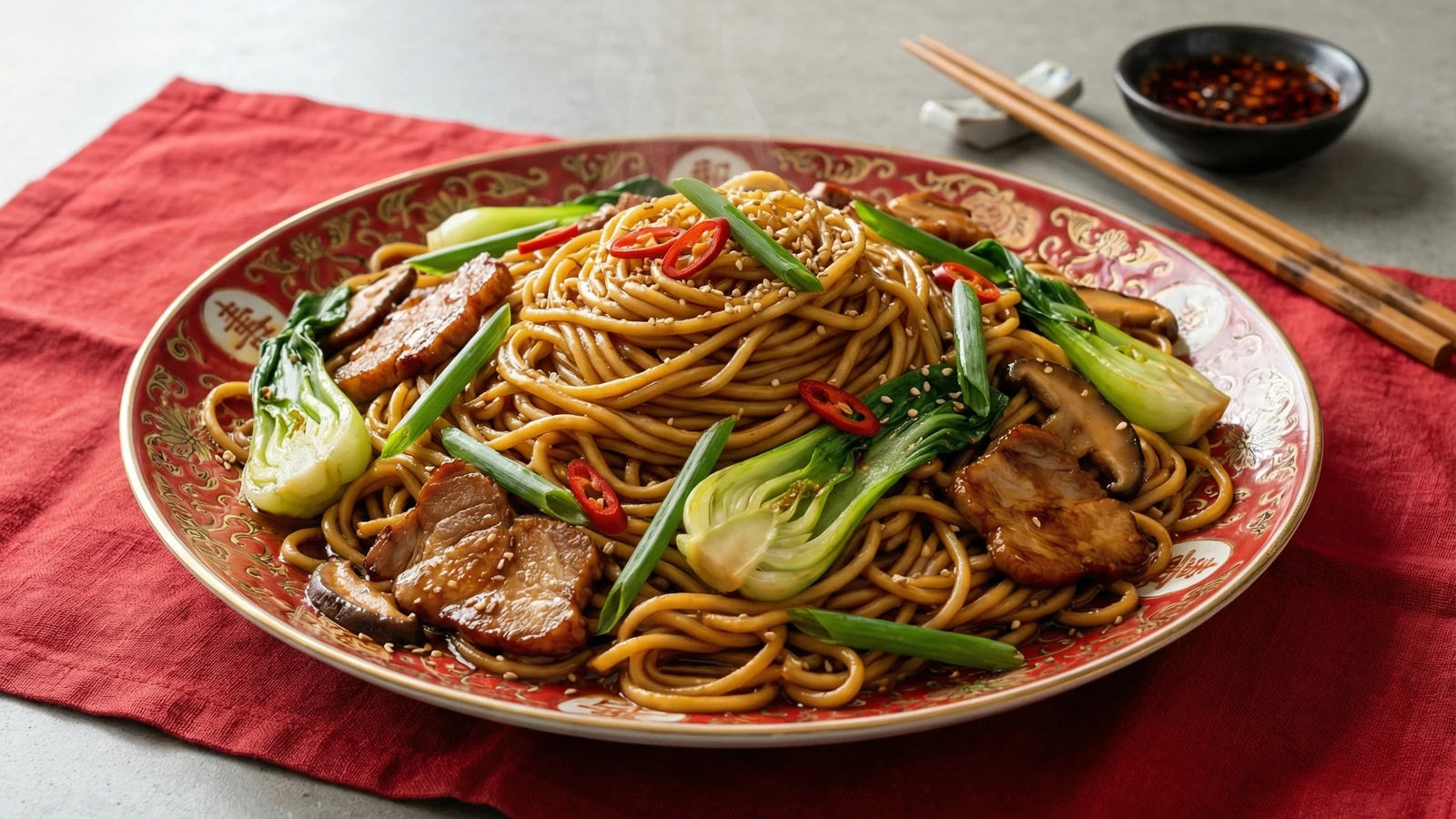
Silky wheat noodles stretched to extraordinary length, tossed in a savory-sweet sauce with crisp vegetables and tender pork, carrying wishes for long life into the new year.
In Chinese culinary tradition, the noodle represents life itself. The longer the strand, the longer the years you'll enjoy. This is food as blessing, dinner as benediction. During Lunar New Year celebrations, these noodles arrive at the table unbroken, and guests slurp them whole without biting through. To cut the noodle is to sever good fortune. Try explaining that to a five-year-old with a fork.
I first encountered longevity noodles in San Francisco's Chinatown during a New Year celebration in the 1960s. The grandmother hosting us had stretched her dough that morning, pulling and folding until each strand measured nearly three feet. She served them family-style from a platter the size of a wagon wheel, and we lifted portions with chopsticks while she watched to ensure no one committed the cardinal sin of breaking them short.
This recipe honors that tradition while acknowledging that most home cooks won't be stretching their own noodles. Good dried wheat noodles work beautifully. The sauce matters more than homemade dough. Get your wok screaming hot, keep everything moving, and you'll produce a dish worthy of any celebration. The technique is forgiving. The symbolism is not.
Quantity
1 pound
Quantity
8 ounces
sliced thin against the grain
Quantity
2 tablespoons, divided
Quantity
1 tablespoon
Quantity
2 teaspoons
Quantity
3 tablespoons, divided
Quantity
4 cloves
minced
Quantity
1 tablespoon
minced
Quantity
4
white and green parts separated, cut into 2-inch lengths
Quantity
1 cup
sliced thin
Quantity
1 cup
stems removed, sliced
Quantity
1
julienned
Quantity
1 cup
Quantity
3 tablespoons
Quantity
1 tablespoon
Quantity
1 teaspoon
Quantity
1/2 teaspoon
Quantity
1/2 cup
| Ingredient | Quantity |
|---|---|
| dried long wheat noodles (yi mein or longevity noodles) | 1 pound |
| pork tenderloinsliced thin against the grain | 8 ounces |
| soy sauce | 2 tablespoons, divided |
| Shaoxing wine | 1 tablespoon |
| cornstarch | 2 teaspoons |
| vegetable oil | 3 tablespoons, divided |
| garlicminced | 4 cloves |
| fresh gingerminced | 1 tablespoon |
| green onionswhite and green parts separated, cut into 2-inch lengths | 4 |
| napa cabbagesliced thin | 1 cup |
| shiitake mushroomsstems removed, sliced | 1 cup |
| red bell pepperjulienned | 1 |
| bean sprouts | 1 cup |
| oyster sauce | 3 tablespoons |
| dark soy sauce | 1 tablespoon |
| sesame oil | 1 teaspoon |
| white pepper | 1/2 teaspoon |
| chicken stock or water | 1/2 cup |
Combine the sliced pork with 1 tablespoon soy sauce, Shaoxing wine, and cornstarch in a bowl. Toss to coat thoroughly. The cornstarch forms a protective coating that keeps the meat tender during high-heat cooking. This technique, called velveting, separates restaurant stir-fry from the rubbery disasters most home cooks produce. Let the pork rest while you prepare everything else, at least 15 minutes.
Whisk together the oyster sauce, dark soy sauce, remaining 1 tablespoon regular soy sauce, sesame oil, white pepper, and chicken stock in a small bowl. Set this beside your stove. Once the wok gets hot, you won't have time to measure. The dark soy adds color and a subtle molasses depth. Skip it and your noodles will look pale and timid.
Bring a large pot of water to a rolling boil. Add the noodles and cook according to package directions, usually 3 to 4 minutes for yi mein, slightly less than al dente. The noodles will finish cooking in the wok. Here is where tradition demands attention: lower the noodles gently into the water and lift them out the same way. Do not dump them. Do not stir aggressively. You want these strands intact. Drain and toss immediately with 1 tablespoon of vegetable oil to prevent sticking. Spread them on a sheet pan in a single layer if not using immediately.
Heat your wok over the highest flame your stove can produce. Wait until you see the first wisp of smoke rising from the metal. Add 1 tablespoon vegetable oil and swirl to coat. Add the marinated pork in a single layer and let it sear without moving for 30 seconds. You want color. Toss and cook another minute until just cooked through, still slightly pink in the center. The residual heat will finish it. Transfer to a plate immediately. An overcooked pork slice is a failure of nerve.
Return the wok to high heat. Add the remaining tablespoon of oil. When it shimmers, add the garlic, ginger, and white parts of the green onions. Stir constantly for 20 seconds. The fragrance should hit you immediately, sharp and promising. Add the cabbage, mushrooms, and bell pepper. Toss vigorously for 2 minutes until the vegetables brighten in color but retain their snap. Limp vegetables have no place in a proper stir-fry.
Add the noodles to the wok. Pour the sauce mixture over everything. Here comes the critical moment: use two wooden spoons or a spider strainer and spatula to lift and toss the noodles gently. Fold them over themselves rather than stirring in circles. You're coating, not tangling. Work quickly. Add the bean sprouts and cooked pork. Toss for another minute until the sauce clings to every strand and the noodles glisten. The liquid should be absorbed, not pooling at the bottom.
Cut the heat. Scatter the green onion tops over the noodles and give one final gentle toss. Transfer to a large warmed platter using tongs, lifting the noodles high and letting them cascade down to show off their length. Serve immediately, family style, with the longest strands positioned on top. Tradition holds that the eldest family member should be served first, receiving wishes for continued long life with each strand they consume.
1 serving (about 380g)
Culinary guides, cultural storytelling, and the editorial depth that makes cooking meaningful.
Discover Culinary ExplorerChef Dean
A celebration of textures and traditions: silky tofu, tender mushrooms, and crisp vegetables braised in a glossy sauce that honors the Buddhist vegetarian tradition and welcomes prosperity with every bite.
Chef Dean
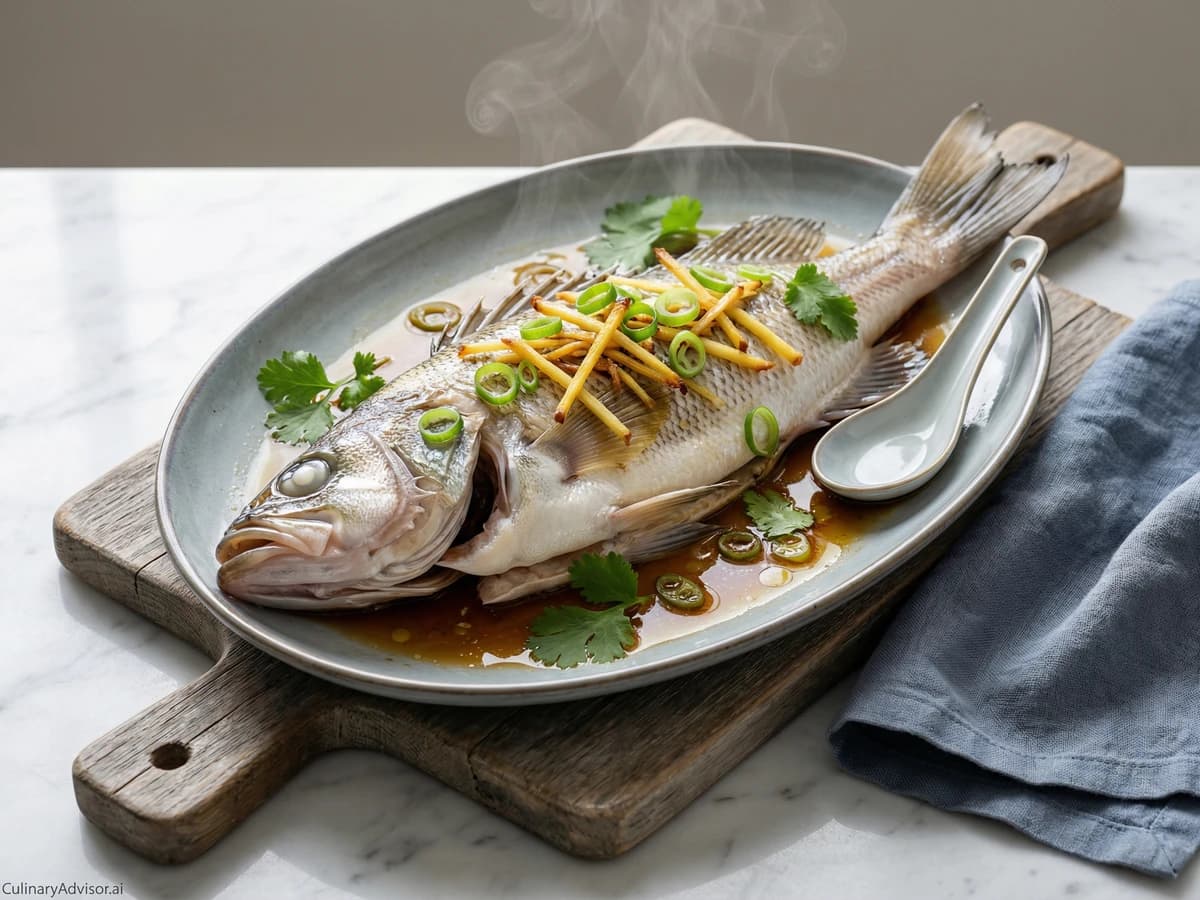
A whole Pacific rockfish steamed to silken perfection, then shocked with smoking-hot oil that sends ginger and scallions into an aromatic frenzy. This is the dish that proves simplicity requires courage.

Chef Dean
Massive, silky pork meatballs nestled in a mane of tender napa cabbage, braised until they yield to a chopstick. This is celebratory cooking that rewards patience and feeds a crowd.

Chef Dean
Day-old rice transformed by screaming-hot wok heat, tossed with sweet bay shrimp and Dungeness crab, threaded with golden egg ribbons. This is how you honor the Pacific Northwest's finest shellfish without fuss or pretension.