
Chef Lupita
Cecina Potosina con Frijoles y Huevo
San Luis Potosí's dry-country breakfast: thin salted beef cured overnight, flashed on the comal, served with frijoles bayos refritos and a lacy-edged huevo estrellado.
A cooking platform built around craft, culture, and the stories behind what we eat.
Created by
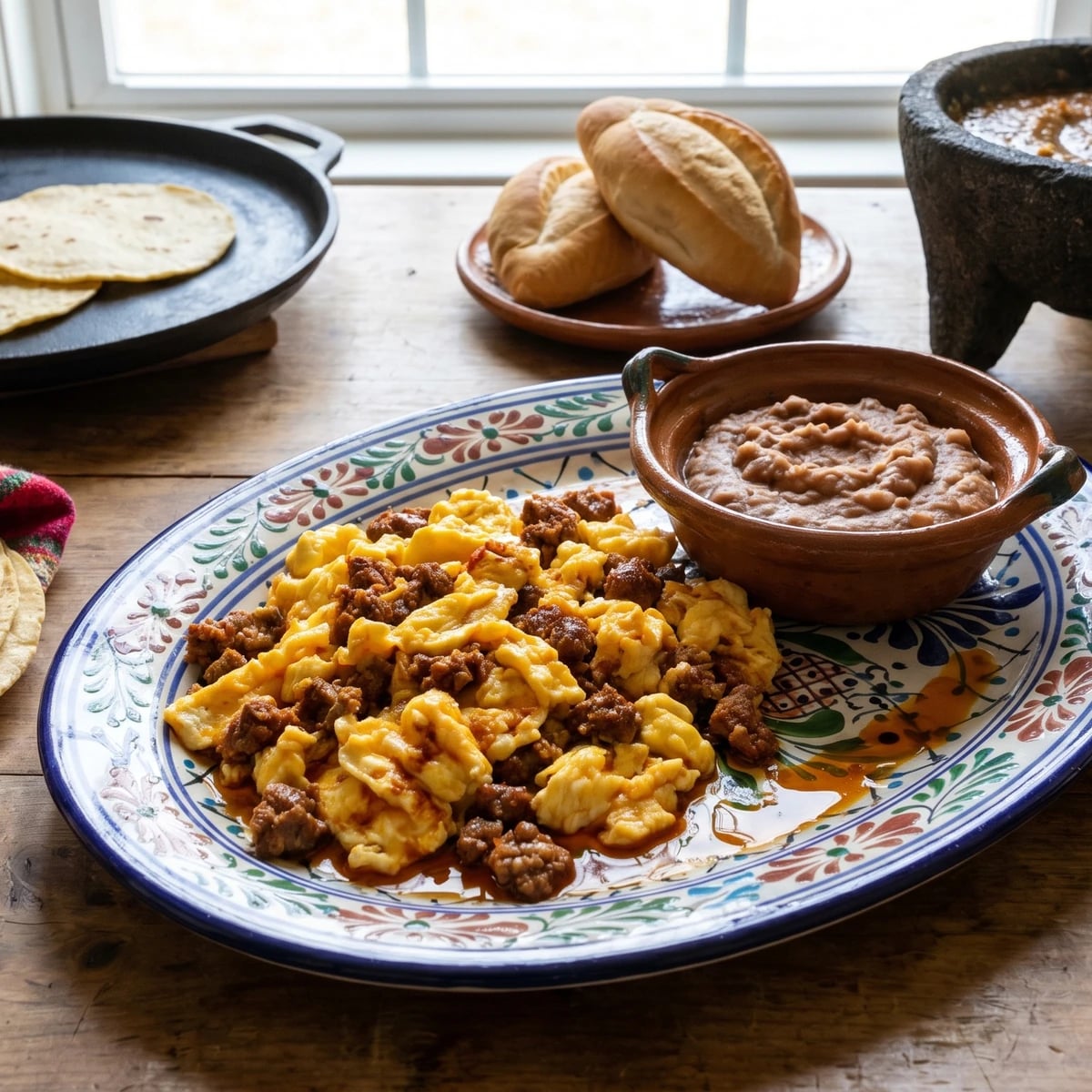
Aguascalientes' Hidrocalida breakfast of chile ancho and clove-scented pork longaniza from Calvillo, browned in lard and folded into soft eggs with beans at the table.
Aguascalientes sits in the Bajio, small on the map and not small in the kitchen. Calvillo, west of the capital toward the Sierra del Laurel, is better known to outsiders for guayaba, but the desayunaderos know another treasure: longaniza seasoned with chile ancho, garlic, vinegar, and clove, fried in its own red fat and cut with eggs in the morning.
This is not northern chorizo and it is not supermarket breakfast sausage. The chile ancho gives sweetness and color. The clove gives that Calvillo perfume, the note that tells you this sausage belongs here and not in Toluca or Oaxaca. A señora who knows her pan will cook it until the fat shines brick-red before the eggs go in. Add the eggs too early and you get pale meat trapped in dry curds. No me vengas con atajos.
I first wrote this version after eating breakfast near the mercado in Calvillo, where the plate came with frijoles refritos, bolillo from the panadería, and a salsa martajada that still tasted of the molcajete. Nothing decorative. Nothing precious. Just a plate that understood work, hunger, and the morning.
Cada estado, su propia cocina. Aguascalientes does not need to borrow anyone else's identity. Give the longaniza its ancho, its clove, its manteca, and its time in the refrigerator. Then scramble the eggs gently. Saber cocinar es saber vivir.
Longaniza arrived in Mexico through Iberian sausage-making traditions after the Spanish introduced domestic pigs in the 16th century, but regional Mexican cooks rebuilt the seasoning around local chiles, vinegars, and household spice mixes. Calvillo's version is associated with Aguascalientes' western municipality, where chile ancho, clove, garlic, and pork fat give the sausage a darker, sweeter profile than the sharper chorizos of Toluca or the vinegar-heavy sausages sold in parts of central Mexico. The dish became a practical breakfast because preserved and seasoned pork could be browned quickly with eggs, beans, and bread before a workday.
Quantity
1 1/2 pounds
coarsely ground
Quantity
1/2 pound
finely diced or coarsely ground
Quantity
4
stemmed and seeded
Quantity
3
peeled
Quantity
1/3 cup
Quantity
1 1/2 teaspoons
Quantity
1 teaspoon
crushed
Quantity
1/2 teaspoon
Quantity
1/2 teaspoon
freshly ground
Quantity
1/4 teaspoon
Quantity
1/4 teaspoon
Quantity
1 tablespoon
Quantity
1/2 medium
finely chopped
Quantity
10
Quantity
2 tablespoons
Quantity
1/2 teaspoon, plus more to taste
Quantity
for serving
Quantity
for serving
Quantity
for serving
| Ingredient | Quantity |
|---|---|
| pork shouldercoarsely ground | 1 1/2 pounds |
| pork back fatfinely diced or coarsely ground | 1/2 pound |
| dried chile anchostemmed and seeded | 4 |
| garlic clovespeeled | 3 |
| white vinegar | 1/3 cup |
| kosher salt | 1 1/2 teaspoons |
| dried Mexican oreganocrushed | 1 teaspoon |
| ground clove | 1/2 teaspoon |
| black peppercornsfreshly ground | 1/2 teaspoon |
| ground cinnamon | 1/4 teaspoon |
| ground cumin | 1/4 teaspoon |
| pork lard (manteca de cerdo) | 1 tablespoon |
| white onionfinely chopped | 1/2 medium |
| large eggs | 10 |
| whole milk or water | 2 tablespoons |
| kosher salt | 1/2 teaspoon, plus more to taste |
| refried beans (optional) | for serving |
| warm corn tortillas or bolillos (optional) | for serving |
| salsa de molcajete (optional) | for serving |
Heat a dry comal over medium. Toast the chile ancho about 20 to 30 seconds per side, just until the skins puff and the smell turns deep and raisiny. Do not blacken them. Chile ancho gives Calvillo longaniza its dark red color and quiet sweetness. Burn it and the sausage will taste bitter.
Cover the toasted chiles with hot water and let them soften for 15 minutes. Drain them and blend with the garlic, white vinegar, oregano, clove, black pepper, cinnamon, cumin, and salt until you have a smooth brick-red paste. The clove should be present, not shouting. This longaniza is aromatic before it is hot.
Put the ground pork shoulder and pork fat in a cold bowl. Add the chile paste and mix with your hands for 2 to 3 minutes, until the meat turns evenly red and tacky. That tackiness matters. It tells you the seasoning has moved through the meat instead of sitting on the surface.
Cover the bowl and refrigerate at least 12 hours, or up to 24. If you have pork casings, stuff the mixture loosely and coil it on a tray. If you do not, keep it as loose sausage. Do not leave fresh longaniza hanging at room temperature in a modern kitchen. The old kitchens had their own conditions. Yours has a refrigerator. Use it.
Melt the lard in a wide skillet or clay cazuela over medium heat. Add 1 pound of the prepared longaniza, removed from the casing if stuffed, and break it into rough pieces. Cook 8 to 10 minutes, stirring often, until the pork is cooked through, the edges darken, and the red fat begins to shine in the pan. La manteca es el sabor.
Add the chopped white onion and cook 3 minutes, scraping the browned chile and pork bits from the bottom. The onion should soften and pick up the red fat. Do not drown this with tomato. This is longaniza con huevo, not a guisado trying to hide weak sausage.
Beat the eggs with the milk or water and 1/2 teaspoon salt. Lower the heat to medium-low and pour the eggs into the skillet. Stir slowly, folding the eggs through the longaniza until they set into soft curds. Pull the pan off the heat while the eggs still look a little glossy. They will finish in the pan. Dry eggs are laziness, not tradition.
Spoon the longaniza con huevo onto a warm barro plate with refried beans, salsa de molcajete, and warm corn tortillas or bolillos. In Aguascalientes, breakfast is practical food: pork, egg, beans, bread or tortilla, and enough chile ancho to remind you where you are. Recetas probadas y garantizadas.
1 serving (about 225g)
Culinary guides, cultural storytelling, and the editorial depth that makes cooking meaningful.
Discover Culinary Explorer
Chef Lupita
San Luis Potosí's dry-country breakfast: thin salted beef cured overnight, flashed on the comal, served with frijoles bayos refritos and a lacy-edged huevo estrellado.

Chef Lupita
Guanajuato breakfast chilaquiles built on fried corn totopos, salsa roja of chile ancho and guajillo, and the seasoned pork chorizo that Apaseo el Grande claims as its own.

Chef Lupita
Querétaro's Cadereyta chorizo is pork shoulder and back fat seasoned with chile ancho, vinagre, clavo, ajo, and oregano, rested overnight, then browned for almuerzo beside beans and blue corn totopos.

Chef Lupita
Guanajuato's miner's breakfast, corn tortillas stained red with chile guajillo, folded around shredded chicken, and finished with papas y zanahorias browned in manteca de cerdo.