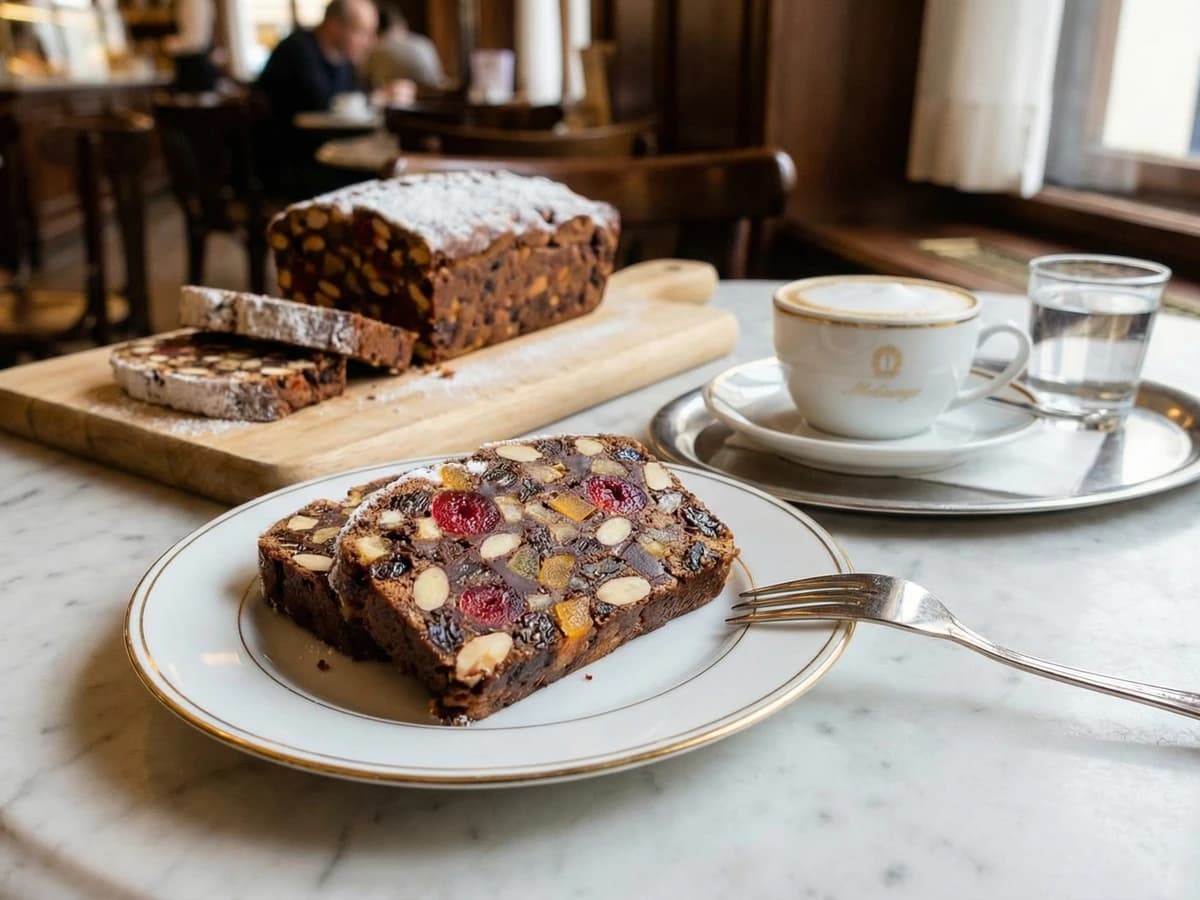
Spiced hazelnut shortcrust filled with tart redcurrant jam and finished with the most famous lattice in all of baking. Made yesterday, eaten today, better tomorrow.
Desserts
Austrian
Holiday
Make Ahead
45 min
Active Time
45 min cook•1 hr 30 min total
Yield8-10 servings
Gretel always said the Linzer Torte was the most patient cake in Austria. You make it, you let it sit, and the next day it's better than it was. The day after that, better still. The spiced hazelnut dough softens against the tart jam overnight, and the flavors meld into something richer and deeper than anything you tasted when you first pulled it from the oven. This is a cake that rewards you for waiting.
I made my first Linzer Torte in my grandmother Eva's kitchen when I was eleven, following a recipe Gretel had scribbled on the back of a shopping list. The dough felt different from anything I'd handled before: sandy, fragrant, almost too crumbly to hold together. Ground hazelnuts do that. They replace some of the flour, which means less gluten, which means a shorter, more tender crust that practically dissolves on your tongue. The cinnamon and cloves come through gently, warming the back of your mouth without announcing themselves.
The lattice on top is the signature. Every Austrian knows it on sight. You roll strips of the nutty dough and lay them across the redcurrant jam in a diamond or crosshatch pattern, then brush them with egg so they turn golden and glossy in the oven. The jam bubbles up between the gaps, darkening at the edges where it catches the heat. When it cools, the whole thing sets into something that looks like it belongs in a Konditorei window, but the truth is this cake was born in home kitchens and it still belongs there.
What makes the Linzer Torte special is its honesty. Good hazelnuts, good butter, good jam. No tricks, no complicated technique. You bring the right ingredients together, you handle the dough gently, you bake it until the kitchen smells like Christmas in Linz, and then you leave it alone until tomorrow. That's it. That's the whole secret.
The earliest known recipe for Linzer Torte appears in a 1653 manuscript found in the Admont Abbey library in Styria, making it the oldest documented cake recipe in the world. The recipe was attributed to a Veronese nobleman, Count Johann Konrad Amman, though the cake's name ties it firmly to the Upper Austrian city of Linz. By the 18th century, Linzer Torte had become so iconic that Viennese Konditorei menus listed it alongside Sachertorte, and emigrants carried the recipe across Europe and to America, making it one of the first Austrian cakes to gain international recognition.
The technique, the tradition, and the story behind every dish.
egg yolkbeaten with 1 tablespoon milk, for glazing
1
powdered sugar
for dusting
Equipment Needed
•26cm tart tin with removable bottom
•Rolling pin
•Cling film
•Pastry brush
•Wire cooling rack
Instructions
1
Prepare the hazelnut dough
Combine the flour, ground hazelnuts, cinnamon, cloves, Vanillezucker, and salt in a large bowl. Add the cold cubed butter and rub it in with your fingertips until the mixture resembles coarse breadcrumbs. You want small, irregular pieces of butter still visible. This isn't a smooth paste. Those little pockets of fat are what make the crust flaky and short. Add the sugar, egg yolks, whole egg, and lemon zest. Bring it together into a dough with your hands, working quickly and gently. The moment it holds together, stop. Overworking this dough activates the gluten in the flour and you'll lose that beautiful sandy crumble that defines a proper Linzer Torte.
If your kitchen is warm, chill the butter in the freezer for ten minutes before you start. The dough needs the butter cold. Warm butter melts into the flour instead of staying in distinct pieces, and you'll end up with a tough crust instead of a tender one.
2
Rest the dough
Divide the dough into two pieces, roughly two-thirds and one-third. The larger piece is for the base. Flatten both into discs, wrap them in cling film, and refrigerate for at least one hour. The dough needs this rest. The butter firms up again, the gluten relaxes, and the ground hazelnuts absorb moisture from the eggs. If you try to roll it straight away, it will crack and fight you. After an hour in the fridge, it will behave.
You can make the dough the day before and refrigerate overnight. In fact, the flavor improves. Just let it sit at room temperature for fifteen minutes before rolling so it's firm but not rock-hard.
3
Line the tin
Butter a 26cm tart tin with a removable bottom. Take the larger piece of dough and press it evenly into the base and up the sides of the tin with your fingers. If it cracks, press the cracks back together. This dough forgives. The base should be about four millimeters thick and the sides should come up about three centimeters. Prick the base a few times with a fork to prevent air pockets from puffing up underneath the jam. Place the lined tin back in the fridge while you prepare the lattice.
4
Spread the jam
Stir the redcurrant jam until it loosens. If it's very stiff, warm it gently in a small pan for a minute. Spread it evenly over the dough base in a thick, generous layer. Don't be cautious here. The tartness of the Ribiselmarmelade is the whole counterpoint to the rich, nutty, buttery crust. If you hold back on the jam, the balance tips and the cake tastes flat.
Redcurrant jam is the traditional choice and the right one. Its sharp, fruity acidity cuts through the richness of the nut dough in a way that raspberry or strawberry jam simply cannot. If you can't find redcurrant, a good quality seedless raspberry jam is the closest substitute, but try your best to find the real thing.
5
Create the lattice
Roll the smaller piece of dough between two sheets of cling film to about four millimeters thick. This dough is delicate and the cling film saves you from it sticking to your surface or your rolling pin. Cut strips about one centimeter wide. Lay half the strips across the jam in parallel lines, spaced about two centimeters apart. Then lay the remaining strips diagonally across the first set to form a diamond lattice pattern. Press the ends gently into the rim of the dough. Roll one final strip and press it around the edge to form a neat border, sealing the lattice ends underneath.
If the dough gets too soft to handle while you're cutting strips, slide the whole sheet back into the fridge for ten minutes. Cold dough cooperates. Warm dough falls apart. This is the one rule you need to remember.
6
Glaze and bake
Heat the oven to 175°C (350°F). Brush the lattice and the border with the egg yolk and milk mixture. Use a light hand. You want a thin, even coat that turns golden in the oven, not a thick lacquer. Place the torte on the middle rack and bake for 40 to 45 minutes. The lattice should turn deep golden brown and the jam should bubble up between the gaps, thickening as it cools. If the top is browning too quickly, lay a sheet of foil loosely over the surface for the last ten minutes.
Watch the color of the lattice, not the clock. Ovens vary. You want the dough a rich, toasty gold, not pale blond and not dark brown. The hazelnuts in the dough burn easily once they pass the golden stage.
7
Cool and rest overnight
Let the torte cool completely in the tin before removing it. The jam needs time to set and the dough needs time to firm up. Once cool, dust lightly with powdered sugar. Now here's the part that tests your patience: wrap it loosely and leave it until tomorrow. A Linzer Torte eaten on the day it's baked is good. A Linzer Torte eaten the next day is the cake it was meant to be. The spices deepen, the jam and crust merge at their edges, and the whole thing develops a complexity that wasn't there when it came out of the oven. Two days is even better. Three days, magnificent. It keeps for a full week at room temperature, improving quietly the whole time. Mahlzeit!
Chef Tips
•Toast whole hazelnuts in a dry pan until fragrant, then grind them yourself. Pre-ground nuts lose their oils and go stale quickly. You'll smell the difference the moment you open the bag versus cracking into a freshly ground batch. The skins add depth of flavor, so don't bother blanching them.
•Gretel always said that the Linzer Torte is the best make-ahead cake in all of Austrian baking, because it doesn't just tolerate waiting, it demands it. Bake it on Friday, serve it on Sunday. Your guests will think you've been baking all weekend when the truth is you've been reading a book.
•Vanillezucker matters here. Austrian baking depends on it. Buy it at a European deli, order it online, or make your own: bury two split vanilla pods in a kilo of caster sugar and leave the jar sealed for a week. The perfume it gives the dough is subtler and rounder than vanilla extract.
•Store the finished torte at room temperature, loosely wrapped in foil or under a cake dome. Don't refrigerate it. The cold firms the butter and dulls the spices. This cake was designed to live on a kitchen counter.
Advance Preparation
•The dough can be made up to two days ahead and refrigerated, or frozen for up to a month. Thaw overnight in the fridge before using.
•The finished Linzer Torte improves for up to three days after baking and keeps well for a full week at room temperature. This makes it an ideal holiday cake: bake it midweek and forget about it until the weekend.
•Dust with fresh powdered sugar just before serving for the cleanest presentation.
Frequently Asked Questions
Nutrition Information
1 serving (about 115g)
Calories
520 calories
Total Fat
29 g
Saturated Fat
10 g
Trans Fat
1 g
Unsaturated Fat
18 g
Cholesterol
120 mg
Sodium
35 mg
Total Carbohydrates
60 g
Dietary Fiber
3 g
Sugars
39 g
Protein
7 g
Where cooking meets culture.
Culinary guides, cultural storytelling, and the editorial depth that makes cooking meaningful.