
Chef Lupita
Agua de Alfalfa
Ciudad de México's highland market agua fresca, fresh alfalfa blended with pineapple and lime until bright green, strained clean, and poured cold from the vitrolero.
A cooking platform built around craft, culture, and the stories behind what we eat.
Created by
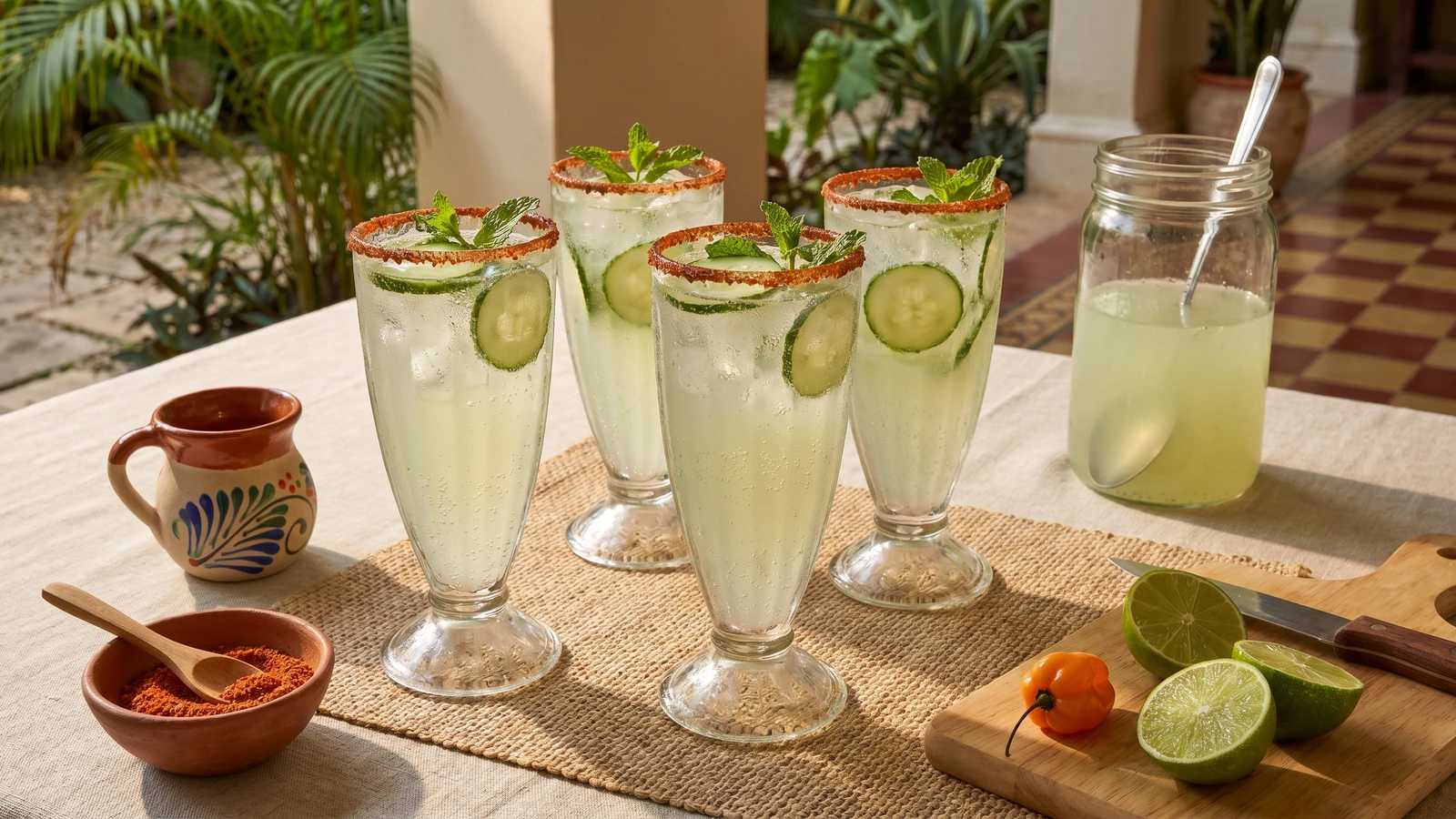
Mérida's cantina mocktail of lima agria, piloncillo, hierbabuena, cucumber, and a flick of chile piquin over cold mineral water. Drunk on a porch in the heat, the kind that resets you for the rest of the day.
This drink is from Yucatán. From Mérida, specifically, where the heat sits on you like a wet blanket from March through September and where the cantinas and sorbeterías have spent more than a century working out exactly how to cool a person down without putting them to sleep.
The lima agria is the soul of this drink. Not Persian lime, not Meyer lemon. Lima agria, the small bumpy citrus that grows in the patios of Yucatán and tastes nothing like the lime you know. It is sharp, floral, faintly bitter at the rind. If you cannot find it, the substitution is honest: Persian lime juice with a splash of fresh orange to round it out. It is a compromise, not an upgrade. You will get close, not all the way. Pregúntale a las señoras del mercado de Santiago in Mérida and they will tell you the same.
The chile on the rim is not a gimmick. Yucatán cooks with chile habanero in everything savory, but for a drink they reach for chile piquin, ground fine. It builds slowly under the cold mineral water and the piloncillo, and on the third sip you understand why they call it eléctrica. My notebook has this recipe written down from a señora named Doña Lucia who served it on the patio of her house in the Centro of Mérida in a glass jar with a metal spoon sticking out, no ceremony, just the drink. Así se hace y punto.
The lima agria (Citrus limetta var.), known in Yucatán as lima dulce or lima agria depending on the cultivar, was brought to the Peninsula by Spanish missionaries in the 16th century and naturalized so thoroughly in the limestone soils of Yucatán that it now anchors regional dishes from sopa de lima to this porch drink. Piloncillo, the unrefined cone of evaporated sugar cane juice, has been produced in Mexican trapiches since the colonial sugar industry took hold in the 17th century, and its molasses depth distinguishes Mexican sweetened drinks from their refined-sugar counterparts elsewhere in the Americas. The pairing of citrus, sparkling mineral water, and ground chile in non-alcoholic cantina drinks emerged in early-20th-century Mérida as a riposte to the alcoholic chelada tradition: a drink for the afternoon, when the heat is at its worst and beer would only make things harder.
Quantity
1/2 cup
from 6 to 8 lima agria; or substitute 1/3 cup fresh Persian lime juice plus 2 tablespoons fresh orange juice
Quantity
1/4 cup
see step 1
Quantity
1 small
sliced into thin rounds, plus more for garnish
Quantity
1 small bunch, about 20 leaves
lightly bruised
Quantity
3 cups
very cold
Quantity
1/2 teaspoon, plus more for the rim
Quantity
1/4 teaspoon
for the rim
Quantity
1
halved, for rimming the glass
Quantity
plenty
Quantity
1/2 cup
Quantity
1/2 cup
| Ingredient | Quantity |
|---|---|
| fresh lima agria juicefrom 6 to 8 lima agria; or substitute 1/3 cup fresh Persian lime juice plus 2 tablespoons fresh orange juice | 1/2 cup |
| piloncillo syrupsee step 1 | 1/4 cup |
| Persian cucumbersliced into thin rounds, plus more for garnish | 1 small |
| fresh hierbabuena (Mexican spearmint)lightly bruised | 1 small bunch, about 20 leaves |
| sparkling mineral water (Topo Chico preferred)very cold | 3 cups |
| chile piquin powder | 1/2 teaspoon, plus more for the rim |
| sal de gusano or flaky sea saltfor the rim | 1/4 teaspoon |
| lima agriahalved, for rimming the glass | 1 |
| ice | plenty |
| grated piloncillo (for syrup) | 1/2 cup |
| water (for syrup) | 1/2 cup |
Combine the grated piloncillo and water in a small saucepan over medium heat. Stir until the piloncillo dissolves completely, about three minutes. Do not let it boil hard or it will start to reduce and turn bitter. You want a thin amber syrup, not a caramel. Cool to room temperature before using. Piloncillo is what Yucatán has used to sweeten drinks for generations. White sugar will work in a pinch, but you will lose the molasses depth that makes this drink taste like the Peninsula and not like a lemonade stand.
Stir together the sal de gusano (or flaky salt) with a pinch of chile piquin powder on a small plate. Rub the cut side of a lima agria around the rim of each tall glass, then press the rim into the salt-chile mixture. Tap off the excess. The rim is the first taste. It has to be sharp.
Drop the cucumber rounds and the hierbabuena leaves into the bottom of a large jarra or pitcher. Press gently with the back of a wooden spoon. You are not muddling them into pulp. You are bruising them just enough to release the oils. Aggressive muddling turns mint bitter and breaks the cucumber into a mush that clouds the drink. Press, do not crush.
Pour the lima agria juice and the cooled piloncillo syrup over the cucumber and mint. Add the 1/2 teaspoon of chile piquin powder. Stir well. Taste the base before the mineral water goes in. It should be sour, sweet, herbaceous, with a low warmth from the chile that builds on the second sip. Adjust salt or syrup now. Once the bubbles are in, you cannot stir much without losing them.
Fill the rimmed glasses three-quarters with ice. Divide the base among the glasses, then top each with very cold Topo Chico or other strong mineral water. Pour the water down the inside of the glass to keep the carbonation. Give one gentle stir from the bottom up. The drink should fizz hard against the chile powder on the rim. That fizz is the eléctrica.
Drop a fresh cucumber round and a sprig of hierbabuena into each glass. Dust a final pinch of chile piquin across the surface. Serve on the porch, with the heat of a Mérida afternoon doing its work. Drink it cold and fast. The ice melts quickly in this climate and a watered-down limonada is a sad limonada. Saber cocinar es saber vivir, and saber preparar las bebidas también.
1 serving (about 230g)
Culinary guides, cultural storytelling, and the editorial depth that makes cooking meaningful.
Discover Culinary ExplorerChef Lupita
Ciudad de México's highland market agua fresca, fresh alfalfa blended with pineapple and lime until bright green, strained clean, and poured cold from the vitrolero.

Chef Lupita
Aguascalientes' Lenten agua fresca, jewel-red from cooked beet and full of apple, banana, orange, lettuce, and ground peanuts, served cold when Holy Week meets the Feria de San Marcos.

Chef Lupita
Sonora and Sinaloa's creamy malted barley water, built on toasted cebada perla, Mexican canela, vanilla from Papantla, and evaporated milk. Pink-beige, rich, and served cold over heavy ice in a heavy glass tumbler. Liquid cookie comfort the northwest way.

Chef Lupita
Yucatán's everyday tonic of boiled chaya leaves blended with lima agria, sugar, and ice. The bright green jarra that sits on every Peninsula table from Mérida to Valladolid.