
Chef Lupita
Agua de Alfalfa
Ciudad de México's highland market agua fresca, fresh alfalfa blended with pineapple and lime until bright green, strained clean, and poured cold from the vitrolero.
A cooking platform built around craft, culture, and the stories behind what we eat.
Created by
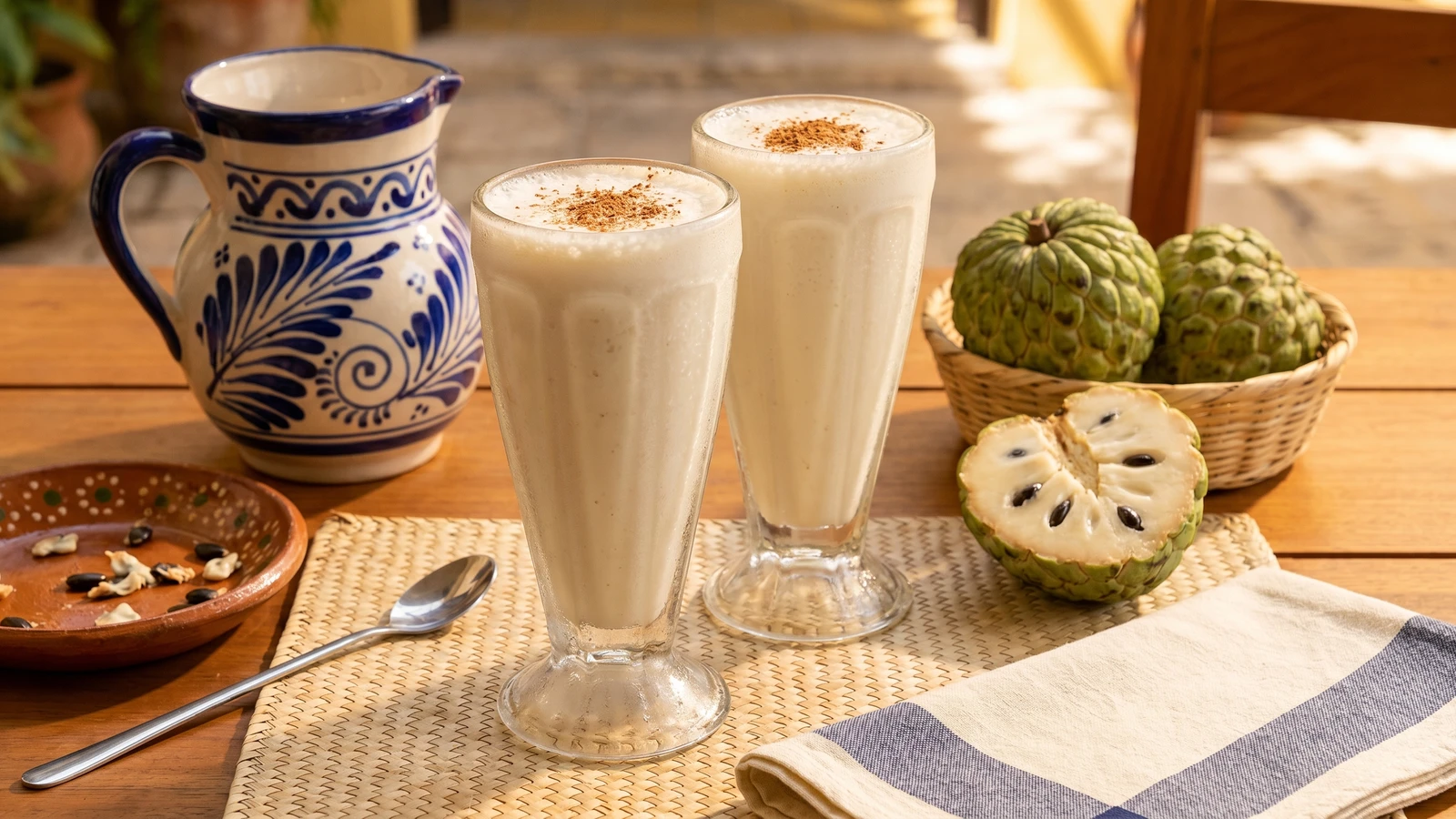
Yucatán's saramuyo licuado, the sugar apple's custard flesh scooped from the skin, seeded by hand, blended cold with milk and a whisper of canela. A drink that only exists when the fruit is in season.
This is from Yucatán. The saramuyo, what the rest of the world calls sugar apple or anona, grows in backyards across the peninsula and shows up in the Mérida markets only when the season says so. Late summer into early winter, you walk through Mercado Lucas de Gálvez and the fruit ladies have them piled in baskets, soft and yielding, perfumed enough to find before you see them. The rest of the year, the licuado does not exist. Cook what the market is selling today, not what looks good on Pinterest.
The flesh inside a ripe saramuyo is the closest thing in nature to custard. White, creamy, sweet, with a perfume that sits somewhere between pear and vanilla and something tropical that does not have a word in Spanish or English. The work is not in the blending. The work is in the seeding. Every segment holds a hard black seed that has to come out by hand. The señoras at the market do this between customers, popping seed after seed into a bowl, and they will tell you the same thing I am telling you: there is no shortcut. Blend the seeds and the licuado turns bitter and your blender suffers.
Yucatán makes this licuado plain, with cold milk and a little canela, and sometimes a spoonful of condensed milk to round it out. No vanilla extract. No nutmeg. No protein powder. The fruit is the star and the milk is the supporting cast and that is the whole architecture. Saber cocinar es saber vivir, and sometimes saber vivir means knowing when to leave a beautiful ingredient alone.
Saramuyo (Annona squamosa), known in much of Mexico as anona blanca, is native to the tropical Americas and was cultivated in the Yucatán Peninsula long before contact, appearing in Maya botanical references and household orchards across what is now Quintana Roo, Campeche, and Yucatán. The Maya word for the fruit, ts'almuy or saramuyo in its hispanicized form, persists in regional Spanish and distinguishes it from the related guanábana and chirimoya, which dominate other Mexican regions. The licuado as a format, fresh fruit blended with milk and sold by the glass, is a 20th-century mercado tradition that spread across Mexico after the domestic electric blender became common in the 1950s, and Yucatán's loncherias adopted it as the natural daytime companion to the peninsula's heavier dishes like cochinita pibil and panuchos.
Quantity
2 (about 1 pound total)
fully soft to the touch, almost yielding like a ripe avocado
Quantity
2 cups
Quantity
2 tablespoons, or to taste
Quantity
1/4 teaspoon
freshly ground
Quantity
1 cup
Quantity
pinch
Quantity
for serving
| Ingredient | Quantity |
|---|---|
| ripe saramuyos (sugar apples)fully soft to the touch, almost yielding like a ripe avocado | 2 (about 1 pound total) |
| cold whole milk | 2 cups |
| sweetened condensed milk | 2 tablespoons, or to taste |
| Mexican canela (true Ceylon cinnamon)freshly ground | 1/4 teaspoon |
| ice cubes | 1 cup |
| fine sea salt | pinch |
| Mexican canela for grating on top (optional) | for serving |
A saramuyo is ready when the skin gives easily under your thumb and the segmented bumps have started to separate, almost loosening from each other. If it feels firm, leave it on the counter for another day or two. A hard saramuyo will give you a chalky, flavorless licuado. There is no rushing this fruit. La fruta manda, not the cook.
Split each saramuyo in half over a wide bowl. The flesh inside is white, creamy, almost custard-like, divided into glossy segments around shiny black seeds. Scoop the flesh out with a spoon into the bowl. Discard the skin. Do not press the flesh through anything yet.
This is the work. Every segment of saramuyo flesh has a hard black seed inside it, the size of a small bean. You cannot blend them, they are bitter and they will scratch the inside of your blender. Press each segment between your thumb and forefinger and pop the seed out into a separate bowl. Work patiently. Two saramuyos give you about forty seeds to pull. No me vengas con atajos. The señoras at Mercado Lucas de Gálvez in Mérida do this all morning long during the season, and there is no shortcut that produces the same clean licuado.
Place the seeded flesh, cold milk, condensed milk, ground canela, ice, and the pinch of salt in a blender. Blend on medium for fifteen to twenty seconds only. You want it smooth but still with body, not whipped into foam. Over-blending breaks the saramuyo flesh and the licuado turns thin and gluey. Taste it. If your fruit was very ripe, you may not need any more condensed milk. If it was less sweet, add a touch more.
Pour into two tall glasses straight from the blender. Grate a little fresh canela across the top. Drink it now, while it is still cold and the foam still sits high on the glass. A licuado de saramuyo will not wait for you. After ten minutes the texture slackens and the perfume of the fruit fades. Así se hace y punto.
1 serving (about 450g)
Culinary guides, cultural storytelling, and the editorial depth that makes cooking meaningful.
Discover Culinary ExplorerChef Lupita
Ciudad de México's highland market agua fresca, fresh alfalfa blended with pineapple and lime until bright green, strained clean, and poured cold from the vitrolero.

Chef Lupita
Aguascalientes' Lenten agua fresca, jewel-red from cooked beet and full of apple, banana, orange, lettuce, and ground peanuts, served cold when Holy Week meets the Feria de San Marcos.

Chef Lupita
Sonora and Sinaloa's creamy malted barley water, built on toasted cebada perla, Mexican canela, vanilla from Papantla, and evaporated milk. Pink-beige, rich, and served cold over heavy ice in a heavy glass tumbler. Liquid cookie comfort the northwest way.

Chef Lupita
Yucatán's everyday tonic of boiled chaya leaves blended with lima agria, sugar, and ice. The bright green jarra that sits on every Peninsula table from Mérida to Valladolid.