
Chef Graziella
Asparagi al Forno con Parmigiano
Roasted asparagus finished with aged Parmigiano-Reggiano from the same region that grows the best spears. Four ingredients. No complications. Nothing to hide behind.
A cooking platform built around craft, culture, and the stories behind what we eat.
Created by
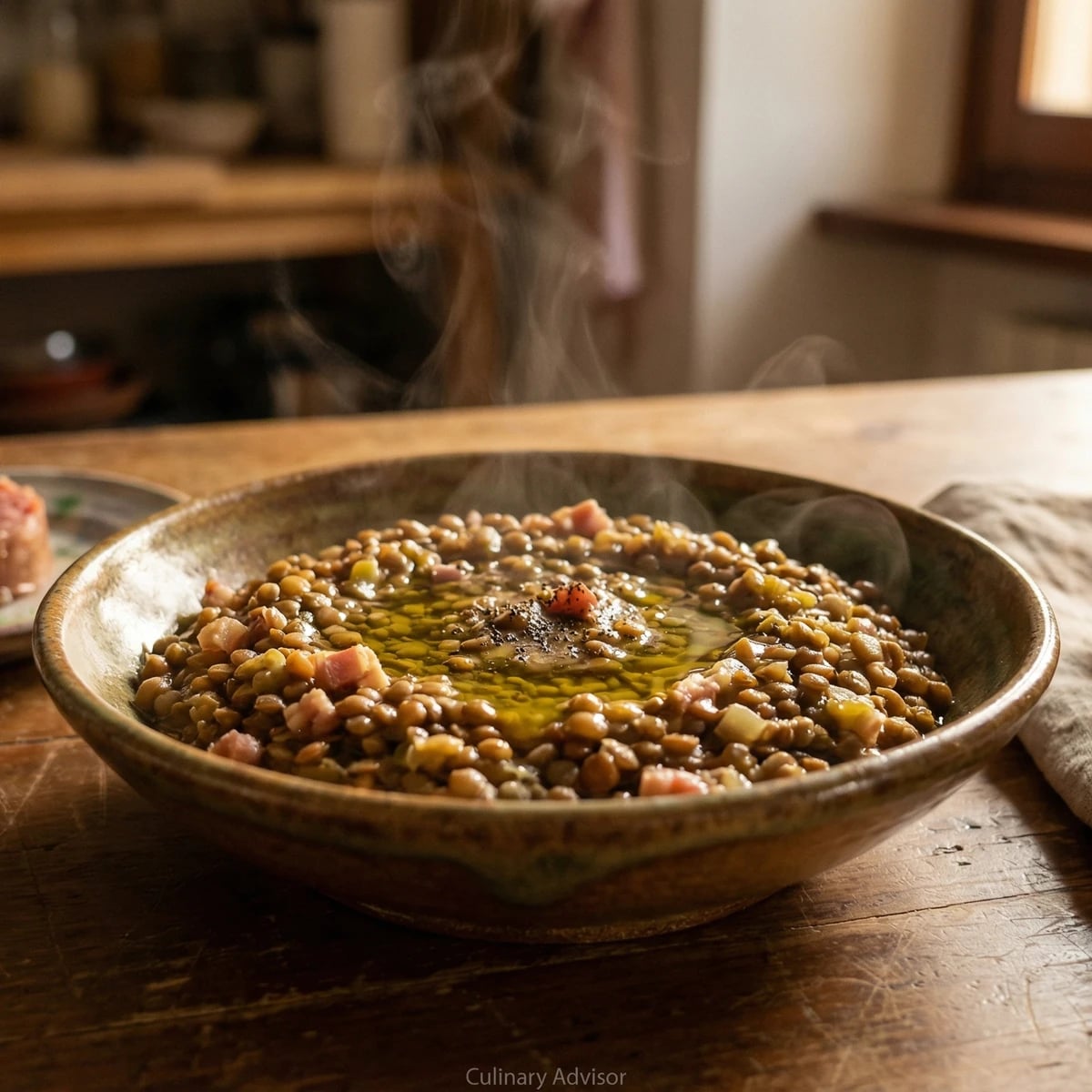
The New Year's lentils that Italians have eaten for centuries, promising prosperity with every spoonful. Their coin-like shape brings luck; their earthy depth brings satisfaction.
Italians eat lentils at midnight on New Year's Eve because the small, flat legumes resemble coins. Prosperity and good fortune for the year ahead. This is the superstition, and who am I to argue with tradition? But the real reason to cook lenticchie in umido has nothing to do with luck. It has to do with the way properly stewed lentils taste alongside a slice of fatty cotechino, the pork sausage that shares the midnight table.
The cooking is simple but not careless. A proper soffritto, rendered pancetta, bay and sage, a touch of tomato paste. The lentils simmer gently until they are creamy within but still hold their shape. Mushy lentils are a failure. Lentils that rattle on the plate are also a failure. You are looking for that point in between, and you find it by tasting, not by watching the clock.
What you keep out matters as much as what you put in. No garlic cloves minced into the dish. Just two cloves, crushed, cooked briefly, then removed. No herbs fighting for attention. Bay and sage, nothing more. The lentils themselves should taste like lentils, supported by the soffritto but not overwhelmed by it.
Romans exchanged pouches of lentils as New Year's gifts, believing the coin-shaped legumes ensured wealth in the coming year. The tradition migrated to the table by the Middle Ages, when lenticchie in umido became inseparable from cotechino on New Year's Eve. Every Italian family has a version, though the superstition remains constant: eat your lentils, count your blessings, hope for a prosperous year.
Quantity
1 pound
Quantity
3 tablespoons, plus more for finishing
Quantity
3 ounces
diced fine
Quantity
1 medium
diced fine
Quantity
1 small
peeled and diced fine
Quantity
1
diced fine
Quantity
2
peeled and lightly crushed
Quantity
2
Quantity
4
Quantity
1 tablespoon
Quantity
4 cups
Quantity
to taste
Quantity
to taste
freshly ground
| Ingredient | Quantity |
|---|---|
| small brown or green lentils | 1 pound |
| extra virgin olive oil | 3 tablespoons, plus more for finishing |
| pancettadiced fine | 3 ounces |
| yellow oniondiced fine | 1 medium |
| carrotpeeled and diced fine | 1 small |
| celery stalkdiced fine | 1 |
| garlic clovespeeled and lightly crushed | 2 |
| bay leaves | 2 |
| fresh sage leaves | 4 |
| tomato paste | 1 tablespoon |
| water or light broth | 4 cups |
| kosher salt | to taste |
| black pepperfreshly ground | to taste |
Spread the lentils on a rimmed baking sheet and pick through them, discarding any stones or debris. Rinse under cold water. Unlike other legumes, lentils do not require soaking. This is their great advantage for the home cook who did not plan ahead.
In a heavy saucepan or Dutch oven, warm the olive oil over medium heat. Add the diced pancetta and cook, stirring occasionally, until the fat renders and the edges turn golden, about 5 minutes. The pancetta should not become crisp. You want its fat, not its crunch.
Add the onion, carrot, and celery to the rendered pancetta. Reduce heat to medium-low and cook, stirring occasionally, until the vegetables are completely soft and the onion is pale gold, about 12 minutes. Add the crushed garlic cloves, bay leaves, and sage. Cook one minute more until fragrant. The garlic must not brown.
Push the vegetables to the side and add the tomato paste to the cleared space. Let it fry in the oil for 30 seconds, stirring constantly, until it darkens slightly and smells sweet rather than raw. This concentrates its flavor. Stir it into the vegetables.
Add the rinsed lentils and stir to coat them with the soffritto. Pour in the water or broth. The liquid should cover the lentils by about one inch. Bring to a simmer, then reduce heat to low. The surface should barely tremble.
Cook uncovered at a gentle simmer, stirring occasionally, until the lentils are tender but still hold their shape, 25 to 35 minutes depending on the age and variety of your lentils. The liquid should reduce to leave the lentils moist but not swimming. If they dry out before becoming tender, add water by the half cup. In the last ten minutes, season with salt and pepper.
Remove and discard the garlic cloves, bay leaves, and sage. Taste and adjust seasoning. The lentils should be creamy within but distinct, not mushy. Transfer to a warm serving bowl and drizzle generously with your best olive oil. Serve alongside cotechino or zampone, or as a contorno with any rich braised meat.
1 serving (about 300g)
Culinary guides, cultural storytelling, and the editorial depth that makes cooking meaningful.
Discover Culinary Explorer
Chef Graziella
Roasted asparagus finished with aged Parmigiano-Reggiano from the same region that grows the best spears. Four ingredients. No complications. Nothing to hide behind.

Chef Graziella
Swiss chard from the kitchens of Emilia-Romagna, wilted in butter until tender, then showered with Parmigiano-Reggiano that melts into the warm greens. Three ingredients. Nothing more.

Chef Graziella
Tuscan white beans warmed gently with fried sage leaves and a whisper of garlic. This is the contorno that proves restraint is a virtue, not a limitation.

Chef Graziella
Sicily's celebrated sweet-sour eggplant, where Arab agrodolce tradition meets the island's capers, olives, and pine nuts. Make it today. Serve it tomorrow.