Chef Lupita
Acúmara Tatemada al Comal
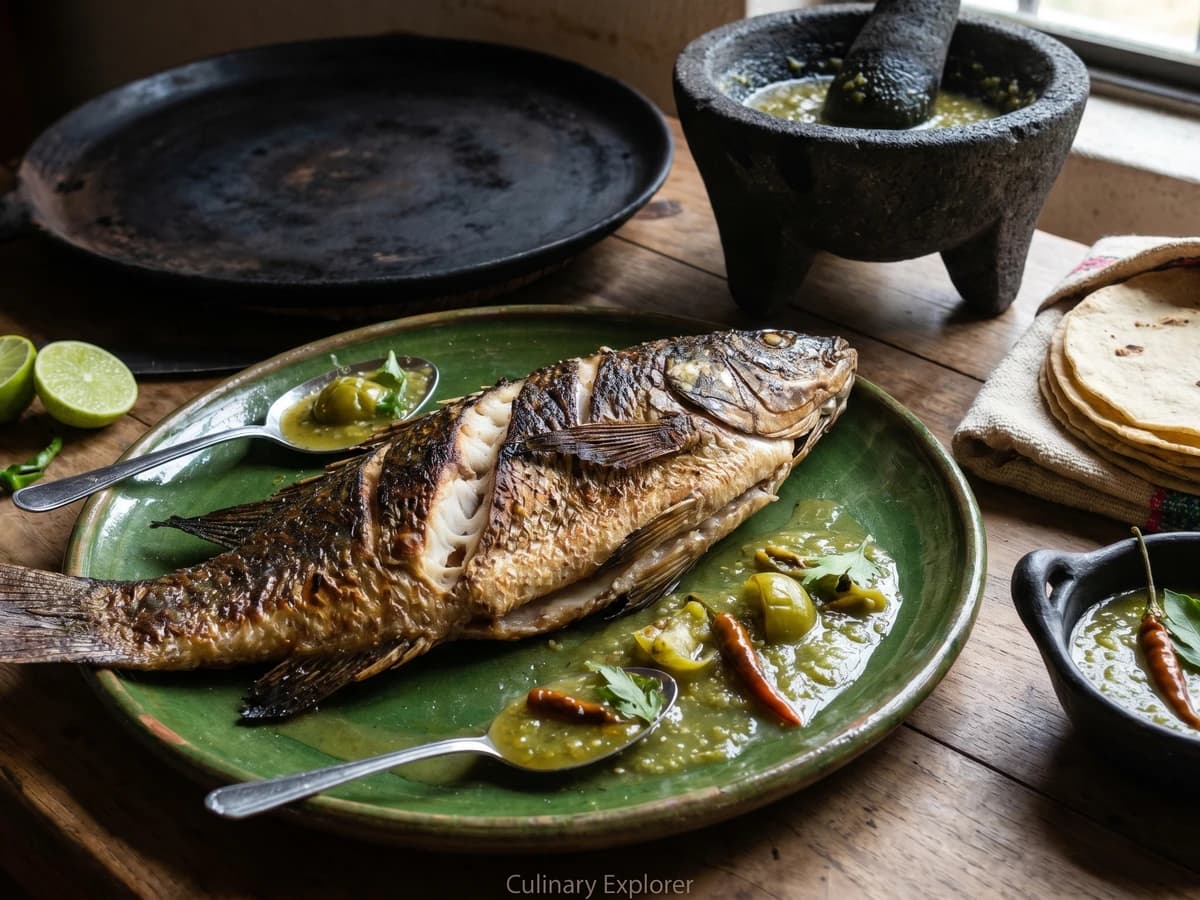
Michoacán's Lake Pátzcuaro acúmara, a whole kurucha from the lago tatemada on a comal de leña and served with chile perón atápakua, corn tortillas, and P'urhépecha discipline.
A cooking platform built around craft, culture, and the stories behind what we eat.
Created by
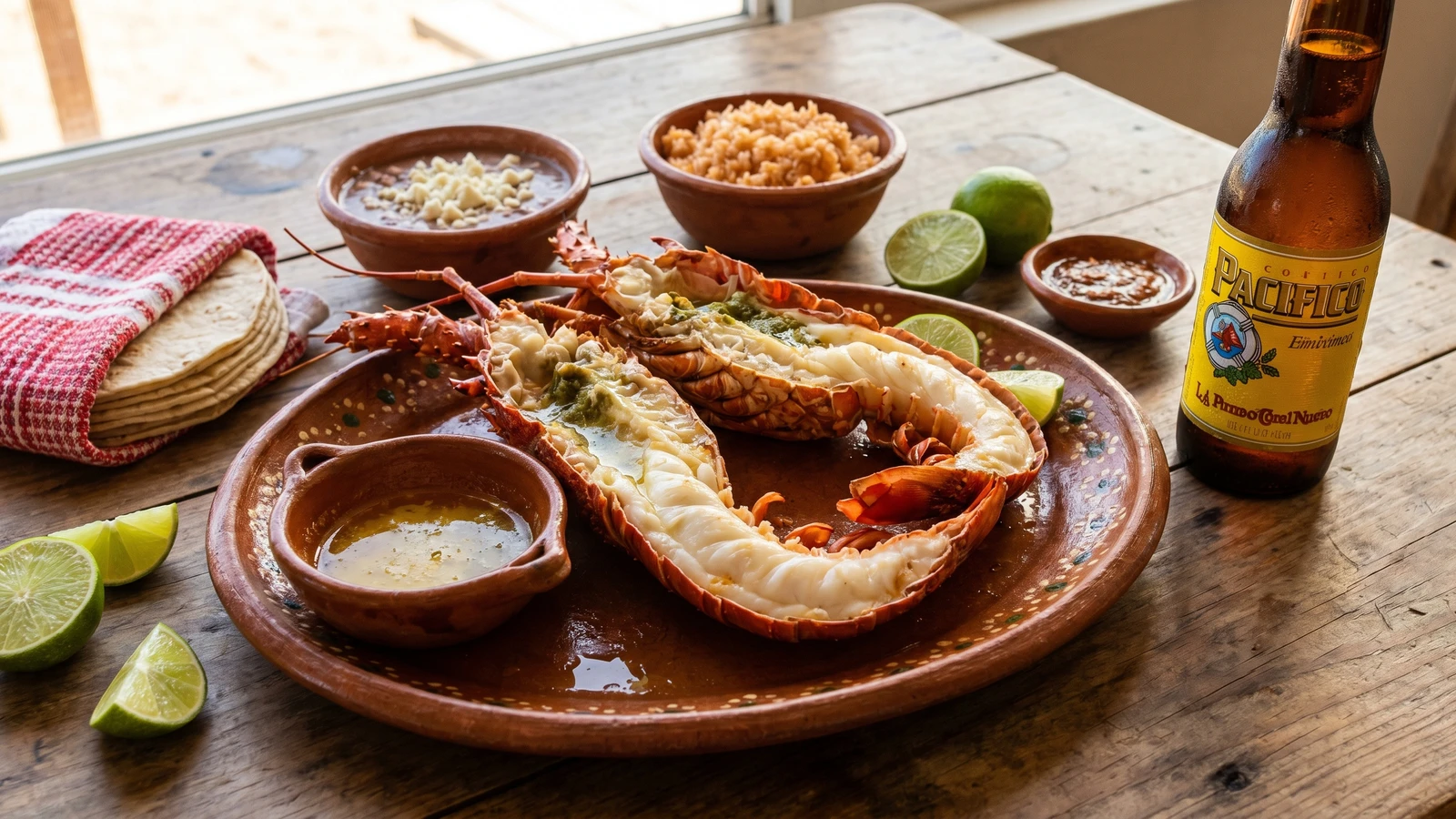
Baja California's Pacific spiny lobster split down the middle and flash-fried in pork lard, served with frijoles puercos, arroz rojo, and small flour tortillas. The signature dish of a single fishing village.
This dish belongs to one village. Puerto Nuevo, on the Pacific coast of Baja California, between Rosarito and Ensenada. A few blocks of restaurants, all serving the same thing, all claiming to have served it first. The langosta is local: Pacific spiny lobster, langosta roja or langosta verde, pulled from the cold Pacific water by men who have been diving the same rocks their fathers dove.
The technique is unromantic and exact. You split the lobster live, head to tail, season the cut flesh with salt and pepper, and drop it into a deep pool of hot pork lard. Six minutes, no longer. La manteca es el sabor. This is northern Mexican cooking, where lard is not a confession and flour tortillas are not a substitute for corn tortillas. They are the tradition. Baja California is wheat country. The flour tortilla here is small, thin, and made fresh, nothing like the rubber discs sold in plastic bags up north of the border.
The plate that comes to the table is the Puerto Nuevo combination, and you do not deviate from it: lobster, frijoles puercos cooked with bacon and chorizo, arroz rojo, melted garlic butter, salsa de chile de arbol, lime, and a stack of flour tortillas. Each person builds their own taco. That is the dish. Cada estado, su propia cocina, and this one belongs to a single fishing village in Baja that figured it out in the 1950s and has not seen a reason to change it since.
Langosta Puerto Nuevo emerged in the 1950s when the wives of Pacific spiny lobster fishermen in the small Baja California village began cooking the day's catch for travelers passing through on the old coastal road between Tijuana and Ensenada. The technique, splitting the lobster, frying it in lard, and serving it with rice, beans, and flour tortillas, was a working-class innovation born of practicality: lard was cheaper and more available than butter, and northern Baja's wheat-growing tradition made flour tortillas the regional staple over corn. By the 1980s the village had built its identity around the dish, and dozens of family-run restaurants now line the same few blocks, each claiming origin status. Pacific spiny lobster (Panulirus interruptus) is distinct from the Caribbean and Atlantic species and has no large front claws, which is why all the meat in this preparation lives in the tail and head.
Quantity
4, about 1 to 1.25 pounds each
Quantity
1 pound
Quantity
1 teaspoon, plus more to taste
Quantity
1/2 teaspoon
Quantity
1 stick (8 tablespoons)
melted
Quantity
4
finely minced
Quantity
2
halved
Quantity
12 to 16
warmed
Quantity
for serving
Quantity
for serving
Quantity
for serving
Quantity
for serving
| Ingredient | Quantity |
|---|---|
| live spiny lobster (langosta roja or langosta verde) | 4, about 1 to 1.25 pounds each |
| pork lard (manteca de cerdo) | 1 pound |
| kosher salt | 1 teaspoon, plus more to taste |
| freshly ground black pepper | 1/2 teaspoon |
| unsalted buttermelted | 1 stick (8 tablespoons) |
| garlic clovesfinely minced | 4 |
| limeshalved | 2 |
| fresh small flour tortillas (6-inch)warmed | 12 to 16 |
| frijoles puercos or refried pinto beans | for serving |
| Mexican red rice (arroz rojo) | for serving |
| salsa de chile de arbol (optional) | for serving |
| lime wedges (optional) | for serving |
Lay the lobster flat on a heavy cutting board, belly down. Drive the tip of a large chef's knife straight through the head between the eyes, then bring the blade down through the length of the body in one motion. You will split it from head to tail into two halves. Pull out the dark vein along the tail. Leave the green tomalley. That is the flavor. This is how they do it on the patios of Puerto Nuevo. No me vengas con atajos.
Season the cut sides of the lobster halves with salt and pepper. Press the seasoning lightly into the flesh. Do not marinate. Do not brush with anything yet. Puerto Nuevo lobster is not a marinated dish. The flavor comes from the lard, the butter, and the lobster itself.
In a wide, heavy 12-inch cast iron skillet or a deep cazo, melt the entire pound of lard over medium-high heat until it is hot and shimmering, about 350 to 360F. La manteca es el sabor. The cooks in Puerto Nuevo fry their lobster in deep hot lard, not oil, not butter. The lard seals the meat fast and gives it that toasted edge that defines the dish.
Lower two halves at a time into the hot lard, cut side down first. The lard will roar up around the shells. Fry for about 2 minutes on the cut side until the meat turns opaque white at the edges and lightly golden where it touches the fat. Flip the halves and fry shell side down for another 3 to 4 minutes. The shell will turn deep red-orange. The total time in the lard should not exceed 6 minutes for a 1-pound lobster. Overcooked langosta turns to rubber and there is no recovering from it later. Asi se hace y punto.
Lift the lobster halves out with tongs and let them drain for 30 seconds on a wire rack set over a sheet pan. Repeat with the remaining halves. Strain the rendered lard through a fine-mesh sieve once it cools and save it. The lard is now scented with lobster and shellfish, and it will make the next pot of beans or the next batch of rice taste like the coast.
While the lobster rests, melt the butter in a small saucepan over low heat. Add the minced garlic and cook for 1 to 2 minutes, just until fragrant and barely golden. Do not brown the garlic. Squeeze in the juice of one lime half and pull the pan off the heat. This is the dipping butter that goes to the table in a small clay cazuelita.
Arrange the lobster halves cut side up on a wide platter. Set the warm flour tortillas in a basket wrapped in a cotton servilleta. Bring out the frijoles puercos, the arroz rojo, the salsa de chile de arbol, the lime wedges, and the garlic butter. Each person pulls meat from the shell with a small fork, dips it in the butter, and builds tacos with the tortillas, beans, and rice. That is the Puerto Nuevo ritual. Saber cocinar es saber vivir.
1 serving (about 550g)
Culinary guides, cultural storytelling, and the editorial depth that makes cooking meaningful.
Discover Culinary ExplorerChef Lupita
Michoacán's Lake Pátzcuaro acúmara, a whole kurucha from the lago tatemada on a comal de leña and served with chile perón atápakua, corn tortillas, and P'urhépecha discipline.

Chef Lupita
Puebla's weekday adobo of pork shoulder braised in a thick guajillo and ancho sauce sharpened with vinegar, cumin, and clove. The deep red of a market spice stall, the dish a poblana cooks without thinking.

Chef Lupita
Loreto's pit-roasted clams, planted hinge-up in beach sand and tatemadas under a fast fire of dried romerillo brush, the resinous Baja desert shrub that gives this dish its smoke.

Chef Lupita
Oaxaca's eighth mole, the silky, almond-and-cinnamon almendrado, served over poached chicken. Mild, sweet, restrained, and a quiet rebuttal to anyone who thinks Mexican food has to be hot to be Mexican.