
Chef Elsa
Bröselnudeln
Broad egg noodles tossed in golden butter-toasted breadcrumbs until every strand is coated and crackling. Four ingredients, fifteen minutes, and a dish that has kept Austrian families fed and happy for centuries.
A cooking platform built around craft, culture, and the stories behind what we eat.
Created by
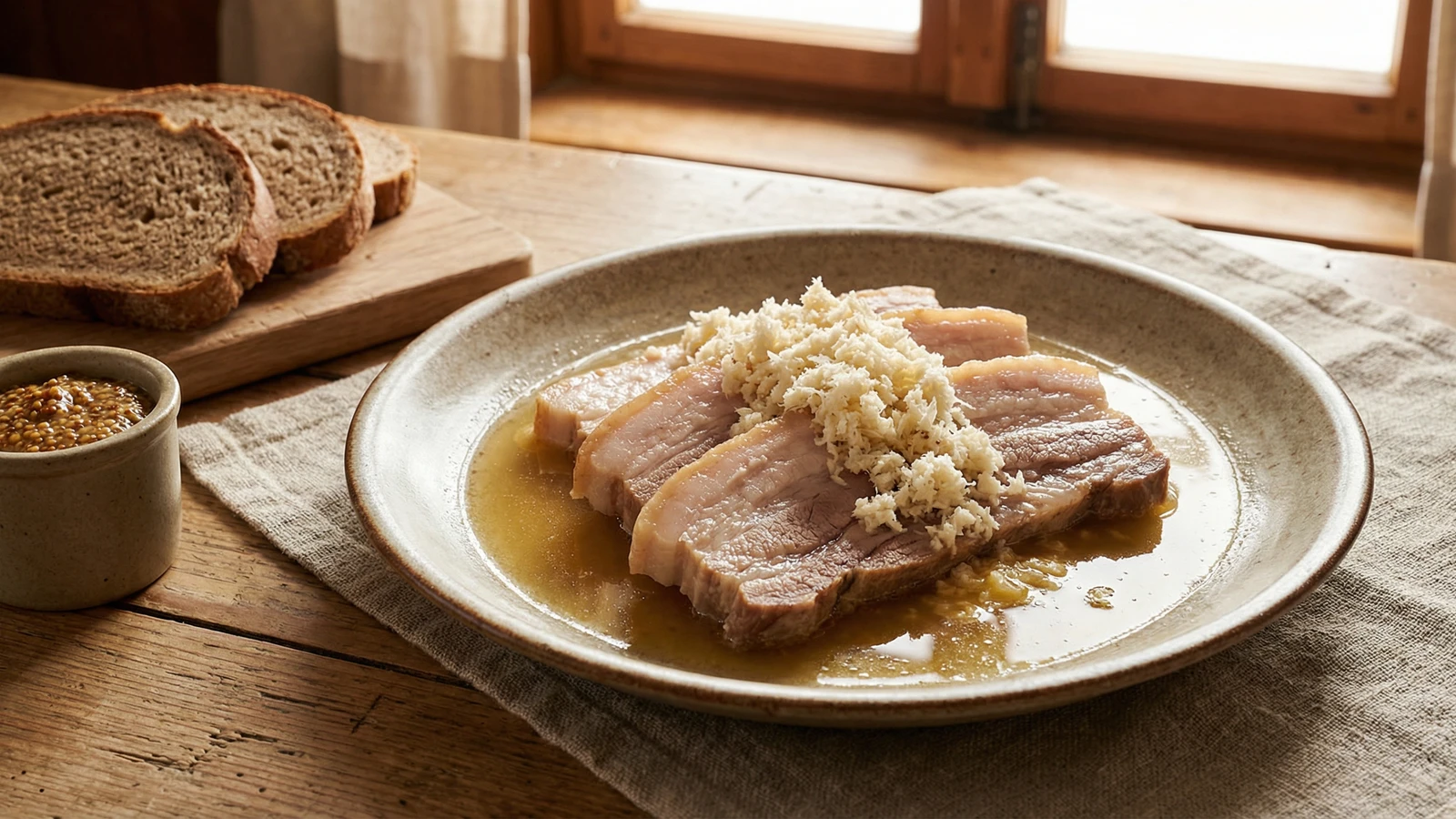
Upper Austrian pork belly simmered with juniper and allspice until the fat turns to silk, then sliced thick and served with freshly grated Kren that opens your eyes and clears your head.
There's a particular kind of Austrian dish that terrifies food writers and delights anyone who actually eats it. Krenfleisch is that dish. Boiled pork. With horseradish. That's it. No sauce to hide behind, no spice paste, no finishing technique. A piece of good pork belly goes into a pot of water with a few aromatics, simmers until it gives up all resistance, and comes to the table with nothing but freshly grated Kren and a chunk of dark bread.
I first ate proper Krenfleisch at a Gasthaus in the Salzkammergut on one of those childhood trips with Gretel and my grandmother Eva. It was January, there was snow piled against the windows, and the room smelled like woodsmoke and boiled meat. The plate arrived and I remember thinking it looked like nothing. Pale slices of pork, a mound of white horseradish on the side. Then I took a bite of the pork, which was so tender it dissolved, and followed it with a dab of the Kren, which shot up through my nose and made me gasp. Gretel laughed. Eva handed me a piece of bread. That was my education in what Austrian plainness can do when the ingredients are honest and the cook has patience.
This is peasant food in the truest sense. It doesn't ask you to be clever. It asks you to find a good piece of pork belly, simmer it slowly, and grate the horseradish fresh. If you can do those three things, you can make Krenfleisch that would earn a nod at any Gasthaus in Upper Austria.
Krenfleisch has been eaten across Upper Austria, Styria, and parts of Lower Austria for centuries, rooted in the tradition of the Hausschlachtung, the autumn household pig slaughter that provided meat for the cold months. The belly, head, and offcuts went into the simmering pot because they were the parts that needed long, gentle cooking. Kren (horseradish) grows wild across the Austrian countryside and has been the dominant condiment in Alpine cooking since the medieval period, long before black pepper was affordable. In Styria, horseradish cultivation is still a point of regional pride, and the Oststeiermark produces some of the sharpest, finest Kren in Europe.
Quantity
1 kg
skin on, bone in if possible
Quantity
2 liters
Quantity
1 tablespoon
Quantity
1 medium
halved
Quantity
2
Quantity
6
Quantity
4
Quantity
3
Quantity
1 medium
peeled and halved
Quantity
1 small
peeled
Quantity
1/4
peeled
Quantity
about 150g
Quantity
1 tablespoon
Quantity
pinch
Quantity
pinch
Quantity
for serving
Quantity
for serving
| Ingredient | Quantity |
|---|---|
| pork bellyskin on, bone in if possible | 1 kg |
| cold water | 2 liters |
| coarse salt | 1 tablespoon |
| onionhalved | 1 medium |
| bay leaves | 2 |
| whole black peppercorns | 6 |
| whole allspice berries | 4 |
| juniper berries | 3 |
| carrotpeeled and halved | 1 medium |
| parsnippeeled | 1 small |
| celeriacpeeled | 1/4 |
| fresh horseradish root (Kren) | about 150g |
| white wine vinegar or cider vinegar | 1 tablespoon |
| sugar | pinch |
| salt (for horseradish) | pinch |
| coarse rye bread | for serving |
| whole-grain mustard (optional) | for serving |
Place the pork belly in a large pot and cover with two liters of cold water. Add the coarse salt. You start in cold water for the same reason you start a good beef broth in cold water: it draws the proteins out gradually and gives you a clean, clear cooking liquid instead of murky grey foam clinging to the meat. Set the pot over medium heat and bring it slowly to a simmer. This should take fifteen to twenty minutes. Don't rush it.
As the water heats, grey foam will rise to the surface. Skim it off with a spoon. Keep skimming until the foam turns white and stops coming. This takes patience, maybe ten minutes. Then add the halved onion, bay leaves, peppercorns, allspice, and juniper berries. The juniper is the quiet signature of Upper Austrian cooking here. It gives the pork a faint Alpine note you can't quite name but would miss if it weren't there.
Reduce the heat until the surface of the liquid barely trembles. You want lazy bubbles, one every few seconds, not a rolling boil. Add the carrot, parsnip, and celeriac. These aren't garnish. They sweeten the broth and give it depth. Now leave it alone for about an hour and a half. The pork belly is done when a knife slides through the thickest part with almost no resistance. The meat should hold its shape but feel yielding, not tight.
While the pork simmers, peel the horseradish root. Grate it finely on a box grater or a dedicated Kren grater if you have one. Work near an open window or turn on a fan, because fresh horseradish will clear your sinuses with an authority that makes onions look polite. Immediately toss the grated Kren with the vinegar, a pinch of sugar, and a pinch of salt. The vinegar stabilizes the heat and stops the horseradish from turning bitter and grey. If you wait too long before adding it, the volatile oils escape and you're left with something bland.
Lift the pork belly out of the broth and let it rest on a board for five minutes. It will be soft and trembling, the layers of fat between the lean meat gone translucent and yielding. Slice it thick, about a centimeter, cutting across the grain. The slices should hold together but feel like they could fall apart if you looked at them too hard. That's exactly right.
Lay the warm pork slices on a platter or divide among warm plates. Ladle a few spoonfuls of the hot broth over the meat to keep it glistening and warm. Pile the freshly grated Kren alongside, not on top. The cook controls the pork. The eater controls the horseradish. Serve with thick slices of coarse rye bread and whole-grain mustard if you like. This is good Austrian home cooking. Mahlzeit!
1 serving (about 400g)
Culinary guides, cultural storytelling, and the editorial depth that makes cooking meaningful.
Discover Culinary ExplorerChef Elsa
Broad egg noodles tossed in golden butter-toasted breadcrumbs until every strand is coated and crackling. Four ingredients, fifteen minutes, and a dish that has kept Austrian families fed and happy for centuries.

Chef Elsa
Vienna's weeknight answer to everything: soft flour Nockerl fried golden in butter, scrambled through with eggs and buried under fresh chives. A sharp green salad on the side because the Viennese know that richness needs a counterpoint.

Chef Elsa
Soft Austrian potato dumplings in browned butter with warm, caraway-scented sauerkraut. A meatless Gasthaus meal that's been filling up Alpine kitchens for centuries.

Chef Elsa
Braised beef steaks in a velvety sauce of julienned root vegetables, capers, mustard, and sour cream, the kind of dish that made the Esterházy name famous in kitchens long after it faded from politics.