Chef Freja
Aebleflaesk
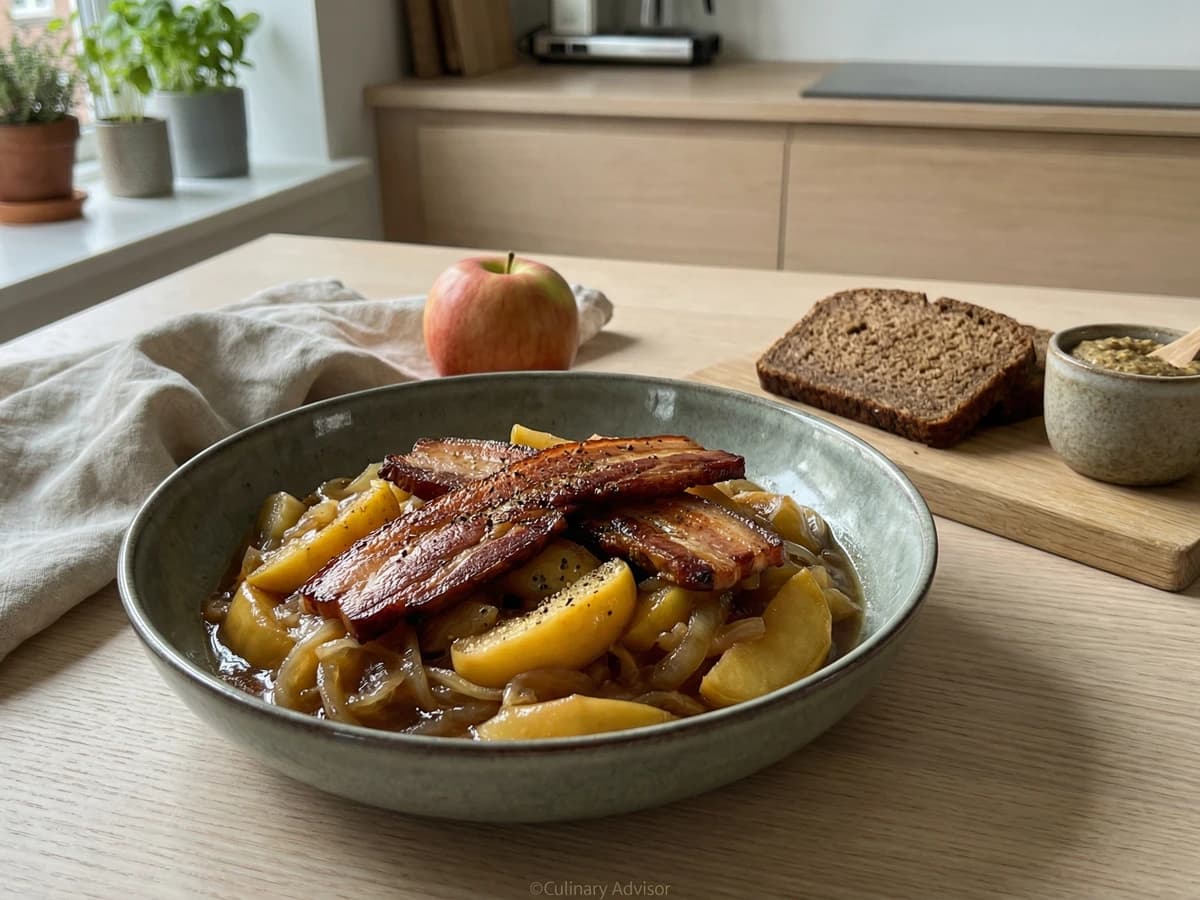
The Fyn autumn supper where thick pork belly renders slowly into its own fat, then meets apples and onions that cook down into a deep amber tangle. Sweet, salt, and the oldest pairing in the Danish larder.
A cooking platform built around craft, culture, and the stories behind what we eat.
Created by Chef Freja
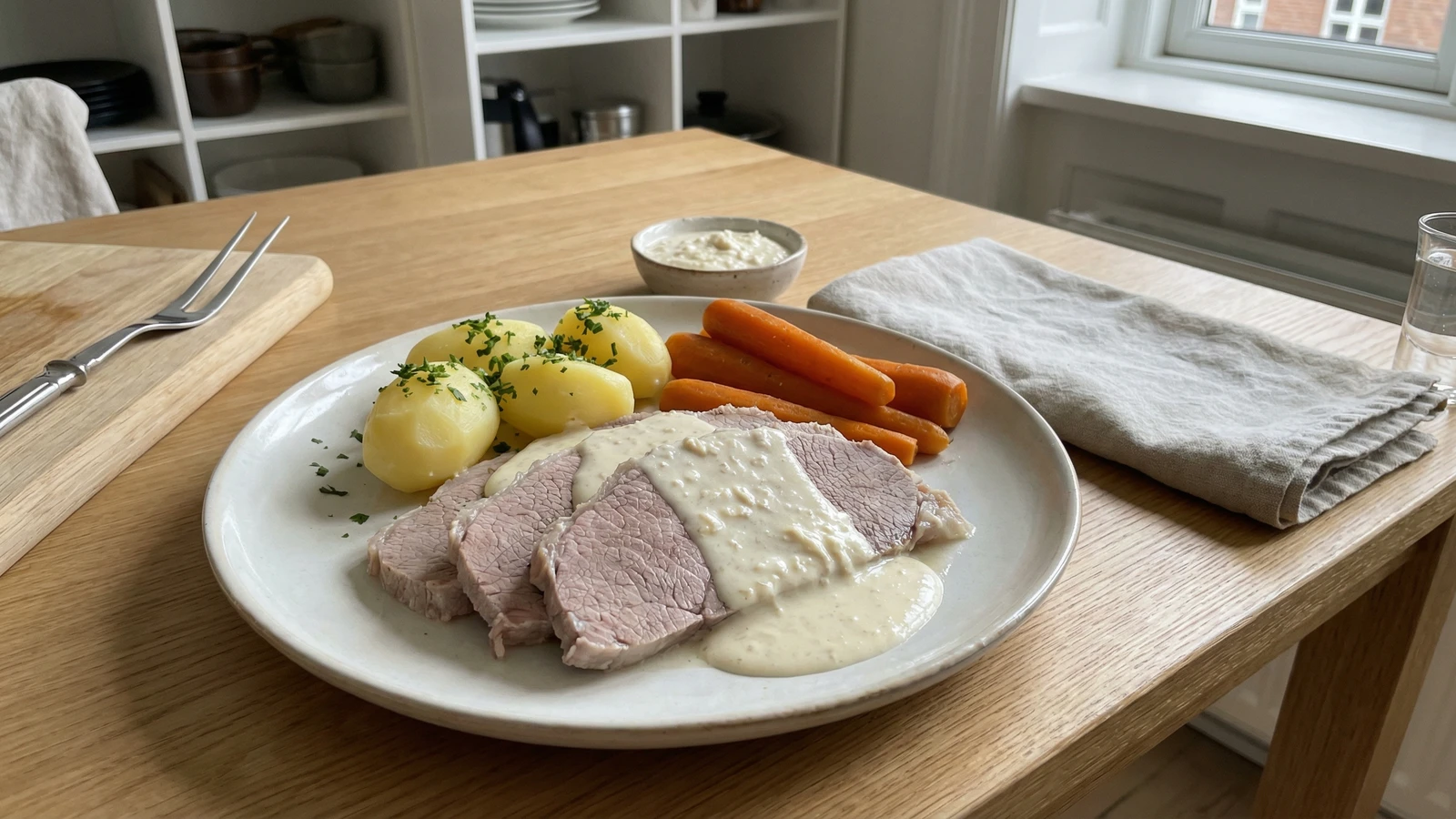
Danish boiled brisket simmered with roots and bay until a skewer slides through, then carved across the grain and bathed in a sharp horseradish cream sauce built from its own broth. Slow food before the word existed.
There's a stretch in January when Copenhagen goes quiet. The holidays are packed away, the daylight is barely five hours wide, and the wind off the harbor has a specific kind of cold that gets into the seams of your coat. This is when kogt oksekød comes out of the Danish kitchen. It belongs to the Sundays when nobody is going anywhere, and the whole point of the afternoon is the smell of something slow on the stove.
The dish is exactly what its name says. Boiled beef with horseradish sauce. A piece of brisket, a pot of water, a handful of root vegetables, and the patience to let them become something together over three hours. Then a roux-based sauce built from the poaching liquid itself, loosened with milk and cream, and finished off the heat with a generous scoop of freshly grated horseradish. The sauce is half the dish, and the broth that makes the sauce is half of that. Everything in the pot is working for everything else.
I want you to watch for three moments. The first is the slow start: the brisket goes into cold water, not hot, and the broth stays clean as long as you skim it gently. The second is the simmer: a whisper of movement, never a hard boil, because hard boiling tightens the meat and you cannot undo it. The third is the horseradish going in at the very end, off the heat, because fresh horseradish is volatile and cooking it is the fastest way to lose what you came for. Do those three things and the rest of the recipe does the work for you. This is comfort food that trusts you to be unhurried, and the joy of waiting is built into every stage.
Boiled beef with horseradish sauce appears in Frøken Jensens Kogebog, the 1901 cookbook that shaped the Danish bourgeois kitchen for most of the twentieth century, and the dish was already old when she wrote it down. Horseradish arrived in Denmark through the medieval monastery gardens, where it was grown as a medicinal root long before it became a kitchen ingredient, and it became firmly attached to boiled beef in the 1800s when the dish settled into the rotation of Danish Sunday cooking. Regional variations split along familiar lines: Jutland cooks often add a touch more vinegar to cut through the richness, while Sjælland kitchens lean on extra cream and a gentler hand with the root.
Quantity
1.5kg
in one piece
Quantity
2 medium
peeled and halved
Quantity
3 medium
scrubbed, one halved for the broth, two kept whole for serving
Quantity
1
trimmed and split lengthways
Quantity
200g
peeled, cut in thick chunks
Quantity
1
peeled and halved
Quantity
3
Quantity
10
Quantity
6
Quantity
3
Quantity
1 tablespoon
Quantity
about 2.5 litres, to cover
Quantity
800g
peeled, to serve
Quantity
50g
Quantity
50g
Quantity
500ml
strained
Quantity
200ml
Quantity
100ml
Quantity
60g
finely grated
Quantity
1 teaspoon
Quantity
1 teaspoon
Quantity
to taste
Quantity
to taste
Quantity
small bunch
finely chopped, to finish the potatoes
| Ingredient | Quantity |
|---|---|
| beef brisketin one piece | 1.5kg |
| yellow onionspeeled and halved | 2 medium |
| carrotsscrubbed, one halved for the broth, two kept whole for serving | 3 medium |
| leektrimmed and split lengthways | 1 |
| celeriacpeeled, cut in thick chunks | 200g |
| parsnippeeled and halved | 1 |
| bay leaves | 3 |
| whole black peppercorns | 10 |
| whole allspice berries | 6 |
| whole cloves | 3 |
| fine sea salt | 1 tablespoon |
| cold water | about 2.5 litres, to cover |
| waxy potatoespeeled, to serve | 800g |
| unsalted butter (for the sauce) | 50g |
| plain flour (for the sauce) | 50g |
| reserved poaching liquidstrained | 500ml |
| whole milk | 200ml |
| double cream | 100ml |
| fresh horseradishfinely grated | 60g |
| caster sugar | 1 teaspoon |
| white wine vinegar | 1 teaspoon |
| fine sea salt | to taste |
| white pepper | to taste |
| flat-leaf parsleyfinely chopped, to finish the potatoes | small bunch |
Place the brisket in a heavy pot wide enough to hold it flat. Cover with cold water by a good two fingers. Bring it slowly up to a simmer over medium heat. A slow start is what you want here. If you drop the meat into hot water the outside seizes and the broth goes cloudy. Starting cold lets the impurities rise gently, and you will skim them off in the next step.
Once the water is clear and barely simmering, add the onions, the halved carrot, the leek, the celeriac, the parsnip, the bay leaves, peppercorns, allspice, cloves, and the salt. These aromatics do two jobs. They perfume the meat from the outside, and they build the stock that becomes your sauce. Everything in the pot is working for you now.
Keep the heat as low as you can while still seeing the occasional bubble break the surface. Partially cover the pot and let the brisket cook for two and a half to three hours. Never let it boil hard. A hard boil tightens the meat and makes it stringy. What you want is a whisper of movement in the liquid, nothing more. The kitchen will smell of slow food and winter Sundays.
After two and a half hours, slide a thin skewer or the tip of a knife into the thickest part of the brisket. It should go in with only the gentlest resistance and come out cleanly. If it still feels tight, give it another twenty or thirty minutes and test again. Brisket is not in a hurry and neither should you be. You'll know when it's right.
When the brisket is tender, turn off the heat and leave the meat to rest in the hot broth for at least fifteen minutes. This is not optional. Resting in the liquid keeps the meat moist and warm while you make the sauce. Lift it out and it will dry on the counter. Leave it in and it stays luminous.
While the meat rests, put the peeled potatoes and the two whole carrots in a separate pot of salted water. Bring to a gentle simmer and cook until a knife slides through without resistance, about fifteen to twenty minutes. Drain and keep warm. Toss the potatoes with a small piece of butter and the chopped parsley just before serving.
Strain 500ml of the poaching liquid through a fine sieve and set it aside. In a clean heavy saucepan, melt the butter over medium heat until it foams and smells faintly of hazelnuts. Add the flour all at once and whisk it into the butter. Cook the roux for two minutes, stirring constantly. You want a pale blonde color and a smell like warm biscuits. Don't let it brown. A brown roux belongs to other sauces, not this one.
Pour the warm poaching liquid into the roux in a thin stream, whisking constantly. It will thicken quickly at first and then loosen as more liquid goes in. Keep whisking until the sauce is smooth. Add the milk and cream and let the whole thing simmer very gently for eight to ten minutes, stirring often. The sauce should coat the back of a spoon and leave a clean line when you draw a finger through it.
Take the sauce off the heat before you add the horseradish. This matters. Fresh horseradish is volatile, and hard heat blows off the sharpness that is the whole point of the dish. Stir in the grated horseradish, the sugar, and the vinegar. The sugar rounds the edge, the vinegar wakes it up. Taste and season with salt and white pepper. It should make your nose prickle gently. If it doesn't, add more horseradish.
Lift the brisket from the broth and set it on a board. Carve it across the grain into slices about half a centimetre thick. Carving across the grain is what keeps each slice tender in the mouth. Arrange the slices on warm plates, spoon the horseradish sauce generously over the meat, and serve with the parsleyed potatoes and the whole carrots alongside. Tak for mad.
1 serving (about 490g)
Culinary guides, cultural storytelling, and the editorial depth that makes cooking meaningful.
Discover Culinary ExplorerChef Freja
The Fyn autumn supper where thick pork belly renders slowly into its own fat, then meets apples and onions that cook down into a deep amber tangle. Sweet, salt, and the oldest pairing in the Danish larder.

Chef Freja
Warm Danish apple soup for the first cool evenings of autumn. Tart apples simmered with cinnamon and lemon peel, thickened to a soft gloss, and served with cold cream and buttery toasted oats.

Chef Freja
Danish white asparagus velouté with tiny veal meatballs, flour dumplings, and bright green tips scattered on the surface. The Easter soup of Copenhagen, built from five small pans of spring.
Chef Freja
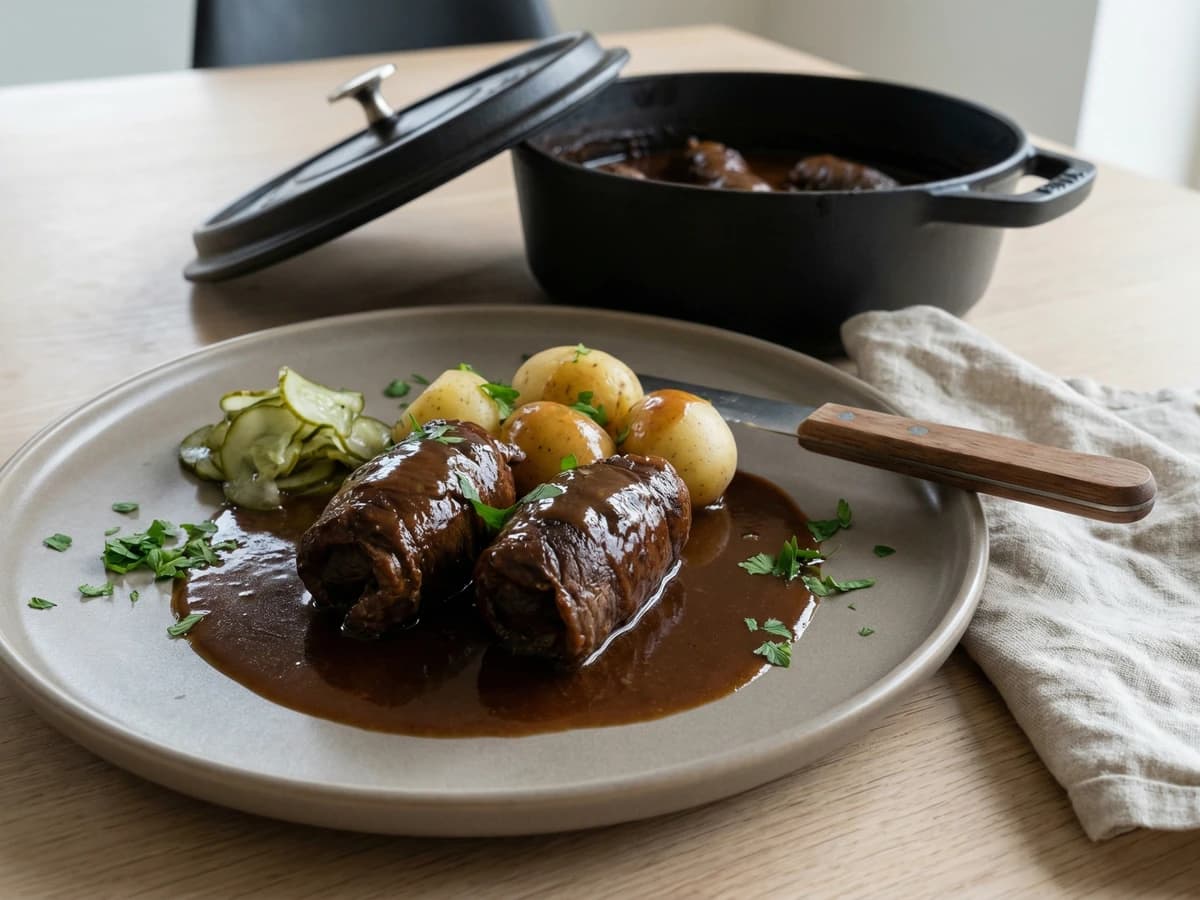
Thin beef slices rolled around bacon and onion, tied with string, and braised slowly in a dark glossy gravy finished with cream and redcurrant jelly. Danish Sunday dinner at its most comforting.