
Chef Freja
Æblegelé
Tart autumn apples, slow-boiled and strained clear overnight, then cooked with sugar to a trembling pale amber jelly that belongs on the cheese board, on morning toast, and in the kitchen of anyone who respects the season.
A cooking platform built around craft, culture, and the stories behind what we eat.
Created by Chef Freja
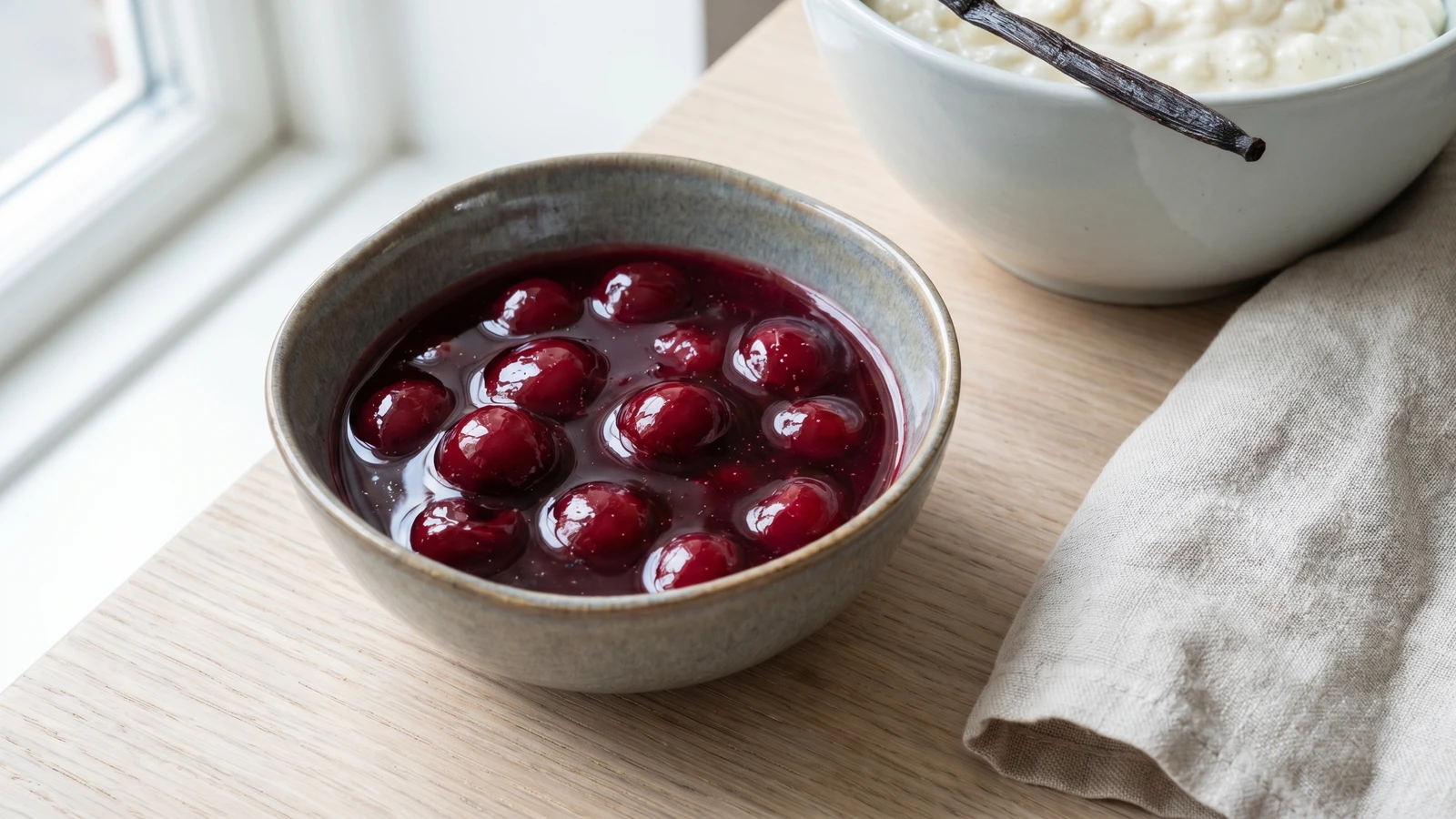
Morello cherries, a split vanilla pod, and a generous measure of Cherry Heering simmered into a glossy ruby compote. The warm half of risalamande, and the reason the cold white pudding makes sense.
December the twenty-fourth. The goose is resting, the candles on the tree are lit, and somewhere in the kitchen a pot of cherries is beginning to bubble. That low, sweet simmer is the sound of Christmas Eve in Denmark. Not the carols. Not the wrapping paper. The cherries.
Risalamande without its kirsebærkompot is unfinished. The cold white rice pudding, thick with whipped cream and chopped almonds, needs the warm ruby sauce the way a Danish December needs candlelight. Cool and warm, white and red, creamy and tart. One without the other is only half the story, and nobody serves half a story on Juleaften.
The compote itself takes fifteen minutes. Sour cherries, sugar, a vanilla pod, and a measure of Cherry Heering, the Copenhagen cherry liqueur that deepens everything it touches. You simmer the juice, thicken it with kartoffelmel (potato starch, the Danish thickener that gives fruit sauces their particular glossy clarity), then fold the cherries back in gently so they hold their shape. What matters most is the finish: glossy, not gluey, with whole cherries suspended in a sauce that pools like dark rubies across the white surface of the risalamande. I'll walk you through every moment so you know exactly what to look for. You'll know when it's right.
Risalamande entered Danish Christmas tradition in the mid-nineteenth century, likely adapted from the French riz à l'amande, but the cherry compote alongside it has older roots in the Danish tradition of kompot, preserved fruit sauces served with grain-based desserts since at least the 1700s. The sour cherries most prized for the sauce come from the orchards of Fyn, where Stevnsbær, a Danish Morello variety, have been cultivated since the monastery gardens of the Middle Ages. Cherry Heering, the liqueur that finishes the compote, has been distilled in Copenhagen since 1818, when Peter Heering first produced it from Danish cherries and spices in a recipe that remains largely unchanged.
Quantity
2 jars (680g each)
drained, 400ml juice reserved
Quantity
120g
Quantity
1
split lengthways, seeds scraped
Quantity
2 tablespoons
Quantity
3 tablespoons
Quantity
3 tablespoons
| Ingredient | Quantity |
|---|---|
| Morello cherries in juicedrained, 400ml juice reserved | 2 jars (680g each) |
| caster sugar | 120g |
| vanilla podsplit lengthways, seeds scraped | 1 |
| potato starch (kartoffelmel) | 2 tablespoons |
| cold water | 3 tablespoons |
| Cherry Heering | 3 tablespoons |
Pour the reserved cherry juice into a heavy-bottomed saucepan. Add the sugar, the vanilla seeds, and the scraped pod. Set it over a medium heat and stir gently until the sugar has dissolved completely. Bring the liquid to a low simmer and let it cook for five minutes. The vanilla needs this time. Heat opens the flavor and lets the tiny seeds bloom through the juice, turning it fragrant in a way that cold vanilla extract never manages.
In a small bowl, stir the potato starch into the cold water until completely smooth. This must be done in cold water. If you add dry starch directly to the hot juice, it clumps instantly and you will spend ten minutes chasing lumps you can never quite dissolve. Cold water first, then into the pot.
Give the starch slurry one final stir (it settles fast) and pour it into the simmering cherry juice in a steady stream, stirring constantly. The sauce will thicken almost immediately. This is the nature of potato starch: it works faster than cornstarch and gives a clearer, more luminous finish. That gloss is what you're after. Keep stirring for one minute until the sauce is smooth and coats the back of your spoon with a translucent, jewel-like sheen. Then take the pan off the heat.
Add the drained cherries to the thickened sauce with a gentle hand. You want them warmed through and coated, not crushed. Stir slowly, turning them through the sauce until each cherry is glossy and the color has deepened to a dark, clear ruby. Let the compote sit in the warm pan (heat off) for two or three minutes. The cherries absorb some of the vanilla-scented syrup during this rest, and the flavors settle into each other.
Add the Cherry Heering now, off the heat. This matters. If you add the liqueur while the sauce is still simmering, the alcohol cooks away and you lose the warm, almond-cherry depth that Cherry Heering brings. Stir it through gently. Taste the compote. It should be sweet but balanced by the natural tartness of the Morello cherries. If it needs a touch more sugar, add it now. Remove the vanilla pod. Serve the kompot warm alongside cold risalamande. The temperature contrast between the two is not a suggestion. It's half the pleasure of the dessert.
1 serving (about 195g)
Culinary guides, cultural storytelling, and the editorial depth that makes cooking meaningful.
Discover Culinary ExplorerChef Freja
Tart autumn apples, slow-boiled and strained clear overnight, then cooked with sugar to a trembling pale amber jelly that belongs on the cheese board, on morning toast, and in the kitchen of anyone who respects the season.

Chef Freja
Autumn apples simmered slowly with vanilla until they collapse into a rough, golden sauce. The condiment that waits on the shelf for flaeskesteg, for roast duck, for the meals that carry you through the Danish winter.

Chef Freja
The pan sauce that holds the Danish Christmas plate together. Duck drippings, good stock, cream, and a spoonful of red currant jelly for the tart brightness that makes juleaften taste like itself.

Chef Freja
September plums slow-cooked with onion, ginger, vinegar, and warm spice into a dark, glossy chutney that belongs beside aged cheese on a cold evening. The joy of waiting, sealed in a jar.